When I first moved to Western NY, the spring runs looked a little different than the salty bites we look forward to in the spring. I traded my early-season back bay striped bass fishing for walking the banks of Great Lakes tributaries looking for big, hungry brown trout. Once I leaned into my first lake run brown, I was hooked. The fight, the screaming drag, and the beauty of these fish were all remarkable. And the fact I could do it in a tributary no wider than my truck made it all more amazing.
There’s something different about chasing browns from the bank. No electronics, no boat, no long trolling passes: It’s just you, your rod, and a stretch of shoreline that might look empty until it suddenly isn’t. Shore fishing for brown trout in the Great Lakes and their tributaries is raw, seasonal, and deeply personal. It’s about reading water, grinding through weather, and believing the next cast could connect you to a fish that’s seen more miles than most people.
Across the basin — from Lake Ontario to Lake Michigan, Lake Erie, and Lake Huron — brown trout offer legitimate shore-bound opportunities for anglers willing to put in the time. It makes great early season fun on both spinning and fly casting gear.
Why You Should Target Browns in the Spring

Unlike some open-water species that roam deep and suspend offshore, browns are structure-oriented and temperature-driven. They relate to current breaks, creek mouths, rocky points, pier heads, and stained water edges. That makes them accessible, especially in the spring when they are stacked in the mouths of tributaries of the Great Lakes.
In early spring, as water temps hover in the high 30s and low 40s, baitfish push shallow and browns follow. You’ll often find them cruising within a long cast of shore. The same goes for fall, when mature fish stage near river mouths before running upstream to spawn. Those windows give shore anglers a legitimate shot at fish that can push well into the teens — and sometimes much larger.
They’re also predators with attitude. Browns aren’t shy about smashing stickbaits in three feet of water or ambushing a drifting egg sack in a creek seam. When one commits, you know it.
Shore Fishing the Big Lake

Fishing for browns directly in the lake is often about timing and conditions. Early spring is king. Cold nights, warming afternoons, and a little stain in the water are prime. After a blow, when waves have churned up the shoreline and discolored the water just enough, browns slide shallow to feed.
Key Areas to Target
- Creek and river mouths
- Warm-water discharges
- Rocky shorelines with adjacent depth
- Harbor walls and pier heads
- Sandy flats near structure
Wind is your friend — up to a point. A light to moderate onshore wind pushes bait and warmer surface water toward the bank. Too much wind, and you’re battling floating debris and dangerous waves.
Lure Selection
From shore, casting distance matters. Long, slender stickbaits in natural baitfish patterns, like a Rapala X-Rap or a Smithwick Rogue, are staples. Plugs get attention in colder water with a slow retrieve. Spoons shine, like a Krocodile or Hopkins Spoon, when fish are aggressive or when you need extra casting distance into the wind. This is my one-two punch fishing in early spring.
Retrieve speed should match water temperature. In early spring, slow it down. Browns will track a bait a long way before committing, especially in clear water. A steady retrieve with occasional pauses often seals the deal.
Low light helps a lot with this type of fishing. Dawn and dusk are classic, but don’t overlook cloudy afternoons with a good chop on the water.
Tributary Browns: Understanding Moving Water

When I first started fishing these tributaries, I started treating them like I was smallmouth fishing. That was not the appropriate approach. Over the past few years, I’ve made a lot of friends on the creeks, one of them being social media influencer and trib fishing guru Payton Hanssen.
Hanssen has fished Great Lakes tributaries most of her life and knows the ins and outs of these big wary trout.
“Early spring lake-run browns are a different game than resident trout. These fish are fresh from the lake, constantly moving, and they don’t always sit in the classic “steelhead spots” everyone expects. My mindset is simple — cover water, stay adaptable, and focus way more on presentation than constantly changing flies,” she said.
The mindset of either a spin or fly angler is the same. The baits presented will make the difference. There will be fish in every hole, and the key in getting them to commit to a bait is moving around and staying mobile.
“If I’m not moving a fish within 10-15 minutes, I’m walking and hole hopping till I find one. If there’s one in the hole, it’ll be more than willing to at least show itself,” Hanssen said.

Finding Fish and Spots on the River
In tributaries, browns hold in predictable spots. These include:
- Deep pools below riffles
- Inside bends with slower current
- Tailouts where oxygen and food concentrate
- Undercut banks and log jams
- Gravel runs during spawning periods
Water clarity is everything. After a rain, slightly stained water is ideal. Chocolate milk conditions? Save your gas and wait a day. Gin-clear, low water? Downsize your presentation and lengthen your leader.
Access will be your biggest concern. Here in Western NY, a lot of our Great Lakes tributaries run through a lot of private property. Yes, there is a lot of public access that the New York State Department of Environmental Conservation (NYSDEC) has in place, but if you want to reach some of the best trout fishing, you have to get off the beaten path. Half the battle with these fish is just finding water that isn’t shoulder-to-shoulder with anglers. Areas with less pressure are filled with more fish that are willing to bite.
Scouting areas out before you even step in the creek is crucial to success.
“Tools like Trout Routes have honestly made that process way easier for me, especially when I’m trying to quickly identify public access points or new stretches of creek to explore without wasting time,” Hanssen advised.
Presentations That Produce
For more aggressive fish, small spinners, like a Blue Fox Vibrax, and plugs, like a Rapala Husky Jerk, can trigger reaction and aggression strikes. There’s nothing quite like watching a bronze-backed brown flare its gills and crush a lure in two feet of clear water. With these techniques on spinning gear, you can cover a ton of water and pick away at bigger fish
Fly anglers find success swinging streamers through tailouts or dead-drifting nymphs through deeper runs.
“Streamers are my favorite way to target big brown trout in the spring,” Hanssen began. “Olive, white, or sculpin-style patterns in smaller profiles tend to outfish oversized flies for me. I’ll dead-drift the streamer first and then add slow strips at the end of the swing — a lot of eats happen right when the fly starts to rise.”
No matter the method, natural presentation is key. Browns in rivers see pressure. Drag-free drifts and subtle movements matter.
Gear Considerations

For fishing the lake and the outer breakwalls, a longer spinning rod — eight to 10 feet — helps with casting distance and line control in wind and waves. Medium or medium-light power gives you backbone for big fish while maintaining enough tip to throw lighter baits.
In tributaries, your longer medium light bass rods will do the trick. My Great Lakes Finesse CX Spinning Rod handles these big trout perfectly. The seven-foot, eight-inch medium light action rod is perfect for throwing light baits and working big trout into the net. Smooth drags are critical, which is why I run a Shimano Vanford in a 3000 size with light Power Pro Braid and a super long five pound test fluorocarbon leader. Great Lakes browns are not stocker pond fish. They run hard, use current to their advantage, and will test every knot you tie. Playing these fish is super critical to landing them, and having the right gear is important.
On the fly side of things, Hanssen loves the Redington EDC 7 Weight 10’ Fly Rod.
“That extra length makes a huge difference when you’re managing long drifts from the bank or trying to keep line off conflicting seams, and it has plenty of backbone for both lake-run browns and steelhead,” she said. “It’s become my do-everything rod for indicator rigs, tightline setups, and throwing streamers.”
Waders, a good landing net, and layered clothing round out the essentials. Shore fishing often means walking, climbing rocks, and covering water.
The Mental Game

Shore fishing for Great Lakes browns isn’t always fast-paced. There are days you’ll walk miles and make hundreds of casts without a bump. Then, out of nowhere, your rod loads up and your drag starts singing.
Patience and observation separate consistent anglers from frustrated ones. Watch the water. Look for any signs of life, baitfish, or surface activity. Pay attention to temperature changes. Notice where waves break differently along a stretch of shoreline.
In tributaries, learn to read subtle seams and depth changes. Browns often sit just inches out of the main current, conserving energy while waiting for food to drift past.
Confidence is huge. If conditions look right, they probably are and the fish are probably there.
Respecting the Resource

Great Lakes brown trout are supported by a mix of natural reproduction and stocking efforts managed by state agencies. Many fish you catch have survived multiple seasons, predators, and angling pressure. Handle them accordingly and with exceptional care.
Use rubber-coated nets. Keep fish in the water when possible. Follow local regulations on seasons and limits. Selective harvest has its place, but releasing large, mature browns helps sustain quality fishing for everyone.
Why It Matters

There’s something grounding about standing on a windswept shoreline or knee-deep in a cold river, waiting for that unmistakable thump. Shore fishing for Great Lakes browns strips the sport down to its core. It’s not about screens or speed. It’s about reading nature and earning every bite.
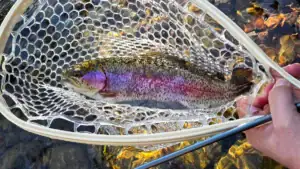
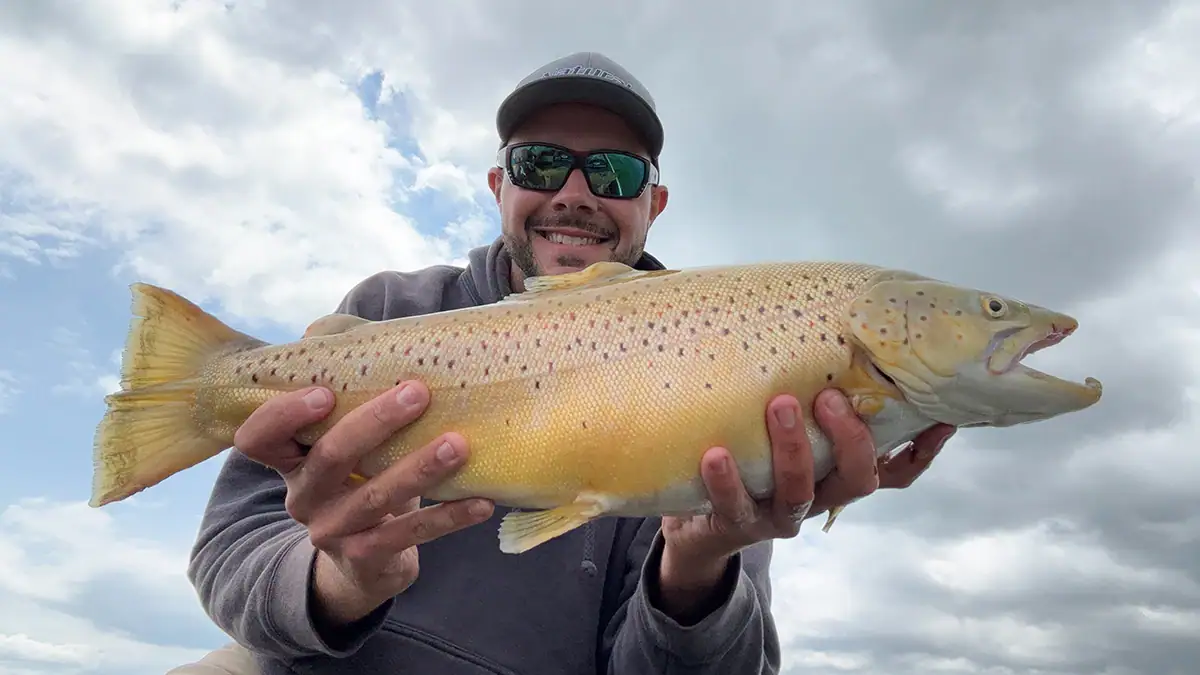
When a big brown trout finally rolls at your feet — gold flanks glowing, black spots haloed in silver — you realize why you came. Not for limits. Not for photos. But for the challenge and the connection.
And from the bank of a Great Lake or one of its winding tributaries, that connection feels as real as it gets.