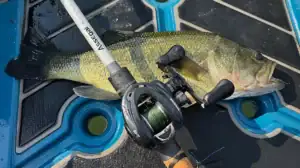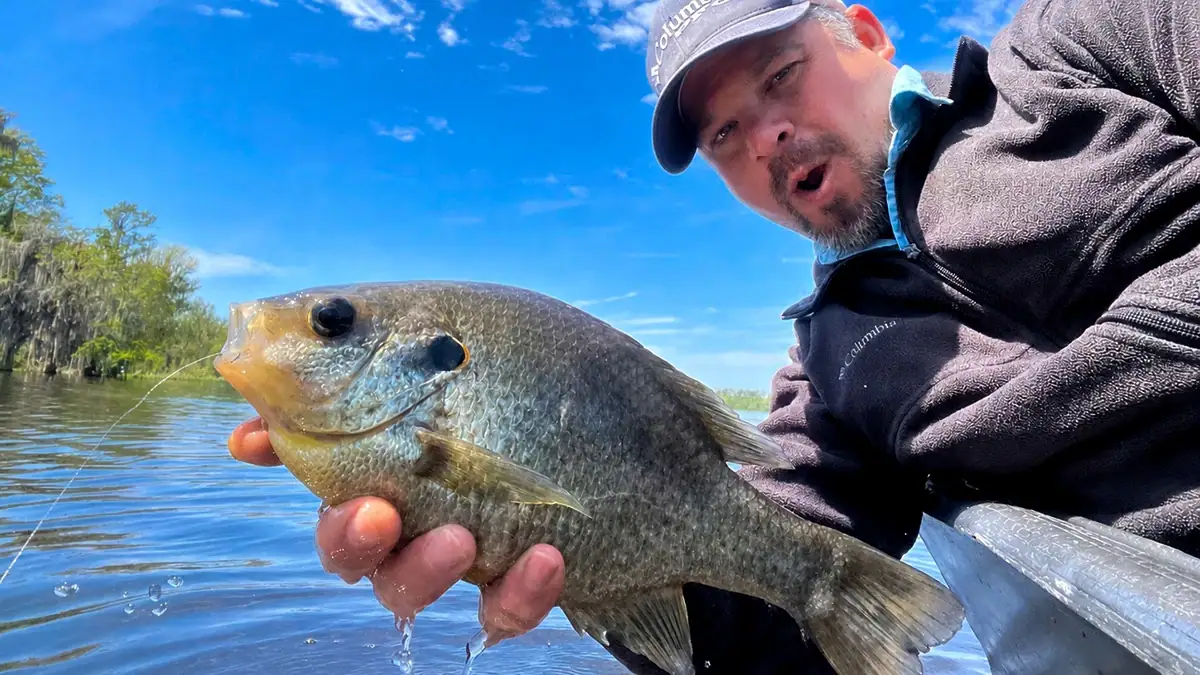
It’s that time of year when the water is warming up and the best bream bite of the entire year is firing up in the shallows. In May, those redear sunfish — or as we like to call them down here in Louisiana, shellcrackers — are easy pickings. These fish are moving into the shallows to spawn, and if you’re a perch jerker who loves loading a cooler with thick, meaty bream, right now is the time to target them.
The shellcracker is built differently than your average bream. These fish have specialized teeth tucked back in their throats that act like a built-in nutcracker used for crushing hard-shells like snails and small mussels right off the bottom. I’ve even caught a few with small crawfish in their stomachs. While a bluegill is up in the water column chasing whatever floats by, a shellcracker is down on the bottom grazing. This makes a difference when targeting them.
And targeting shellcrackers is certainly worth the effort.
Thick, Quality Fillets
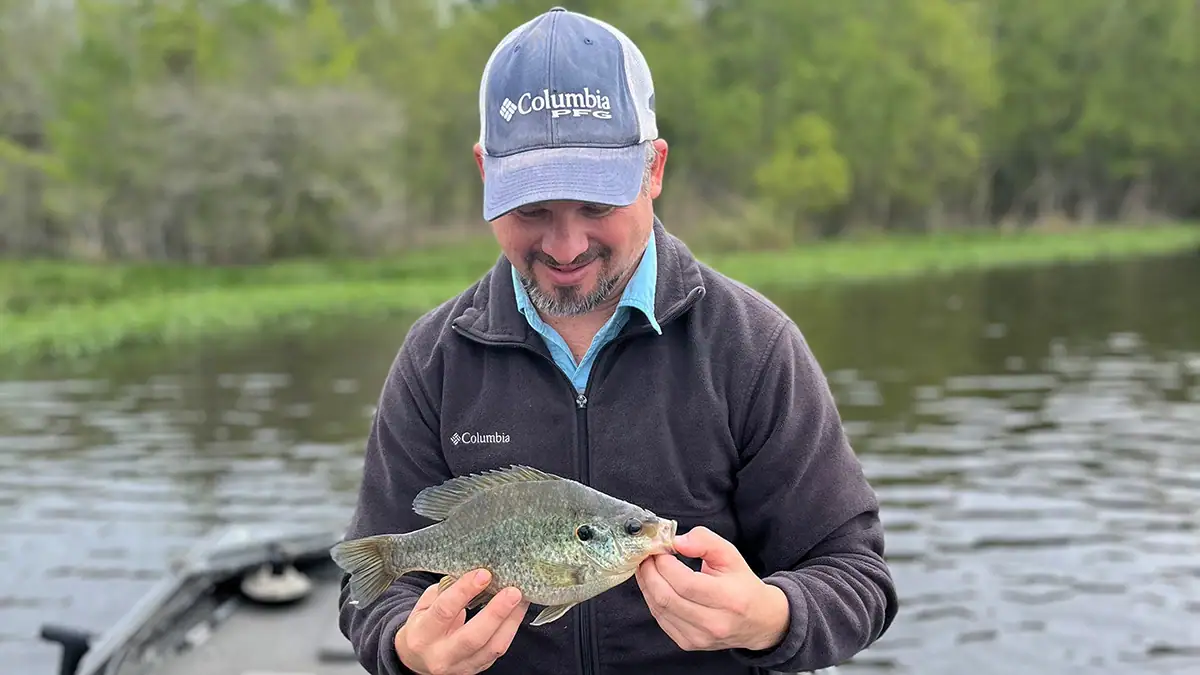
If you’ve ever cleaned a mess of shellcrackers next to a pile of bluegill, you already know what’s coming.
The fillets from a shellcracker are noticeably thicker and meatier than anything you’ll fillet off bluegill. When I run my fillet knife down a 10-inch shellcracker, I usually get two quality slabs of meat that are around 2/3-inch thick. This makes a big difference when filling up my Ziploc bag for freezing.
In addition to their girth, these fish also grow big. The world record redear tipped the scales at 6 pounds, 4 ounces, out of Lake Havasu in 2021. For anyone looking to fill a freezer with quality panfish fillets, there is no more efficient fish to target.
Where to Find Shellcrackers
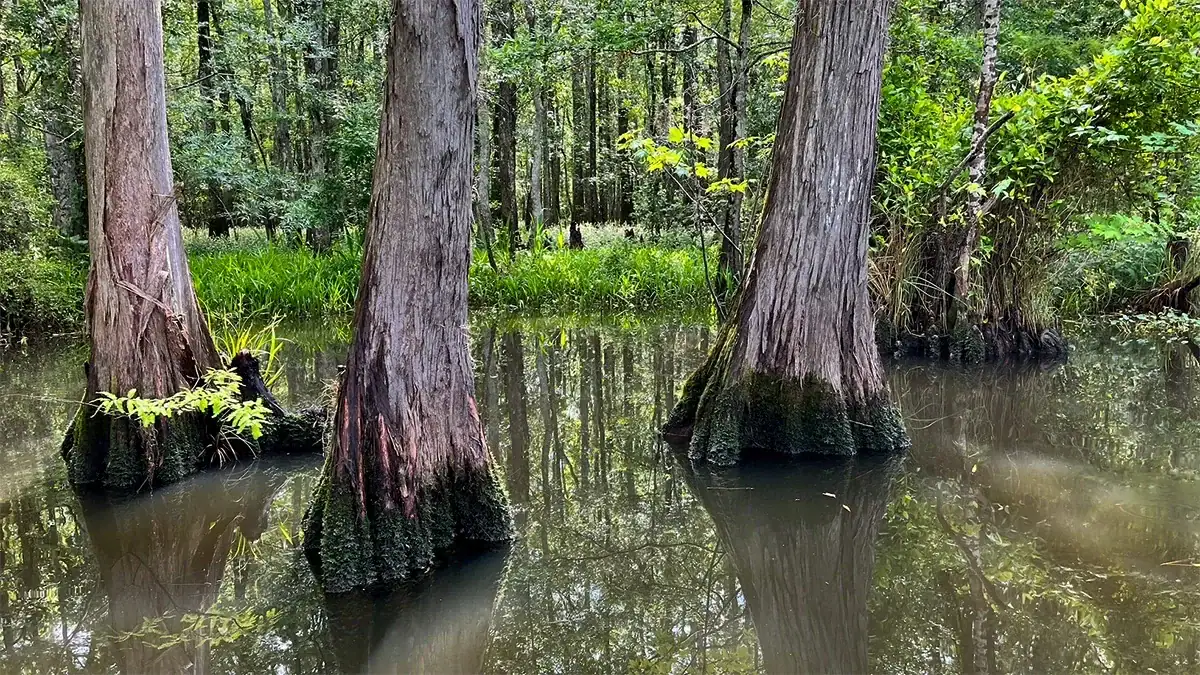
I’ve caught shellcrackers in ponds, lakes, swamps, reservoirs, slow-moving rivers, and backwater creeks. They are mostly found from the Atlantic coast down to Florida and west along the Gulf Coast into Texas. What they care about is structure. Stumps, dock pilings, gravel bars, and submerged timber are all prime real estate. While I target these fish in the summer and fall, I find that they’re easiest to catch in May when they are more concentrated in very shallow water, often two feet or less.
Like all bream, shellcrackers spawn in circular, saucer-shaped beds in clusters. If you find one bed, there likely will be a dozen more nearby. During the spawn, I catch my biggest ones in the main river where deep water meets shallow.
One of my personal favorite rivers to target shellcrackers is the Tickfaw River in Southeast Louisiana. Along much of the river there’s a flat, shallow shelf that extends from the bank all the way to where the cypress trees end. Those cypress root systems grab and hold the river bottom in place, forming a natural wall that defines the edge of the shallows. When the roots end, the bottom drops off hard into deep water, and that transition is exactly where shellcrackers stack up during the spawn. In some stretches, that shallow shelf extends a full 30 feet out from the bank. That’s 30 feet of prime shellcracker real estate.
How to Catch Them
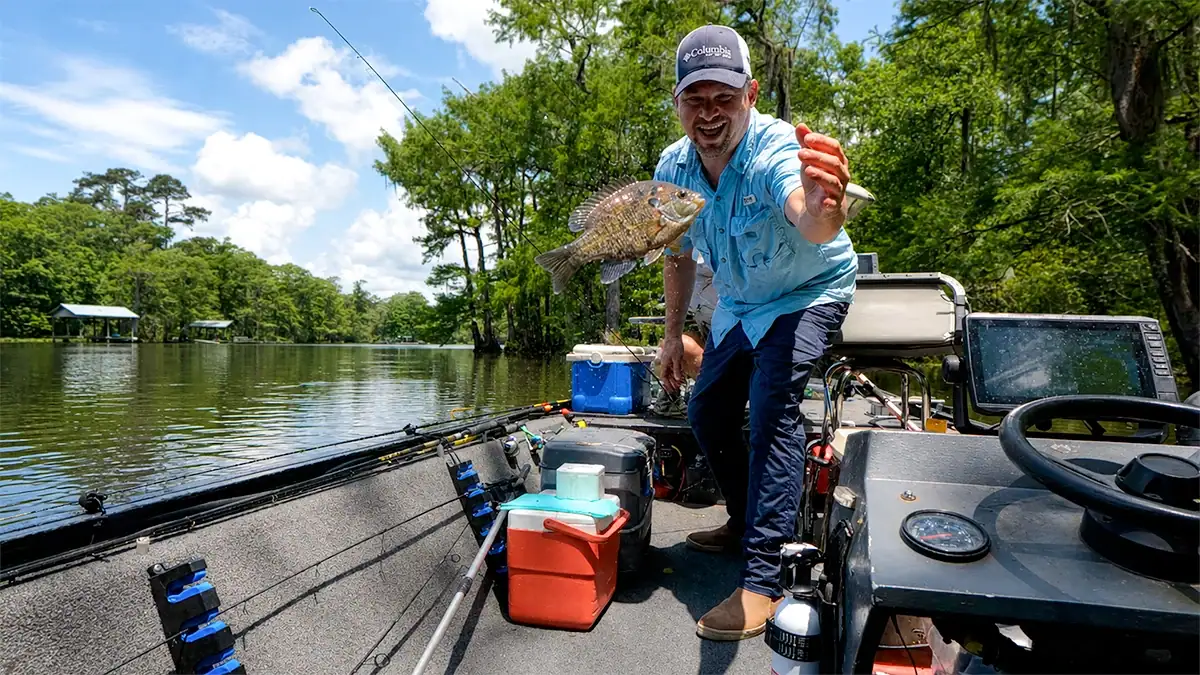
Shellcrackers are bottom feeders, so I recommend dropping your hook deeper than you normally would for bream. These fish also respond to a moving bait, so don’t just park your cork after the cast. Let the rig settle, then slowly lift your rod tip and drag the cork toward you a foot or two before letting it settle again. That subtle movement is often what triggers the strike. When a shellcracker eats, that cork will shoot under and the fish will immediately bolt toward the surface.
For bait, pinch off a one-inch section of nightcrawler and thread it onto a No. 6 cricket hook. Don’t overload the hook or those fish will strip it every cast. Moon phases also matter during the spawn. I find three days before and after a full moon consistently produce the best action.
My Shellcracker Setup
I run a Trika ultralight spinning setup with six-pound mono. The fast action tip on a Trika rod telegraphs even the faintest tap, which matters especially if you’re fishing line-to-lure without a cork. Personally, I always use a cork — more specifically, a pencil cork. Pencil corks are slender, roughly six inches long, and far more sensitive than a traditional round bobber. Any slight dip or sideways drift, and I’m setting the hook. When targeting shellcrackers, I rig it with about three feet of line between the cork and the hook. This makes sure the bait is dragging the bottom.
The shellcracker bite should continue into early June, and deeper into the summer for those farther north. Get out there and find those beds, because the bite is on right now and the freezer isn’t going to fill itself.