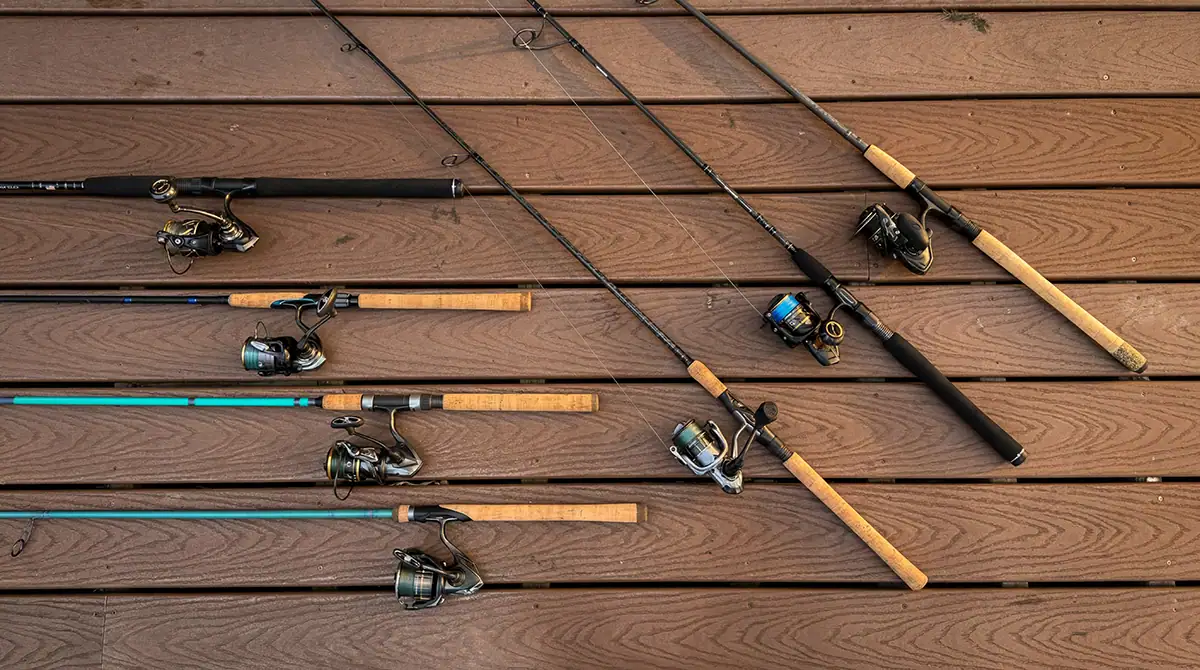
Fishing in Florida my entire life, I’ve learned that spinning reels and saltwater species go hand in hand. For inshore saltwater anglers, they’ll pick up a spinning reel to cast a soft plastic or topwater spook. That might sound completely crazy to bass fishermen who prefer baitcasters. But imagine throwing a big bait to a striped bass or tarpon that can easily weigh over 50 pounds — you need plenty of drag and line capacity! I can personally attest to getting absolutely smoked by a fish hauling in two feet of water.
There are key differences between freshwater spinning reels and ones that need to be saltwater tough. Saltwater spinners must have intrusion-resistant sealing; corrosion-resistant ball bearings; bulletproof body and rotor; heavy-duty gearing made from materials like cold-forged aluminum, marine-grade bronze, or stainless steel; and sealed carbon-fiber (or similar) drag systems. Check out our best spinning reels guide that includes a mix of quality salt- and freshwater options.
I personally tested all the saltwater-proof reels highlighted in this guide along Florida’s Atlantic and Gulf coasts. For example, I recently fished for snook and trout out of Bokeelia with Quantum’s Cabo. In total, I fished all manner of ways with the many different reels, including live-baiting, dead-baiting, casting plugs and plastics, popping corks, bottom fishing, and plenty more. This roundup of reels includes some of the best options available today, utilizing the latest tech and design to combat hard-fighting fish and harsh saltwater conditions. Let’s dig in.
Top Saltwater Spin Picks for 2026
- Best Overall Reel — Shimano Sustain — Buy from Bass Pro Shops
- Best Budget Reel — Okuma Inspira ISX — Buy from Tackle Warehouse
- Best Inshore Reel — Quantum Cabo — Buy from FishUSA
- Lightest Reel — Daiwa Certate HD LT — Buy from Tackle Warehouse
- Best Big Fish Reel — Penn Authority — Buy from Bass Pro Shops
- Best Offshore Reel — Penn Slammer IV — Buy from Amazon
- Best Kayak Reel — Daiwa BG — Buy from Amazon
- Best Livebait Reel — SEVIIN Reels GW Series — Buy from Amazon
Best Overall Reel
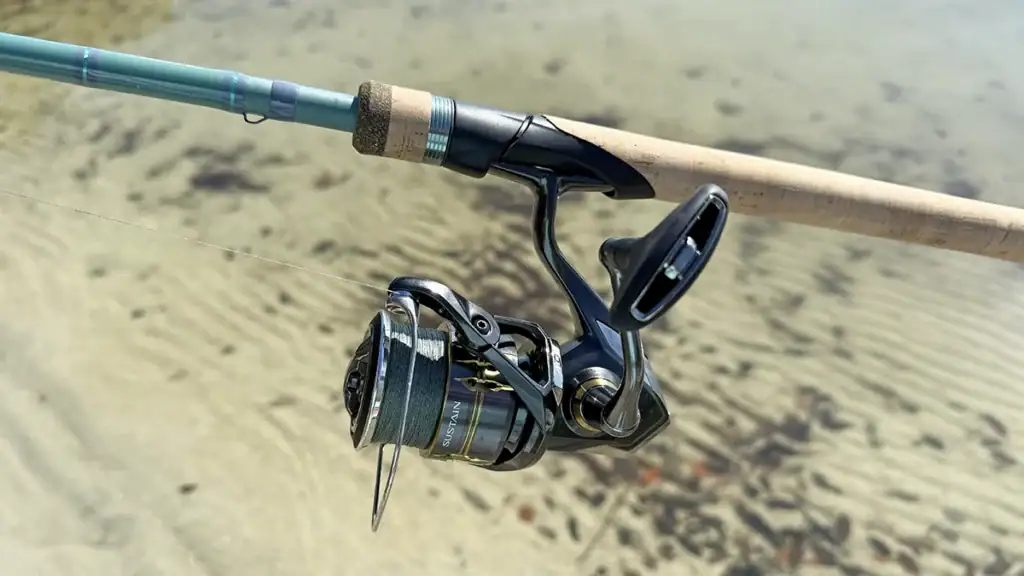
Shimano Sustain 4000 XG
The newest version of the Shimano Sustain hits just about everything right. I’ve been using the 4000XG (Extra-High Gearing) for the past couple of months with topwaters. I use this reel not only for the speed it offers for quicker presentations, but also because I can take up line quickly when fighting a fish.
Tech features of the Sustain truly make it stand out, second only to Shimano’s Stella. The Sustain uses a cold-forged aluminum drive gear (Hagane Gear) for durability, a lightweight carbon-fiber rotor (MGL Rotor) for effortless feel, Magnumlite (MGL) construction to reduce rotational inertia, and a labyrinth-style water seal (X-Protect) that blocks salt and grit. Reel companies have a way of labeling all their tech with marketing speak, but if you can get past that, you’ll see how incredibly well they’re constructed.
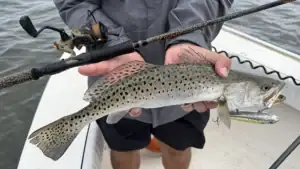
Recently, I was casting a spook near a school of mullet, and a speckled trout worth bragging about absolutely smashed my plug. The trout fought weirdly, first swimming toward the boat, then finally deciding to take off on a small run. I truly believe being able to quickly reel the line in while it charged kept me hooked up. You guessed it: As soon as I landed the fish, the lure fell right out of its mouth.
Best Budget Reel
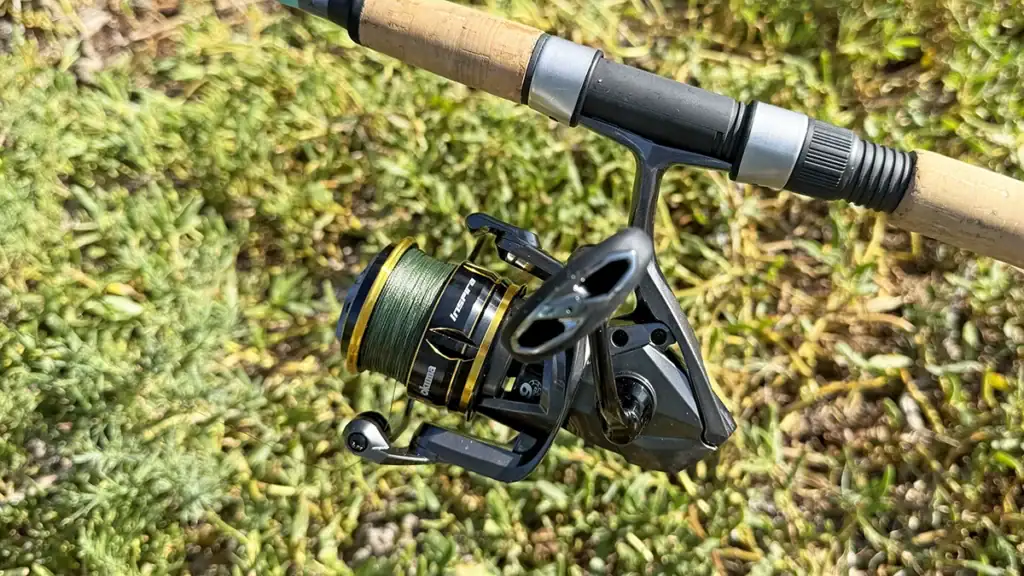
Okuma Inspira ISX
The Okuma Inspira ISX really set out to appeal to light-tackle inshore anglers who want the best bang for their buck. And I get it — with reels soaring in price, anglers are trying to find that quality reel close to $100. I’ve fished the 3000 size model paired with an Okuma Pulse Wave rod for a while now. It’s a great option with plenty of power, but Okuma Inspira models come as large as 5000 sizes.
What Okuma calls its Torsion Control Armor (TCA), a dual-arm aluminum frame, creates a strong and rigid feel when fighting fish with the reel. And Okuma’s Hydro Block II keeps water out of the drag stack. For that smooth operation, Okuma packed in 8BB+1RB stainless steel bearings.
I’ve been using the Okuma spinner to fish weedless jerkbaits over the shallow flats. It’s incredibly shallow where I’m fishing, so a fluke rigged to a weedless hook with no weight is an absolute killer option. But that fluke is liable to spin and cause line-management issues, which is why I’m happy to say I haven’t had a single line tangle issue with the Inspira ISX over the past year. It sure catches fish, too.
Best Inshore Reel
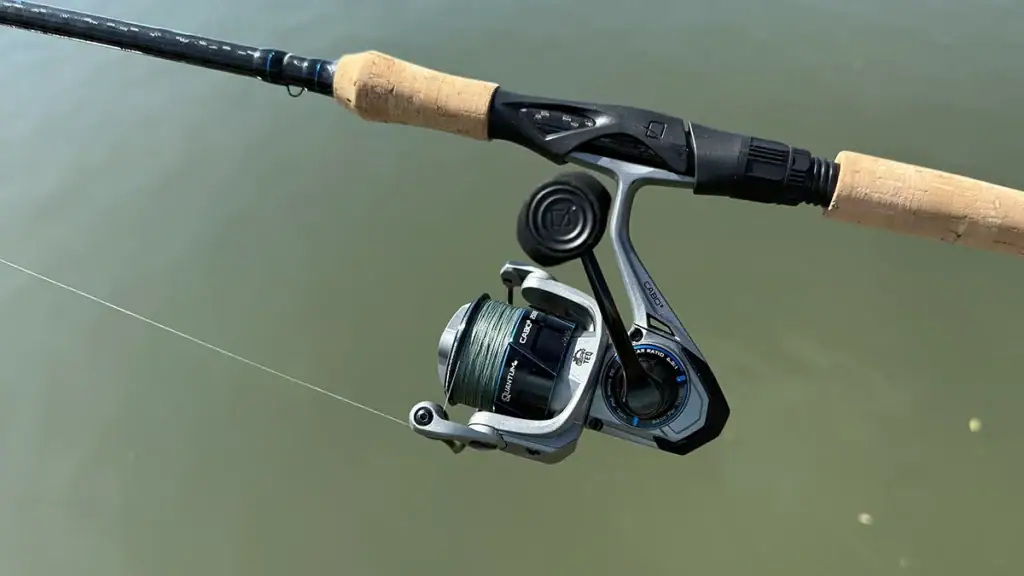
Quantum Cabo
When Quantum reintroduced the iconic Cabo spinning reel, those of us who drool over tackle knew it was a big deal. It had completely disappeared off shelves for a couple years. I used the Gen 1 model for ages, especially fishing in Florida’s brackish rivers. As you probably know, the Cabo is built for the salt, with machined gears, carbon fiber drag, and an IPX8-rated sealing system to protect internal components.
How the newest third generation differs from older models is a lower total weight and improved sealing. I’ve fished this new model to catch snook and seatrout, but also to catch drag burners like jacks. Its smooth casting and easy retrieval makes it a true machine, and I got mechanical with it, battling jacks near bridge pilings one evening. The reel works just as well for snook and reds, and I remember one memorable afternoon pulling quality fish from jetty rocks while also trying to keep my catches away from bottlenose dolphins. I really put the drag through its paces.
Lightest Reel
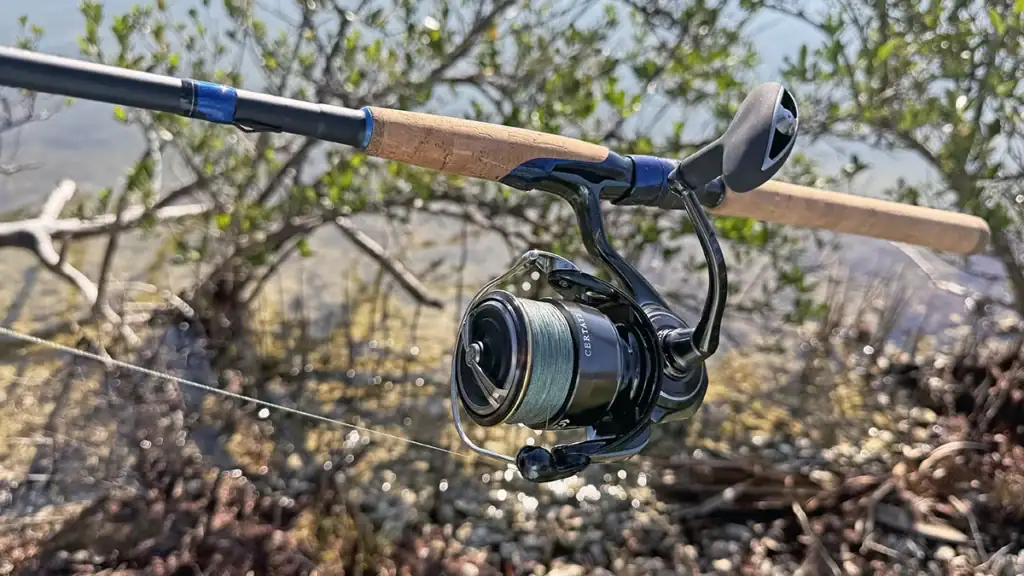
Daiwa Certate HD
Daiwa spinning reels have to be some of the lightest spinning reels on the market. I can only think of one other spinning reel maker that’s comparable. The brand-new Certate HD from Daiwa is so smooth and light in your hands it feels and looks like tech pulled straight from Star Wars.
The Certate is that reel you purchase when you want the best of the best components, able to handle saltwater without question. In fact, it’s definitely in the primo category of spinners. I’ve been using the 3000 size reel to catch slot redfish, but I feel like it can also handle bulls and black drum. The reel weighs just 8.5 ounces with 22 pounds of drag. Trying to skip past the marketing lingo on its design specifications, it has a one-piece Monocoque (MQ) aluminum body and proprietary MagSealed technology to protect its main shaft and bearings.
I’ve been having a blast catching reds on the Indian River Lagoon casting paddle tails and shrimp imitators. The HD stands for “heavy duty,” and I know it’ll handle a juvenile tarpon if I come across one, especially in the larger 4000 and 5000 reel sizes. In fact, I do keep a 5000XH model tied with an oversize bucktail whenever fishing near bridges or inlet rocks.
Best Big Fish Reel
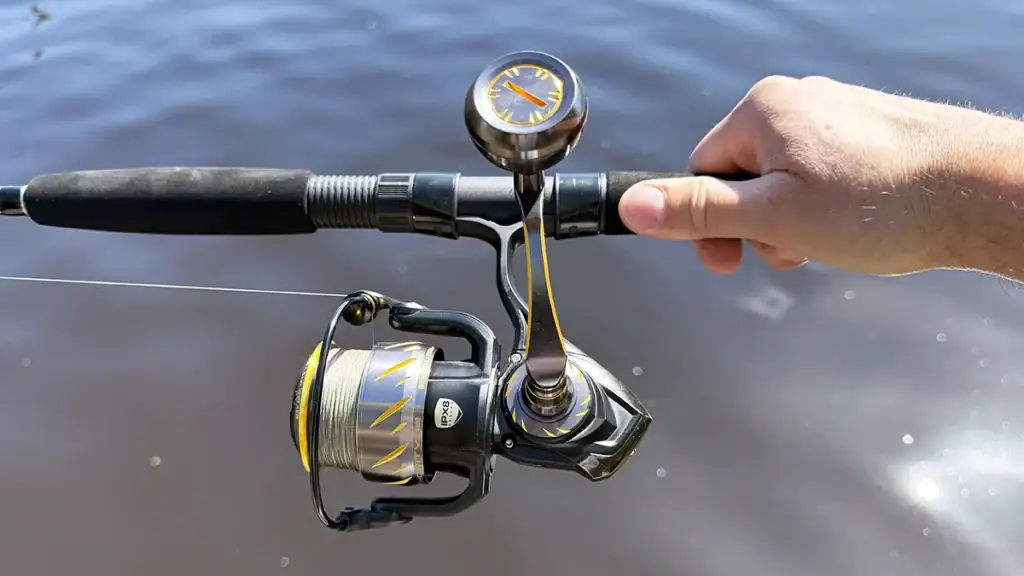
Penn Authority
Spooled with 20-pound braided line, the Penn Authority is that ideal livebait reel for river fishing. Chunking baits like mullet in the salt, this reel has the muscle to pull fish from cover such as docks or mangroves. I’ve used the 4500 model for species like juvenile tarpon and reds, but it’ll handle even more fight.
The Authority is available in sizes up to 10500 (8 models total). Expect 60 pounds of drag mixed with 540 yards of 80 pound braid on Penn’s largest offering. That’s a tuna reel if I’ve ever seen one. Your back and legs will go out before the drag does.
The Penn Authority is saltwater tough, with IPX8-sealed body and spool, plus a full-metal body houses a stainless steel gear system and Slammer drag. You hear so many new anglers asking what’s the best reel to use to catch just about everything from sharks to tuna — and I believe this reel would get the job done. Just pick the size spinner that works best for you.
Best Offshore Reel
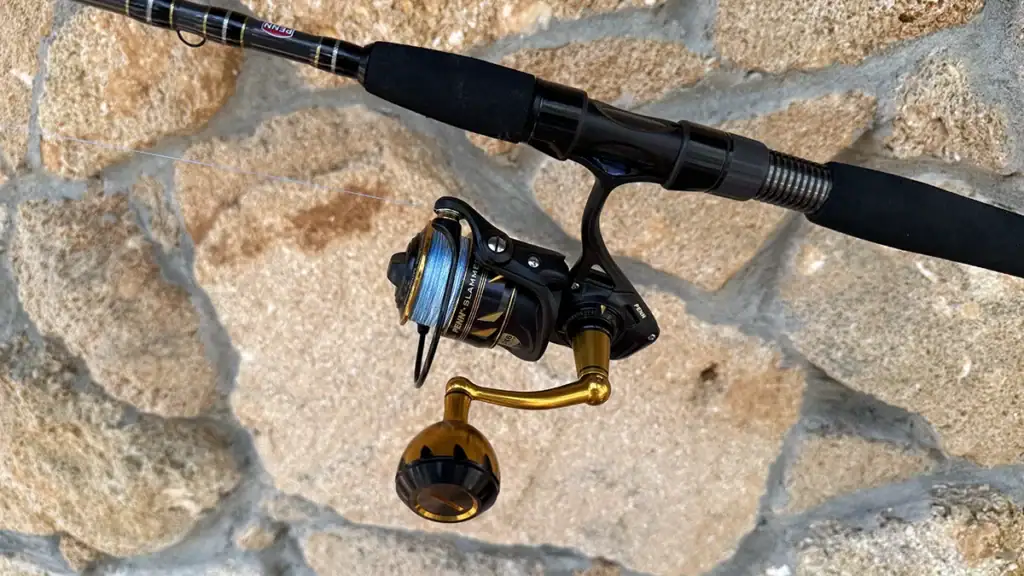
Penn Slammer IV
When heading offshore, the Penn Slammer IV is that all-purpose reel you need to have rigged and ready. It works as a bait fishing reel, a jigging reel, and I’ve even seen it used as a reel to pitch baits to fish on top like mahi. That gives you an idea of just how strong it is.
I use the 3500 for inshore fishing and light-tackle nearshore fishing, plus there’s even one smaller model — the 2500 — which could be ideal for species like bonefish. The Penn Slammer IV has a redesigned IPX6-sealed body and spool, CNC gear technology with a brass main gear, and an 8+1 stainless steel bearing system. I also quite like its beefy handle when fighting a fish.
For offshore fishing, I’d use the 6500, 7500 size or heavier. The 7500 handles 400 yards of 65-pound braid, producing 50 pounds of drag. That’ll handle dorado, sailfish, even drag burners like king mackerel. Penn really went all in on its offshore spinners in the past couple years, and it really shows.
Best Kayak Reel
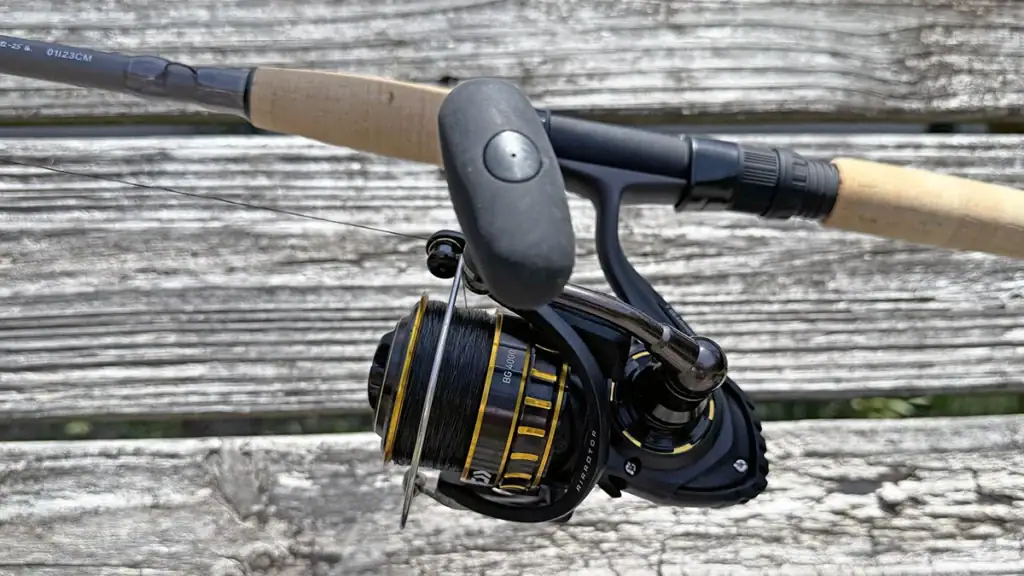
Daiwa BG
When you’re sitting just inches off the water in a kayak, your gear is inevitably going to get drenched. It’s why I often find myself using a Daiwa BG spinner that has the HardBodyz aluminum housing. The frame won’t flex or corrode, and it has an obvious rigid feel to it. The BG has earned its reputation as a bulletproof reel that’s still affordable. And I think that reputation is well earned, at least in my experiences.
The BG’s oversized Digigear system provides a massive amount of cranking power for those moments when you need to turn a fish’s head and it’s dragging you around in the ‘yak. And then there’s the Carbon ATD drag system, with its smooth operation and no start-up “friction” or “inertia,” as it’s sometimes called. I’ve used the 4000BG for a couple years now. I appreciate its oversize handle — in fact, I think all saltwater spinners should have oversized knobs. They’re just easier to grab ahold of. I’ve tested the BG in different versions for years now, mostly fishing along jetties, and mixed-bag river fishing with live baits such as croakers and shrimp. So far the BG has lasted me really well, as long as I give it a spray of freshwater when I get home.
Best Livebait Reel
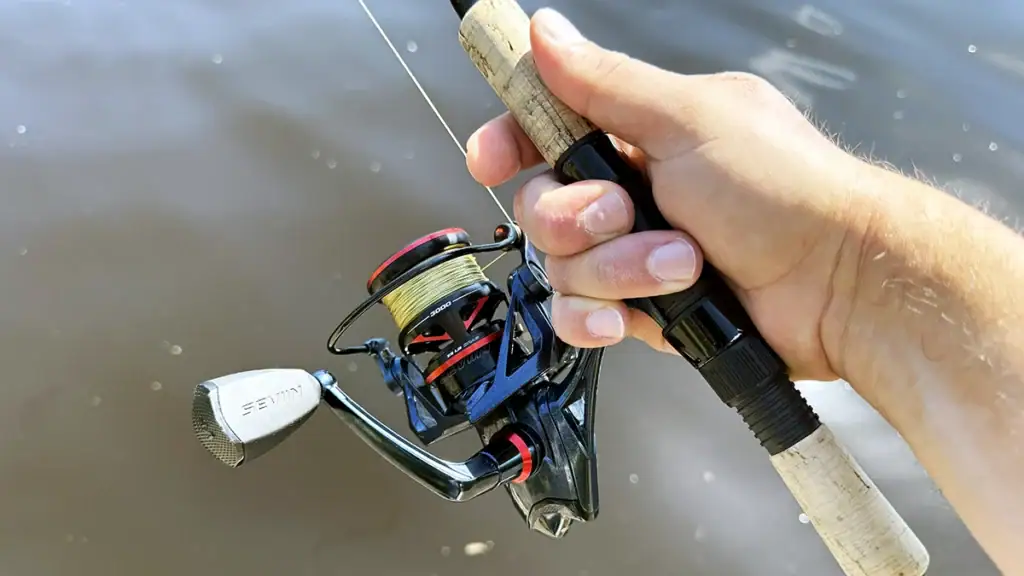
SEVIIN Reels GW Series
Not everyone knows about SEVIIN reels, but they’re engineered by St. Croix, the well-known rod maker out of Park Falls, Wisconsin. They are part of the same family of brands and share the same ownership. I was at ICAST in 2023 when SEVIIN reels were introduced, and I’ve fished them ever since. At first, the spinners were only available in freshwater models, but that’s all changed.
The SEVIIN GW Series is the saltwater-ready workhorse I’d been waiting for, and I’ve been using it for the past year. The reels are built around a rock-solid aluminum frame and protected by an IPX5-rated seal that keeps salt and sand out of your gears. I have the reel with a St. Croix boat rod to fish chunk baits, live baits, and fresh dead bait. In fact, I recently added a top shot of mono above my braided main line to help prevent tangles when fishing in close quarters with other anglers. I don’t get to fish offshore as much these days, but anyone with a boat who needs an affordable set of spinners should definitely check out SEVIIN. They’re one of the most affordable options on the market right now.
Spinning Reels Comparison Chart
| Reel Model | Sizes | Gear Ratio | Max Drag | Weight | Braid Capacity (lb/yds) |
| Penn Slammer IV | 2500 to 10500 | 6.2:1 to 4.2:1 | 20 lbs to 60 lbs | 11.0 oz to 42.9 oz | 20/160 to 80/540 |
| Penn Authority | 2500 to 10500 | 5.7:1 to 4.2:1 | 20 lbs to 60 lbs | 11.9 oz to 37.3 oz | 15/220 to 65/780 |
| Daiwa BG | 1500 to 8000 | 5.6:1 to 5.3:1 | 4.4 lbs to 33 lbs | 8.5 oz to 30.0 oz | 8/220 to 80/440 |
| Daiwa Certate HD | 3000 to 5000 | 6.2:1 | 22 lbs to 26.4 lbs | 8.5 oz to 10.8 oz | 8/220 to 40/160 |
| SEVIIN GW | 2500 to 6000 | 6.2:1 to 5.7:1 | 20 lbs to 35 lbs | 11.1 oz to 19.4 oz | 15/250 to 50/230 |
| Quantum Cabo | 2500 to 8000 | 6.2:1 to 4.7:1 | 25 lbs to 45 lbs | 9.9 oz to 26.0 oz | 10/275 to 65/410 |
| Okuma Inspira ISX | 2000 to 5000 | 6.0:1 to 6.2:1 | 11 lbs to 24 lbs | 7.1 oz to 10.1 oz | 10/180 to 30/220 |
| Shimano Sustain | 2500 to 5000 | 6.0:1 to 6.2:1 | 20 lbs to 24 lbs | 7.2 oz to 9.5 oz | 10/150 to 30/235 |
How Did We Test the Products?
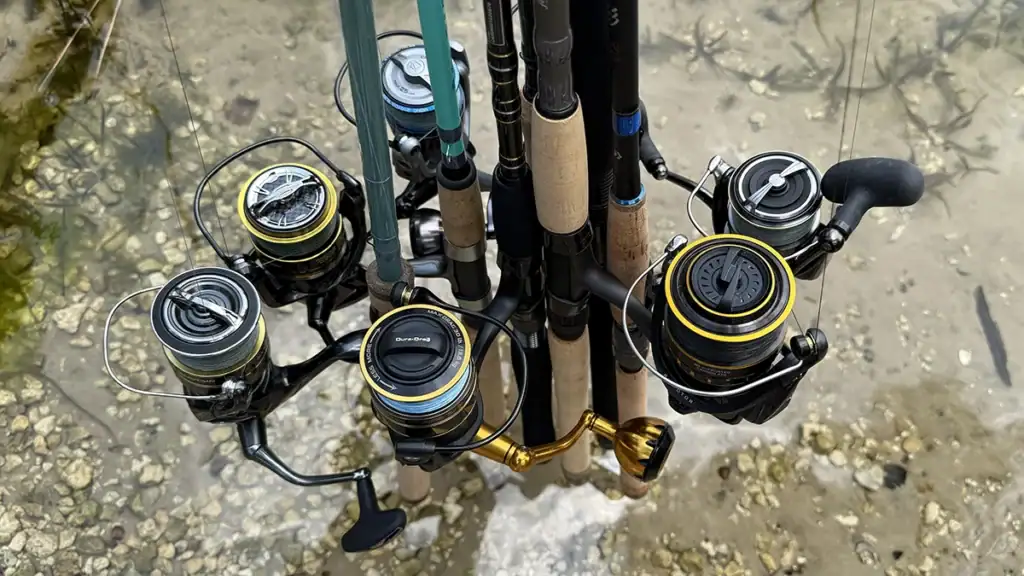
I tested all the spinning reels highlighted below for feel in hand and performance, but also for strength and durability. Are the reels made from high-quality materials and waterproof construction? Is there enough line capacity and drag strength? Were any reels showing early deterioration from salt water or sand? How’d they perform under pressure? That’s what I tested while fishing Florida’s Intracoastal Waterway (ICW) and Atlantic waters.
Surprise, surprise: I felt comfortable highlighting all the reels in this guide as standouts for one reason or another. I felt very confident fishing with these reels. Some of the spinners are a bit heavier or might have a beefier handle, but that’s because anglers are looking for different qualities in their reels. For example, I understand why light spinning reels are so popular for all-day fishing, but I like a bit of weight in my spinning reel.
What To Consider When Choosing
Choosing the best reel size — usually labeled from 1000 to 8000 — is primarily about finding the right “counterweight” for your rod. A tiny 1000-series reel is built for finesse, light-tackle fishing for specks or even catching baits such as pinfish, while a 2500 or 3000 is the versatile, popular choice for species like redfish, drum, and flounder.
Offshore in the deep blue, anglers are now using spinning reels to cast lures to tuna, they’ll drop a slow-pitch jig down deep for bottom fish and jacks, and they’ll pitch a bait to a dorado or even a sailfish. I’ve been lucky enough to target all these different species over the years, and spinning reels shine in these scenarios.
Sizing
One other important consideration is that the number used to size spinning reels is not uniform across brands. A 5000-size spinner from Daiwa, Penn, and Shimano might all be completely different sizes and weights. For example, Penn reels are often oversized when compared to makers such as Shimano. Instead of looking at that number, I recommend considering three specs: the weight of the reel, the line capacity, and the max drag capabilities. That’ll give you a much better understanding of the reel’s intended use.
Line Choice
When it comes to the line itself, remember that capacity is a game of volume and diameter, not just pound-test strength. Here’s a great example: Because braided line is significantly thinner than monofilament, a spool rated for 10-pound mono can hold magnitudes more braid — often far more than you actually need. Ten-pound braid has the same diameter of two-pound mono.
To avoid wasting money and line, many anglers use “backing” on their spinning reel, simply by filling the reel spool first with monofilament before tying on braid. Put just enough mono on the spool so that you can’t see the arbor. This is one method to make sure that your braid never slips loosely around the spool — and I’m not talking about pulling drag. More importantly, the mono fills the space closest to the spool; that’s probably fishing line that won’t ever see the light of day. (Hint: You should always leave about 1/8th of an inch of the spool’s metal lip visible when adding braid; if you overfill it flush to the edge, the line will literally jump off the reel and become tangled.)
How Do You Know the Reel Is Saltwater-Proof?
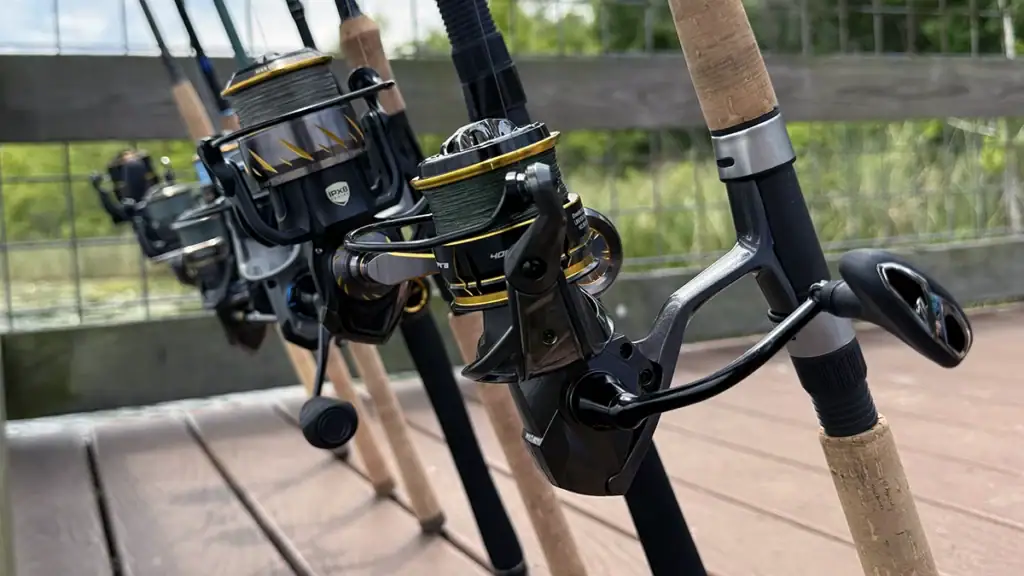
I’d say just look at the specs on the box! Before buying, anglers should investigate exactly what their spinning reels are made of. Look for corrosion-resistant materials like an anodized aluminum body and high-grade stainless steel internals. You also have to check for a fully sealed drag system and shielded bearings. Even better, many reel makers list a standardized IPX rating (such as IPX6 or higher) — this provides a calculable guarantee that the seals can handle heavy spray or even a dunk underwater. And definitely prioritize a reel with a full metal frame over graphite to handle the gearing and torque that comes with saltwater fishing.
Best Brands
- Okuma: Okuma Fishing Tackle was established in 1986 and the US headquarters is located in Ontario, California.
- Penn: Penn first began manufacturing fishing reels in 1932 and is currently headquartered in Columbia, South Carolina, as a brand under Pure Fishing.
- Quantum: Quantum began manufacturing spinning reels in the mid-1980s, following the brand’s initial debut in 1984, and is currently headquartered in Stuart, Florida.
- Shimano: Shimano first began manufacturing fishing reels in 1971 and is currently headquartered in the United States in Ladson, South Carolina.
- Daiwa: Daiwa first began manufacturing fishing reels in 1955 and is currently headquartered in the United States in Foothill Ranch, California.
- KastKing: KastKing first began manufacturing fishing reels in 2014 and is currently headquartered in the United States in Lewisville, Texas.
- SEVIIN: SEVIIN Reels first began manufacturing reels in 2023 and is currently headquartered in the United States in Park Falls, Wisconsin.
Why Trust Us?
I compiled a selection of the top saltwater spinning reels that are on the market right now. Every model in this lineup was put through the wringer against the corrosive spray and raw power of the salt, tested with the same heavy-duty, tried-and-true tactics that Wired2fish has relied on for decades. My lifetime of experiences allowed us to really test 2026 equipment, separating the hype from genuine innovations in reel performance.
Being honest here, most of these models are top-of-the-line, salt-ready reels models that truly stand up against most fish species and competitors. When it comes to premium components, engineering and prices, the anglers’ preferences might be the deciding factor. I personally reach for a spinning reel more than a baitcaster, rooted in my years fishing the rivers, surf, and inlets along Florida’s East Coast. While conventional gear is never going away, we can’t overlook how many saltwater anglers are now turning to specialized spinning tackle.