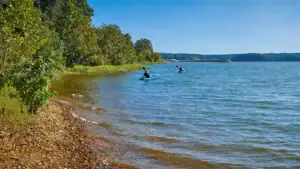
Open up your favorite map app and cruise over to South Florida. In satellite mode, zoom in and you’ll notice a damn-near infinite network of dark canals. Some are a block or two in length, and others run for miles. Some are too broad to throw a stone across; others are no wider than a city back alley.
Most of these interconnecting canals date back to the early 1900s, when they were cut into the prevalent swampland to provide drainage and flood protection; more joined their numbers in following decades. Canals farther south — Dade and southern Broward counties — tend to be deeper and clearer thanks to groundwater seepage. The canals in northern Broward and Palm Beach counties are somewhat shallower and not as clear, but all are productive.
Added up, these canals amount to a lot of water holding fish. An astonishing array of species inhabits these canals, including so-called “exotics” — imported species introduced courtesy of aquarists and others — that you’ll catch nowhere else in the country.
Unassuming Surroundings
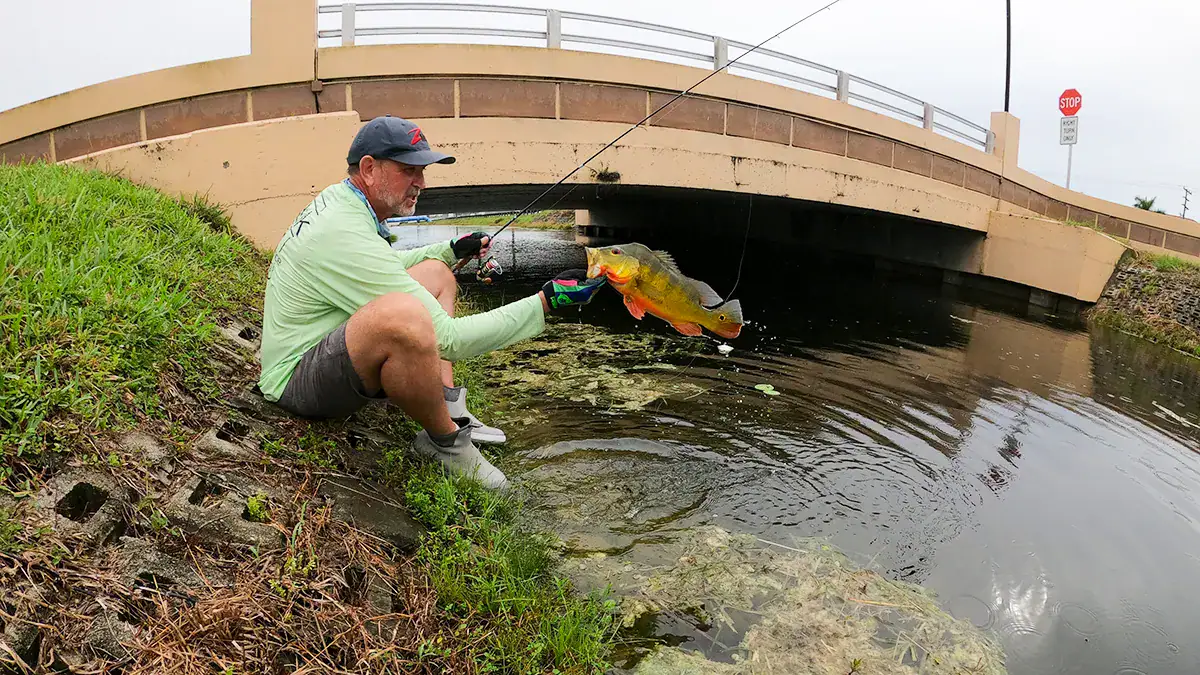
While what lurks below the surface appeals to anglers, the visuals above the surface aren’t that exotic or, in many cases, particularly appealing. The original swamp has yielded to suburban development, but there’s nothing resembling the more famous canals running through Venice, Italy.
Some of the canals, particularly those farther west (toward what’s left of the Everglades), run through wild terrain. But most of the systems cut through suburban neighborhoods and even shopping malls, and are bordered by busy roads.
An Array of Exotics Awaits
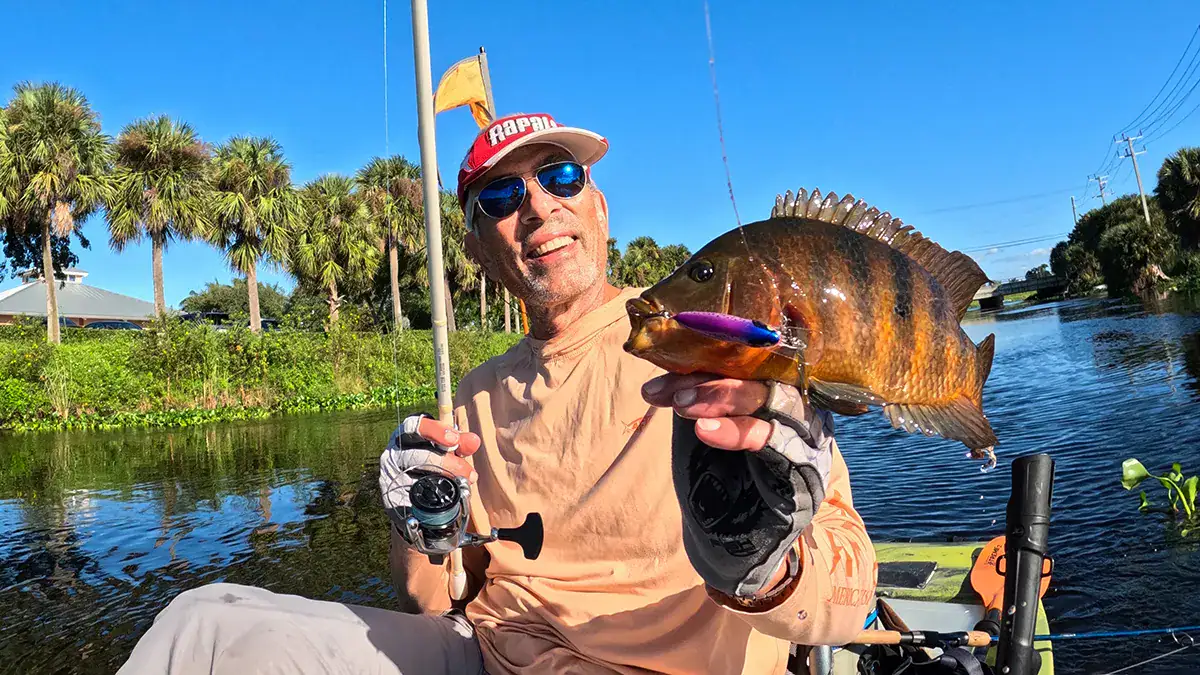
Fishers can’t resist the chance to catch the exotics — notably peacock bass and snakehead.
“I certainly have plenty of fishing opportunities here in Central Florida,” says enthusiast Paul Macinnis, who lives near Merritt Island but makes the drive south — up to three hours — “for the chance to catch peacock bass, bullseye snakeheads, and clown knifefish, all on the same day.”
Besides that “South Florida canal slam,” species like Mayan cichlids, oscars, tilapia, jaguar guapote, and still more tropical exotics come into the mix — along with, to be sure, our native gamefish, bass, crappie, and bluegill.
Prized Peacocks
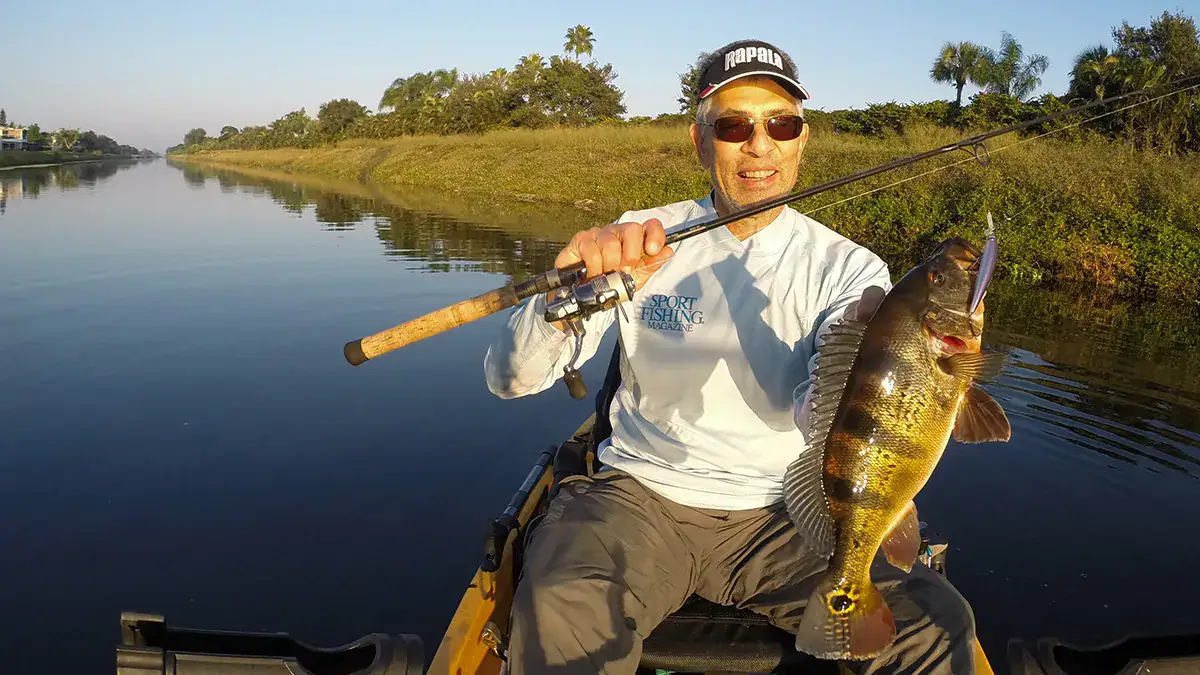
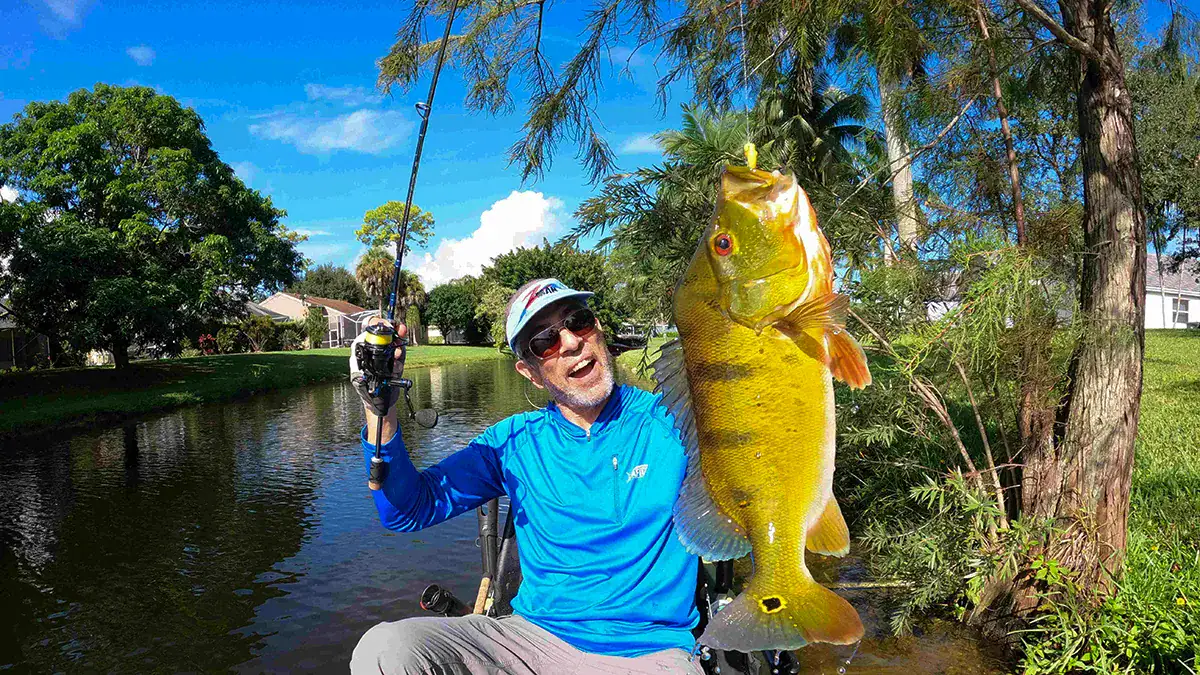
Of all these gamefish, the striking golden peacock bass is the primary draw. Not surprising: They’re gorgeous, grow to respectable size (common to a few pounds), hit like a freight train, and leap spectacularly. Capt. Alan Zaremba has been guiding anglers to “peas” since the 1980s “when no one else was doing it.” These days, that secret is definitely out and pressure has increased, but fishing remains good.
Peacocks can show up anywhere in canals, but generally favor rubble, bridges, seawalls, and so on. Anglers can catch them throughout the year, but it may be tough in the coldest months. These big cichlids are truly tropical: Water temps below 60 degrees threaten populations, and indeed, major die-offs occur after Arctic cold spells make it this far south every few winters, but Zaremba says they’re tough and typically bounce back within a couple years.
Rising Interest in Snakeheads
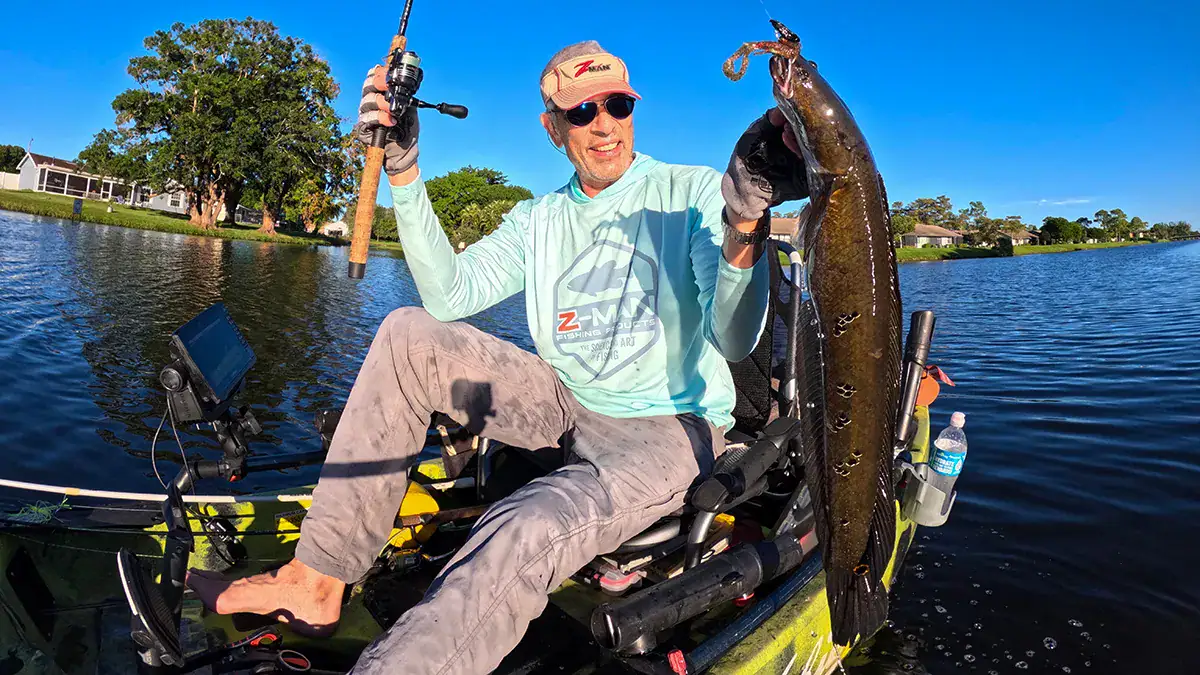
Snakehead have gained considerable interest in recent years, perhaps because of all the ridiculous media hype of these malignant “frankenfish” that will walk across your yard and eat your dog. In fact, they’re great gamefish — smart, aggressive, and hard-fighting.
For those with some elevation — like walking high banks while shore fishing or watching from a casting platform — sightcasting to spooky snakes laid up in super-shallow water right at water’s edge can be incomparable sport. Macinnis has caught dozens, many on plastic frogs.
Zaremba also is a frogger: “Throw it right up on the bank and [pull just enough to] let it fall to the water. Be ready,” he advises, since snakes often pounce immediately.
Snakes usually run a couple of pounds into double digits. It’s worth noting that an angler pulled the current International Game Fish Association (IGFA) all-tackle world-record bullseye snakes from a Broward County canal in June 2025, weighing just over 17 pounds.
The Challenge of Clown Knifefish
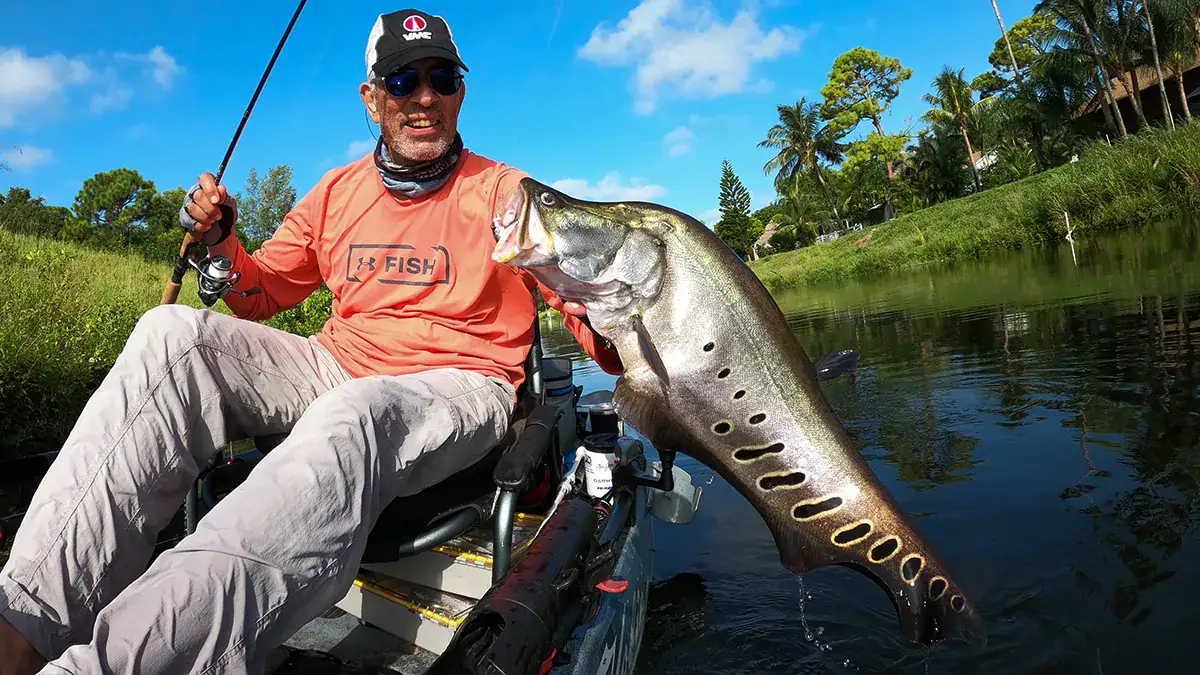
And then there are clown knifefish, arguably the most exotic — and certainly most eye-popping visually and most jaw-dropping when hooked. Their high, wild, initial leaps seem to me like a tarpon on steroids.
But wait, there’s more: They swim backward. If you’re lucky enough to get one to the boat, watch it as it watches you while darting away backwards. These spectacular fish aren’t as widespread nor as common as other exotics, but are aggressive predators.
I’ve caught my share of clowns over the years. In that time, I’ve found that slow-trolled diving crankbaits, such as small X-Raps, work well in many canals, as well as lakes Ida and Osborne, where knifefish, peacocks and other exotics call home.
Fish How You Wish
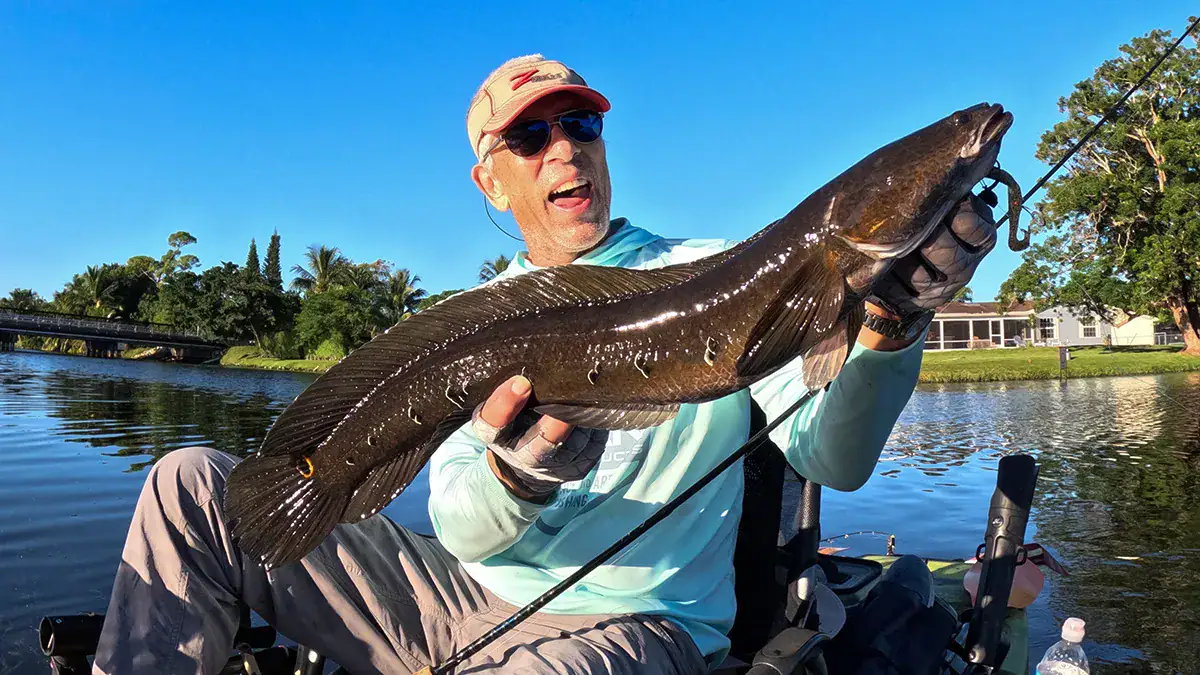
A quick web search reveals that anglers have a number of options to fish South Florida canals, starting with guides like Capt. Zaremba, who runs Worldwide Sportsfishing.
Most prefer fishing live bait (such as shad), particularly as a no-brainer for anglers with limited experience. Some — like Zaremba — eschew bait and fish only artificials. Private boaters find ramps with canal access scattered throughout the region, as a Florida Public Boat Ramp Finder shows, but doesn’t show all possible launch sites. Kayaks offer a fine way to explore canals, with many unpublicized put-in options, often showing up on Google Maps.
In broad strokes, the entire canal network can be seen on this Florida FWC map.
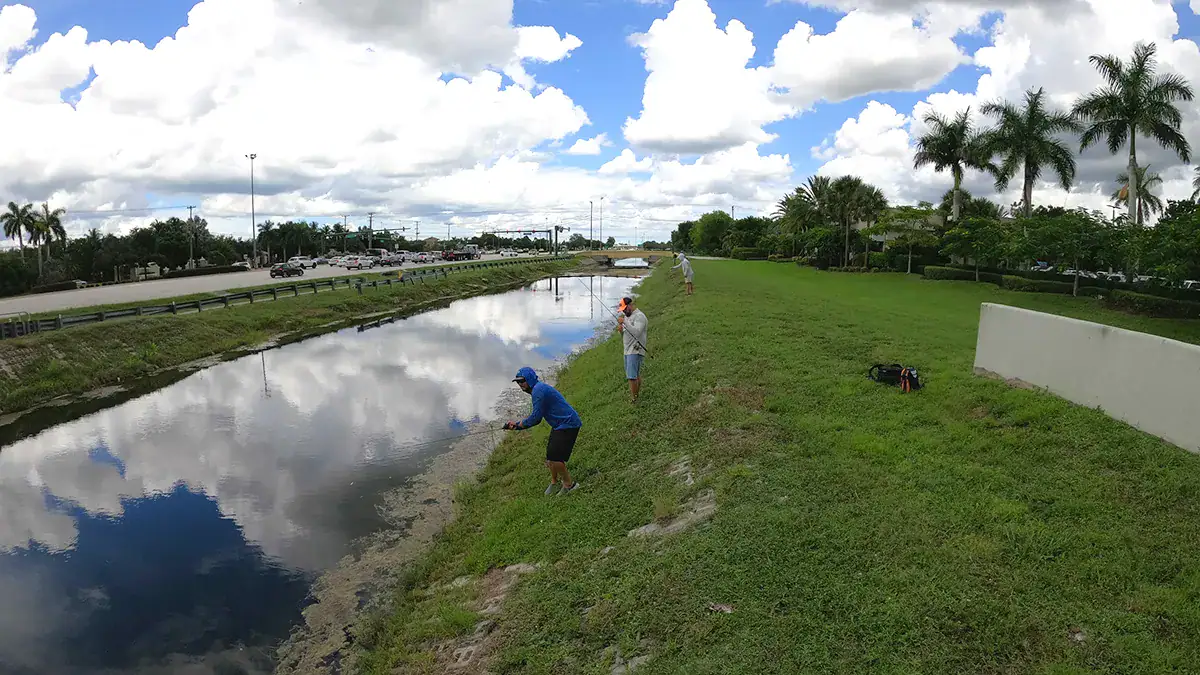
Finally, bank fishing can be an outstanding way to fish these canals, particularly where boats can’t fish short sections divided by culverts or barriers. I have done well parking in busy shopping centers and fishing canals adjacent to malls and busy roadways. Being high above the water offers a good vantage point to see fish, as well.
However you fish the canals, which predominantly cut through residential areas, don’t expect waterfront mansions. Typically, canals are rimmed by medium- or low-cost housing. Like Macinnis, I’ve had no problems with people, though narrow canals don’t offer much distance from houses. Macinnis agrees, noting that — knock on wood — his truck left at various launch or jumping-off sites has gone unmolested. Still, it’s hard to overvalue good judgment; if in doubt, move on out.
Most anglers would be happy to fish Brazil or Thailand. But finding many of the same gamefish in South Florida canals is a less complicated and far less expensive alternative.