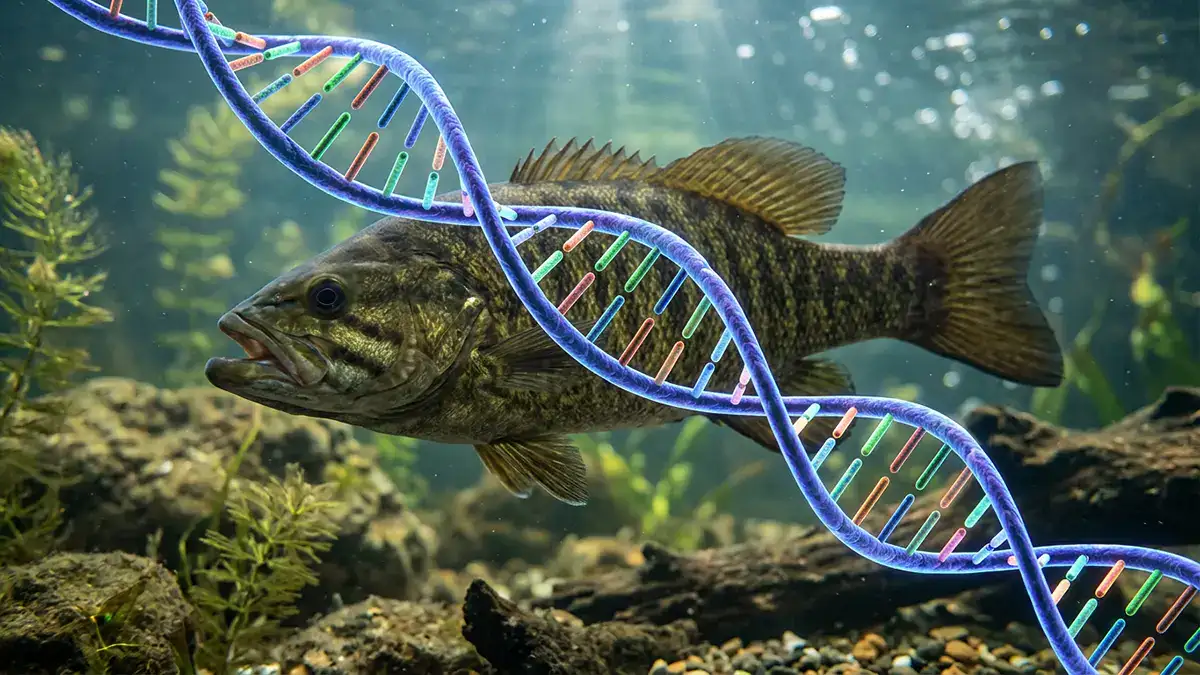
For generations, anglers across North America have talked about smallmouth bass as if they were all the same fish. Whether caught on a rocky shoal in the Great Lakes, on an Ozark stream, or a deep Tennessee reservoir, a bronzeback was simply a bronzeback. But a new scientific review suggests the fish many anglers grew up calling “smallmouth bass” may actually represent four distinct evolutionary lineages — and possibly four separate species.
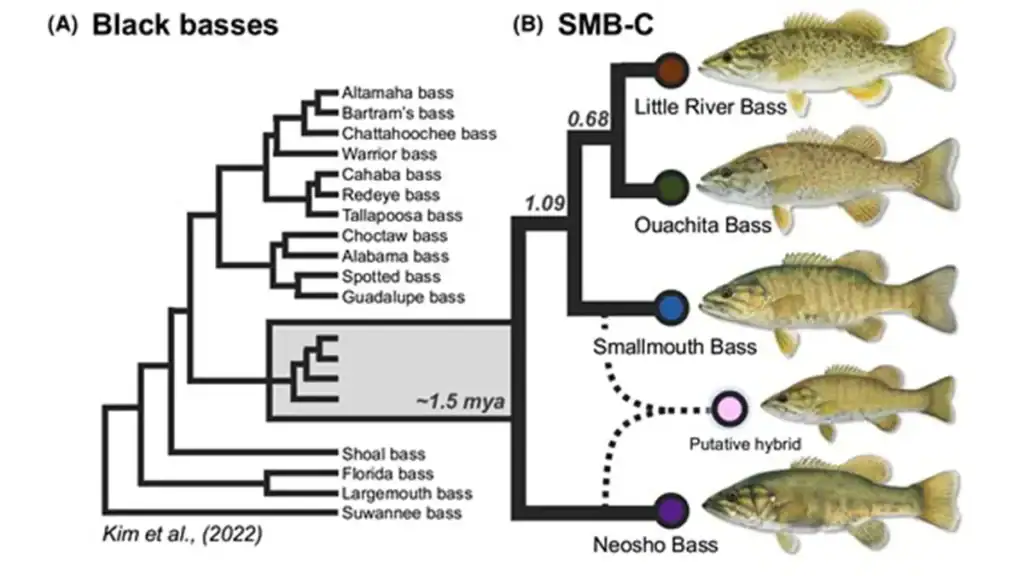
In a paper published in Transactions of the American Fisheries Society, researchers Joe C. Gunn and Andrew T. Taylor reviewed nearly 30 years of genetic and genomic research and concluded that what scientists now call the “Smallmouth Bass species complex” contains four deeply divergent groups. Those fish include the widespread Northern smallmouth bass familiar to most anglers, along with the Neosho bass, the Ouachita bass, and the Little River bass. According to the paper, the four lineages may have been evolving separately for more than a million years.
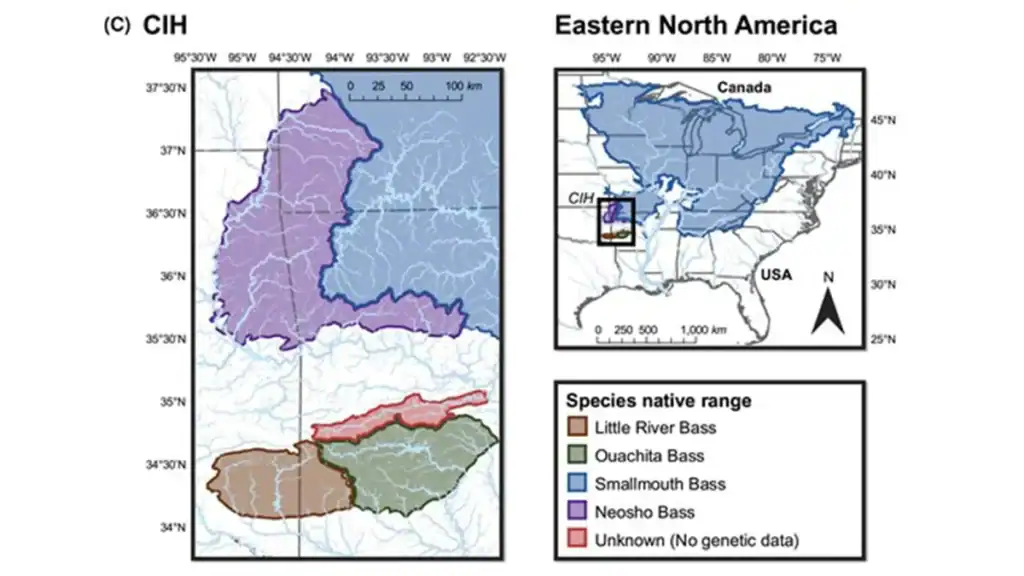
For anglers, the findings help explain why smallmouth from different parts of the country can seem remarkably different in appearance, behavior, and habitat preference. The classic northern smallmouth bass remains the best known and most widespread form, inhabiting waters from the Great Lakes through much of the Midwest, Northeast, and eastern Canada. These are the hard-fighting fish anglers associate with clear northern lakes, rocky rivers, and current breaks. Northern smallmouth are known for their bronze coloration, aggressive strikes, and ability to thrive in both rivers and reservoirs across a wide range of climates.
The Neosho bass occupies a much smaller native range centered around the Arkansas River basin in parts of Missouri, Arkansas, and Oklahoma. Long prized by Ozark anglers, Neosho bass are generally associated with clear, flowing streams and are often described as stream specialists. Earlier researchers noted subtle physical traits that distinguished them from northern smallmouth, including darker vertical bars as juveniles, a slightly more protruding lower jaw, and teeth on the tongue. Many anglers who fish Ozark streams have long claimed Neosho bass fight differently and seem especially adapted to shallow, fast-moving water.
The paper also highlights two lesser-known forms that many anglers may have never heard of: the Ouachita bass and the Little River bass. Both are native to isolated mountain river systems within the Ouachita Mountains of Arkansas. According to the researchers, these fish remained largely overlooked because they resemble smallmouth bass so closely in appearance. However, modern genomic sequencing revealed they form genetically distinct groups separated from other smallmouth lineages over extremely long evolutionary timescales.
The Ouachita bass is associated with streams draining the Ouachita River basin, while the Little River Bass occupies waters farther west in the Little River drainage. Scientists believe both evolved in isolated refuges south of the glaciers during ancient climate shifts, allowing them to diverge genetically from other smallmouth populations. Although little research has been done on their specific behavior or ecology, the authors suggest these fish may possess unique local adaptations involving spawning behavior, habitat use, temperature tolerance, or forage preferences.
The study emphasizes that fisheries managers historically treated all smallmouth bass as a single species, leading to widespread stocking programs that moved fish between river systems and reservoirs. According to the authors, that practice may have unintentionally mixed genetically distinct lineages. In some areas, especially within the Ozarks and Interior Highlands, researchers have already documented hybridization between native bass and stocked fish from outside drainages.
That raises important questions about conservation and fishery management. A smallmouth perfectly adapted to a cold northern lake may not be genetically suited for a shallow Ozark river, and introducing outside fish could potentially weaken unique native populations that evolved over thousands of generations. The researchers argue that understanding these differences could become increasingly important as fisheries face mounting pressure from habitat alteration, warming water temperatures, impoundments, and continued stocking activity.
The paper also shows how dramatically fish genetics research has advanced in recent years. Earlier studies relied on limited tools like fin-ray counts, mitochondrial DNA, and microsatellites. Modern genomic techniques now allow scientists to analyze tens of thousands of genetic markers across the genome, uncovering hidden diversity that earlier researchers simply could not detect. Those methods consistently identified the same four major lineages throughout the smallmouth bass species complex.
Even so, the researchers caution that more work remains before all four fish receive full formal recognition as separate species. Scientists still need additional information on differences in behavior, ecology, morphology, and reproduction before taxonomy can be finalized. But the evidence already gathered strongly suggests anglers may have been fishing for multiple distinct forms of “smallmouth bass” all along.