Among the International Game Fish Association’s (IGFA’s) all-tackle world records, six are sharks over 1,000 pounds. These records date back 20 years or (much) more, and with good reason. With more and more large-shark populations considered threatened, current laws widely prohibiting retention or harvest by anglers preclude bringing a potential world record to a gantry on shore to get the requisite certified weight.
Above photo credit: Wiki Creative Commons
In addition, public attitude increasingly frowns upon the fact and the optics of huge sharks brought back to hang for a weight reading. When many of these records were set, anglers could legally keep the fish, with the depth and breadth of public outrage that’s inevitable today at doing so much less inevitable back then. It was, as they say, a different era. All this explains why most of these records are likely to stand either permanently or at the least for a long time.
All of these over-1,000-pound species are predators. Three can justifiably be termed, in the popular (albeit rather sexist) jargon, man-eaters: mako (though such encounters are exceedingly rare and unlikely), tiger, and white.
Granted, many other species have been implicated in attacks — particularly the bull shark — but those species don’t break the 1,000-pound mark for world records. Populations of some of these six species are, as noted, in trouble, per their IUCN (International Union for Conservation of Nature) listings, primarily from targeted commercial fishing or as bycatch.
Greenland Shark (Somniosus microcephalus)
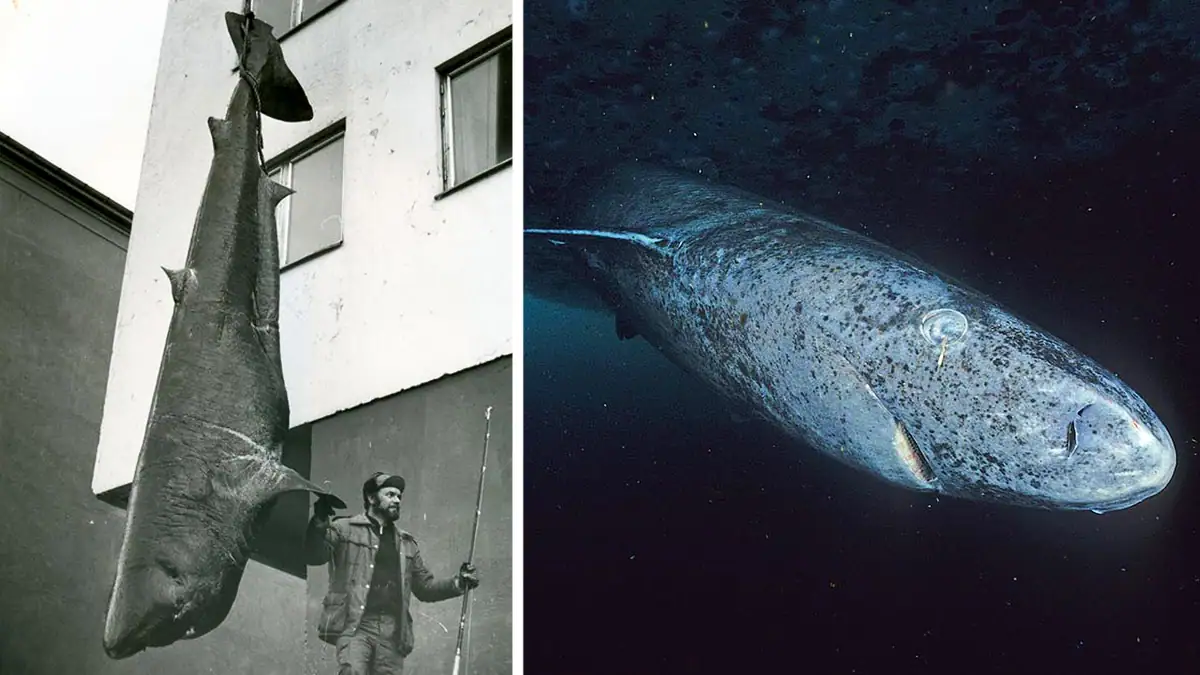
- 1,708 pounds, 9 ounces (13.4 feet)
- Trondheim Fjord, Norway
- October 1987
- Terje Nordtvedt
- Bait: Herring
- 12/0 reel with 130-pound Dacron
An inhabitant of the Atlantic’s cold northern waters, the Greenland shark is one of the world’s largest predatory sharks. Canada’s Department of Fisheries and Oceans cites the largest on record as weighing 2,250 pounds, measuring 21 feet.
While Greenlands are generally described as sluggish, don’t tell that to the whole seals found in their stomachs. They’re thought to be ambush hunters, which normally live at great depths but can also patrol waters under ice floes.
Some other notable species factoids: These are among the earth’s slowest-growing and longest-living fish, apparently capable of living hundreds of years; some estimates suggest they don’t even reach sexual maturity until around 150 years of age.
Though bycatch (in Greenland halibut fisheries) is a problem, there is no directed commercial fishery for the species. Indeed, the meat is poisonous to humans unless boiled several times or dried (though how appetizing it may be seems dubious at best). Sport fishing for harvest is widely illegal; however, if caught inadvertently, some countries require any hooked Greenland shark to be recorded and landed.
Great Hammerhead Shark (Sphyrna mokarran)
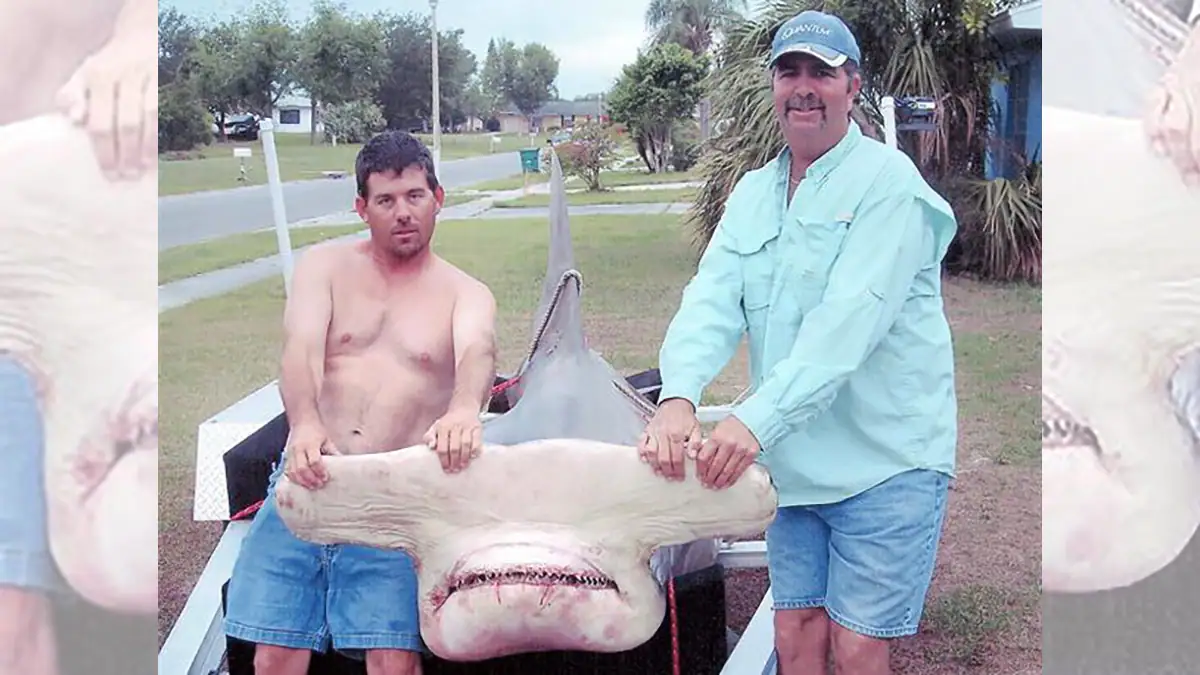
- 1,280 pounds (14.5 feet)
- Boca Grande, Florida
- May 2006
- Bucky Dennis
- Bait: stingray
- 100-pound braid
The unmistakable flattened head of the great hammerhead is a familiar sight in tropical waters worldwide. Reports suggest they may reach 20 feet.
Despite their chilling appearance, hammerheads generally are not considered dangerous; unprovoked attacks on humans are almost unheard of, with only 18 ever reported. None of these were fatal, despite hammerheads’ frequent presence in nearshore/coastal waters (as well as offshore). Those waters are where they often search for stingrays using enhanced vision and electroreceptors in their specialized head, which helps detect faint electrical signals of rays hidden in sand.
From overfishing — directed and bycatch — the International Union for Conservation of Nature (IUCN) lists these slow-growing sharks as critically endangered. Still, in federal waters, great hammerheads may be harvested by anglers (with a 78-inch minimum size and the proper HMS permit); no states allow keeping the species in their waters. In some areas, anglers target massive hammerheads from beaches where they’re released alive back into the surf, though studies have shown high mortality rates for the species after release.
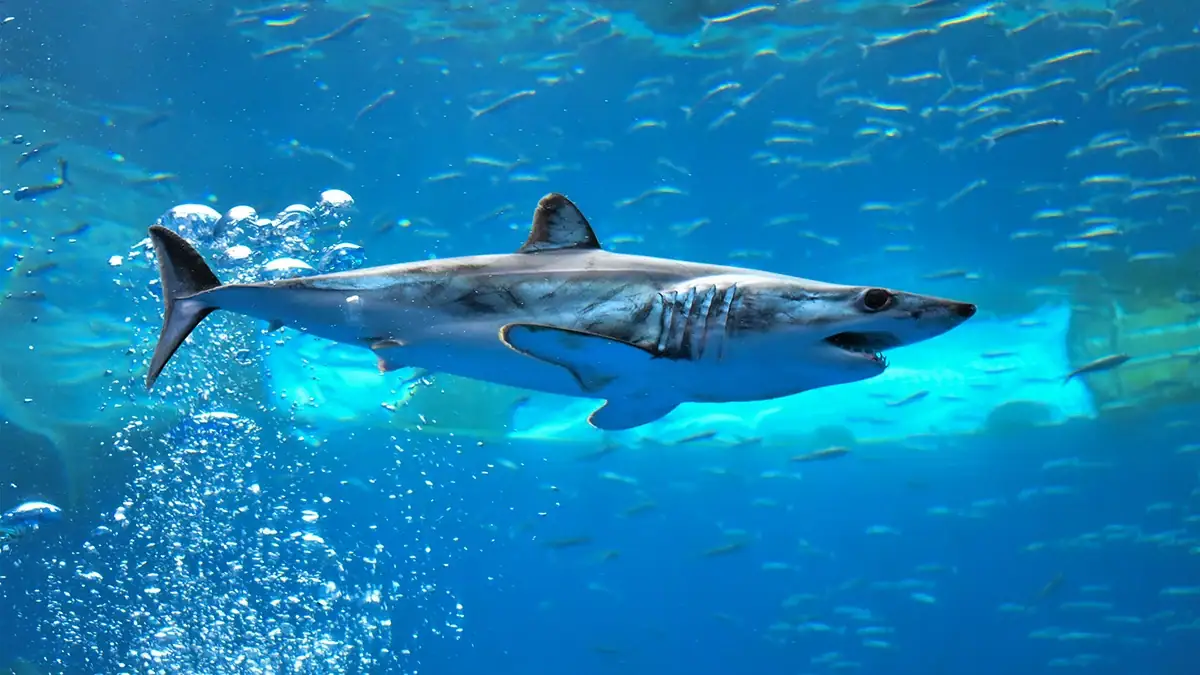
Shortfin Mako Shark (Isurus oxyrinchus)
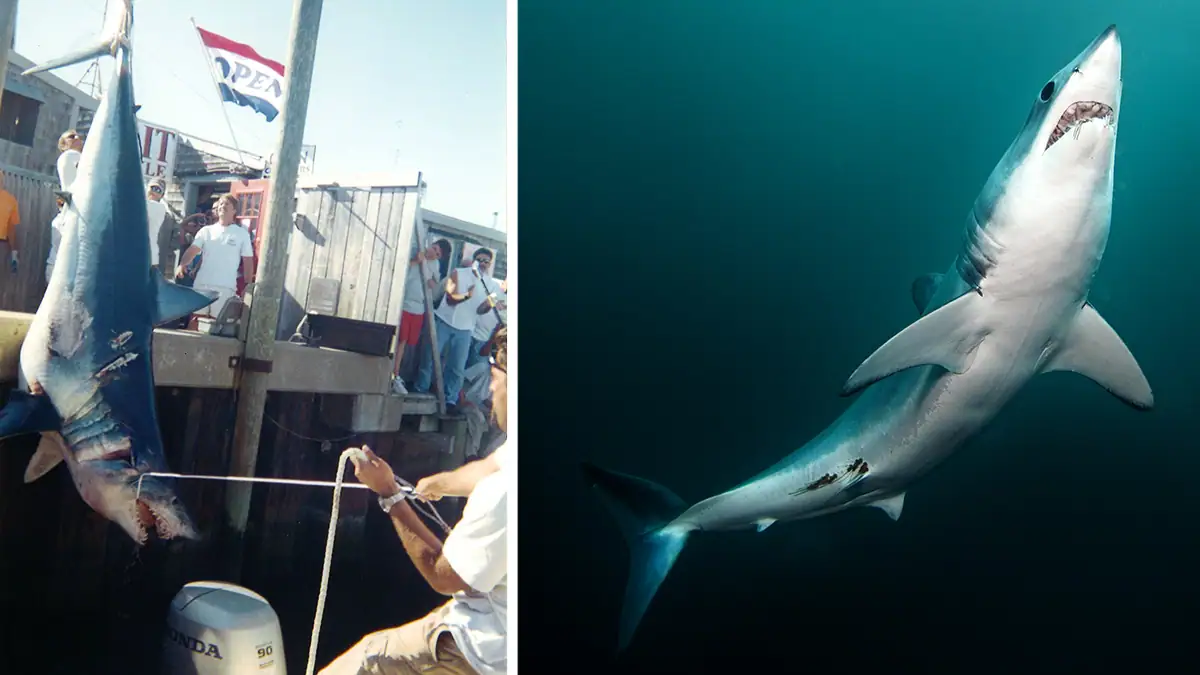
- 1,221 pounds (11 feet)
- Chatham, Massachusetts
- July 2001
- Luke Sweeney
- Bait: Bonito
- 80-wide reel with 130-pound line
No shark better deserves the adjective “spectacular” than the wild, high-jumping mako. No shark is as fast nor as unpredictable when hooked (and more than one has leapt into a boat’s cockpit, resulting in injury and general mayhem). Makos are known to attack boats, particularly outboards’ lower units.
The solitary, pelagic mako is found around the world in tropical and temperate waters. In appearance, the mako is the most streamlined of sharks, with a brilliant blue coloration, and teeth that resemble curved daggers. While those teeth could slice through any human limb, unprovoked attacks on humans in the water are almost unheard of.
Although they may not see humans as a food source, that’s not true of a favorite prey sprecies: the broadbill swordfish, another solitary pelagic fish. They’re known to dash in to bite off a swordfish’s tail, then return to munch the disabled fish.
The IUCN lists the species as threatened, largely from overfishing (mostly by longliners); the mako is more valued for the quality of its meat than most sharks. Anglers hook them while trolling bait or high-speed lures, most often while targeting marlin. Makos hooked in the Atlantic must be released, potential world records notwithstanding. Retention of up to two per day is allowed in Pacific waters.
Sixgilled Shark (Hexanchus griseus)
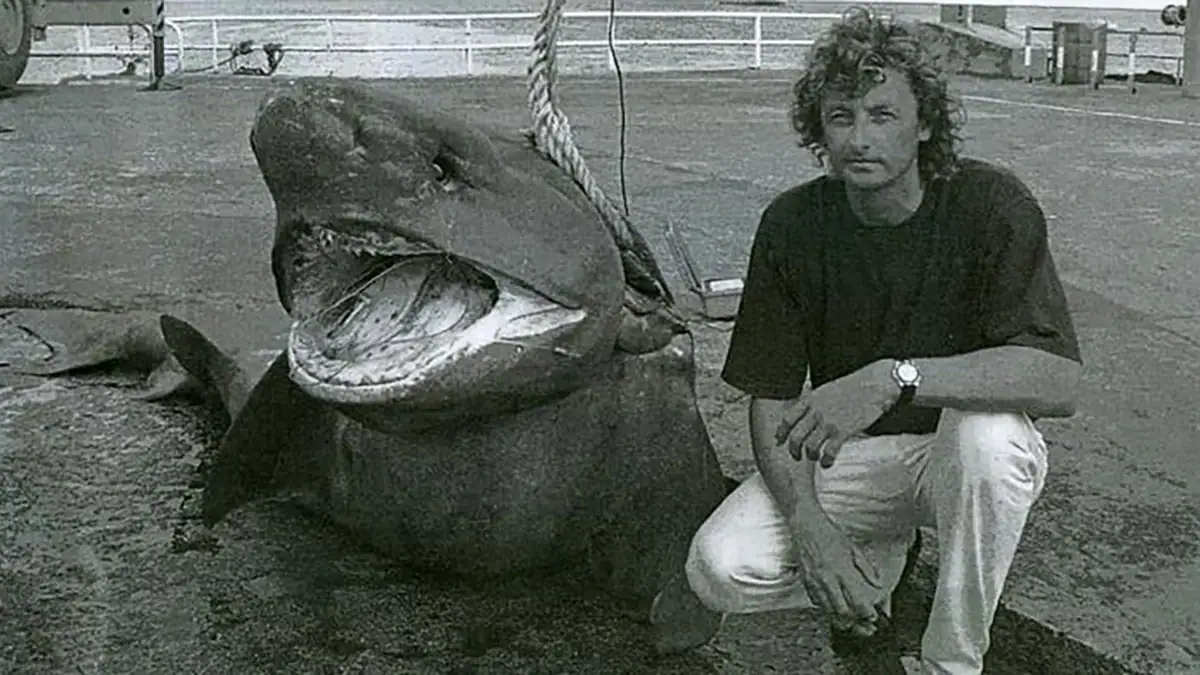
- 1,298 pounds (10.5 feet)
- United Kingdom
- November 2002
- Clemens Rump
- Bait: Not specified
- 130-pound line
This clear video footage reveals the power of a massive sixgilled shark.
While the IGFA-record sixgilled shark is huge, they grow even larger — reaching more than 18 feet in length. In 2017, a sixgill estimated at 25 feet was released off Ireland. These deepwater sharks are considered a primitive species (versus, for example, the highly evolved design of the sleek mako).
Also called a cow shark, H. griseus inhabits temperate and tropical seas around the world. A slow-swimming shark, it spends days near bottom in up to 6,500 feet of water, but at night hunts near the surface or moves into shallower waters where it may feed on a variety of fish, both large and small. The deep waters of Puget Sound are home to a population of sixgills.
Little is known about this solitary shark’s life history. It’s not considered a danger to humans. Though little data are available, the IUCN lists the species as near threatened; in federal and most state waters, retention of H. griseus is illegal. California allows taking one per day (no size limit). Most commercial harvest is illegal in federal waters.
Tiger Shark (Galeocerdo cuvier)
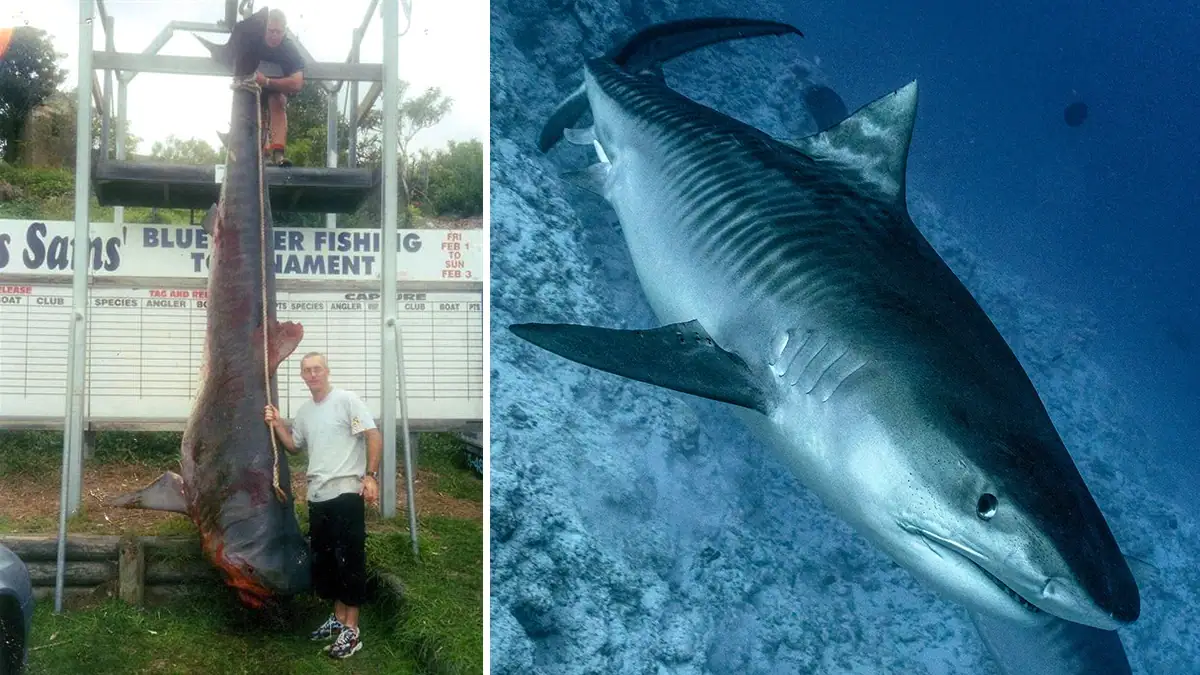
- 1,785 pounds, 11 ounces (11.9 feet)
- Unadilla, Australia
- March 2004
- Kevin James Clapson
- Bait or lure: Not specified
- 80-pound line
- 1,780 pounds (13.9 feet)
- South Carolina
- June 1964
- Walter Maxwell
- Bait: Skate
- 130-pound line
That tiger sharks inhabit all tropical and warm-temperate waters is reinforced by the two records tied for all-tackle-record honors, one from Australia and the other halfway around the world off South Carolina.
When young, tigers do sport prominent dark stripes and leopard spots on the upper body and tail, but these markings mostly disappear in large adults. The tiger’s teeth are distinctive, short and broad with a deeply serrated edge. It’s considered one of the most dangerous shark species, a reputation derived from its aggressive nature and tendency to hunt in shallow coastal waters, where it’s more likely to encounter swimmers.
Tigers may be legally kept in federal waters if at least 54 inches in length and with proper federal permits. In most state waters, including Florida, retention isn’t allowed. Commercial fisheries widely target tigers; they’re harvested for their fins, skin (for leather), and oil. The IUCN lists the species as near threatened.
As far as their diet goes, tigers eat nearly anything — including the trash that large ships throw out offshore. Tiger stomachs have revealed animals like sea turtles, porpoises, stingrays, and birds, and such unlikely items as tires, license plates, boat cushions, plastic bags, and even an unexploded bomb.
White Shark (Carcharodon carcharias)
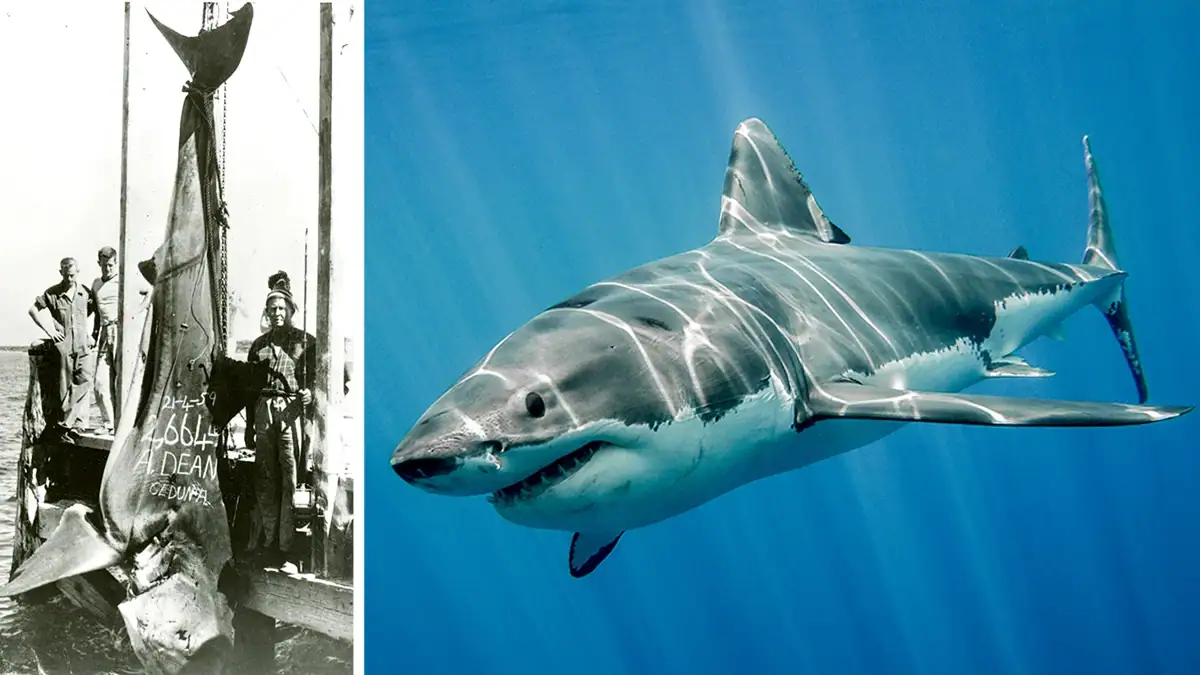
- 2,664 pounds (16.8 feet)
- Ceduna, Australia
- April 1959
- Alfred Dean
- Bait: Porpoise
- 130-pound line
At the time, this was a legal catch, and one that certainly set a benchmark. Although it’s unlikely to ever be eclipsed, the species does get even larger, estimated to reach 4,500 pounds and 21 feet in length.
Its streamlined, torpedo shape is much like that of the mako, its cousin. White sharks inhabit temperate and subtropical seas around the world, ranging from offshore to near-coastal waters, which brings it into contact with humans (hence its own classic movie, Jaws). The white shark is the ultimate iconic predator with a well-deserved reputation as a man-eater (sometimes called “the white death”). Whites may leap spectacularly clear of the water, particularly if targeting seals (famously off South Africa).
It’s one of the most widely protected sharks globally; its size, slow reproduction, and growth (maturing at 25 to 30 or more years) make it vulnerable — which is how the IUCN designates its conservation status. There are no directed commercial fisheries today for white sharks. Anglers may legally target them to release at the boat in Atlantic federal waters, but not in state waters. The practice is illegal in federal Pacific waters.