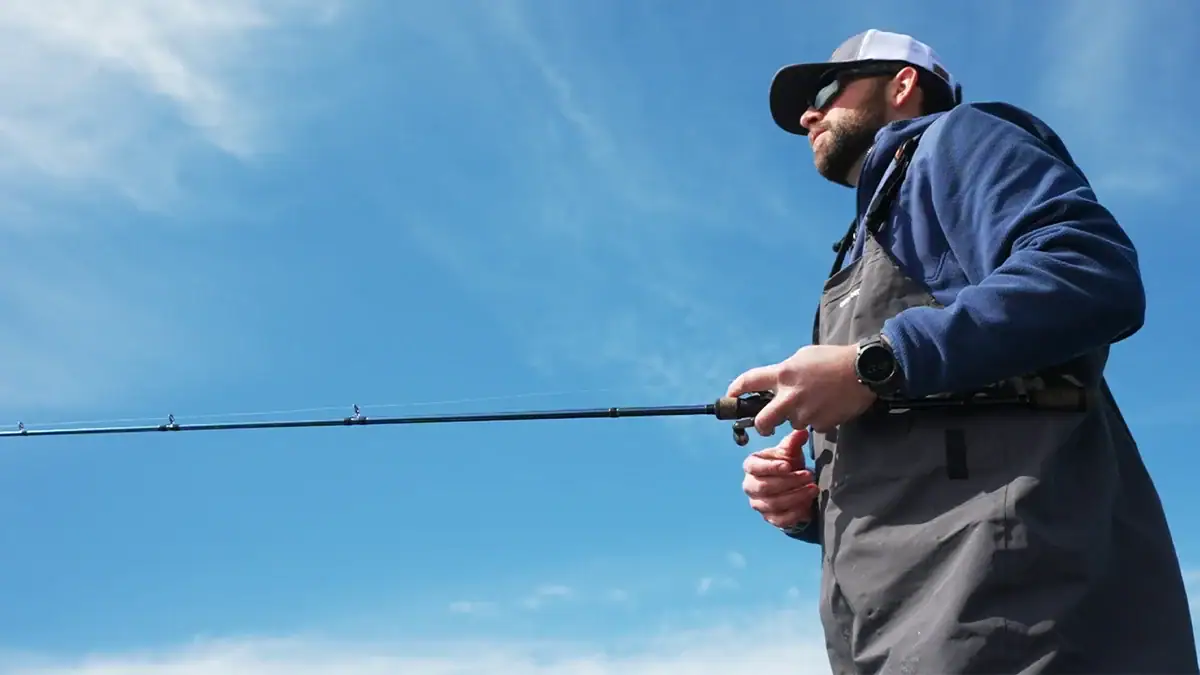
Layering fishing clothes can make or break your day on the water. In this video, Nick Dumke explains a simple system that helps anglers stay comfortable in changing conditions. From cold mornings to warm afternoons, the right layering approach keeps you focused on fishing instead of adjusting to the weather.
Featured Product
- SUN SHIRT – Grundéns Tough Sun Masked Hoodie: Buy at Grundéns
- HOODIE – Grundéns Bering Fleece Pro Full-Zip Hoodie: Buy at Grundéns
- HOODIE – Grundéns Turbulence Insulated Hoodie: Buy at Grundéns
- BIBS – Grundéns Transmit X Bib: Buy at Grundéns
- JACKET – Grundéns Transmit X Jacket: Buy at Grundéns
- BOOTS – Grundéns Deck-Runner Ankle Boot: Buy at Grundéns
- SOCKS – Grundéns Boot Sock Thermal: Buy at Grundéns
Start With the Right Base Layer
Layering fishing clothes starts with a strong foundation. Dumke relies on a sun shirt as his go-to base layer year-round. It keeps you cool during summer, yet it also performs in colder conditions. Because it wicks moisture, it prevents sweat from soaking your clothing. As a result, your body stays dry and comfortable even when temperatures shift. In colder months, adding long underwear helps retain warmth without adding bulk.
Use Mid Layers for Temperature Control
Mid layers bring flexibility to your layering fishing clothes system. Sweatshirts, vests, and insulated jackets trap heat early in the day. However, as temperatures rise, you can remove these layers quickly. This approach keeps your body temperature steady throughout the day. Instead of overheating or getting cold, you adjust as conditions change.
Outer Layers Block the Elements
Outer layers play a critical role when layering fishing clothes. Dumke highlights the importance of waterproof and windproof gear. Rain jackets and bibs block harsh weather and help retain body heat. Additionally, they keep you dry when storms move in unexpectedly. Staying dry allows you to fish longer and remain comfortable in tough conditions.
Gear and Accessories That Complete the System
Layering fishing clothes also includes the right accessories. Dumke recommends waterproof boots for all-day comfort and protection. He also keeps extra socks, hats, and gloves in the boat. Fingerless gloves work well in mild cold, while full gloves help in extreme conditions. Having backup gear helps you stay ready when conditions change quickly.