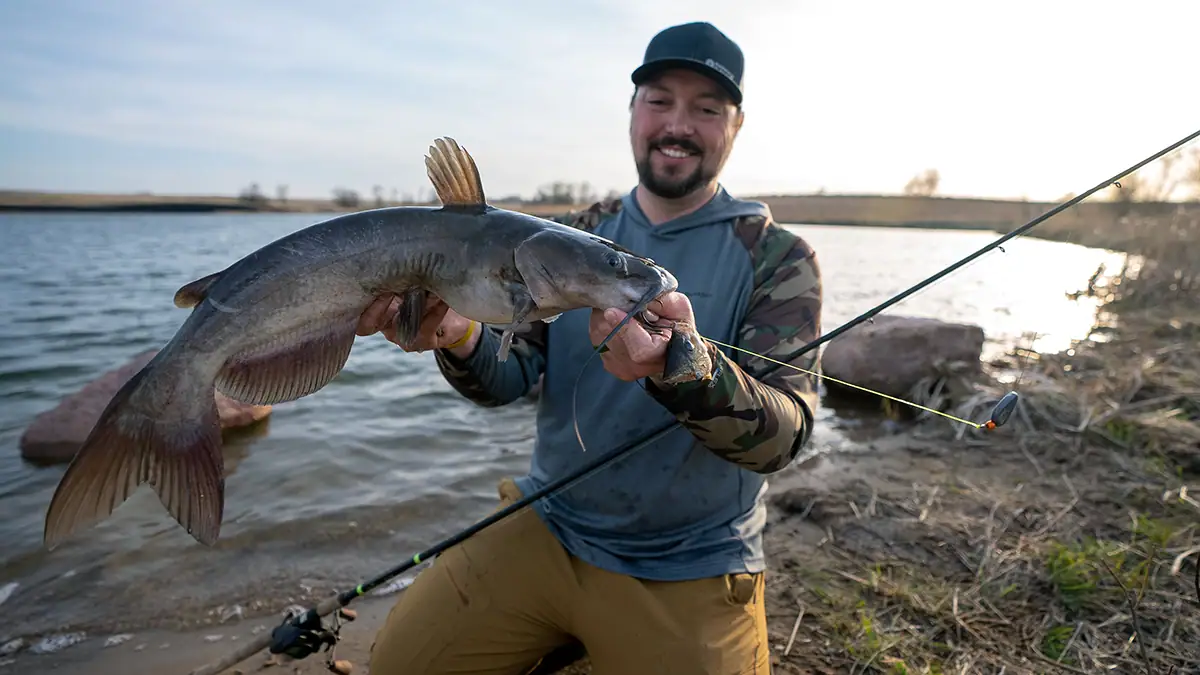
Fishing for catfish is an all-time favorite pastime. You can expect to break a sweat fishing for them since they can put up a good fight, with some growing over 100 pounds. They’re also easy to cook, and they’re tasty, packed with protein, and low in fat. Here in the U.S., we’re fortunate to have no less than 40 types of catfish swimming in our waters.
One key trait of catfish is its incredible sense of smell, second to no other North American gamefish. They can detect substances at concentrations of one part per 100 million. Moreover, they bite a wide variety of things, so your chances of success are very good as long as you fish where they live. This guide below will help you target and catch catfish by covering the following topics:
- Where and How to Find Catfish
- Tactics and Techniques
- Gear and Accessories
- Types of Catfish
- Additional Tips
Where and How to Find Catfish

Catfish are most often found near the bottom, especially around structure and areas where current slows. To catch cats, let’s start with a look at where they’re found. Originally a fish of running water, they still find prime habitat in small creeks just 40 feet wide, as well as larger rivers, all the way up to our massive waterways like the Mississippi and Missouri rivers. Lakes too, but they act differently without moving water. Here’s what to look for:
- Deeper Water
- Holes in rivers and streams
- Deeper areas in lakes and reservoirs
- Structure
- Rocks and current-breaking structure
- Areas that disrupt water flow
- Current Breaks
- Behind rocks and current breaks
- Edges of holes where current slows
- Transitions between fast and slow water
Rivers
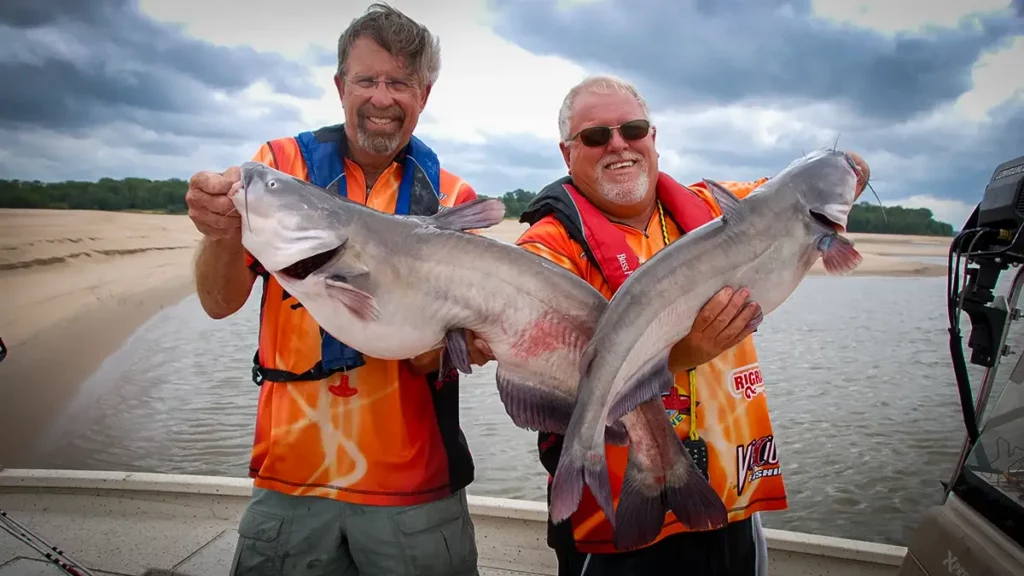
One reason they thrive in flowing water relates to their amazing sense of smell. Chemical odors from prey are continually released and flow downstream. Small streams are the most basic type of catfish habitat and in many of them, cats are top predators. Streams consist of a series of deeper holes, interspersed with faster stretches of shallower water, called shoals or riffles. It’s often easy to walk the bank or wade into the stream. And you can see the differences in water type and flow speed with your eyes — no sonar needed!
As water moves downstream, its typical flow pattern creates a deeper hole just downstream from a riffle that contains pockets of quieter and deeper water where catfish often hold. The downstream end of a hole features a tail out that gradually becomes shallower and leads into a section of medium-depth water with moderate current, called a run.
Depending on the size of the stream, a run might be 2 to 5 feet deep, with generally straight banks, unlike riffles and holes that often occur at bends in the river. In a small stream, a typical hole during summer might be 30 feet long, 20 feet wide and 6 feet deep. These spots often are key locations for catching fish. Once you start looking closely at streams, you will notice these natural patterns and learn to “read the river” like an expert.
To feed, some catfish move into riffles to pick off prey in low-light periods, though the hole can be considered their home area. Actively feeding fish often move to the upstream end of a hole to intercept prey or food drifting downstream. It’s always a high-percentage spot to get bit. And at times, they move onto mid-depth runs to feed on schools of minnows that move near the shore.
These areas can be particularly productive at night when catfish feed heavily during summer. Big rivers are much more challenging to figure out, though they function in similar fashion to small systems, though the many dams on them add another whole dimension. Faster current below dams attracts all sorts of fish, including cats that instinctively move into current, and also recognize that baitfish are usually abundant there. And the eddies below dams often collect dead fish that Mr. Whiskers feed on, particularly in early spring.
Ponds and Lakes
In many parts of the South and Midwest, ponds have been built for farming, water supply and recreation. Channel cats thrive in these small waters, growing fast on a natural diet of small fish and invertebrates — even faster where the owner or pond manager feeds them pellets. Catfish are dialed into their surroundings and quickly learn to recognize the sound of the owner’s truck coming to bring food. They swim straight to the dock and start swirling the surface to eat the food as it drops in. Obviously this makes for ridiculously easy fishing if you’re a friend or guest of the owner! And if you have a kayak, there is a lot of great kayak catfishing to be had on small lakes and ponds and rivers all over the country.
Timing the Bite

Channel catfish can be caught all year long across the U.S., and all states allow year-round fishing for them. Up north, ice fishermen catch channel cats through holes in the ice. And in small creeks, rising water in early spring draws lots of fish into shallow waters where they feed as the water warms.
While some anglers like to fish at night, cats are active throughout the day, especially in flowing water. But because their strong sense of small and taste allow them to feed easily after dark, they’re very active then. Folks that use trot lines, limb lines, and jugs to catch often set them in the evening and check in the morning, since fish move around more at night in summer.
Catfish spawn later in the season than other species, so they have a long prespawn period when they feeding heavily in preparation for the spawn that may take place in May in Texas or July in Minnesota. That heavy feeding makes this period a great time to fish.
Tactics and Techniques

Depending on the body of water, catfish can be caught from shore, if it’s public and you can cast a bait out into good spots. In large reservoirs and lakes, you often need a boat to reach deeper channels and drop-offs where they feed once waters warm up. Anything that can safely get you out there can work, from big fishing rigs to jonboats to kayaks, which are increasingly popular among anglers.
Bank Fishing
In popular spots, you often see forked sticks stuck in the ground that shore-bound anglers use to prop their rod while waiting for a bite. Catfish feed by sense of smell so it’s important to let your bait soak once you cast it out, allowing the attractive chemical scents to flow out of your bait and signal food is in the area. Night fishermen sometimes make a small fire to sit by and keep warm on cooler nights. With so much privately owned land, finding good access can be a challenge for bank fishermen. That’s one reason anglers like bridges. The right-of-way typically has a stretch of land on either side that can be fished. Moreover, when bridges are built, the construction crews often dredge out the area or leave chunks of rock behind that serve as good habitat.
From a Boat

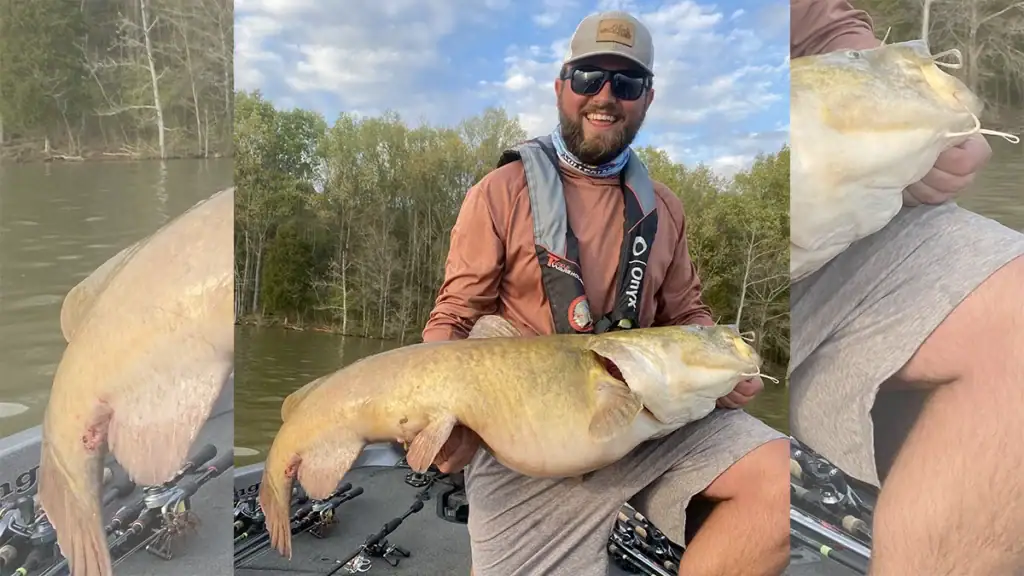
The bigger the boat, the more anglers it can hold. As a result, lots of experts and guides use pontoon boats. The wide-open platform is stable with lots of room to cast and sit down. Anglers often mount rod holders along the gunnels to place rods. Unlike bluegills, bass, and walleyes, catfish are eager eaters and often hook themselves when the rod’s in a holder. When they feel resistance from the rod tip, they keep pulling to get their food, like a dog with a bone.
On popular waters, you see top-end bass and striper boats rigged out for catfish with rod holders that can be temporarily mounted on the gunnels. In small creeks, flat-bottom Jon boats allow you to move from spot to spot, even in shallow creeks.
Depending on the spot, you can anchor the boat upstream of a good spot and fish it, or it’s sometimes better to pull up on the shore and fish the area thoroughly before moving on. In the smallest creeks, kayaks can be the only way to go, and they move easily from spot to spot. If you’re getting the idea that catfishing and rocket science have nothing in common, you’re on your way to success!
Popular Live Bait Rigs
When setting up the popular slip-sinker rig, tie on a barrel swivel that separates the sinker from the hook, but allows fish to pull the bait and hook through the sinker. For finding catfish in rivers, bobbers or floats work well, as they allow you to drift the bait down the creek from one position. The best styles are tall and thin to work well in current, while not blowing around too much in the wind. Set the float so the bait just brushes bottom. Make a few casts to several angles across the river or creek to check for fish. And when it goes down, set the hook! For a complete rundown of different rigs, please check out Wired2fish’s Best Catfish Rigs article.
Gear and Accessories

Rods and Reels
You don’t need high-end rods and reels to catch plenty of fish, which is another appeal of this sport. Fiberglass rods work as well as graphite in most situations. Both spinning and bait casting models can work well, as long as they have good line capacity, holding at least 100 yards of 20-pound-test line. If you’re going after giants, use even heavier gear, as you may need plenty of 60 or 80-pound line. Bigger saltwater spinning reels are popular since they can cast big baits far out into a river or reservoir, but many boat anglers like the winching power of big low-gear baitcasters built for muskies, sturgeon, and saltwater fish.
For longer casting, choose rods at least 7 feet long, and some people like 8-footers. Catfish rods should have at least medium-heavy power for casting heavier chunks of bait and battling big fish. Slobs often live near stumps and rocks, so you can’t play around once they’re hooked.
Line and Terminal Tackle

Most catfish anglers continue to prefer monofilament line, as it’s much cheaper, is strong, and has a little stretch to it. When a fish bites a bait, it often takes it in its mouth and moves off. A very stiff rod or a non-stretch line can pull the bait out of its mouth. But there are situations where super-strong braided lines are best; for example fishing very deep water and making long casts into fast water, such as a dam tailrace. The braided line won’t stretch, so it lets you feel for bites better in those situations.
A good selection of hooks and fishing weights is key. Many companies offer hooks shaped to catch catfish, in sizes from 1/0 for the smallest baits to 12/0 when fishing big live baits for giants. Make sure they’re sharp and strong enough not to bend under pressure. In recent years, many anglers have been using circle hooks for catfish, which work exceptionally well when a rod is in a holder because you don’t even have to set the hook. Their rounded shape also reduces the number of fish that swallow the hook.
Depending on current and depth of the water, you may need weights from 1/2 to 10 ounces. In small creeks, weights up to an ounce or so are all you need. Heavy lead is for the big-river situations when you may be fishing 40 feet deep. Standard bank or “bass casting” sinkers work well, whether you tie direct or use a slip-sinker setup. In current, many anglers prefer flattened “no roll” sinkers, as they hold more securely on the bottom.
Baits

Wired2fish has an entire article about the best catfishing baits, but we still wanted to offer some examples here:
- Cut bait: If you’re fishing cut bait, it’s hard to go wrong with a chunk of the local prey, which could be bluegill, shad, sucker, blueback herring, or Asian carp. That’s what catfish eat every day, so they’re naturally inclined to devour it. Match the size of your chunk of cut bait to the fish in the area.
- Stink bait: Catfish are known to like all sorts of unnatural foods as well. Remember that they eat a wide variety of stuff that’s alive, dead, and even rotting. Stink baits of various consistencies are very popular and successful across the country.
- Punchbait is a form of stink bait that’s most popular in the warmer waters of the South, since liquid-based baits dissolve faster in warm water. The mixture includes some secret recipe that’s mixed in the jar with a fibrous substance such as cattail fibers. Many are based on cheese recipes and some shad-based.
- Live bait: In most situations, live baits aren’t needed to catch catfish and baitfish can be hard to keep alive. But some anglers prefer big live baits to catch big flathead, such as bluegills, green sunfish, or bullheads.
- Naturals: One of the all-time catfish favorites is a nightcrawler, even though they don’t often get to feast on these succulent treats. Another natural favorite is chicken livers. It’s delicate stuff and breaks up easily in current so you may have to rebait every 10 minutes. To keep livers on the hook better, wrap them in in gauze or netting (old pantyhose is a favorite) to hold it together. Shrimp is another favorite that catfish don’t encounter, but they eat it eagerly.
- Unnaturals: Catfish eat all sorts of things, including balls of fluff that falls from cottonwood trees, as well as berries that from shoreline bushes. Anglers have learned that hotdogs and soaps also can make goods baits, particularly in current.
- Artificial Lures: While every crappie and bass fisherman has stories of catching a big catfish on a jig or crankbait, it’s a very low-percentage deal. Even the most flavorful bass baits can’t compare with the attractive odors from cut fish or stink bait. Moreover, cats take their time in finding food, using their sense of smell.
Additional Tips
Learn more tips and tricks to catch big catfish in the river: