If you spend enough time on the water, you start to understand one simple truth: Vegetation and algae aren’t just part of the ecosystem, they are vital to the entire ecosystem. So when it comes to chemical treatments used to kill them, you’re not just altering what home owners and lake associations think of as nuisance, you’re altering the ecosystem as a whole. Whether it’s good or bad, that’s for you to decide.
As anglers, we tend to see both sides of this issue up close. One day, you’re happy to maneuver through a bay that’s previously been choked by weeds, and the next you’re scratching your head wondering why a once-productive grass flat feels lifeless. The reality is that chemical algae and vegetation treatments have positives and negatives. They’re used as a tool. And like any tool, their impact depends on how, when, and why they’re used.
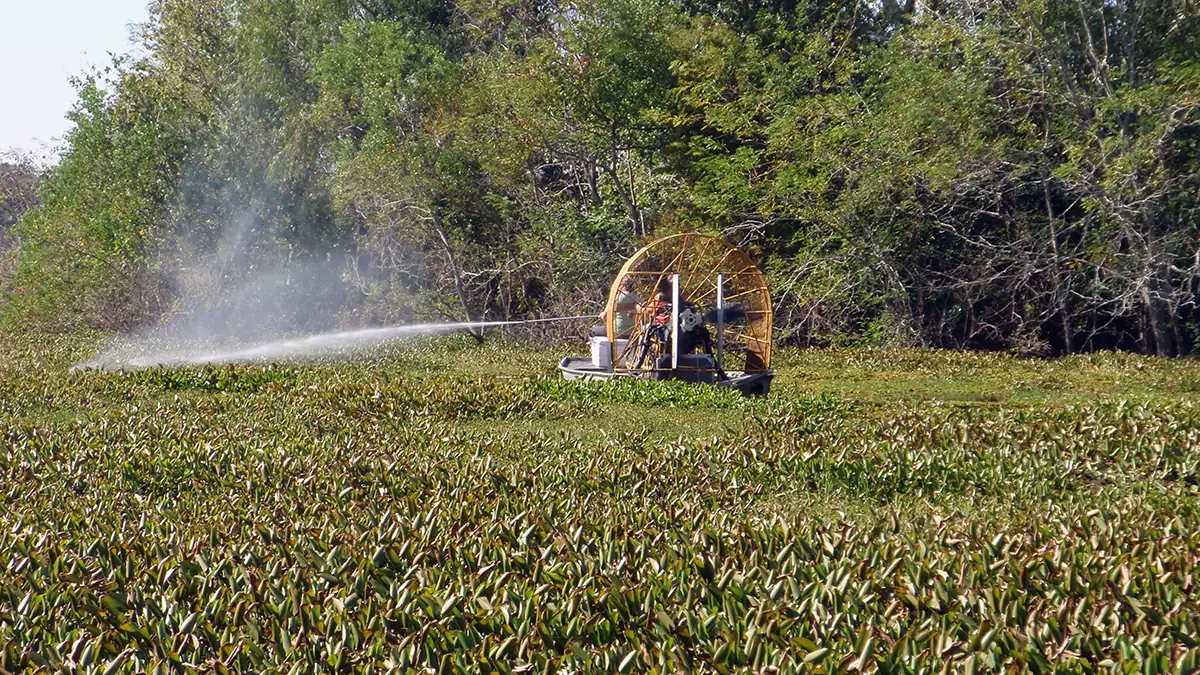
I know what you’re already thinking — those chemicals destroy everything! For example, in Florida, the heavy use of spraying herbicides to combat invasive plants has drawn fierce opposition from anglers, as the public waterways are declining in quality, health, and fish production.
Personally, I’ve been fortunate enough to work in the pond management field for the last six years in New York, Connecticut, New Jersey, or Massachusetts, both for private companies and for myself. In that timeframe, I’ve seen chemical treatments do serious damage and be extremely beneficial to ponds. This is what I’ve observed over the years.
Why Chemical Treatments Exist
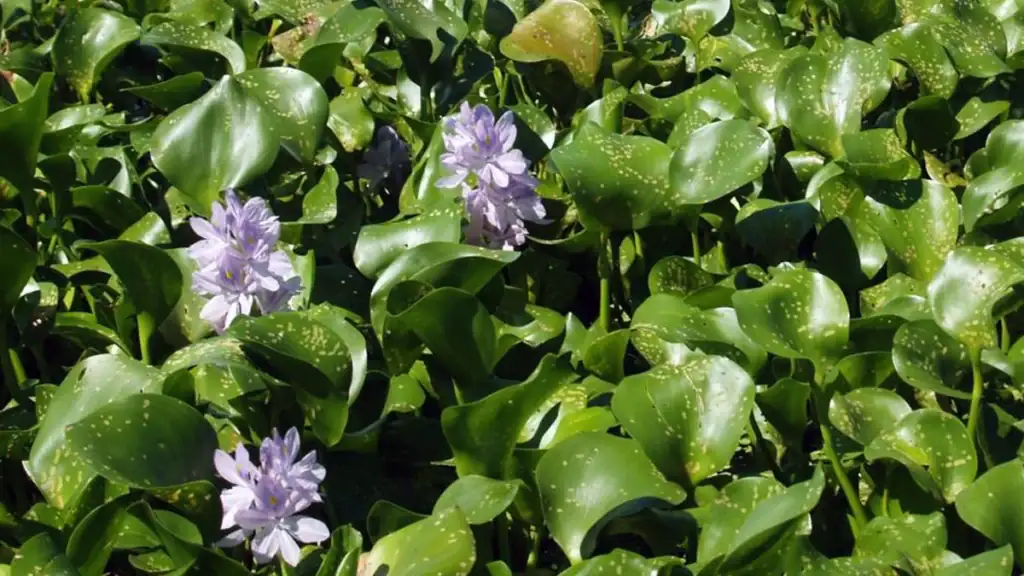
Let’s start with the obvious, mismanaged or unmanaged aquatic growth can get out of control fast. Nutrient-rich eutrophic lakes, especially those dealing with runoff from agriculture, lawns, or development, are prime breeding grounds for excessive algae and invasive vegetation. What causes this? Heavy amounts of phosphorus and nitrogen in the water cause it to be a breeding ground for many species of aquatic plants and algae. And this might be the single largest issue affecting lakes and rivers across the US. Pollution offers a never-ending source of nutrients to grow algae and vegetation.
Anyone who’s tried to fish through a thick mat of filamentous algae or navigate a prop through a hydrilla bed knows how quickly things can go from productive to frustrating. Beyond fishing, these blooms often choke out oxygen, block sunlight, and even produce toxins harmful to fish, wildlife, pets, and people. Some states even have public warnings for harmful algae blooms.
That’s where chemical treatments come in. Herbicides target invasive or overabundant plants, while algaecides work to reduce algae blooms. When applied correctly, they can restore balance to a system that’s crashing in the wrong direction. To bring it back to a balanced ecosystem, it might need a little chemical help.
What Happens To The Plants After They Die?
Of all the HOA or lake association meetings I’ve been to in my life, this is the most common question that gets asked. Many people think that the plants just magically disappear, and that couldn’t be more far from the truth.
After a treatment has been made on a certain plant or algae species in a body of water, the target species starts to break down over time. The dead plant releases carbon dioxide as a result of the breakdown period. The plant or algae will then sink to the bottom of the pond and continue to break down and release nitrogen and phosphorus back into the ecosystem.
Think of it like a tree when it loses its leaves in the fall. The tree uses oxygen and gives off carbon dioxide as it dies, and then the leaves fall off and break down on the forest floor. In this case, it all just happens under water.
The Benefits: Restoring Balance and Access
From a fisherman’s perspective, the benefits of chemical treatments can show days or weeks after a treatment. When done correctly, it can help a body of water. Here are the positives to look for after an application in your body of water.
Improved Oxygen Levels
Certain algae blooms can create dangerous oxygen swings. During the day, they produce oxygen, but at night they consume it, sometimes leading to fish kills during warm water periods. Properly timed treatments can reduce these blooms and stabilize oxygen levels, preventing catastrophic die-offs.
Better Habitat Diversity
Not all vegetation is created equal. Invasive species like Eurasian Milfoil can form dense monocultures, crowding out native plants that support a wider range of aquatic life. Targeted chemical treatments can knock back these invasives and allow native vegetation to reestablish, creating more diverse habitat that is beneficial to the whole ecosystem. This is a hotly contested point, as many anglers notice that spraying kills milfoil, but might also kill other vegetation too, including native vegetation.
Increased Access for Anglers and Fish
Let’s be honest, there’s a point where “good cover” becomes “unfishable jungle.” Strategic treatment opens up lanes, edges, and pockets that make areas accessible again. And those edges? That’s where fish love to set up.
Protection of Recreational & Economic Value
Healthy lakes support more than just fish, they support local economies. Boating, swimming, and fishing all depend on manageable vegetation and algae levels. Treatments can help maintain that balance, keeping lakes usable for everyone. These treatments are meant to benefit the whole lake community, whether it’s the ecosystem, lake association, homeowners, or anglers.
The Downside: When The Cure Becomes the Problem
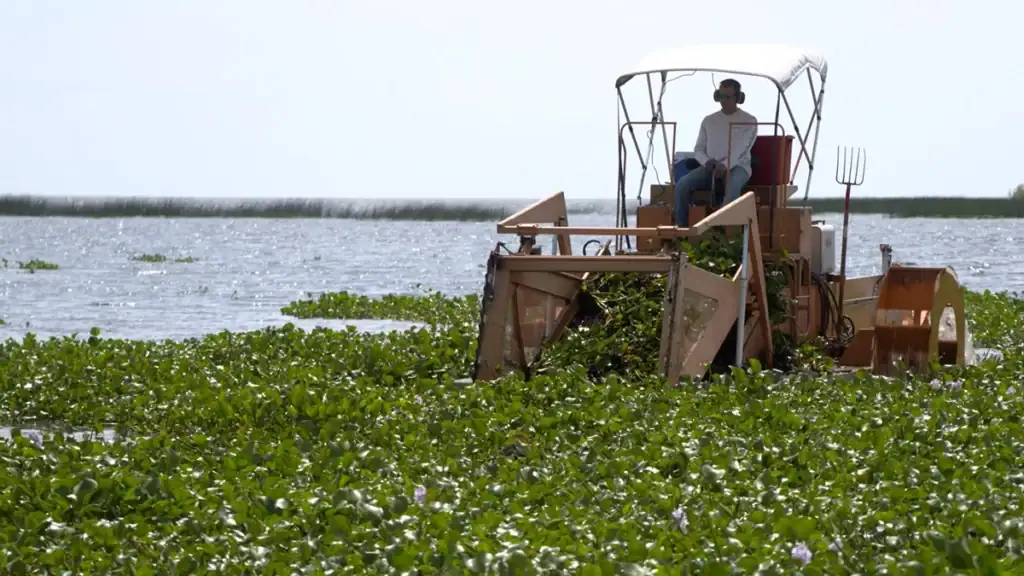
Here’s where things get complicated. Chemical treatments aren’t the fix all solution There are plenty of negative impacts that often show up in meaningful ways, especially to those of us paying close attention. This is what you should look for:
Oxygen Crashes From Decaying Vegetation
One of the biggest risks of treatment is the sudden die-off of plants or algae. When large amounts of vegetation die at once, decomposition kicks into high gear and that process consumes oxygen. It’s just like when vegetation dies off in the fall, it eats up all of the oxygen. Low oxygen levels lead to fish kills. If too much biomass is treated too quickly, it can lead to localized or even lake-wide oxygen depletion, stressing or killing fish and other creatures like insects, reptiles and amphibians.
Loss Of Critical Habitat
Most weed beds aren’t just cover, they’re nurseries, feeding grounds, and ambush points. Treating vegetation with chemicals in an area can strip away essential habitat, leaving fish exposed and disoriented. Bass that once held tight to grass edges may scatter and become more pelagic. Most prey and panfish species lose spawning and protection zones. The result is often a noticeable drop in fishing quality.
Disruption Of The Food Chain
Aquatic plants support insects, zooplankton, and baitfish, which are all key components of the food web. Remove too much vegetation, and you’re not just affecting plants; you’re pulling the rug out from under everything that depends on them. That ripple effect can work its way all the way up to top predators. Mess with the food chain and destroy the entire ecosystem.
Potential Chemical Residue and Sensitivity
While most modern treatments are regulated and designed to break down over time, there’s still concern about how repeated applications affect water quality and sensitive species. And that includes the people and anglers who recreate in the lakes being treated. Some fish and invertebrates are more vulnerable than others, and long-term cumulative effects aren’t always obvious right away.
Most Commonly Used Chemicals
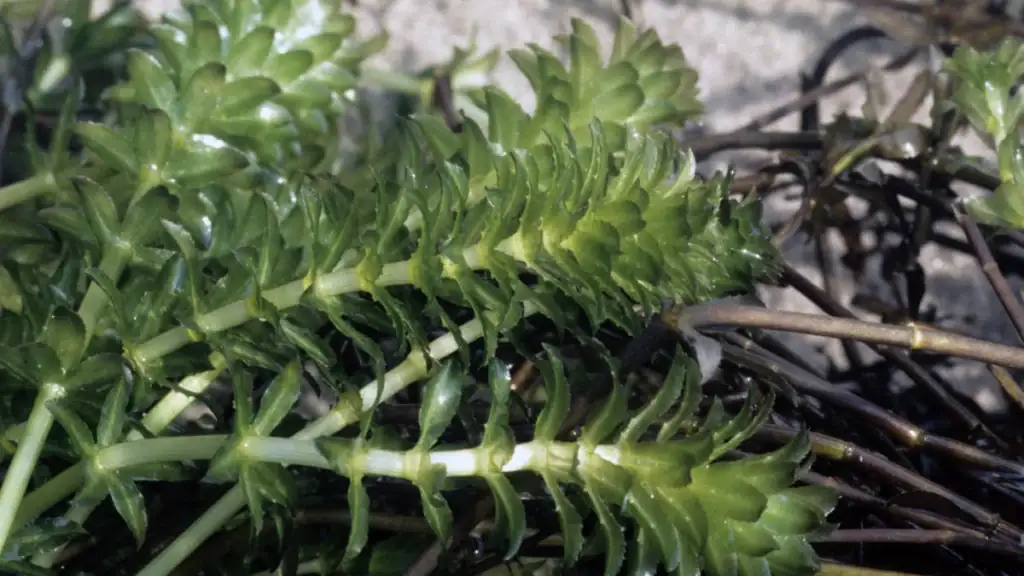
There are many chemicals on the market that treat algae, aquatic vegetation, or both. Some are broad spectrum, treating a wide variety of species, and some are very selective on what they target. Here are a few that are most commonly used throughout the United States by most pond and lake management companies.
Diquat (Brand Names: Tribune, Alligare)
Of all the different chemicals on the market, this is one that’s used by most agencies for private waterbody use. This is a broad spectrum herbicide that will eradicate a wide array of aquatic plants. The reason it’s used by most private entities on private water is that it does kill everything.
Copper Sulfate (Brand Names: Sonar, Cutrine Plus/Ultra; can be granular or liquid)
This is the most commonly used algaecide on the market and the most popular that people might recognize. But, what most people don’t understand is that it can only be used on algae and nothing else. It’s often used in smaller bodies of water with a high amount of nitrogen and phosphorus, which will produce a lot of algae. Applications done correctly can result in clean beautiful looking ponds. Done incorrectly, it can result in oxygen depletion and large fish kills.
Florpyrauxifen-benzyl (Brand Name: ProcellaCOR)
Of all the chemicals on the market, this one is by far the safest to use and most species specific. This is only used on Hydrilla and Eurasian Milfoil. In places like Florida, native Variable watermilfoil (Myriophyllum heterophyllum), Loose watermilfoil (Myriophyllum laxum), and Cutleaf watermilfoil (Myriophyllum pinnatum) could also be negatively affected. With ProcellaCOR, super low doses offer the best performances. It also is perfect for spot treating small areas, as it only kills what it hits as opposed to spreading through the water. You need to be trained and certified to use this chemical.
Timing and Precision: The Difference Maker
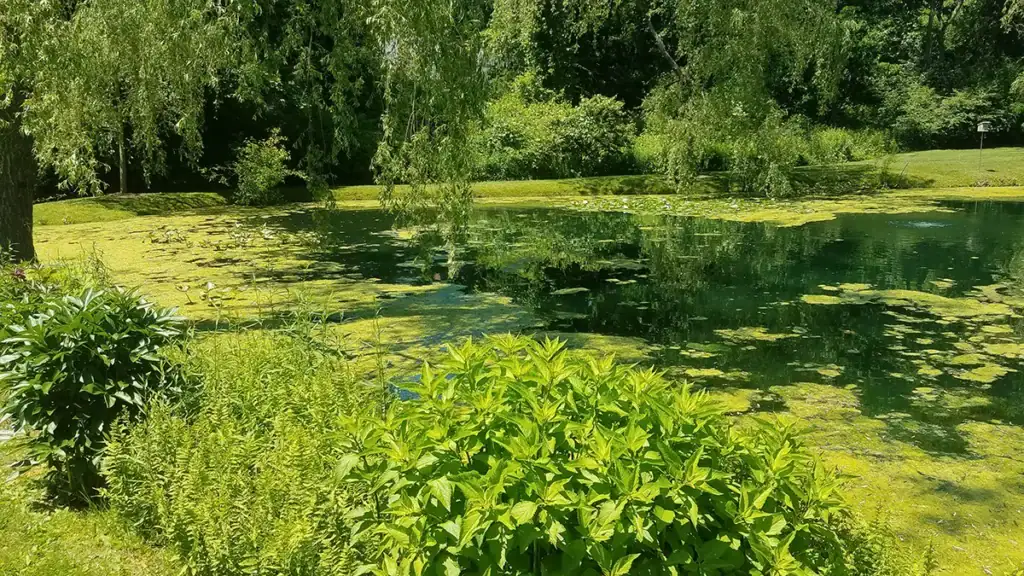
If there’s one thing seasoned anglers learn, it’s that timing is everything. That timing couldn’t be more true for chemical applications and lake management. Finding the right dosage rate, timing, how the chemical is spread, and vegetation/algae coverage is what can make or break a treatment. I’ve seen and been part of treatments that have changed waterbodies for the better and the worse. Let me tell you about my experiences of treating lakes in northern states:
- Treating a lake in early spring, when vegetation is just starting to grow, is far different than hitting it mid-summer when biomass is at its peak. Smaller, incremental treatments are needed to reduce the risk of oxygen crashes and allow ecosystems to adjust more gradually. One big lump sum of chemicals isn’t going to solve the problem.
- Spot treatments—targeting specific problem areas rather than blanket spraying entire sections—also tend to preserve more habitat. This approach maintains a mix of treated and untreated zones, which is exactly what fish thrive on. Variety is key in a healthy pond or lake, which also builds diversity.
The Angler’s Perspective: Reading the Aftermath
If you fish a body of water regularly, you can often see and feel the effects of chemical treatments. You might notice:
- Fish pulling off treated flats and stacking on remaining live vegetation
- A lull in bites following a major treatment
- Increased clarity after algaecide sprayed for algae control, changing how fish position
- New edges forming where partial vegetation remains
Finding The Middle Ground
At the end of the day, chemical algae and vegetation treatments are a balancing act, in my opinion. Used responsibly, they can restore ecosystems, improve fishing, and keep waterways healthy and accessible. Used carelessly or excessively, they can do incredible harm. As fishermen, we have a unique vantage point. We see the before, the after, and everything in between. Honestly, more than most biologists and aquatic specialists will ever see. That perspective matters. Supporting thoughtful, science-based management, as well as speaking up when things head south, helps ensure that our waters remain productive and healthy. The goal isn’t a weed-free lake — the goal is a healthy lake for everyone.