According to findings from a multiyear radiotelemetry study, bigger actually means a better chance of survival when it comes to Iowa’s stocked muskies.
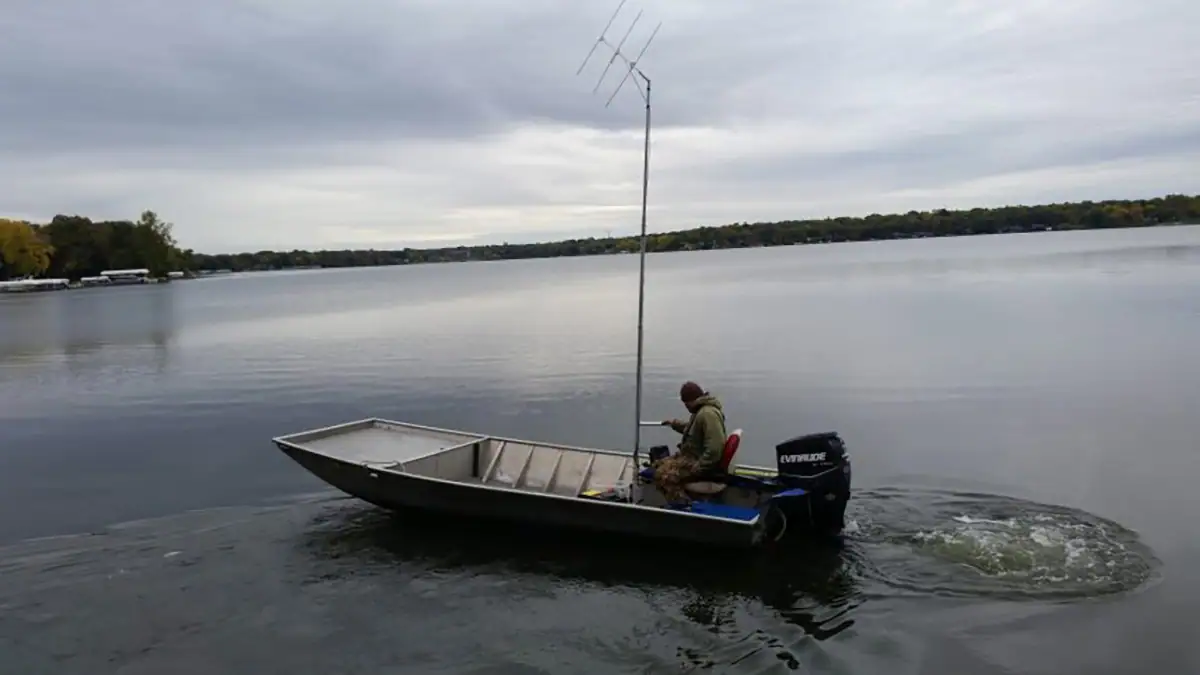
This insight comes from the recently released findings of Iowa Department of Natural Resources (DNR) fish biologist Jonathan Meerbeek. Meerbeek and his colleagues have been following radio-implanted muskies for years, aided by research and hatchery-operation funding from Sport Fish Restoration.
And what group after group of monitored muskies demonstrated is that fish fared better post-stocking when they started off with size on their side.
Tracking Fish for Answers
A paper authored by Meerbeek — “Using Radiotelemetry to Inform and Guide Muskellunge Culture and Stocking Techniques in Spirit Lake, Iowa,” published in the Dec. 2024 issue of Journal of Fish and Wildlife Management — first points to data from 78 musky outfitted with radio transmitters and stocked in May 2016-’17. That research noted how radiotelemetry findings “revealed that stocking techniques did not influence Muskellunge survival or dispersal, but survival significantly improved for fish stocked at larger sizes.”
In short, the piece hypothesized that survival relies less on how a fish is stocked and more on when that fish is released.
Meerbeek’s work continues to shed clarifying light on the important period shortly after a stocked fish’s introduction to a waterbody — most notably the first 25 days, which his aforementioned paper “identified that most mortality occurred within.”
Of the 108 young musky more recently monitored by Meerbeek and others at Spirit Lake and Rathbun State Fish Hatcheries, radio transmitters tracked their patterns and preferences alike. To start with, two groups of musky were loaded into hatchery truck tanks and transported six hours to their stocking destination. Officials immediately introduced one group to those new waters; the other rested 36 hours before their release.
While telemetry findings indicated that there weren’t any substantial survival or dispersal differences based on the group those stocked musky belonged to, what did influence survival was a bigger size upon release.
Refining Research and Results
Guided by those findings, hatchery staff delayed the release of another to-be-stocked musky group for an additional 33-40 days so they could keep growing. Of the 30 muskies in that cohort both outfitted with radio transmitters and followed, those fish allowed to increase in size for more than a month saw their odds of survival leap to a staggering 73.4% improvement.
As Meerbeek and his colleagues kept monitoring multiple groups of musky, it became clear that staving off predatory attacks within that critical 25-day post-release window was the key in longer-term survival, and size was an asset in assuring longevity.
And it wasn’t just other fish that freshly stocked musky had to fend off: Hungry birds presented an additional aerial threat.
Surviving Predatory Species is Key
With predation from birds among the largest concerns for muskies’ survival, it’s perhaps no surprise that Meerbeek told Craig Springer of the U.S. Fish and Wildlife Service’s Office of Conservation Investment that “growing out bigger fish is better for survival of young muskellunge.”
Beyond clarifying musky behavior and successful survival factors, radio signals also tell an interesting story when a technologically equipped fish becomes a predator’s next meal. Which is exactly what happened when transmitters deviated from expected swimming patterns.
One musky’s radio signal began transmitting from a Great Blue Heron; Meerbeek has also encountered a pelican in another telemetry study that emitted a radio signal before regurgitating five sizable 14-inch muskies. (When the stocked muskies were first held in an Iowa hatchery for an additional month-plus period, they had a delayed release if they were smaller than 330 mm, or nearly 13 inches.)
The timing of a musky’s release doesn’t just relate to a more advantageous size: There are certain environmental factors at play, which can influence a predator’s success, or lack thereof.
“Time of stocking matters, too,” Meerbeek added. “Later in the spring when water is turbid — less clear — it makes muskies harder to see for birds — pelicans and herons — and predatory fish like walleye, northern pike, largemouth bass, and other muskies.”
What It Means and What’s Next
As Meerbeek’s paper posits, its “results indicate that Muskellunge populations in natural lakes would benefit from a better understanding of poststocking survival and stocking practices that minimize predator threats during this critical [25-day] period.”
Diminishing threats to newly stocked muskies’ survival boils down to a three-pronged approach: let muskies grow bigger before their release; stock those muskies later in the year; and introduce them in deeper waters.
As these findings play out in real-life scenarios, Springer’s piece about Meerbeek’s work notes that it is more expensive to both grow and stock bigger fish. But, it adds, there are undeniable benefits at play.
For one, recognizing both significant risk factors and promising indicators of longevity can boost effective musky management nationwide, especially where state agencies rely on hatchery fish. That, in turn, can benefit not only the species’ conservation but also the quality of its fishing — both in Iowa and beyond — because scientific management practices produce good musky.
“It’s about predator avoidance,” Meerbeek said. “Muskie that live beyond 25 days post-stocking seem to have a marked chance of survival to bigger sizes.”