Innovation has always been the hallmark of fly-rod anglers, especially those folks who tinker with fly- and bug-making for their own use on waters far and wide.
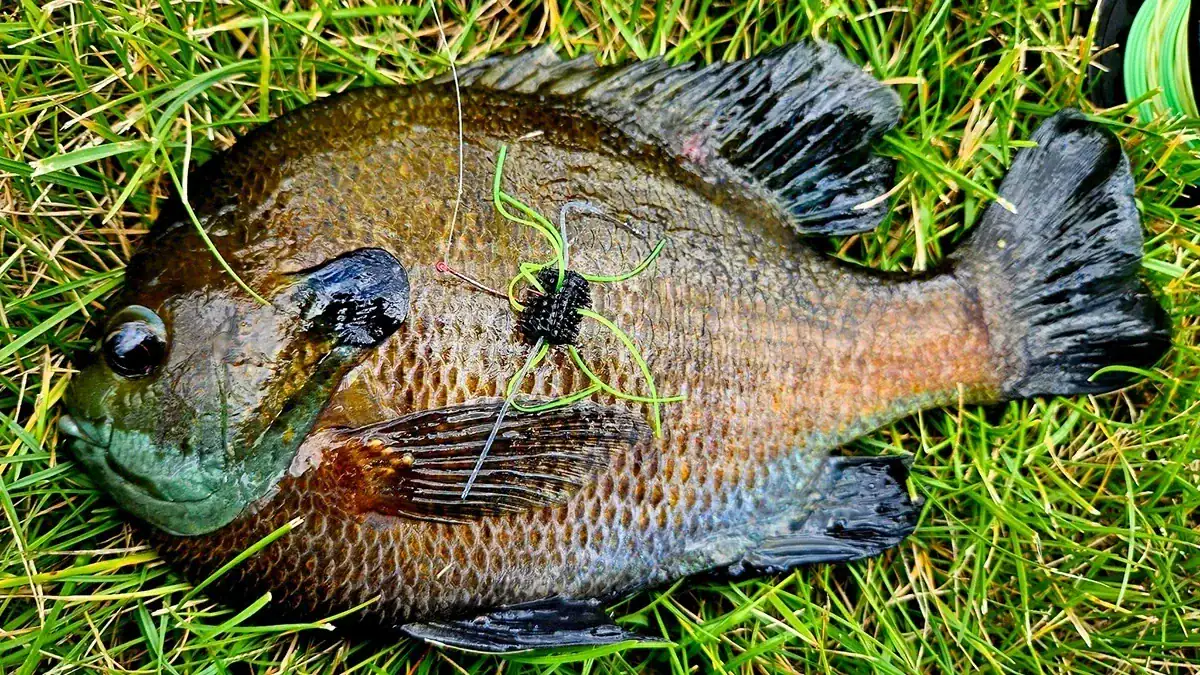
Now, long-rod anglers have started making their own urchin and dice bugs that are attracting good numbers of jumbo bluegills and largemouth bass — with other species likely on the soon-to-target list.
Longtime Angler Learns New Tricks
One such angler is Gene Murray. He’s long been a dedicated fly-rodder, flinging flies and bugs on ponds and lakes in and around his southeast Iowa hometown of Oakville.
For some time, Murray had watched the new wave of soft-plastic urchin and dice lures muscle to the forefront of bass fishing. He has watched videos of both the lures in use and those innovative designs winning tournaments.
“I knew it worked for bass and I thought if I could downsize it a bit, it would be great for big bluegills,” Murray explained to Wired2fish.
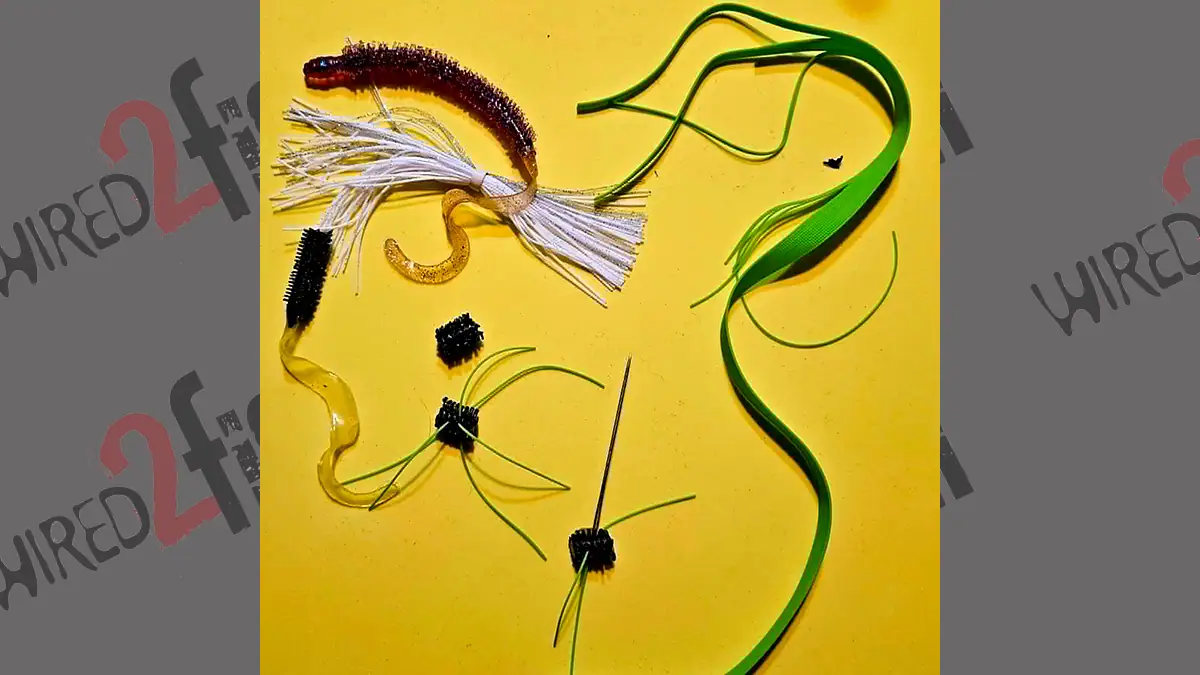
Murray says he doubts that purist fly rod-rodders would call his creations “flies” because he makes them from chunks of old soft-plastic worms he cuts down to panfish-mouth size. He threads rubber legs through the soft plastic chunks and uses a small #6 Aberdeen hook with them.
“When I decided to make up a few of these things I didn’t have much faith (in them),” says the 75-year-old restaurant owner and occasional outdoor scribe. “I figured ’gills would just grab the legs and drive me crazy. It happens occasionally — but big ones dead-center this thing.”
Homemade Lures Outperform Expectations
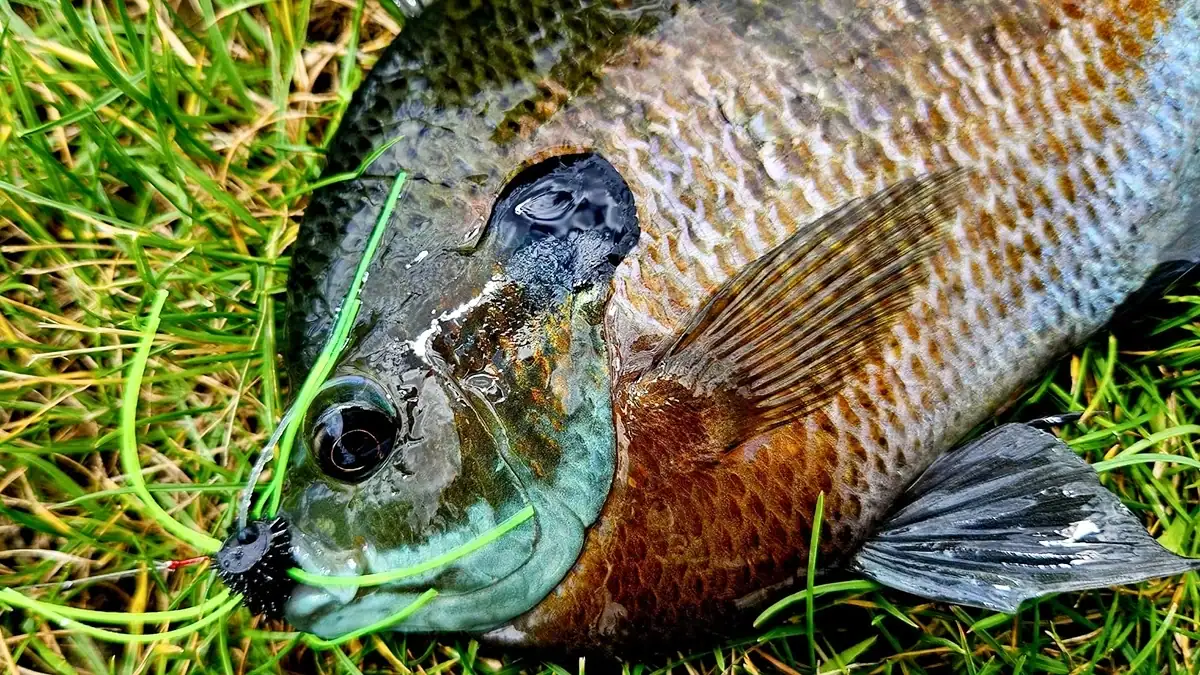
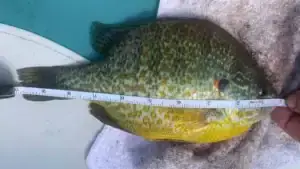
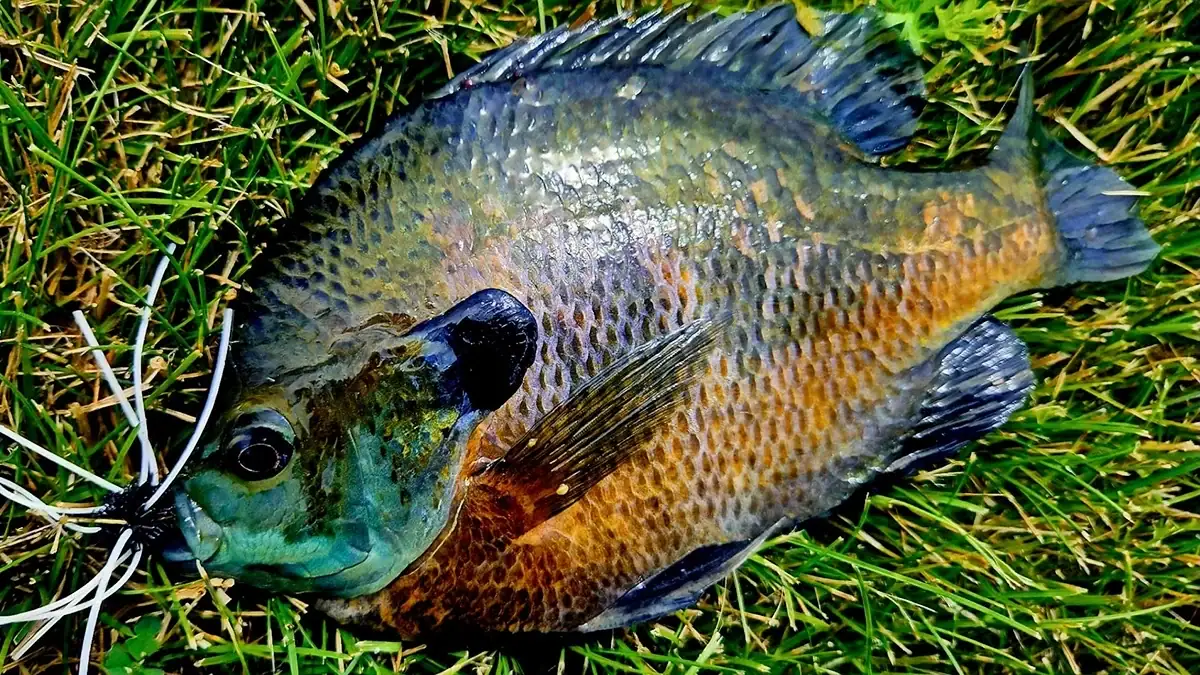
Multiple farm pond trips targeting bluegills have produced some eye-popping catches for Murray. He says a black soft-plastic body with chartreuse rubber legs are most deadly on big bluegills.
He says the lures hold up well to multiple bluegill strikes, and he can make additional lures quickly and easily.
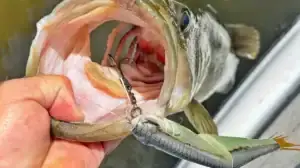
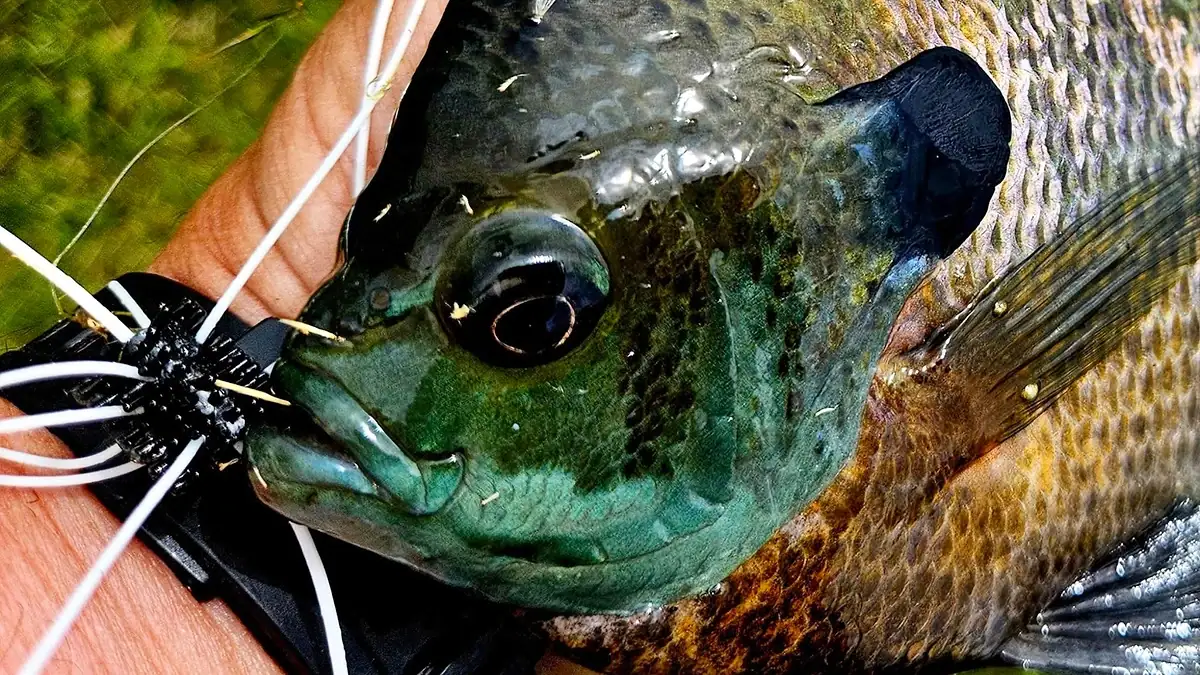
“Big bluegills just devour them, and I’m sure to have my hemostats with me to remove hooks from down inside a bluegill mouth,” he noted.
Murray fishes his homemade “mini dice baits” on a size 3 or 4 weight, 7-foot-long fly rod. Most casts are near shore, on bluegill beds or near weed edges in about four feet of water.
“They sink slowly without a weight, but a split shot on the leader ahead of the lure gets it down a little quicker,” he explained. “I’ve also used them with spinning gear and split shot and they work great.”
Murray started using his urchin fly rod bugs last May and he carries them all the time when fishing. He says they work well as a slow presentation in cold water, too, having caught largemouth bass up to 4.5 pounds while fly-rodding for panfish.
“I use a bit larger bug for bass, which usually are in the two-pound class,” he said. “But bigger bass love ‘em, too. I’ve also caught crappies up to 14 inches using a white piece of plastic worm with white rubber legs threaded through it.”
Testing DIY Success in the Northwest
Murray isn’t the only fly-flinger trying homemade urchin and dice lures.
Washington State’s Davie Ivie is tying multi-leg bugs using yarn and forming an egg fly pattern popular with salmon and trout anglers in the region.
“The dice lure is all the rage, so why shouldn’t fly anglers join in the fun?” he said. “I had been thinking about how to tie one of these, and then it dawned on me: Tie a large egg pattern using yarn to create the sphere. Then use a sewing needle to put in the rubber legs. It’s really easy to do. If you don’t know how to tie an egg pattern using yarn, there are plenty of videos online that show how.”
Ivie says his “Uni Dice Flies are mere prototypes and are not the prettiest flies around.” He plans to try them on Washington waters for largemouths, and maybe smallmouths, too.
Just the Beginning
As attractive and easy as it is to make as dice and urchin bugs, there’s little doubt other fly anglers will keep joining this new fly-making game.
It’s a pretty good bet they would produce other fish species such as stream trout, white bass, and stripers, and perhaps pickerel and pike, and a wide variety of marine species, too.