I had an eye-opening experience on an offshore trip to the famous banks off Baja California. Besides the exceptional fishing for yellowfin tuna, yellowtail, dorado, and wahoo, what really stuck out to me was the advanced casting tackle catching these drag-screaming, prolonged fighters. As someone who had used spinning gear to cast big topwater poppers in the past, these West Coasters used lever-drags and even star-drags for every type of fishing imaginable. Whether it was jigging, live-baiting, casting, lure fishing, or high-speed trolling, spinning gear was nowhere to be seen.
The purpose of reminiscing about that memorable trip was to point out just how important casting tackle is in today’s saltwater fishing. Ratcheting it back a few magnitudes, even baitcasters are reels that inshore anglers should have on every trip. Baitcasters are not just for bass anglers in freshwater, and anglers who prefer baitcasters don’t have to use their freshwater gear in the salt. You can read our complete Best Baitcasters Buyer’s Guide that covers the best saltwater and freshwater models.
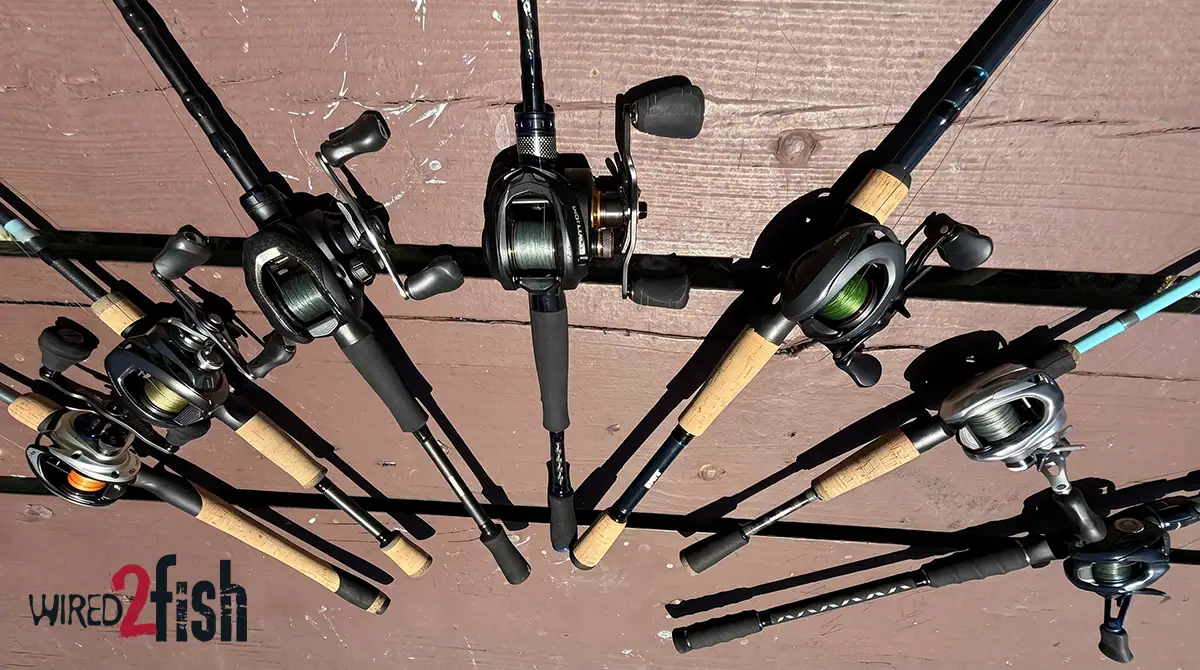
In fact, today’s inshore baitcaster offerings are as varied as cereals at the grocery store. Finding a low-profile saltwater baitcaster that actually holds up to the elements and works for you is not as easy as it sounds. To cut through the marketing hype, I field-tested some of the industry’s top reels in Florida’s diverse coastal regions. From the inlets, to the flats, to the oyster beds, and deepwater bridges, baitcasting reels have a place in inshore saltwaters. This compiled list highlights some of our favorite saltwater baitcasting reels on the market today, broken down by how you fish. These reels flat-out perform day in and day out.
Top Saltwater Casting Picks for 2026
- Best Overall Reel — Abu Garcia Revo Inshore — BUY NOW
- Best Jigging Reel — PENN Fathom — BUY NOW
- Best Wade Fishing Reel — Shimano TranX 150 XG — BUY NOW
- Best Crossover Reel — Lew’s Speed Spool RX — BUY NOW
- Best Combo Setup — Shimano Caius — BUY NOW
- Best Inshore Reel — Daiwa Coastal — BUY NOW
- Best Plug Reel — Shimano Metanium HG — BUY NOW
Best Overall Reel
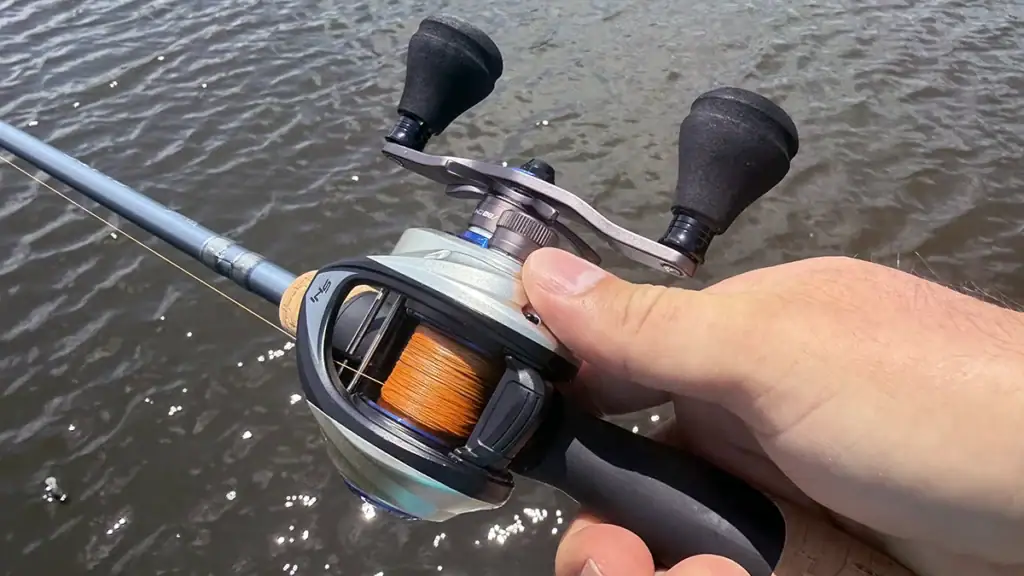
Abu Garcia Revo Inshore
This Revo took me a little while to get dialed in, I’m not going to lie. That spool tension knob is exacting, so if you don’t have it primed right you’ll notice a difference. Now, it might be my favorite casting reel. The Abu Garcia Revo Inshore is that reel I treat like my gold standard, and I feel comfortable throwing it with just about anything. Mostly, I’m talking about soft plastics and topwaters. On shallow flats and open bays where fish are easily spooked, the IVCB-6 braking system and EXD Concept Design allow you to launch your lightweight baits.
But the moment you hook up is where this reel really shines. The massive 25-pound Carbon Matrix Drag combined with an oversized 95mm handle gives you the instant mechanical leverage required to turn a big snook or redfish. I feel pretty comfortable locking down the drag with this reel and trusting my knots. And I’ve pulled some pretty big fish to the boat this way, including a giant red drum that was hanging with a bunch of school-size fish in the shallows.
Features
- 5 stainless steel HPCR bearings + 1 roller bearing
- A-Symmetric body design
- X2-Cräftic alloy frame
- IVCB-6 braking system
- Power Stack Carbon Matrix Drag System
- 95mm bowed Aluminum handle
- Duragear Gen II gear system
- GullWing Sideplate Design
Best Jigging Reel
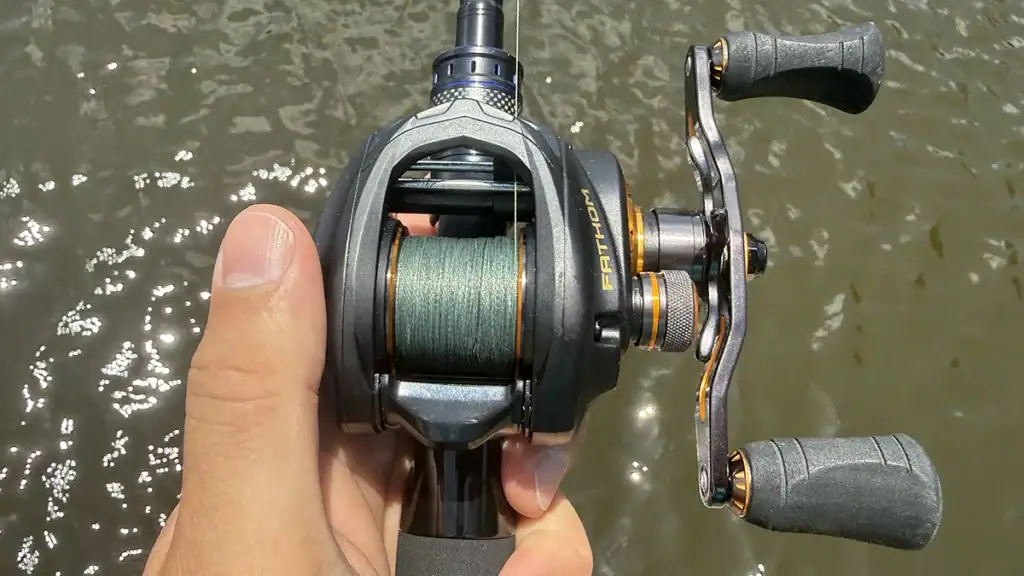
PENN Fathom
When you’re fishing in those 10- to 15-foot depths and you want to drop down a jig, a spoon or a live bait, the PENN Fathom is a killer option. The PENN Fathom Low Profile is what I use for inshore saltwater vertical jigging because it shrinks a heavy-duty conventional offshore winch into a palmable frame.
It feels strong in your hands, and that’s partly because PENN is known for bullet-proof reels, not necessarily lightweight ones. But repeatedly snapping jigs through the water column puts massive stress on a reel, so the Fathom has a Full Metal Body and a hardened stainless steel main gear that completely eliminates frame twist. I’ve been jigging with the vibe-style baits with great success, and I’m not sure everyone knows about this class of lures yet.
The reel features 25 to 30 pounds of carbon fiber drag. High-speed models boast a 9.2:1 ratio pulling 43 inches of line per crank, allowing you to burn jigs back to the surface. Ultimately, this reel is flat-out strong, offering speed if you need it, as well as the toughness and drag power you’re familiar with from PENN spinners.
Features
- Full-metal body and crank side plate
- Smooth 6+1 stainless steel bearing system
- Brass main gear and bearing-supported bronze pinion gear
- HT-100 carbon-fiber drag washers
- Dual-action casting brake dials
- TiN coated levelwind system
Best Wade Fishing Reel
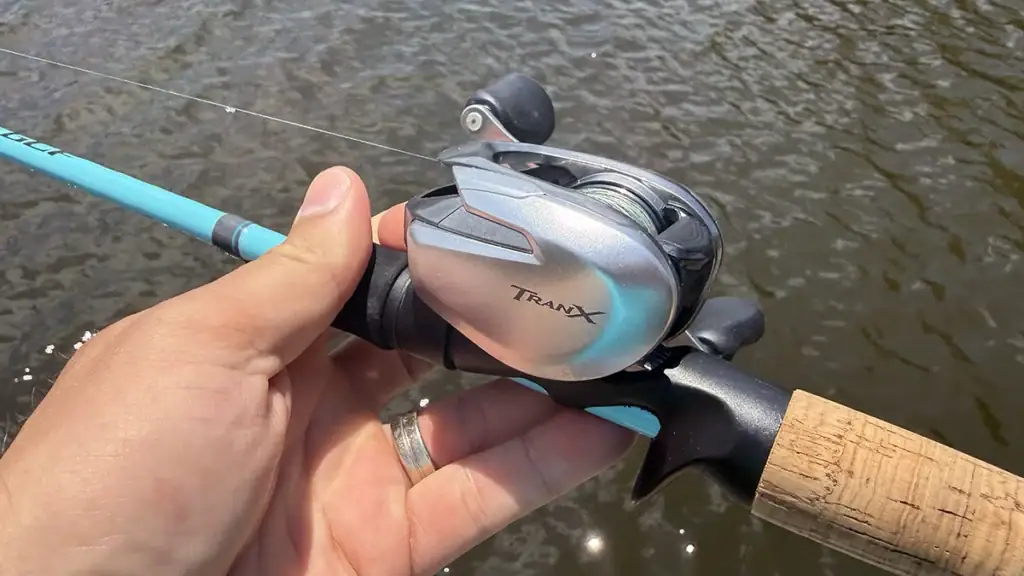
Shimano TranX 150 XG
The Shimano TranX 150 XG is designed for grinding it out on the Gulf Coast flats. I am not a Gulf Coast wade fisherman, but I do have spots in the Indian River lagoon where I like to hop out and wade-fish. There’s plenty of soft bottom, mud, and muck — but if you can find that precious hard bottom, it’s a goldmine. When you’re waist-deep in the salt, you need gear that feels like an extension of your hand, and the 150’s compact, low-profile HAGANE body delivers easy casting and reeling without wrist fatigue. More importantly, it’s built to survive salt water. You also really want to use a casting rod with a short butt section.
Performance-wise, the blistering 8.2:1 XG gear ratio is a total game-changer for speed. I work my baits darn quickly, which I can get away with in saltwater for species like reds, snook, jacks and trout. It allows you to instantly burn up slack line and keep fish hooked, but also stop drag-pullers in shallow water. I’ve fallen in love with the TranX like, and I actually have a couple different models from over the years, including the HG and XG models. Check out our complete review of the Shimano TranX 300 B.
Features
- HAGANE rigid, all-metal frame
- CoreProtect Coating
- Cross Carbon Drag
- SVS Infinity Braking
- Shielded anti-rust bearings (3+1)
Best Crossover Reel
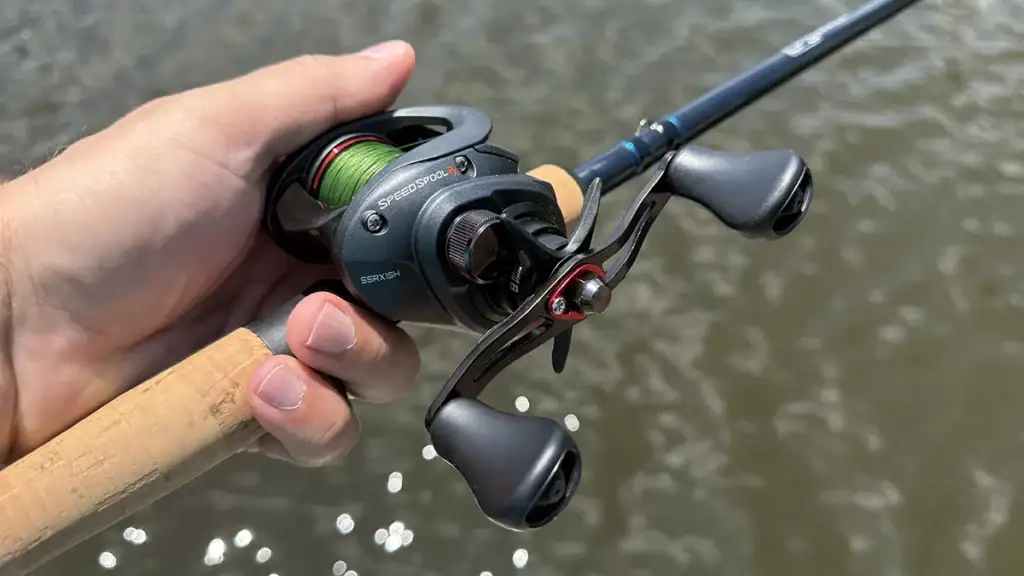
Lew’s Speed Spool RX
I learned about baitcasters that work in fresh and saltwaters fishing the marshes of Louisiana. Those guides and hardcore anglers throw freshwater baitcasters just as much as saltwater gear, targeting largemouth bass, redfish, seatrout, black drum, croakers and even freshwater catfish. And Lew’s is popular in this neck of woods. I like to use the Lew’s Speed Spool RX in just about any brackish waters, but also in freshwaters. Fishing tight grass lines, sawgrass edges, shallow potholes, oyster edges, or underneath tree overhangs, the reel’s rigid aluminum frame gives you plenty of fighting power.
It has high-speed gear ratios and a precise braking system for pinpoint accuracy and backlash control when throwing lures such as lightweight gold spoons, spinnerbaits, or soft plastics. Just be certain to give this reel a freshwater rinse, a thorough wipe-down, and regular bearing lubrication maintenance to keep the internals smooth. Check out our complete review of the Lew’s Speed Spool RX baitcaster.
Features
- ParaMag RX braking system
- P2 super pinion bearing
- Double-shielded stainless steel ball bearings
- One-piece aluminum frame
- Hard-anodized aluminum speed gears
- Carbon fiber drag
Best Combo Setup
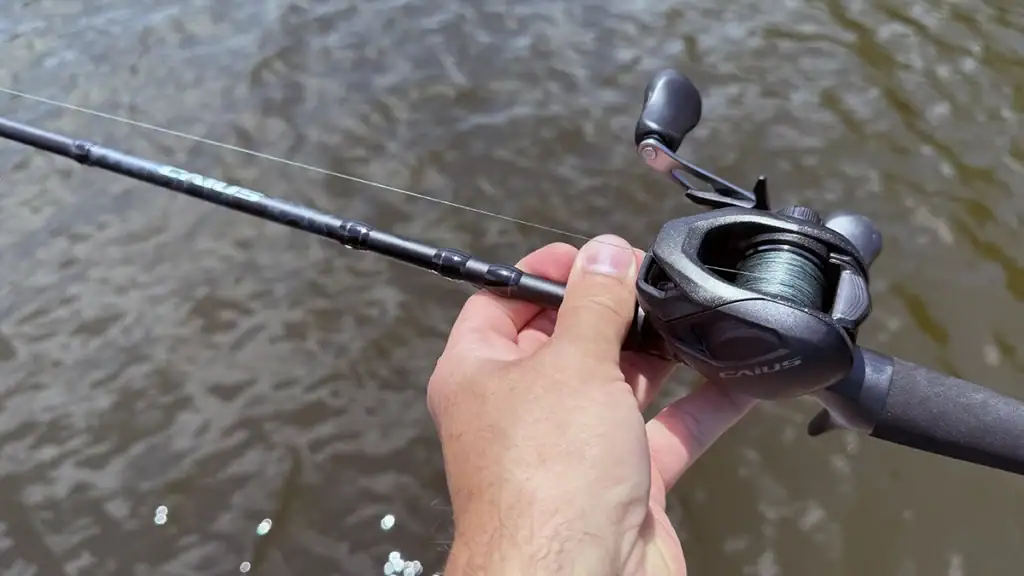
Shimano Caius
The Shimano Caius baitcaster combo stands out because it’s a great starter option with a budget-friendly price. When someone wants to start using a baitcaster, I recommend buying a combo setup just like this one. The setup features a 7-foot, medium-heavy, fast-action graphite rod paired with a compact, low-profile reel.
This specific rod strength and action allow you to seamlessly switch between multiple fishing options, but if we’re being honest it is more generated toward the freshwater angler. There just aren’t many saltwater baitcaster combos on the market.
The reel has an adjustable centrifugal braking system to help with backlashes, and it has a fast 7.2:1 gear ratio for quick line pickup, so I think it works well. And if you take care of the reel, it’ll last in the salt until you’re ready to make that next upgrade. I use this combo when I’m fishing bank spots that look fishy when I’m on the road. It’s a setup I can toss in the back of my truck without any worries.
Features
- Variable Brake System (VBS)
- Super Free Spool Tech
- S3D Spool Tech
- Lightweight Low-Profile Body
- Titanium Oxide Guides
- EVA Split-Grip Handle
- Custom Aluminum Locking Nut
- Exposed Blank Reel Seat
Best Inshore Reel
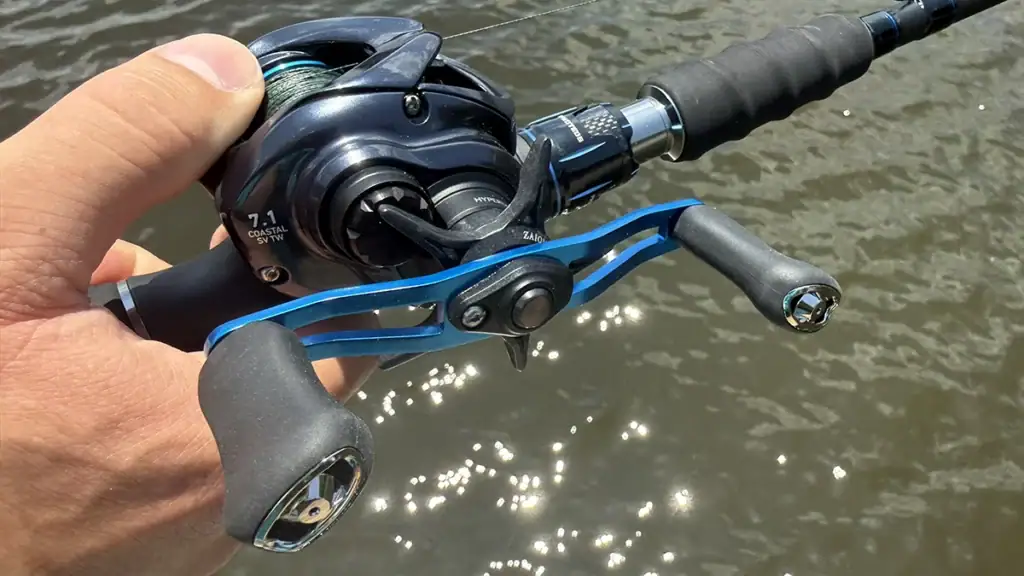
Daiwa Coastal
Daiwa’s Coastal is one of the top baitcasters on the market right now, and I think it’s obvious why. The Daiwa Coastal 150 SV TW is a light-tackle finesse machine, with a max drag of just 11 pounds. I’m often using lightweight soft plastics, and this reel launches them plenty far. It’s a relatively small reel that fits in your hand easily, but still has a deep enough spool to offer plenty of line capacity. The reel comes straight out of the box with the spool tension knob set, but if you really like to dial in your reel and tinker with the knob, it’s in a tight spot near the star drag. Admittedly, I do have a bit of trouble getting my fingers into that tight spot.
The reel has Daiwa’s T-Wing System, aluminum frame and side plate, and a Zaion star drag made from high density carbon-strain material, according to Daiwa. As I’ve said elsewhere, this baitcaster is a bit unlike other reels. There’s no jerkiness — or what some might call “startup inertia” — that plagues other reels with too tight of a drag too early in the fight. So I treat the reel almost like a fine-tuned machine. Once I’ve got it dialed in, it operates like an Olympic athlete. It handles casting lures of any size, it has enough drag to handle inshore all star species, and the gearing and smoothness is second to none. I use this reel when casting lighter weedless soft plastics around grass flats and near oysters in mud-bottom creeks.
Features
- 150-Size Spool in a 100-Size Body
- SV (Stress-Free, Versatile) Spool
- T-Wing System (TWS)
- HyperDrive Design Concept
- Inshore-Grade Componentry CRBB (Corrosion Resistant Ball Bearings)
- Zaion Star Drag
Best Plug Reel
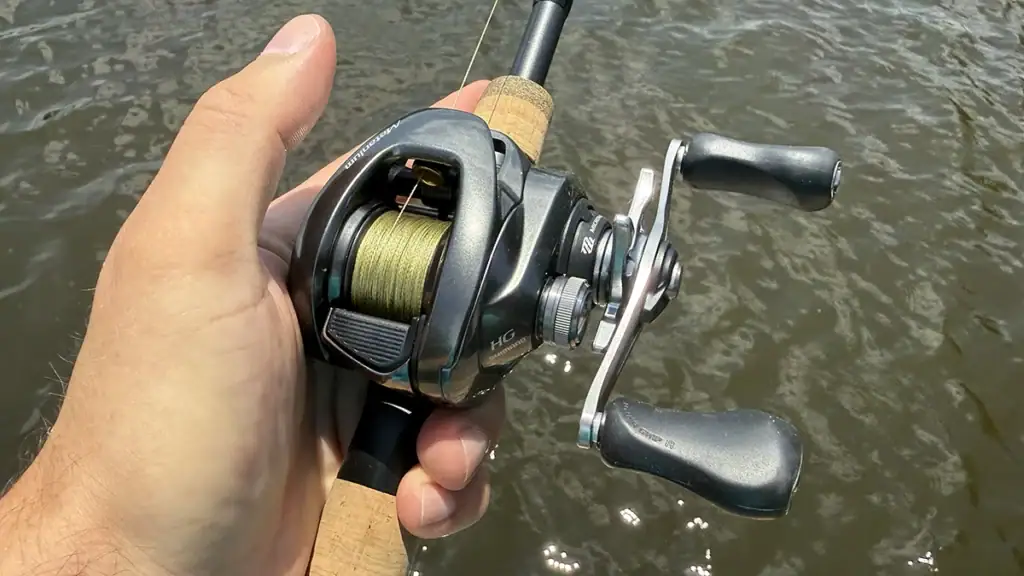
Shimano Metanium HG
When you pick up the Shimano Metanium HG, you’ll notice just how light it feels. It weighs in at just 175 grams (6.17 ounces). How do they pack all that tech into that light of a reel? It seems almost crazy. But the Shimano Metanium HG features a magnesium CoreSolid body that integrates the frame, side plate, and levelwind guard into a single structure to eliminate body flex.
I love throwing this reel whenever and wherever I can. That means fishing topwaters in the morning, but it also means casting live shrimp or mud minnows near structures. And then everything in between. A High Gear (HG) model that I’ve been casting utilizes a 7.1:1 gear ratio, recovering 30 inches of line per handle turn. I can fish jigs, soft plastics, chatterbaits or even lipped plugs.
For casting, it’s super smooth with plenty of Shimano proprietary tech featured — SVS Infinity centrifugal braking system, Silent Tune technology, and MicroModule gears for precise gear-tooth alignment. But in the real world and on the water, that translates to a great feel in your hands. Quiet casts and strong drag stoppage make you feel like you can haul in just about any redfish or seatrout. Although the Metanium is used by fresh and saltwater anglers, I have no qualms bringing it on the boat when heading to the coast.
Features
- Magnesium CoreSolid Body
- MagnumLite (MGL) Spool III
- MicroModule Gearing (Brass)
- SVS Infinity Braking System.
- HAGANE Body
- SilentTune & S3D Spool
- CI4+ Star Drag
What To Consider When Choosing
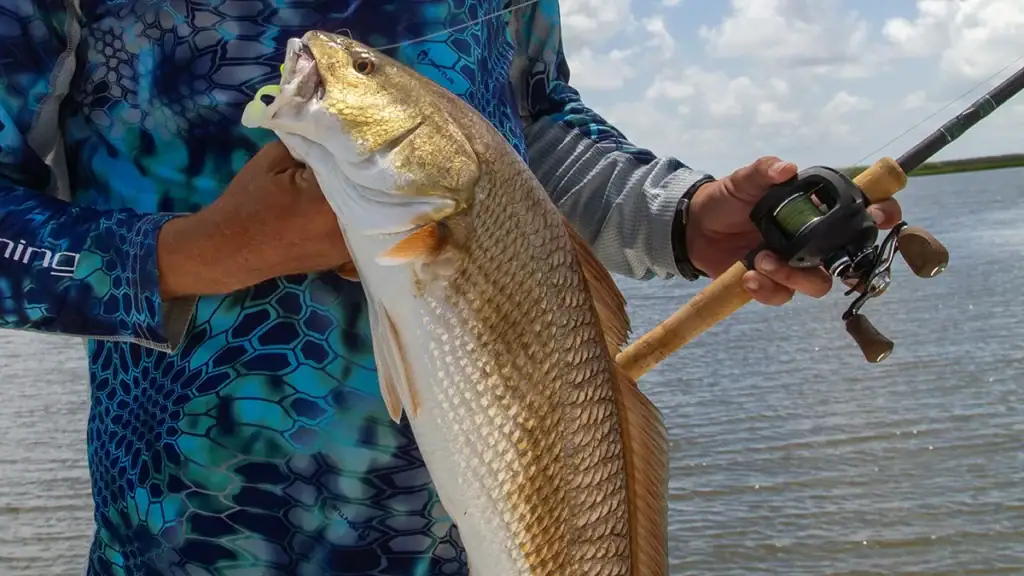
Without overthinking it, I want you to consider a couple designs and features when picking out a baitcaster. Anglers want what works best for them, so they might use specific designs and features differently. So I’m not here to tell you what to pick — instead, I want you to know what to look out for. A baitcaster isn’t a one-size-fits-all tool; different models often work better for a specific technique.
Gear Ratio and IPT (Inches Per Turn)
Anglers love to talk about gear ratio, but here’s why Inches Per Turn (IPT) is the stat that actually matters. It tells you exactly how much line you’re picking up with a single rotation of the handle. Gears ratio and inches per turn are slightly different, but they each are related. A higher gear ratio does lead to more inches per turn. Reels producing a 8.1:1 to 10.1:1 ratio tend to handle jigs, worms, frogs, and flipping best. The 7.1:1 to 7.5:1 reels are for throwing spinnerbaits, bladed jigs , or topwaters. And 5.3:1 to 6.3:1 reels are those workhorses meant for lures such as deep-diving crankbaits. You need the low-gear torque to pull a big plug.
Frame Material
Rigidity wins over anglers, although the exact material might not be as important. If your reel frame twists under heavy pressure, the internal gears misalign. That means lost cranking power and a reel that will grind itself to pieces. Aluminum or magnesium are proven materials, although they can be pricey. Each is light, incredibly rigid, and absorbs the vibration of the lure. Graphite or composite materials are much more budget friendly, and I still think it is a quality option for the weekend angler.
The Braking System
You can’t catch fish if your line looks like a bird’s nest. Anglers, especially new casting anglers, are always looking for a shortcut when it comes to tangles. There’s no skipping this step, so you must develop a feel for your baitcaster. You have to train your thumb to feel the spool when it starts over rotating. And even specific on-the-water conditions can trip up an experienced angler. So it helps, no matter your skill level, to have a quality braking system. Options include:
- Centrifugal brakes use internal weights to slow the spool down at the beginning of the cast when the spool is spinning fastest.
- Magnetic brakes apply constant pressure throughout the entire cast. They are highly reliable and easy to adjust externally.
- Digital systems utilize newer tech that actually reads the spool’s RPMs hundreds of times per second.
There are some other considerations to look into, although they’re not as important to me. Many anglers like to be able to palm a lightweight reel for all-day casting. One thing that I look for is a reel with oversized EVA or rubberized power knobs — they’re just easier to grab onto and crank.
One last consideration is drag smoothness. With top-end reels, they all utilize slightly different tech or design to get the job done. But what to look for is startup inertia. That means when a fish takes a last-second dive or jumps near the boat, a quality drag has to give just a little before engaging so it doesn’t rip the hooks out of a soft-lipped fish such as a seatrout of flounder. Find a drag that’s not going to catch tight instantly, but has the ability to slide just slightly initially.
How We Tested
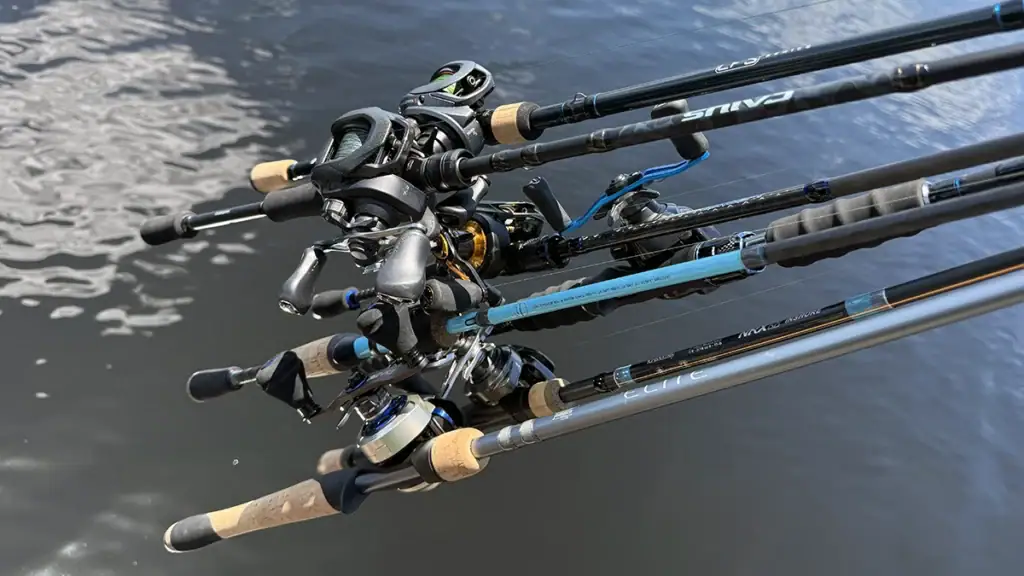
I tested all the baitcasting reels in this buyer’s guide by hand on the water. I fished them in Florida’s salt waters using the most popular fishing techniques today. I was looking for things like strength and durability, performance and castability. Were there any obvious problems? Are the reels made from high-quality materials and waterproof construction? Were any reels showing early deterioration? How’d they perform during the fight? That’s what I looked for when fishing in Florida’s 80-degree spring and 90-degree summer this past year. The reels that didn’t perform did not make the cut, but the reels that did make it into this guide I feel confident fishing.
Best Brands
Why Trust Us
At Wired2fish, I have my hands on many different rods and reels, including plenty of saltwater gear. I’m able to test these baitcasting reels on the water in real-world situations that everyday anglers experience. I’ve fished saltwater and freshwater fisheries across the Southeast for more than 25 years. These days, I’m mostly fishing the Florida coasts and interior waters. By combining the fishy experiences of a seasoned angler with the stubborn opinions of an outdoor writer, I offer field-tested data bridged with reel specs paired to real-world applications on the water. Our saltwater baitcaster guide is here to help you find the reel that works best for exploring the bays, rivers and marshes.