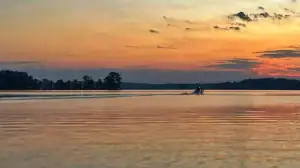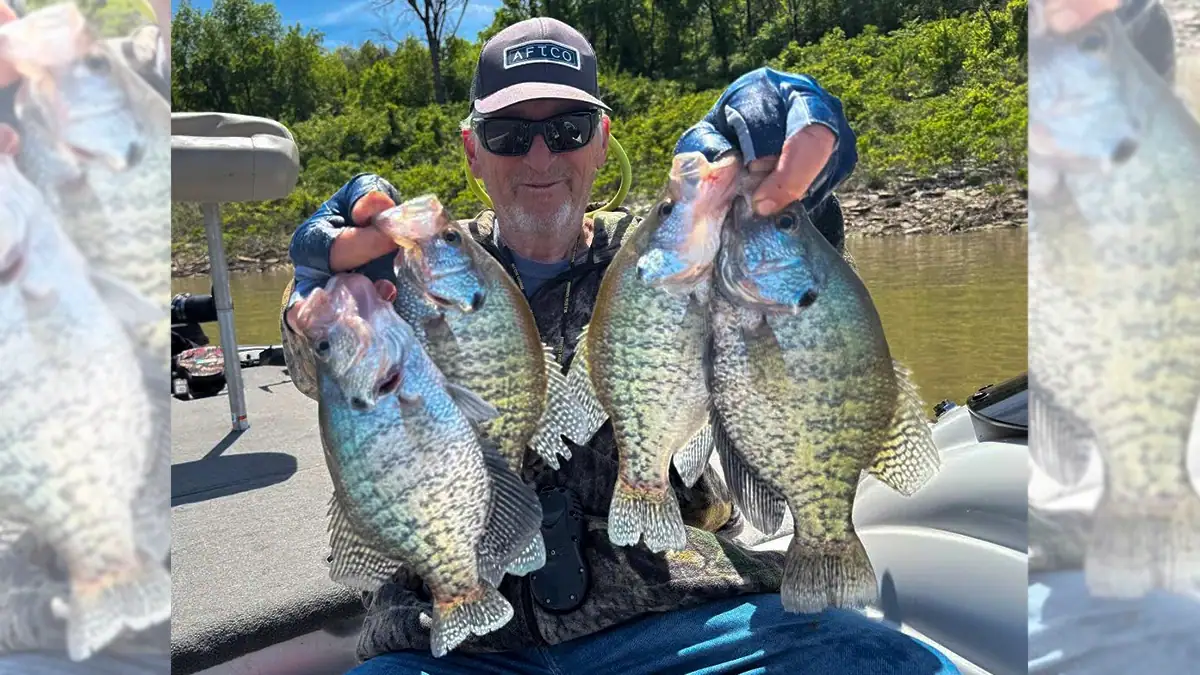
These are good times at Tuttle Creek Reservoir in northeast Kansas.
The 12,000-acre body of water has long been known for its big crappies. But frequently, those fish are inaccessible to anglers during May when the fish move in to spawn.
Because Tuttle has a big drainage area, it is susceptible to flooding during the spring rainy season. Boat ramps are flooded and even bank fishing opportunities are restricted.
But in a spring with some normalcy, crappie fishermen are rewarded for their patience. Take it from Rick Dykstra, longtime fisherman and tourism promoter.
Scouting for Spots
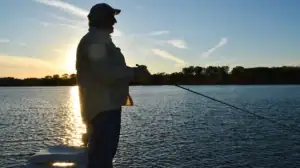
In early May — traditionally the start of the crappie spawn — he launched his boat at mid-lake to find the big fish Tuttle is known for. The water level was almost 10 feet above normal, but that amounted to a drop in the bucket at Tuttle.
“I’ve seen Tuttle when the water level was a lot higher than this,” Dykstra said. “When we have heavy rain, there’s major flooding and you can’t even fish this place. But this is fishable.”
Dykstra started by working several coves with rocky banks and found minimal success. But that quickly changed when he motored to the back of one shallow pocket where the bank transitioned from chunk rock to gravel.
“This looks like a perfect little spawning bank,” he said of the location. “It’s calm back here, the water temp is in the 60s, and there’s a little vegetation.
“This might be what we were looking for.”
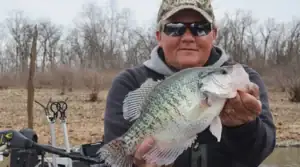
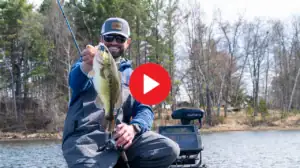
Dykstra used his light-action rod to flip a white Road Runner to the shallows. No sooner had it landed than he felt a distinctive thump. He set the hook and yanked a fat crappie to the surface.
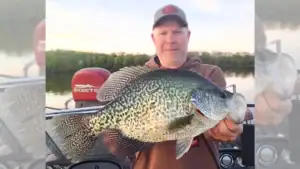
With his boat positioned at the same spot, Dykstra and I continued to catch big crappies one after the other.
“I can’t believe one little bank will hold that many fish,” Dykstra said. “We fished all down the rock banks in this cove, and nothing. Then, we catch 20 big crappies in one little pocket.”
The Magical Month of May
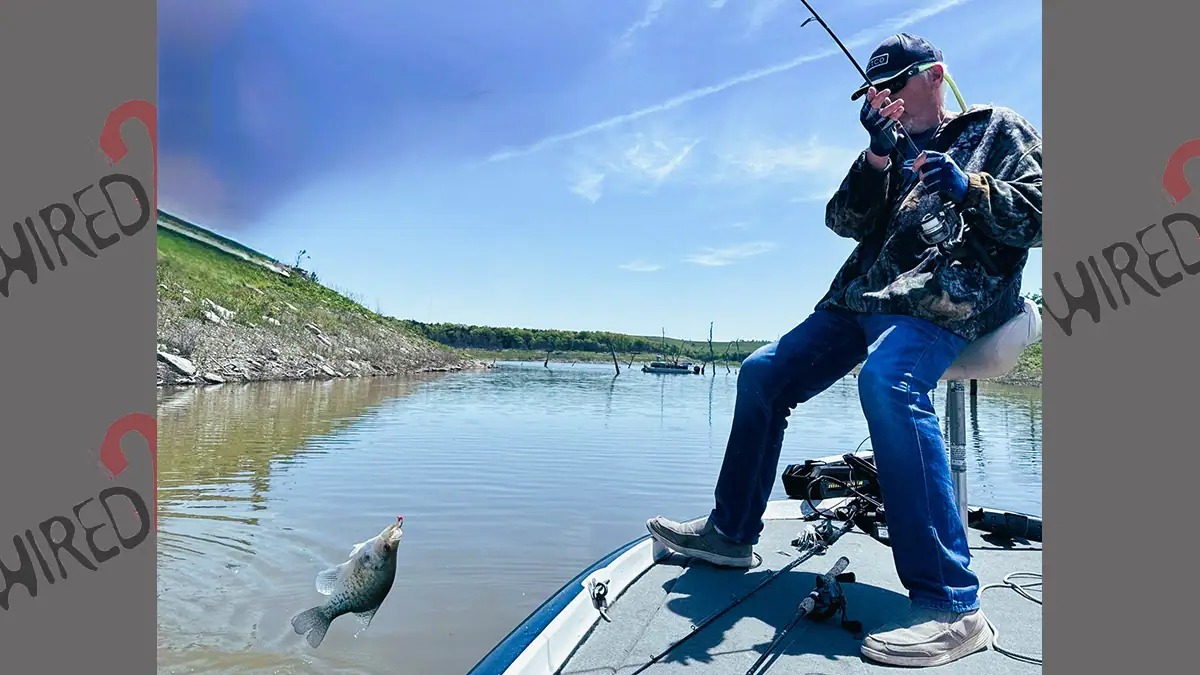
Welcome to May in Kansas. When the crappies move shallow to spawn at reservoirs such as Tuttle Creek, anglers can experience some wild action. But not every day. And not every place.
It’s more than just heading to the nearest rock or gravel bank and casting jigs or minnows to the shallows. Catching crappie is the easy part; finding them is the challenge. The slightest cold front or water fluctuation can cause the crappie to retreat to deeper water, only to try again once conditions stabilize.
But when you hit it right like Dykstra and I did, you can enjoy frenzied fishing.
“It’s been a while since I’ve caught crappie like this at Tuttle,” Dykstra said.
He wasn’t alone. Others who flocked to the Midwestern college town of Manhattan also enjoyed an impressive week of fishing.
Dykstra proudly went old-school to catch those fish. His boat has plenty of fish-finding electronics — including forward-facing sonar — but due to connection problems, they weren’t working that day. So instead of keeping his eyes locked on an oversized screen, he studied the bank for clues as to where crappie would be.
“That’s the nice thing about spring,” he said. “When the fish are on the banks and the weather is stable, you don’t really need your electronics.
“You’ll see people fishing off the banks catching fish.”
The Resurgence of Tuttle Creek
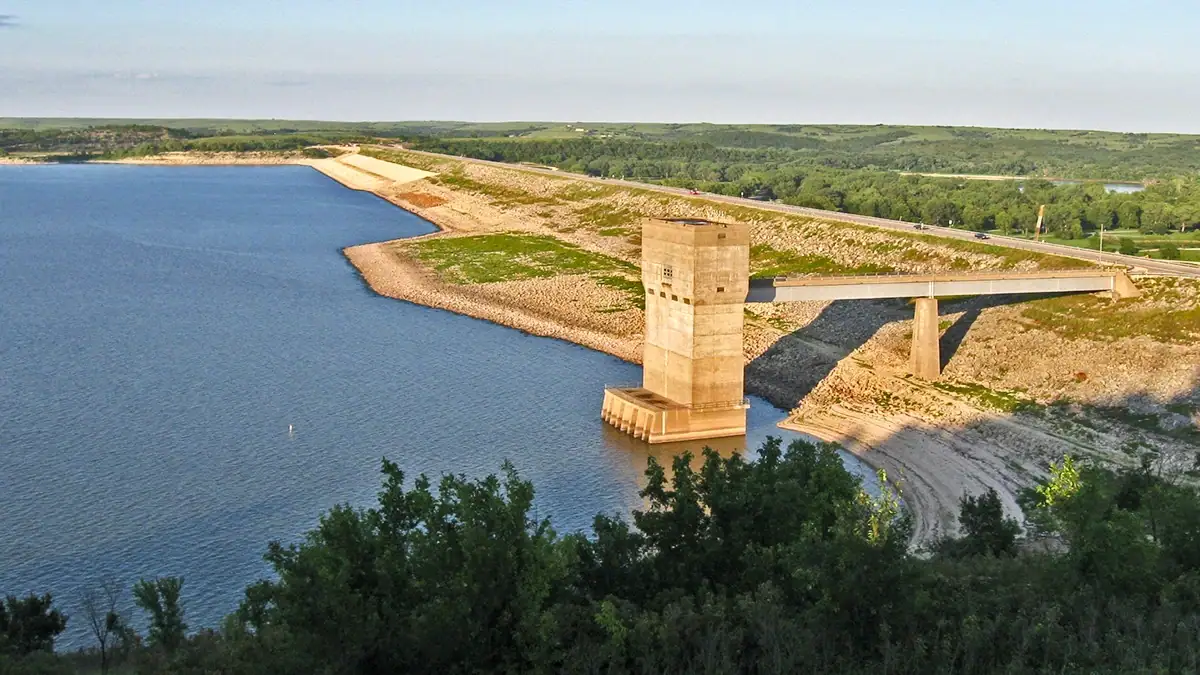
Tuttle Creek’s crappie population is seeing a boom.
“What has really been impressive for the last five years is the size structure,” said Ely Sprenkle, a fisheries biologist for the Kansas Department of Wildlife and Parks. “We’ve had the highest number of crappies over 10 inches in the history of the reservoir (it was built in 1962).”
Because of its limited habitat, Tuttle still can’t match some other Kansas reservoirs for density of crappies. But Tuttle Creek may win honors for biggest comeback — a trend that, according to Sprenkle, started with 2019’s flood.
“We had a big spawn in 2017, so there already were good numbers of crappies out there,” he said. “Then we had the flood of 2019, and the Corps held the water high all summer long. There was all kinds of new flooded vegetation, which is excellent fish habitat, and the fish just went gangbusters.”
Since then, the reservoir has continued to maintain its production of impressive-sized crappies.
“Crappies grow fast and die young in Kansas,” Sprenkle said. “But with the shad population we have, we’re seeing a good growth rate for our fish.”
A Boom Beyond Tuttle
Kansas, as a whole, offers great crappie fishing. Most of the state’s 24 major reservoirs hold healthy populations of the popular panfish. And May is the time to find them shallow.
Dykstra, who does promotional work for Acorns Resort on Milford Lake, offers a unique challenge for anglers wanting to experience spring crappie fishing in Kansas: base at Milford and fish there the first day; Tuttle Creek on the second day; Council Grove Reservoir on the third. Hit it right, he said, and you’ll go home with a lot of fish in your cooler. All three waterbodies are known for their excellent crappie fishing and are within a short drive of each other.
Other regions of Kansas offer clusters of good crappie fishing, too. In the east, Clinton, Perry, and Hillsdale are close and are traditional crappie producers. In the east-central, Melvern and John Redmond offer good spring fishing. And in the southeast, Fall River, Elk City and Big Hill are known for their large crappies.
And since the spawn can stretch throughout the month of May, it’s not too late.
“I think a lot of people would be surprised at how good our crappie fishing is,” Dykstra said. “We don’t have the big fish that states like Mississippi do, but we have good numbers of quality fish and a lot of places to catch them.”