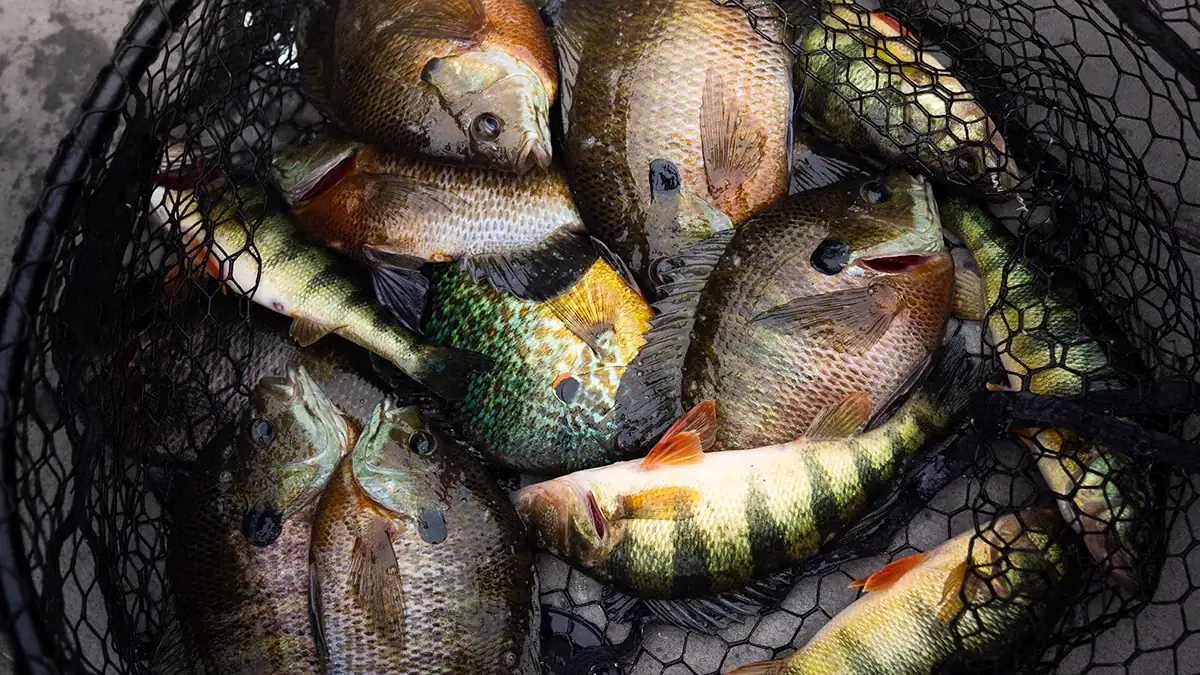
When most anglers think about panfishing with artificials, their minds immediately go to live bait or tiny soft plastics. Think wax worms under a float, micro tubes, small grubs, or swimbaits, all of which works very well.
But there’s a category of wildly overlooked lures in the panfish world: small hard baits. Tiny crankbaits, micro jerkbaits, lipless cranks, and even small topwaters, which can be some of the most effective panfish lures you’ll ever throw. And they’re not only effective, but also efficient, aggressive, and flat-out fun.
I’ll be honest, something I’ve known for years and always tried to keep it on the down low is that big panfish love hard baits. Once you understand why, it becomes clear why hard baits deserve a permanent spot in your tackle box.
Panfish are Visual Predators
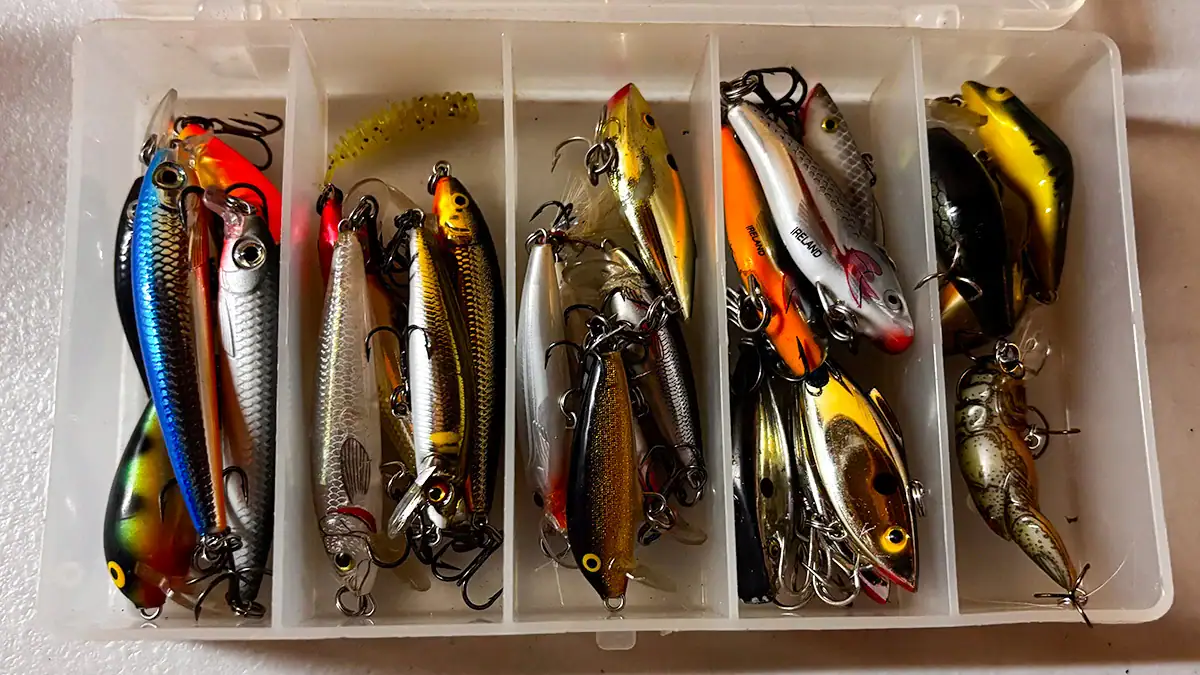
A common misconception is that all panfish are strictly “bite-sized bait” eaters that need subtle, slow presentations to get them to commit. In reality, panfish are extremely visual and opportunistic predators. They spend their entire lives eating small baitfish, aquatic insects, larvae, and anything that looks vulnerable. Small hard baits excel because they trigger reaction strikes.
The flash, vibration, and erratic movement of a hard bait mimics a fleeing or injured baitfish, and something in a panfish’s mind is wired to attack and react. A tiny one-inch crankbait ripping past a school of crappie doesn’t give them time to think. They either eat it or miss it.
This is especially true in clear water, pressured lakes, or situations where panfish see a steady diet of soft plastics and live bait. There are places where if you can see them, they can see you.
Hard Baits Cover Water
One of the biggest advantages of small hard baits is how efficiently they allow you to find fish. Instead of soaking bait or slowly hopping plastics, you can fan-cast an area and quickly locate active panfish. This is huge for:
- Searching weed edges
- Covering shallow flats
- Suspending/roaming fish
A micro crankbait, lipless, or jerkbait lets you dial in depth and retrieve speed quickly. Once you find fish, you can slow down or keep firing if they’re aggressive to react and chase.
Hard baits don’t just catch fish; they help you pattern fish and figure them out. This is especially true for finicky panfish.
They Imitate What Panfish Actually Eat
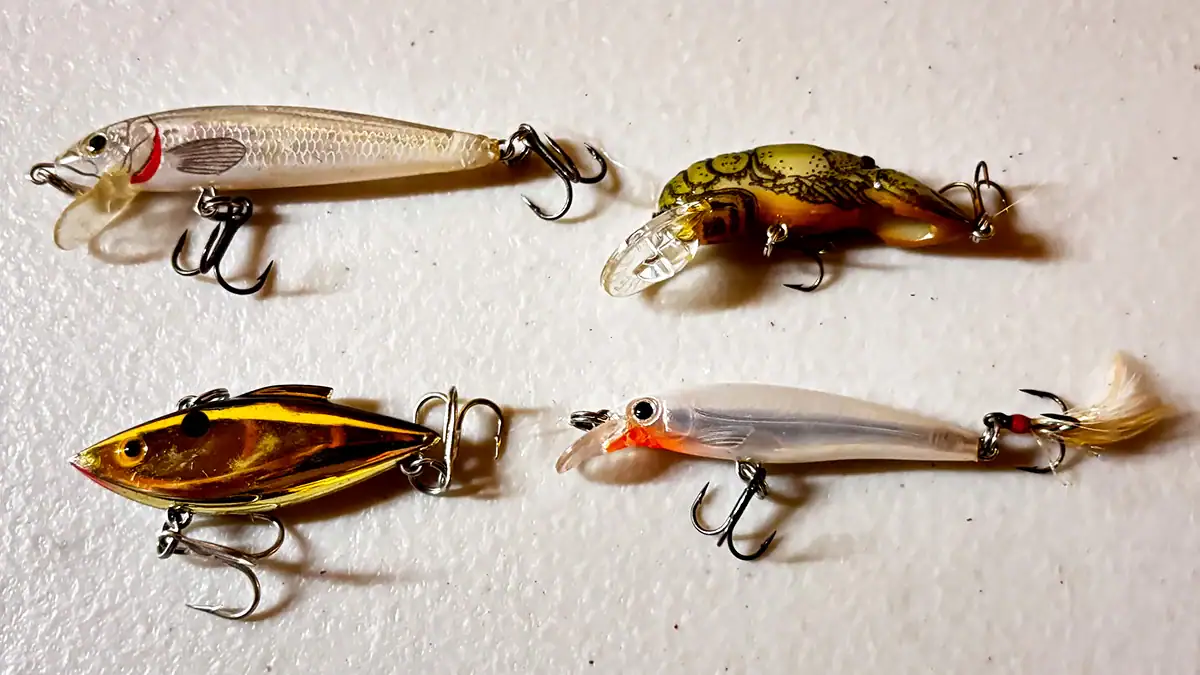
Panfish don’t only eat bugs. In many systems, especially as fish grow larger, baitfish and crustaceans make up a significant portion of their diet. Small hard baits perfectly imitate:
- Young-of-the-year minnows
- Gobies
- Crayfish
- Small perch or shad
Tiny jerkbaits and crankbaits have realistic profiles, plenty of action, and consistent movement that soft plastics can’t always replicate. Even subtle baits like micro suspending jerkbaits can be deadly when panfish are keyed in on small baitfish but won’t commit to live bait.
Cold Water and Hard Baits Go Hand in Hand
One of the most overlooked times to throw small hard baits for panfish is in cold water, like late fall, early spring, and even through the ice.
Small lipless cranks and micro suspending baits shine when fish are lethargic but still feeding. A slow lift-and-drop or gentle twitch keeps the bait in the strike zone while still giving off vibration and flash.
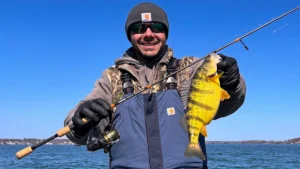
Perch and crappie in particular respond extremely well to vibration-based hard baits when water temps drop and soft plastics lose their action.
They Trigger Bigger Bites
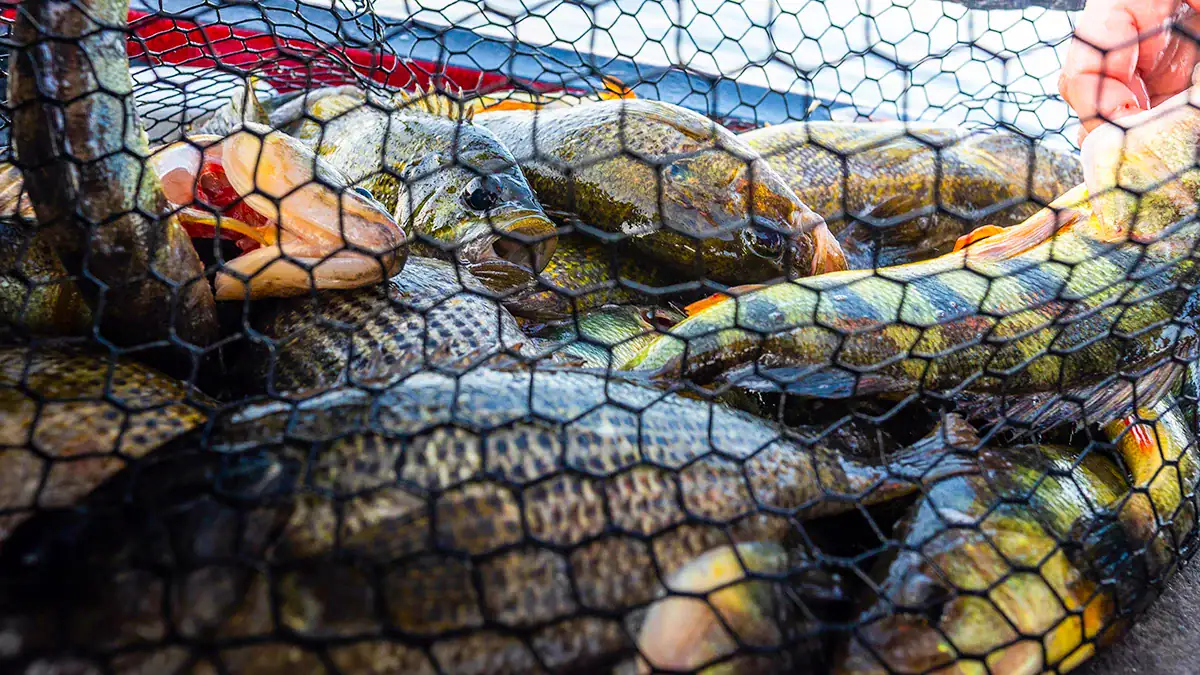
If you’re tired of catching nothing but dinks, hard baits can help you target larger panfish.
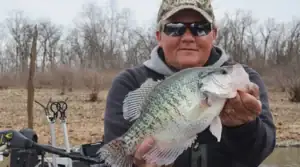
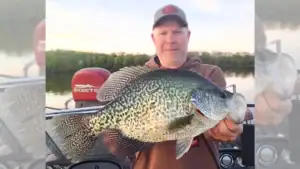
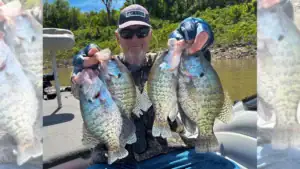
Bigger bluegill, jumbo perch, and slab crappie are far more willing to chase and eat hard baits than smaller fish. The added size, movement, and aggression tends to weed out the smallest fish and appeal to dominant feeders.
This doesn’t mean you won’t catch numbers — you will — but your average size often jumps noticeably. Especially when targeting those bigger panfish, particularly big bull bluegills, they will key in on those larger baits. And, let’s be honest, who doesn’t want a cooler full of big panfish?
My Favorite Panfish Hard Baits
I’ll admit, it seems like most companies have some sort of micro hard bait that they offer for panfish. But, there are a few that stand out from the rest. Here are a few that have worked for me over the past few seasons.
- Rapala X-Rap (Size 04) — Ever since the introduction of the X-rap lineup, they’ve been a fish catcher for all species. When Rapala released the four-centimeter size, it became a staple in my box for big bluegills, perch, and crappies. Especially giant bluegills from the pre to post spawn periods can’t resist the action and small feathered back treble.
- Rapala Husky Jerk (Size 06) — When the water is super cold during the ice-out period, the smallest size husky jerk can put on a clinic. Fished around shallow structures like rock and wood, the slow rise this little bait offers on the pause drives big panfish to eat, especially early spring crappies.
- Bill Lewis Tiny Trap — Of all the micro traps on the market, this one is hard to beat. Whether vertical jigging through the ice, burning it over the tops of weeds, or yo-yoing it over rocks, this bait can cover it all and put a lot of big panfish in the boat.
- Rebel Teeny Pop-R — Not many people think of topwater baits for panfish, but big bull gills go nuts for a teeny Pop-R. The popping motion on the surface paired with the feathered rear treble makes something a curious bluegill or crappie can’t refuse.
- Rebel Teeny Wee Crawfish — Arguably one of the most popular panfish crankbaits on the market, this little crayfish imitator flat out catches them. Originally designed to be fished in rivers or creeks for a multitude of species, this little bait excels for panfish. They are the perfect little snacks paired with sharp trebles to get the job done every single time.
Gear Matters, But Keep It Simple

To get the most out of small hard baits, light gear is key. Having the right rod and reel for the job is crucial to both keeping the fish hooked and the retrieval of the bait. Ultra-light or light spinning rods, thin-diameter line, and smooth drags allow the bait to work naturally while still protecting light-wire hooks.
My go-to rods are either a G. Loomis GCX Lite or a Shimano Compre Lite panfish rod in the seven-foot size length with a light action. An ultralight is a hair too whippy for these hard baits. I pair these rods with a 2000 size Shimano Vanford Spinning Reel with five-pound test Power Pro Braid. Braid isn’t ideal with hard baits but the light braid ensures a long cast. I will always pair my braid with a long 10-foot leader of Shimano Mastiff Fluorocarbon in five-pound test. This ensures a little bit of stretch in the line to absorb the shock of the reaction bait.
Final Thoughts
Small hard baits aren’t just “something different” for panfish: They’re one of the most underutilized and effective tools available. They trigger reaction strikes, cover water, imitate real forage, and consistently catch bigger, more aggressive fish.
If you’ve never tied on a micro crankbait or tiny jerkbait for bluegill, perch, or crappie, you’re missing out. Next time the bite feels slow or the fish seem bored with live bait, tie on a small hard bait and see what happens. I promise you’ll be a believer in no time.
Panfish might be small, but they’re predators at heart. And hard baits ring the dinner bell for a bigger meal.