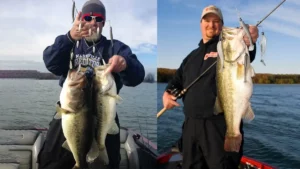
In a fishing world that seems completely dominated by forward-facing sonar (FFS), it’s easy to think you need the latest tech to stay competitive. But here’s the truth: long before FFS ever existed, anglers were quietly catching suspended bass using nothing more than discipline, boat control, and traditional 2D sonar. To many, this seemed impossible. But to others, it was a secret technique requiring serious skill (and still does!).
That technique is tight lining — or often called “moping.” When you learn how to do it right, it’s one of the most efficient and deadliest ways to target suspended fish, especially in cold water or high-pressure conditions. The best part is, you don’t need FFS to do this. Just you, your 2D graph, and a minner.
What is It?
At its core, tight lining is vertical fishing with a jighead/minnow combo where you keep your bait directly below the boat while monitoring fish on 2D sonar. There’s no casting. No chasing individual fish on a screen. Just you dropping on what you think is a bass.
Instead of casting to fish on FFS, you locate fish using 2D sonar, position your boat into the wind directly over them, drop your bait when the on-screen marks appear, and control the bait with the most subtle movements, watching your line and the fish reacting to the bait.
It’s simple in theory but highly technical in execution. If you’ve ever been ice fishing and used the 2D sonar for that, it’s the same concept but on a boat in open water. And it’s a lot harder than you think.
Why It Still Works Without Livescope
The biggest misconception in modern bass fishing is that suspended fish are “uncatchable” without forward-facing sonar. That’s just not true at all. 2D sonar excels at one thing: showing you what’s directly under your boat. And when bass are grouped up — whether they’re suspended over deep water, relating to bait, or sitting off structure — you don’t need to see individual fish swim to your bait. You just need to know they’re there. And more importantly, you need to present something that looks easy enough to eat.
That’s exactly what moping does. It presents a bait in a vertical fashion suspended right over their heads.
Finding the Right Fish
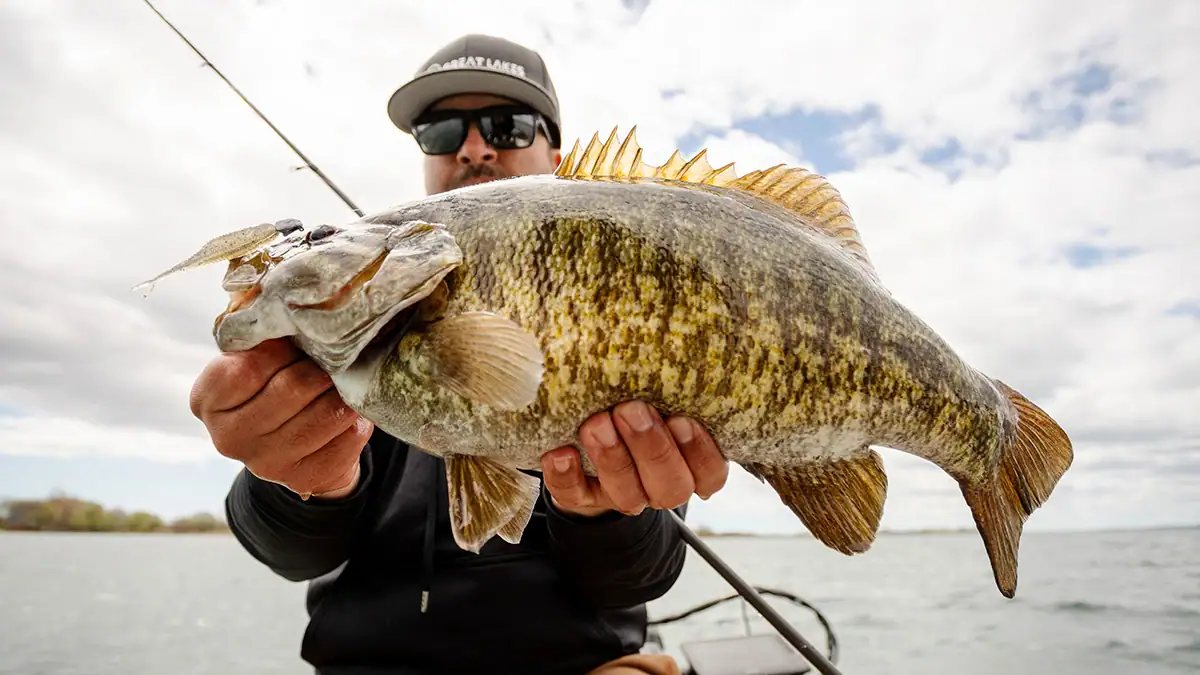
Tight lining is not a run-and-gun technique. It’s about identifying high-percentage areas and committing to them. On your 2D sonar, you’re looking for:
- Suspended arcs or clusters
- Bait balls with marks around or beneath them
- Fish positioned just off bottom in deeper water
Key areas include:
- Bluff walls
- Channel swings
- Points dropping into deep water
- Basins where baitfish suspend
One of the biggest keys is depth consistency. If you find fish suspended at, say, 25 feet over 50 feet of water, you can often duplicate that pattern across similar areas across the river or lake you’re fishing. Fish will always move throughout the water column, so it’s important to look at the whole water column, not just a portion.
Boat Control is Everything
Without Livescope, your boat position becomes your “targeting system.” You want to stay as vertical as possible. That means:
- Keeping your line straight up and down
- Minimizing bow in your line caused by wind or drift
- Using your trolling motor to hover directly over fish
If your line starts to angle away from the boat, you’re no longer presenting your bait naturally. It swings, rises, and loses that subtle, hovering action that triggers bites. A good rule is if you’re not vertical, you’re not really moping.
The Right Setup
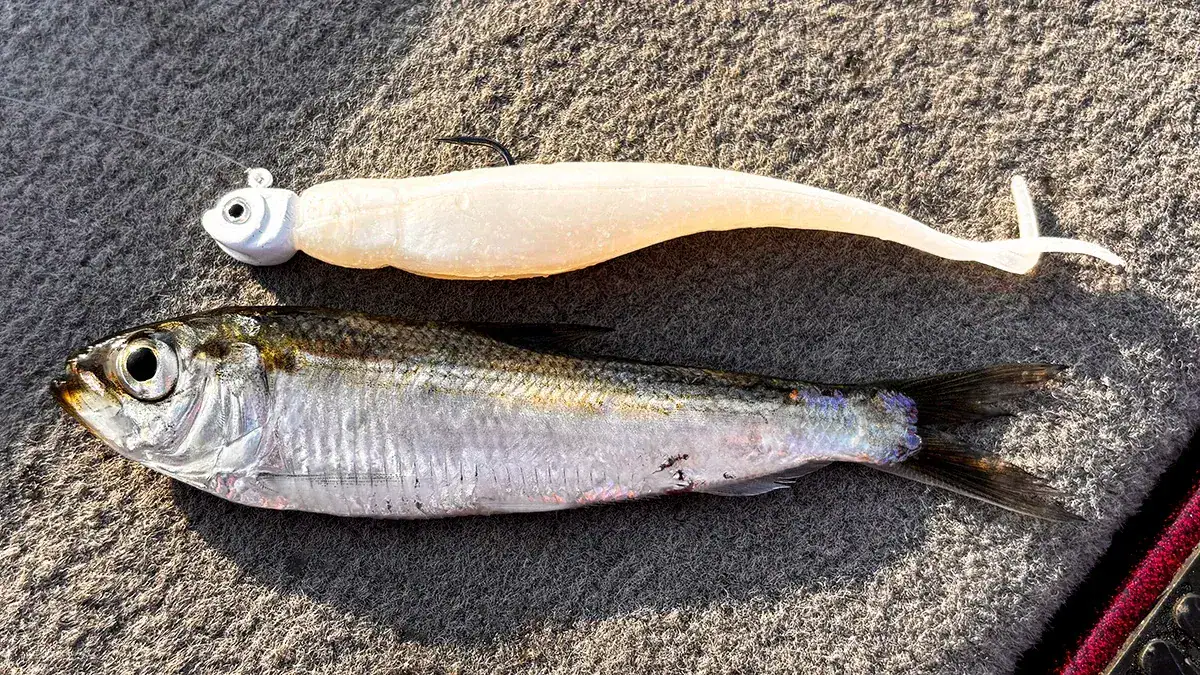
You don’t need anything crazy, but your gear does matter.
Rod
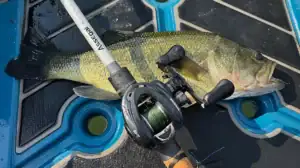
A medium-light to medium spinning rod with a soft tip. You want sensitivity, but also enough give to keep fish pinned on light wire hooks. There’s a million different spinning rods that fit the bill for this, but both Shimano and G. Loomis make a variety of rods that fit the needs of moping perfectly. Whether it’s a Zodias, Expride, GLX or NRX, there’s a rod in their lineup that will work perfectly. Some anglers love longer rods. I personally love rods in the six-foot, 10-inch range: long enough to control the bait and the fish when you hook them.
Line
Most anglers use light line. Light braid for sensitivity with a light fluorocarbon leader to be natural in the water. I’m a huge fan of five pound test Power Pro Braid to an eight pound Shimano Mastiff FC leader. The lighter your line, the more natural your presentation — and the better for staying vertical.
Jighead and Minnow
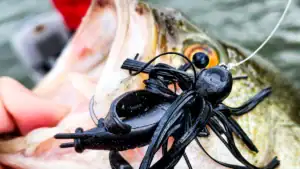
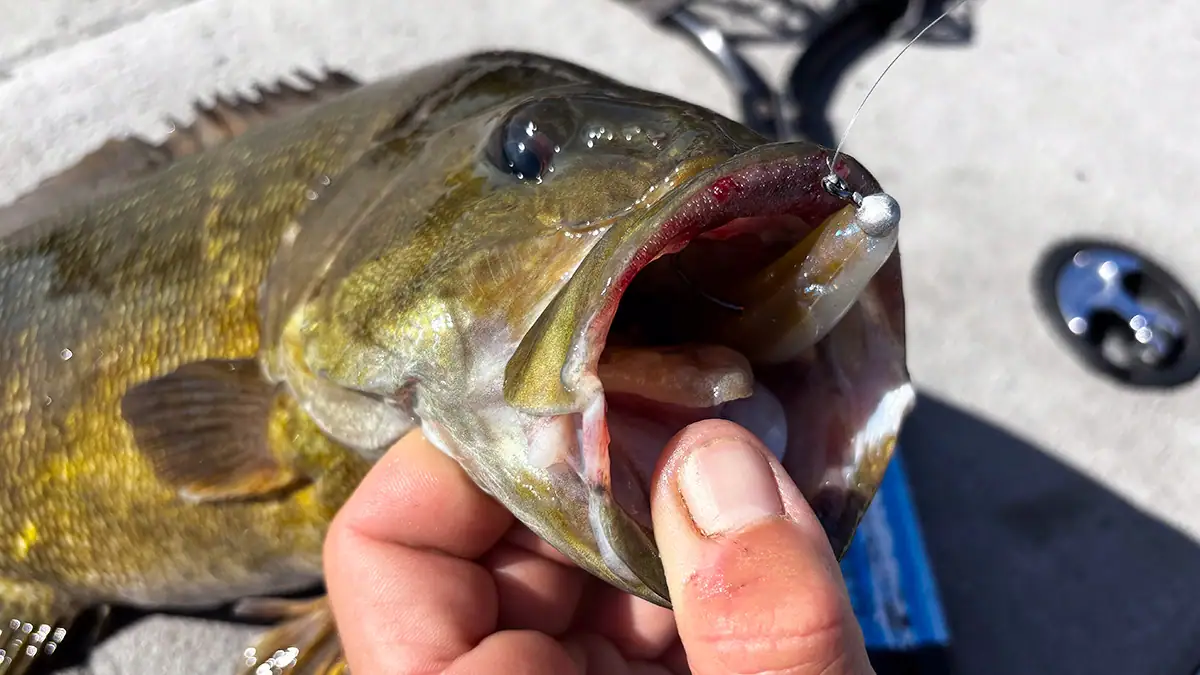
This is the heart of the technique, the bread and butter of this presentation. Without the right jighead and bait combination, this technique would be dead. Jigheads typically range from quarter- to half-ounce, depending on depth and wind. Northland Tackle makes the Smeltinator Jighead designed by Bassmaster Elite Series Pro Jeff “Gussy” Gustafson. Gussy made moping famous when he won the Bassmaster Classic a few years back. Moping originated in the Lake Of The Woods area working with Northland, they were able to create one of the best moping heads on the market.
When it comes to modern minnow baits, there are thousands on the market. They range from two-inch baits all the way up to seven inches, mimicking every baitfish a bass could eat. Some of my moping favorites include:
- Rapala Crush City Freeloader
- Strike King Z-Too
- Z-Man Scented Jerkshad
- Rapala Crush City Mooch Minnow
You’re not trying to trigger reaction strikes: You’re imitating something dying or barely moving. These baits all don’t have a lot of action, and surprisingly, that’s what you want when moping.
The Presentation: Less is More
This is where most anglers mess it up. Moping is not jigging. It’s not snapping or aggressively working the bait. It’s about subtle control of your bait to make it look like a baitfish just swimming around.
Drop your bait down to the depth where fish are marked. Then:
- Hold it steady
- Slightly shake your rod tip (barely)
- Occasionally lift it a foot or two and let it fall back
That’s it. The magic happens in the stillness of letting the bait move with the current. The bait hovers, quivers, and looks vulnerable. A lot of bites will feel like:
- Extra weight
- A slight “tick”
- Or just your line tightening
Sometimes, the only indication is your line stopping before it should. The bite is that subtle. When in doubt, set the hook. You never know if it could be a fish.
Reading Your 2D Sonar
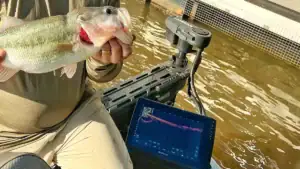
You don’t need to see your bait to be effective. That’s the biggest mental shift. Instead, use your sonar to:
- Stay in the correct depth where the fish are
- Confirm fish are still below you and that you’re in their zone
- Track bait movement through the water column
If fish disappear, reposition the boat to be back on them. If you mark them again, drop back down. You’re not reacting to individual fish; you’re fishing a zone where the fish are sitting.
When Tight Lining Shines
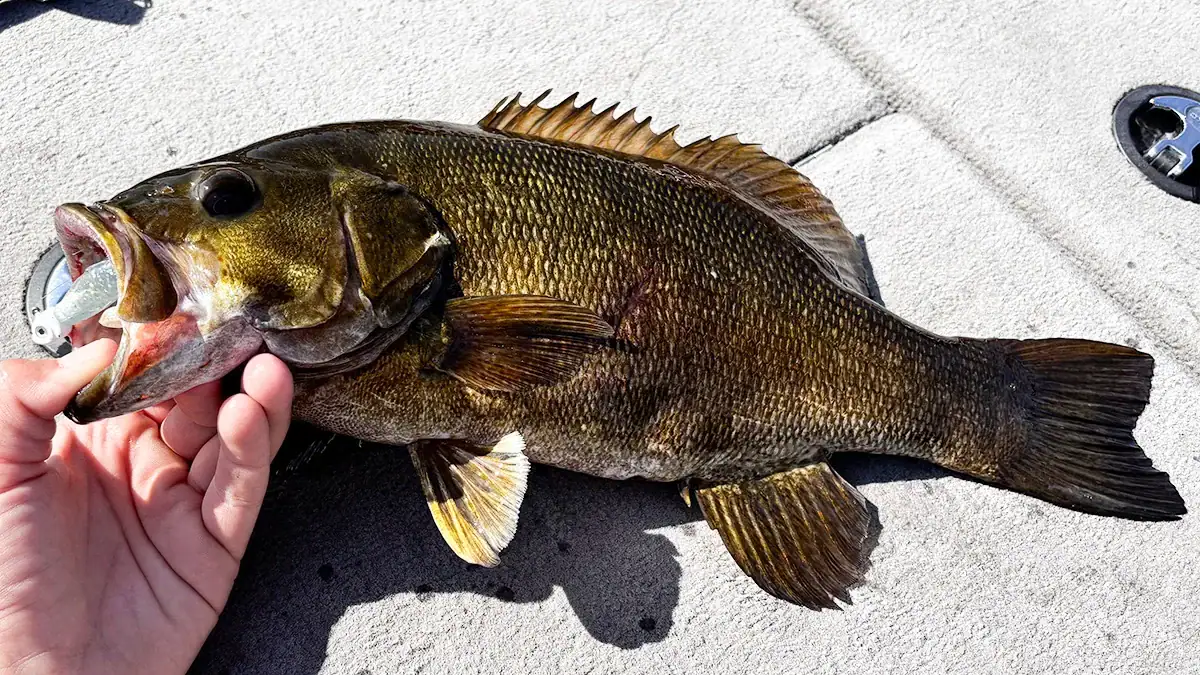
This technique is especially effective in cold-water situations (late fall, winter, and early spring) when bass are lethargic and suspend more. They don’t want to chase bait for long distances. They want a meal as lethargic as they are.
Post-front conditions make for high pressure, which also calls for fish that are less aggressive. A slow, vertical bait keeps them engaged and contemplating a meal that’s too good to resist.
Deep, clear lakes are where this technique really shines. In most cases, these are pressured fisheries and most of the bass are suspended around bait. Most likely these fish have seen every moving bait in the book, and often fall for something subtle and stationary.
Common Mistakes
Even experienced anglers struggle with moping because it requires so much patience and discipline. Most anglers are fishing too aggressively. This is when big movements kill the presentation.
Not staying vertical is a huge problem. If your line is at an angle, you’re already out of position.
Using too heavy of a line reduces sensitivity and natural movement.
Lastly, leaving fish too quickly is the biggest problem. If they’re there, they can be caught. Give it time and have some patience.
Final Thoughts
Tight lining isn’t flashy. It’s not exciting to watch. And it definitely doesn’t rely on high-end electronics. But it flat-out catches fish.
In a time where everyone is chasing bass with FFS, there’s something incredibly effective about slowing down, fishing vertically, and trusting what’s under your boat.
Because at the end of the day, bass don’t care what technology you’re using. They care about an easy meal. And a perfectly presented jighead/minnow hovering right in their face? That’s about as easy as it gets.