Forget the gloomy days of the late 2010s when Kentucky Lake’s bass fishing hit rock bottom.
The sprawling reservoir on the Kentucky-Tennessee state line has made a dramatic comeback. The smallmouth bass population is at a record high. And largemouth numbers are steadily increasing after a disappointing stretch where they were hard to come by.
Boom times? Well, yeah, kind of. Huge bass are being caught, major tournament circuits are showing up again and tourism is flourishing.
No doubt, Kentucky Lake is back in the national spotlight.
“It’s impressive the way our bass fishing has come back so quickly,” said Jake Lawrence, a Major League Fishing pro who lives in Paris, Tenn. “I can’t think of many places in the country that have the combination of smallmouth and largemouth we do.”
And occasionally, those species intersect to produce dramatic results.
“I’ve had times in May and June when the bass are off-shore, and I’ve caught a 4-pound smallmouth on one cast and a 4-pound largemouth on the next,” said Lawrence, who has fished Kentucky Lake since his childhood. “Now, that’s fun.”
The Comeback
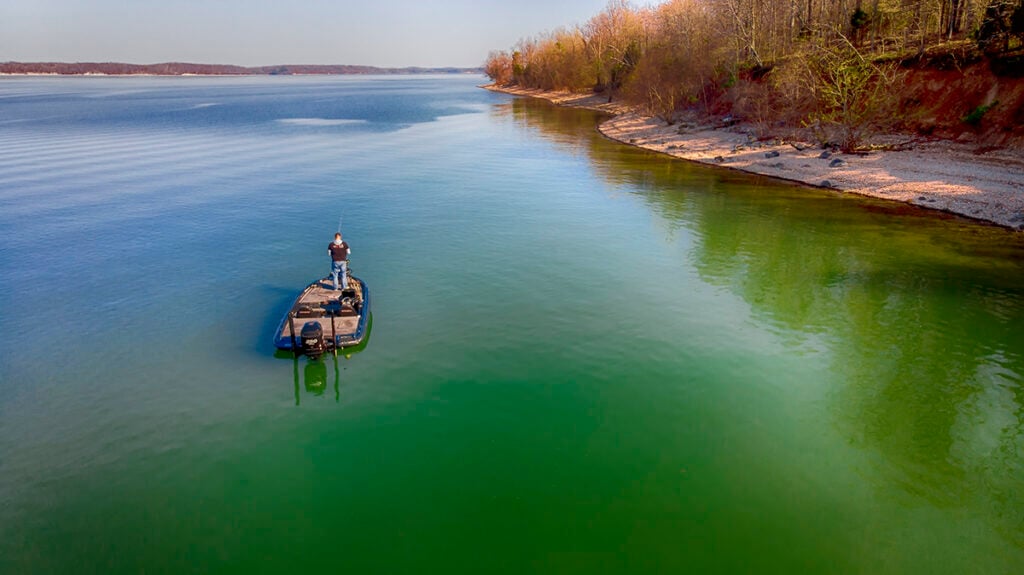
Kentucky Lake wasn’t always that fun.
Many fishermen remember the mid 2010s when they were on the struggle bus. After several bad spawns, weather extremes, and an invasion of Asian carp, bass populations tanked.
So did Kentucky Lake’s famous crappie fishing.
“In 2015, Asian carp numbers skyrocketed,” said Adam Martin, a regional fisheries biologist for the Kentucky Department of Fish and Wildlife. “They got into the lake through the lock system from the rivers.
“Some people blame the carp for the downturn in the bass fishing, but that’s an oversimplification. The largemouth population was already down after several years of poor spawns.
“The carp were just part of the problem.”
A task force worked hard to reduce carp numbers by encouraging commercial fishermen to target the invasives and remove them. That succeeded in a big way; carp populations plummeted.
Bass began showing up more frequently on the ledges that once were overtaken by big schools of invasive carp. And the spring weather cooperated, allowing the bass to pull off several large year-classes. As the forage base came back strong, so did the gamefish—the bass, crappies, redear sunfish, bluegills, and catfish.
Meanwhile, the smallmouth enjoyed a population boom as the water became clearer and more gravel and cobble habitat was exposed.
That set the stage for Kentucky Lake’s resurgence.
Kentucky Lake Stats

- Location: on the Kentucky-Tennessee state line.
- Breakdown: 68 percent of the lake lies in Tennessee; 32 percent is in Kentucky.
- Age: Built in 1944
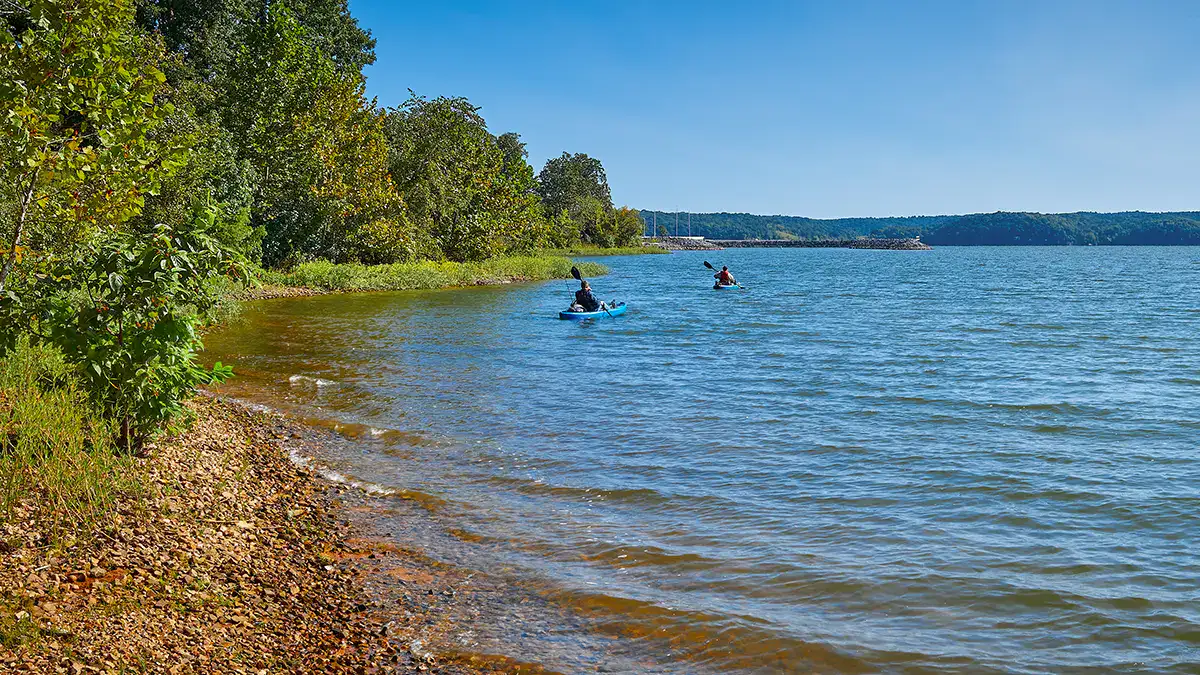
- Size: 160,309 acres; 2,064 miles of shoreline.
- Did you know?: Kentucky Lake is the largest manmade reservoir east of the Mississippi River.
- Management: Tennessee Valley Authority. Connected to Barkley Lake by a canal. The acreage between the two massive reservoirs, which run north to south, makes up the Land Between the Lakes National Recreation Area.
- Boat ramps: Kentucky Lake has 48 public boat ramps. To find ramps on the Kentucky side, go to https://app.fw.ky.gov/fisheries/waterbodydetail.aspx?wid=64 On the Tennessee side, go to TWRA Boating and Fishing Access Map.
- Fishing: Known for its excellent bass fishing. In recent years, Kentucky Lake has supported one of the nation’s best smallmouth bass fisheries. Its largemouth bass population is on the rebound after a period of subpar production.
- Also…: Kentucky Lake also offers outstanding fishing for bluegills, redear sunfish, crappie, and catfish.
- Lodging: Kentucky Lake offers a variety of lodging options, from resorts to motels to campgrounds. Go to the Visit Kentucky Lake website to view places to stay.
The Best Of Times For Smallmouth
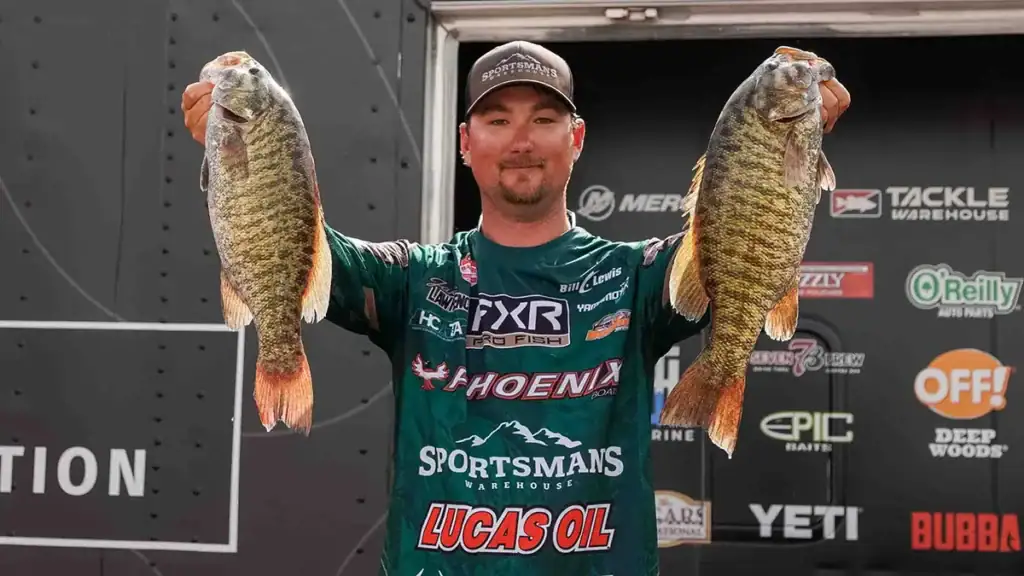
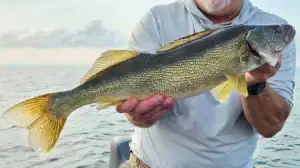
Do you want to catch your personal-best smallmouth bass? You should plan a trip to Kentucky Lake.
Take it from Lawrence, who has caught and released one smallie over 7 pounds and 11 weighing 6 pounds or bigger—and most of them in recent years.
Granted, those fish don’t come along every day, but they’re an exclamation point on what may one day be remembered as a golden era for the bronze fish.
“We’re on the southern fringe of where smallmouths flourish, but far enough south where the growth rate is better than in the north country,” Lawrence said. “Our smallmouth grow very, very fast. It is not uncommon to see fish in the 4 to 5.75-pound range.”
That’s no fish story. Martin confirms that the smallies have produced multiple big year-classes in the past 10 years. And that has resulted in an impressive population of big fish.
“In pretty much any tournament, you’re going to need 20-plus pounds (for five bass) to win,” he said. “ A lot of tournament bags these days will be all smallmouth bass or four smallmouths and one kicker (big) largemouth.”
It’s no mystery why the smallmouths are thriving. The water is getting clearer, and as the reservoir ages, more gravel and rock are being exposed. That’s heaven for a smallmouth bass.
“We have tons of gravel banks on the eastern side of the lake,” Martin said. “Also, that shoreline is largely undeveloped. So, it has great habitat for smallmouth bass.”
Lawrence targets the Paris Landing area mid-lake on the Tennessee side. A 35 – to 40-mile stretch from U.S. Highway 68 and Kentucky Route 80 to the Danville Bridge holds lots of shallow, hard-bottom flats and great habitat for smallmouth.
Best Time To Go
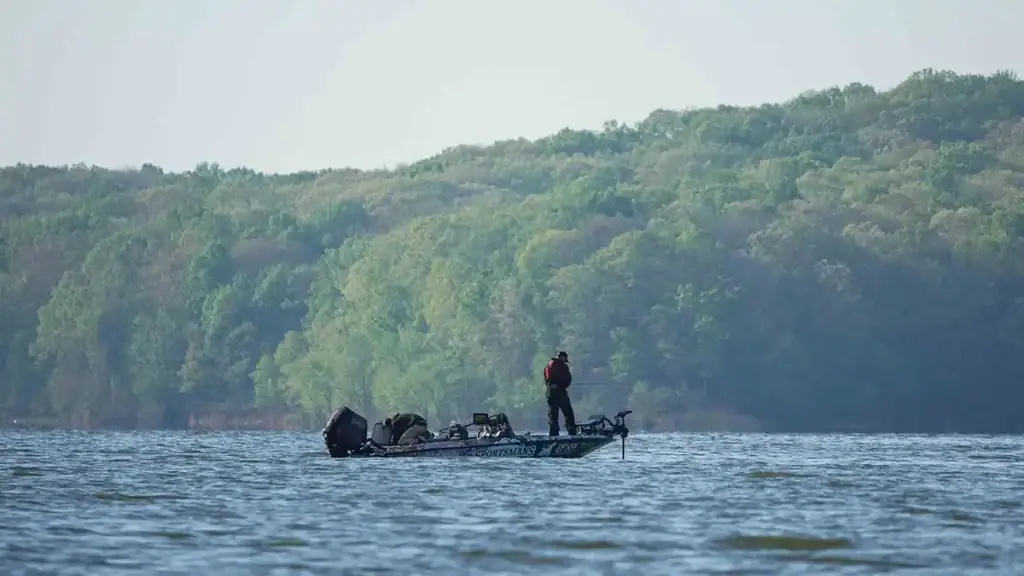
Lawrence’s favorite time of the year has arrived.
From the middle of May through June, the bass school up and move off shore after the spawn, he said.
“That’s one of those times when 95 percent of the fish will be in 5 percent of the water,” he said. “It gets very predictable if conditions are stable.”
That’s when the ledge fishing Kentucky Lake is famous for is at its best. Many of the bass relate to the old (Tennessee) river channel and the associated creel channels. He looks for bottom irregularities along those channels such as little depressions, brush, humps or rocks that break the current.
When he locates a school of bass, he starts off with the largest bait in his arsenal—a large crankbait, a magnum spoon, or a Buckeye Mop Jig. Once he gets a few fish to commit, it often gets the school active. But once that frenzy dies, he will often drop to a drop shot, shaky head or small swimbait.
Schools of largemouth also will use those ledges, sometimes mixing with the smallmouth in schools or nearby in schools of their own. But in recent years, the catch of big smallmouth far outweighs that of largemouth.
Fall Topwater Fishing

Want to catch a 4-pound smallmouth bass on a topwater bait? Keep Kentucky Lake in mind once fall arrives.
After the Fourth of July, the Tennessee Valley Authority begins a slow, steady drawdown of the lake. By the time fall arrives, there is algae on the top of shallow bars, flats and points. Schools of baitfish move in to feed on that algae, and that creates some great topwater conditions.
“I like to use a walking bait like a Zara Spook and bring it right over that shallow cover,” Lawrence said. “When you see a 4-pound smallmouth come up and just smash that topwater, it will get your heart going.”
The Future
For as good as the smallmouth fishing has been, Martin doesn’t think it has peaked yet.
“We still have some good year-classes of fish coming on, and I wouldn’t be surprised if this streak we’re on continues for a while,” he said.
Martin sees similarly encouraging signs for the largemouth. The 2023 year-class of bass was the best on record going back to 1984.
But the wild card, as always, is the weather, especially during the spring spawning season.
If you could give me a weather forecast for the next 10 years, I could give you a pretty accurate fishing outlook,” Martin said. “But we have to just take what we get.”