Buying a used boat can be one of the best ways to get on the water without emptying your bank account. You don’t need a fancy, brand-new rig to catch some fish. As someone who is always looking for the right deal, I’d much rather spend money on a solid used rig with the right setup than buy a brand-new boat and take the immediate depreciation hit. But there are many things you need to take into consideration. After all, there’s a huge difference between finding a good deal and buying somebody else’s headache.
A used boat should be treated like a used truck: Look past the shine, ask questions, inspect everything, and don’t be afraid to walk away. Trust me, I’ve bought used boats that are immaculate and reliable; I’ve also bought boats that are absolute lemons and nothing but problems. Here are the biggest things I look at before handing over my hard-earned money.
Start With a Budget
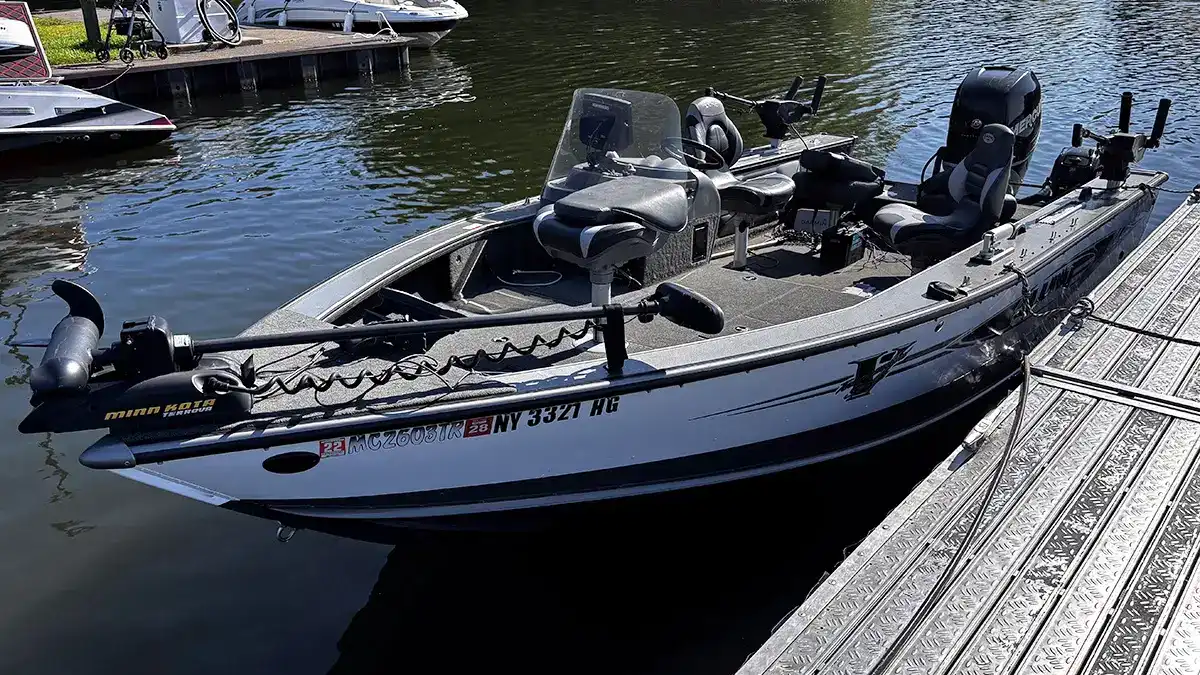
Once you know the kind of boat you need, you need to figure out what you can actually pay for in the long term, not just the purchase price you think you can afford. Remember that a boat comes with expenses beyond the advertised price. Registration, insurance, storage, winterization, maintenance, fuel, batteries, trolling motors, electronics, and trailer expenses all add up quickly.
I like to leave some money in the budget for unexpected repairs. If you have $25,000 available, I wouldn’t necessarily spend the entire $25,000 on the boat. Having a few thousand dollars set aside (or more) can make the difference between enjoying your first season and immediately putting the boat back in the garage. Giving yourself financial wiggle room will allow you to set up any boat exactly the way you want it.
Also, consider what you actually fish for. There’s no reason to spend extra money on a massive rig loaded with equipment you’ll never use. Or, settle for something that’s a little more bare-bones to better customize for your specifications.
Motors Are the Heart of the Boat
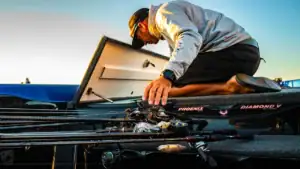
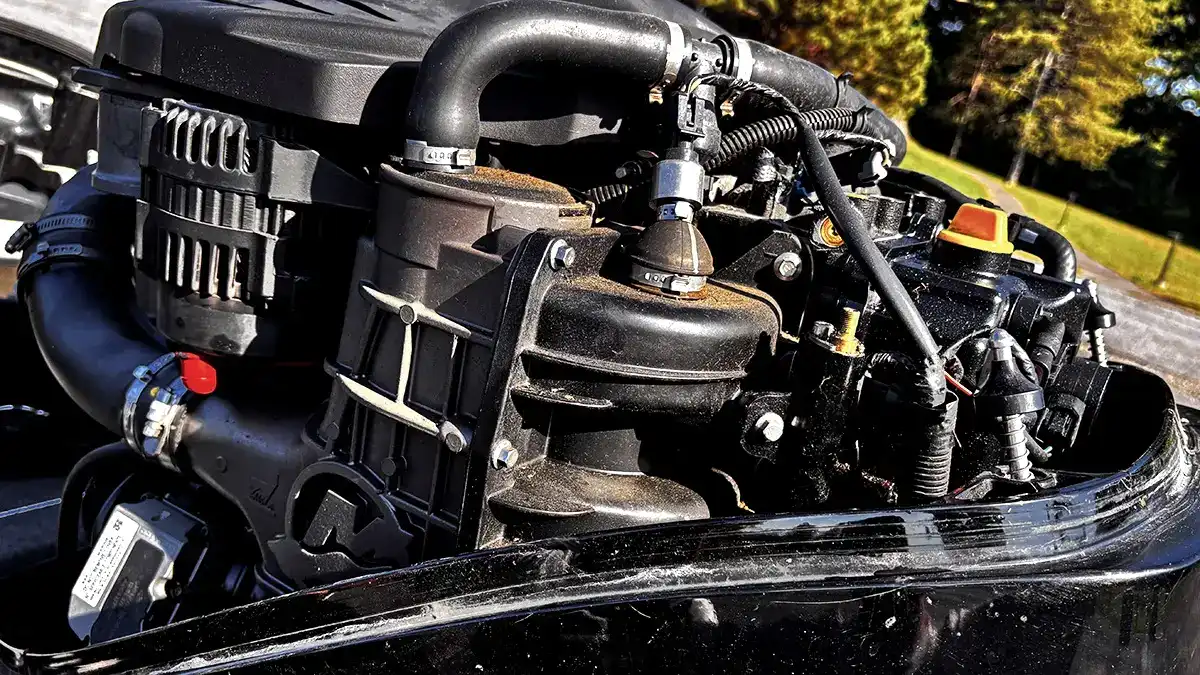
If there is one part I’m going to scrutinize the most, it’s the outboard. Besides the transom, it’s the most important part of the boat. You can’t get from point A to B without either a reliable outboard or I/O to get you there safe and sound.
Ask the owner about the motor’s history, including regular maintenance, winterization, repairs, and any major work performed on it. Service records are extremely valuable because they tell you whether the previous owner actually took care of the motor or simply changed the oil when something went wrong.
Hours matter, but they aren’t everything. A motor with 500 well-maintained hours may be a better purchase than a neglected one with 200 hours. Ask how many hours are on the engine and, if possible, have a dealer or qualified marine mechanic pull the engine’s data. Depending on the motor, that information can provide additional insight into how it was used. I’d personally never buy a boat with more than 1,000 hours on it, no matter the service and how well it runs. Once engines rack up that many hours, they are ticking timebombs.
I also want to hear the motor run from a cold start. Look for excessive smoke, strange noises, rough idle, difficulty starting, or unusual vibrations. Ideally, take the boat for a water test rather than simply listening to it run on a trailer.
A compression test and a professional inspection can also be money well spent before buying. Have your seller either get it to a mechanic or have a mechanic ready when you’re about to make the purchase.
Look Closely at the Hull
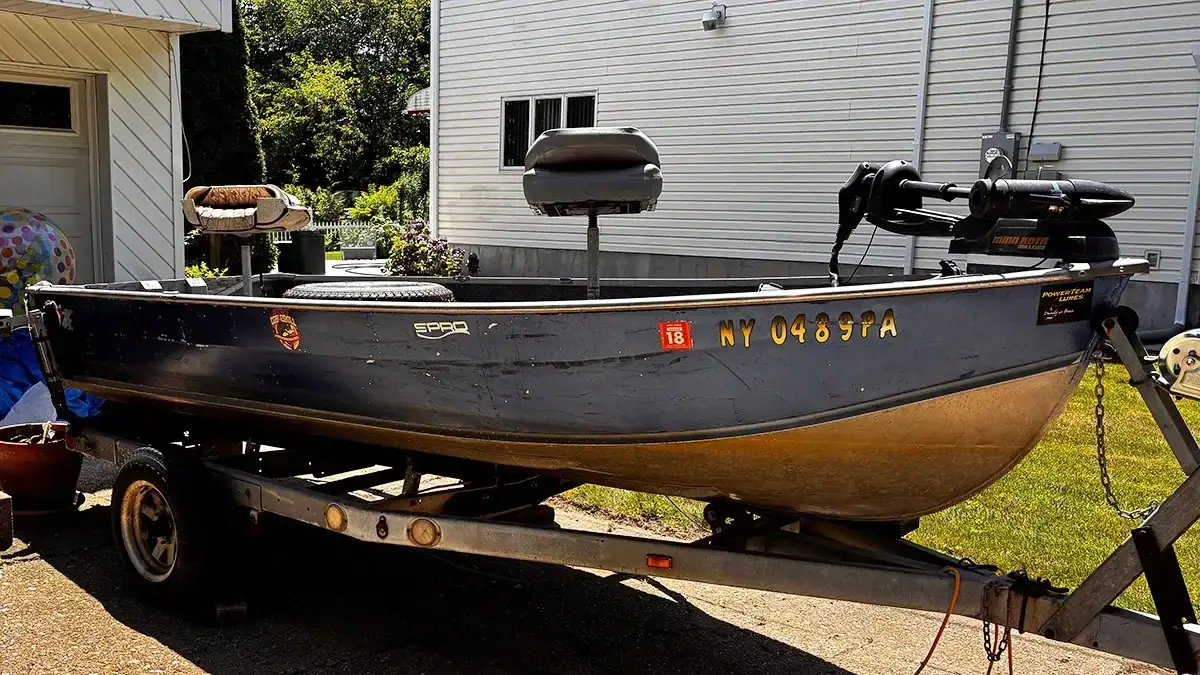
Don’t let a freshly detailed hull fool you. Walk around the entire boat and inspect it carefully. Look for cracks, deep scratches, repairs, soft spots, damaged fiberglass, and signs of previous impacts. Pay particular attention to the transom, which takes a tremendous amount of stress from the outboard. Without an intact transom, boats are useless.
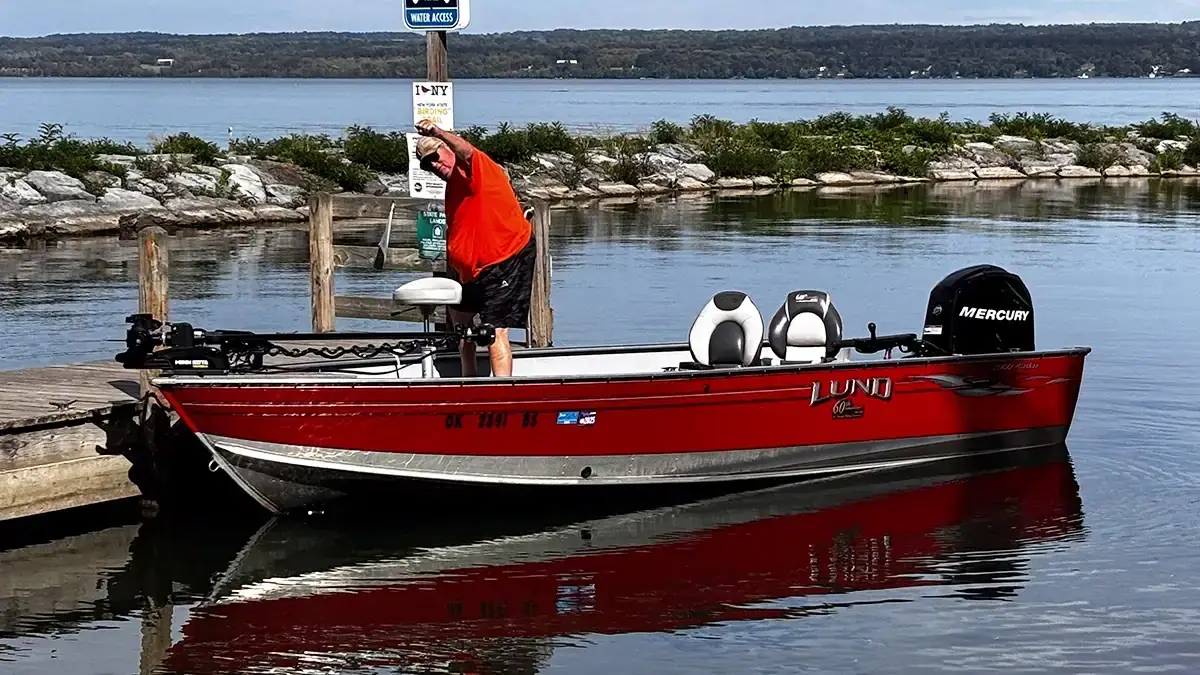
On aluminum boats, inspect for dents, cracked welds, loose rivets, and repaired areas. On fiberglass boats, look for stress cracks and evidence of significant repairs. For older aluminum boats that were mostly made with wood spacers in the transom, ask for repair records or see if you can take a look at the wood inside. On the used Lund I purchased last year, I was unaware that the transoms rotted over time — leaving me with a headache of a repair.
Get underneath the boat, if possible. A hull that looks perfect from the side may tell a different story when you crawl underneath it. Boats are a big purchase, so make sure you get a good look from every single angle.
Electrical Can Make or Break the Value
Modern fishing boats can carry thousands of dollars in electronics, but don’t automatically assume every screen is worth top dollar. Most coming on boats are outdated and not up with current technology. It’s one thing if you’re OK with that, but you do need to take some points into consideration.
Turn on everything. Check the GPS, sonar, mapping, networking, transducers, side imaging, down imaging, forward-facing sonar, and anything else the boat comes equipped with. Make sure the units actually work and that the transducers are mounted properly. If the boat has older electronics, determine whether you’re comfortable keeping them or what it’ll cost to replace them.
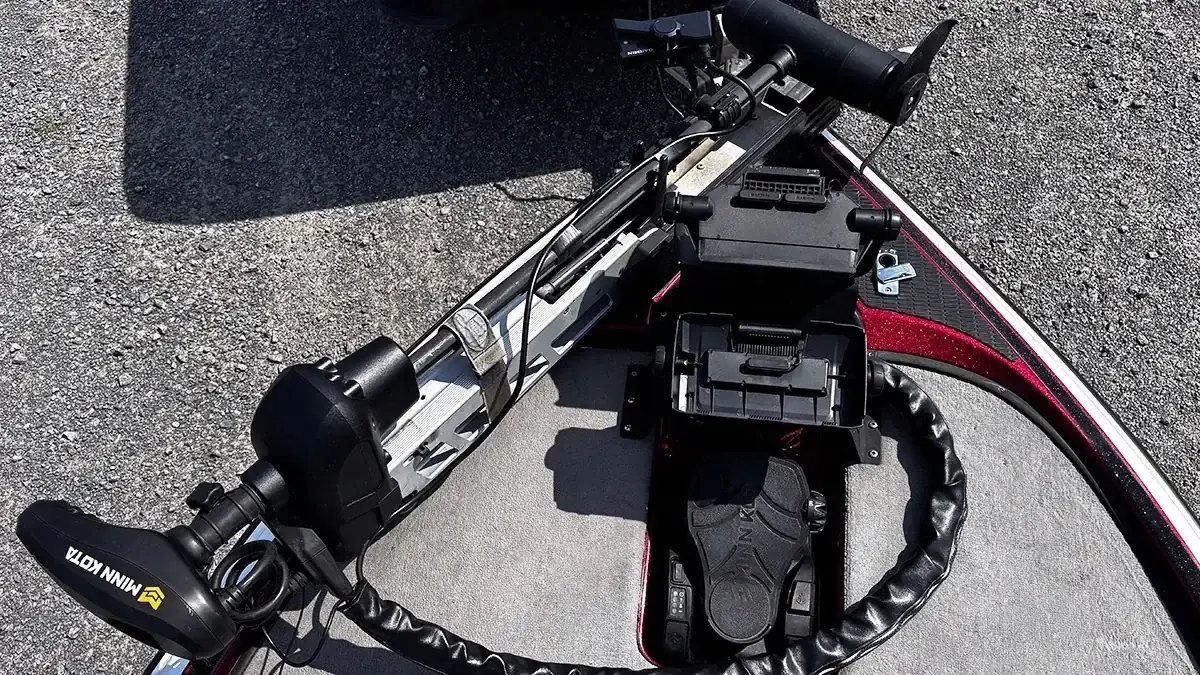
The same goes for the trolling motor. Check the steering, deployment system, propeller, foot pedal or remote, GPS functions, and spot-lock or anchor features, if equipped. Sometimes an older boat with fewer electronics is actually the better deal if the price leaves you room to build the electronics package you want.
The biggest item isn’t the electronics themselves: It’s the wiring and how it’s set up to the batteries. If it looks like a rat’s nest of wires, that’s a disaster waiting to happen. You want electrical wires to be kind of neat so you can see where things go. There will always be some rewiring to do, but the less you have to do, the better. Electrical problems can become a nightmare, so inspect the battery compartment carefully.
Find out the age of the starting battery, trolling motor batteries, and any electronics batteries as well. Check battery terminals for corrosion, and inspect wiring for loose connections, homemade repairs, or excessive corrosion.
Don’t forget to turn on the lights, bilge pump, livewell pumps, aerators, horn, and every other electrical accessory. If something doesn’t work, don’t assume it’s a $20 fix. If something isn’t working, see if you can have the seller fix it if you’re still inclined to buy.
Inspect the Trailer
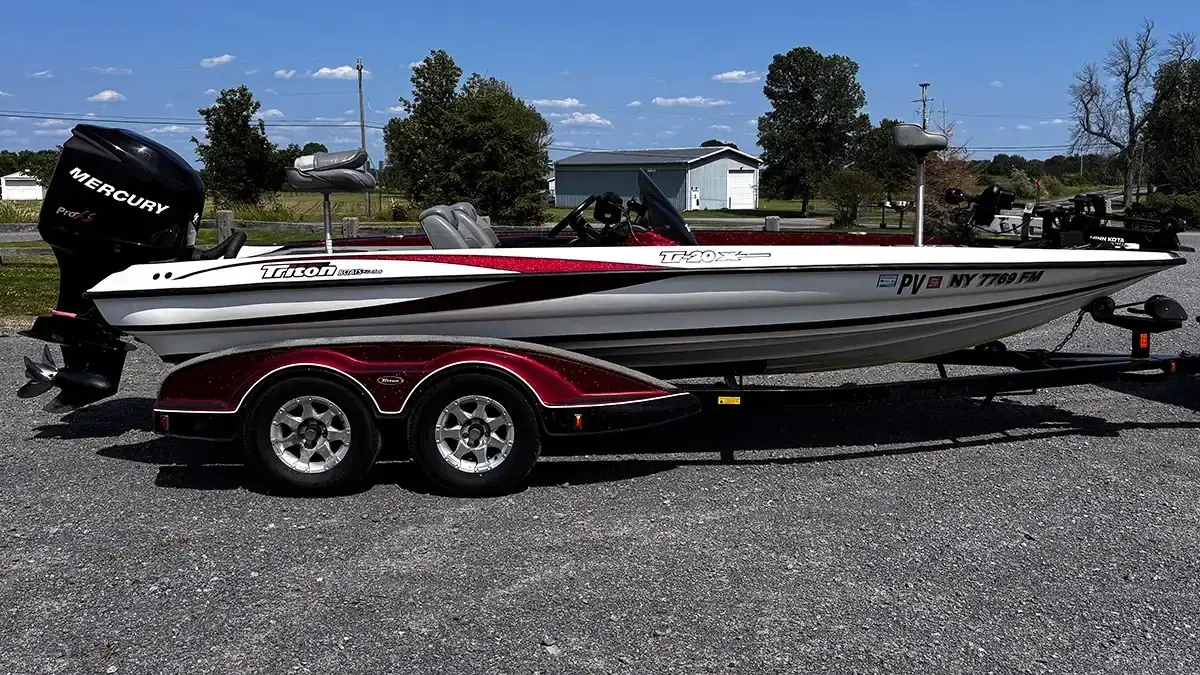
A great boat sitting on a terrible trailer isn’t a great deal — but it can be if you know what to look for and can get it for a decent price.
Look at the tires for dry rot, cracking, and uneven wear. Check the wheel bearings, hubs, brakes, lights, winch, safety chains, and rollers/bunks. Inspect the frame for rust or damage, particularly around the axle and suspension components. Ask when the bearings were last serviced and when the tires were replaced. If the trailer has brakes, make sure they function properly.
Remember, the trailer is what gets your boat to the water and back home. It deserves just as much attention as the boat itself. Whenever you buy a boat on a trailer, always repack the bearings and hubs regardless of the age, just for the peace of mind.
Take It for a Test Drive
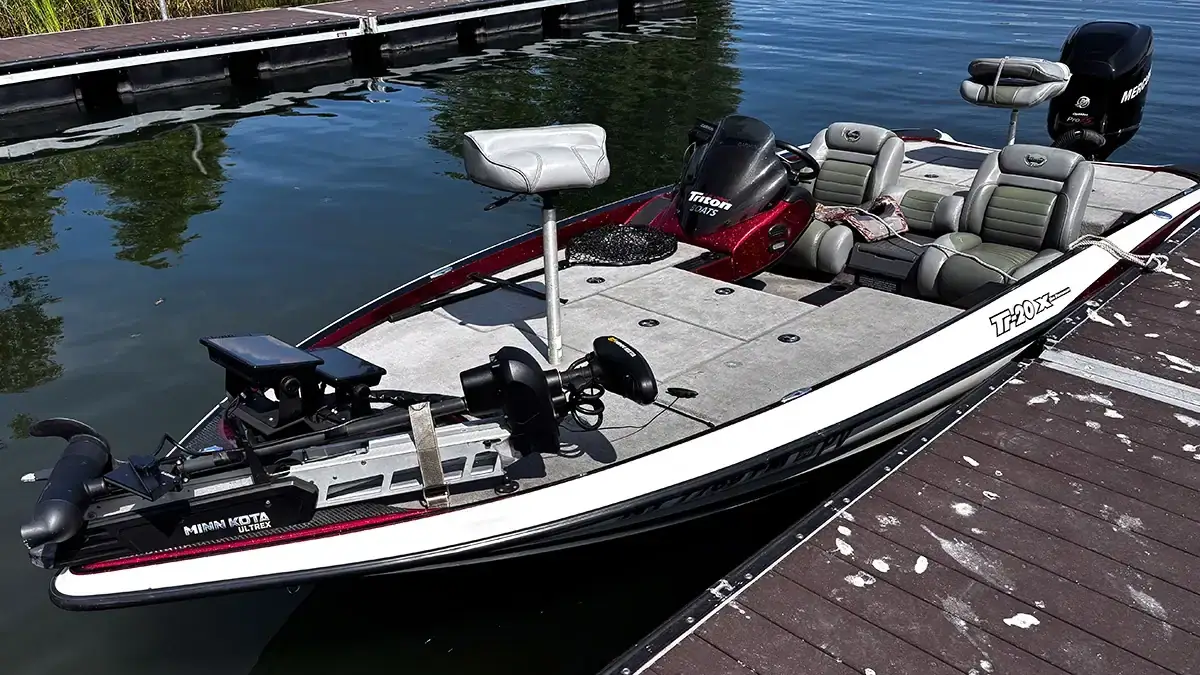
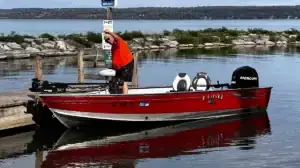
Never buy a serious fishing boat without putting it in the water if there’s a reasonable way to do so. Pay attention to how easily it starts, how it idles, how it accelerates, and how it handles at different speeds. Watch the gauges, and make sure the motor reaches the appropriate operating temperature and RPM. Don’t forget to test the trim and steering, try the trolling motor, run the electronics, and operate all the pumps and switches.
A boat is just like a car: Without a test drive, how will you know that the boat is reliable? Any boat can look perfect sitting in someone’s driveway but reveal a long list of problems once it’s actually on the water.
Ask Why They’re Selling
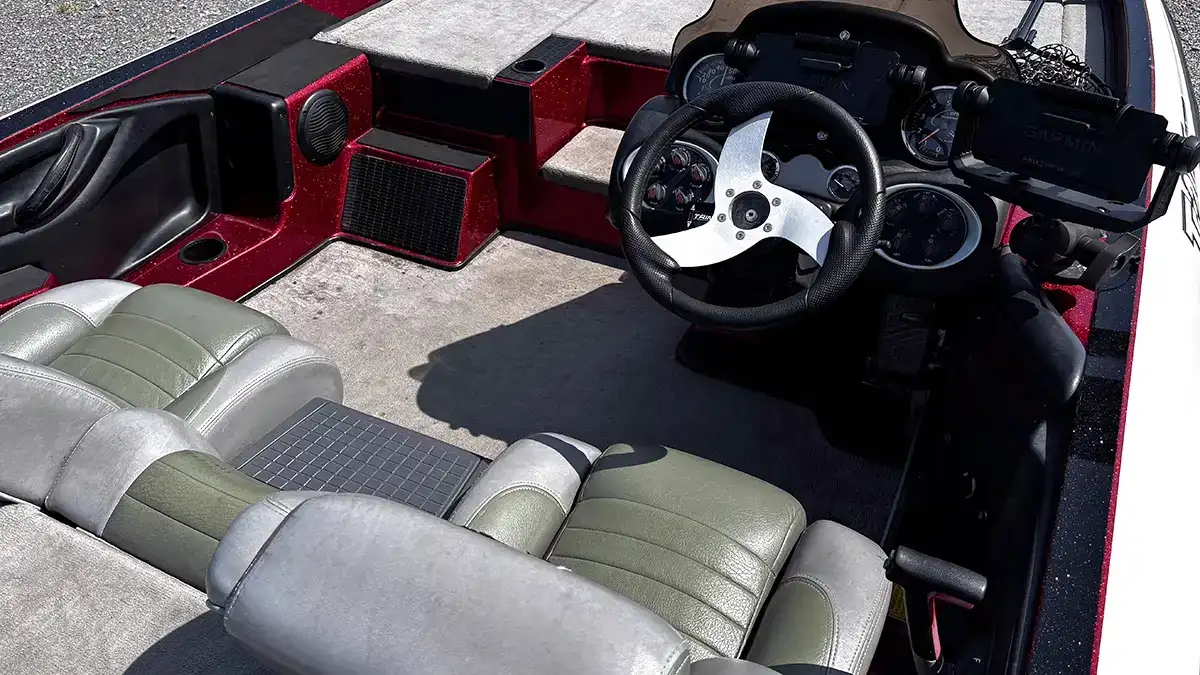
One of my favorite questions to ask a seller is simple: “Why are you selling it?”
The answer doesn’t automatically make or break the deal, but it can tell you a lot. Maybe they’re upgrading, moving, getting out of fishing, or simply don’t use the boat anymore. Those are very different circumstances than somebody selling because they’ve repeatedly had mechanical problems — which is something many boaters and anglers do.
Ask for receipts and maintenance records whenever possible. The more you can learn about the boat’s history, the better. Without records, you won’t know what has happened and what to look out for.
Don’t Let Emotion Make the Decision
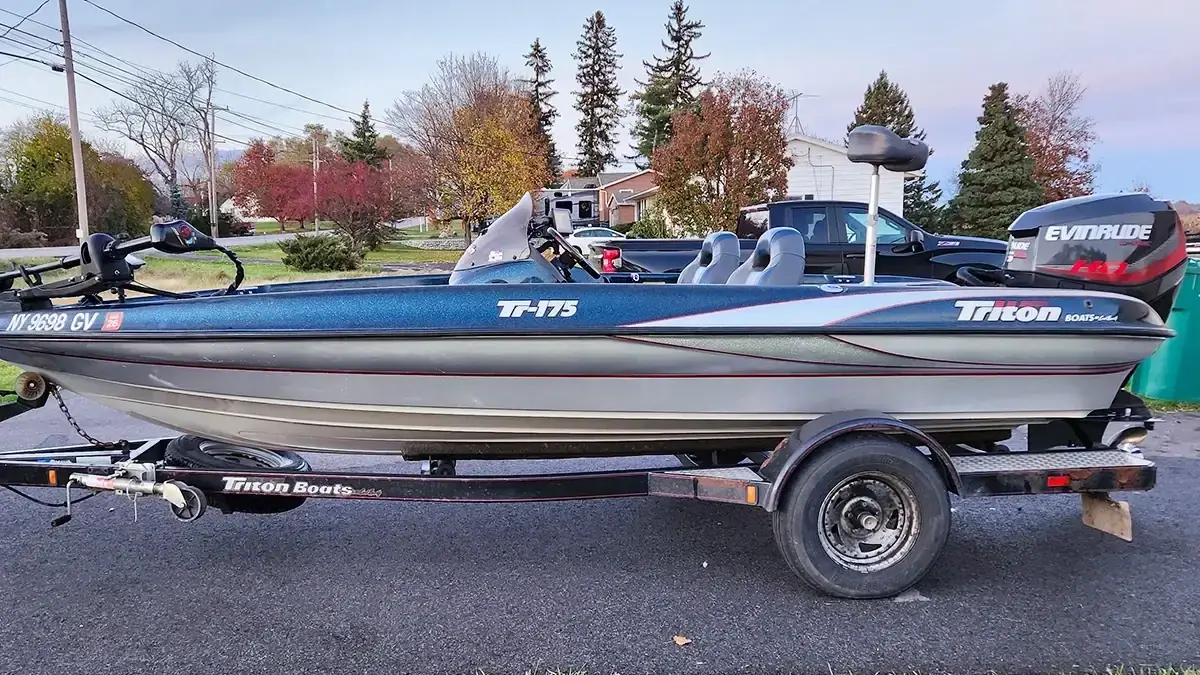
Finally, don’t fall in love with the boat before you buy it. Trust me, I’ve been there many times before. I know how easy it is. You see the big graph at the console, the shiny outboard, the huge casting deck, and you’re already imagining yourself catching fish from it. But there will always be another boat — and, in most cases, an even better one.
If the motor has questionable service history, the hull has serious damage, the trailer is unsafe, or the electronics don’t work, walk away. A good deal isn’t a good deal if you have to spend another $10,000 to make the boat reliable.
A used boat should get you closer to the fish, not closer to the repair shop. Do your homework, inspect everything, have an inspection checklist ready, confirm the motor hours and service records, test the boat on the water, and leave room in your budget for maintenance. Take your time and buy the best-maintained boat you can afford instead of the biggest or flashiest one.
When you finally find the right rig, you’ll have much more confidence heading out on the water when the time matters most. And you’ll be able to spend your time doing what you bought the boat for in the first place: fishing.