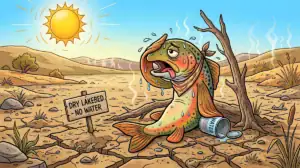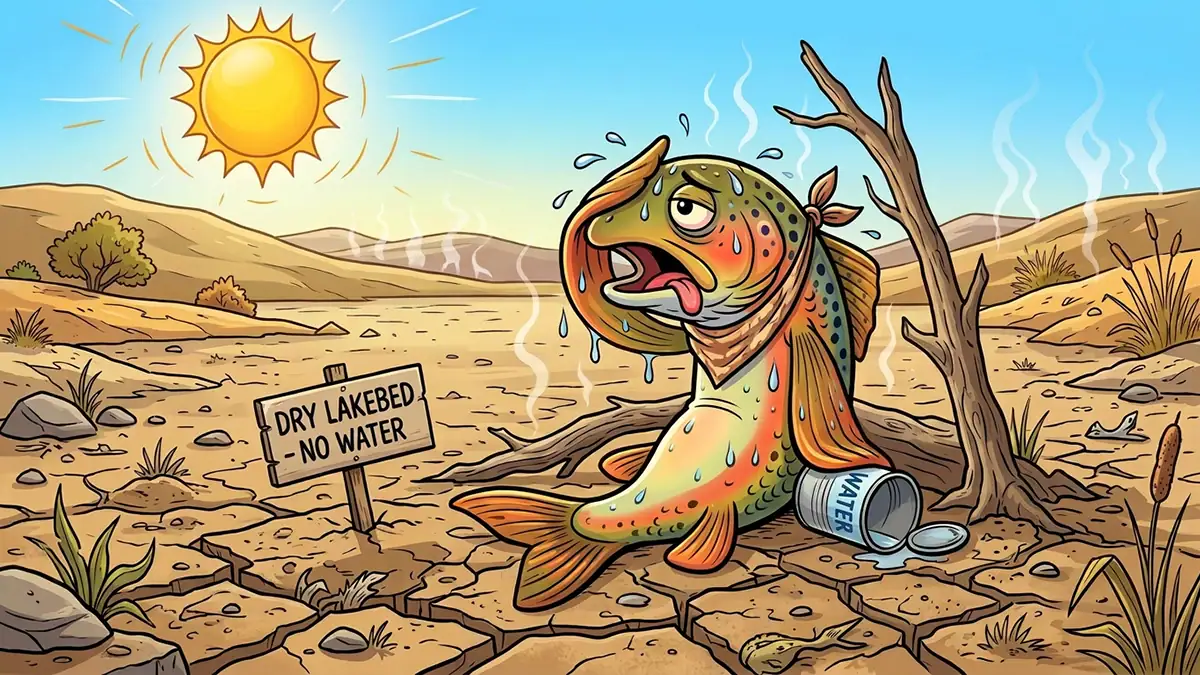
There is a moment every summer when an angler looks at the weather forecast, checks the river gauge, and realizes that the fish might be having a worse day than they are. Unfortunately, this seems to be happening more often than ever, and in more places.
Across the West, fish and wildlife agencies are increasingly asking anglers to stop fishing for cold-water species when rivers get dangerously warm. Sometimes that means a voluntary afternoon closure; other times involve shutting down a stretch of river entirely. Anglers should heed these warnings. When trout, steelhead, and other cold-water fish are already struggling, the sporting thing to do is leave them alone.
Closures Across the Country
Idaho made that decision recently on CJ Strike Reservoir, where officials closed part of the Snake River arm to sturgeon fishing after finding high water temperatures, low dissolved oxygen, and multiple dead sturgeon. With a population declining since 2022, these are not fish that can simply be replaced next spring. White sturgeon can take decades to reach trophy size. Idaho Fish and Game’s earlier closure of the same area likewise emphasized that fish already living at the edge of survivable conditions don’t need the additional stress of being hooked, fought, handled, and released.
Oregon faces a similar problem with summer steelhead. Low returns partly drive the North Umpqua closure, but warm water and low flows make the situation worse. The river can approach 80 degrees, a temperature at which a cold-water fishery is not exactly operating under ideal conditions. Oregon Department of Fish and Wildlife has previously used emergency closures when drought, low flows, and high stream temperatures combined to put fish at greater risk.
And then there’s Colorado, where officials asked anglers to observe afternoon closures on the Colorado and Fraser rivers during extreme drought and warming conditions. State biologists noted that nighttime cooling — the thing that normally gives a river and its inhabitants some relief — was no longer bringing temperatures down enough. But that’s just the tip of the (not) iceberg, as there’s many more closures in the Centennial State.
Factors in Fish Mortality
We tend to think of fishing mortality as something involving a legal limit and a skillet full of hot grease. But a fish doesn’t have to come home with us to die. A trout, or other species better adapted to cooler temperatures, that spends a long time fighting on a hot day, followed by several minutes being held out of the water while somebody searches for the perfect hero shot, can be in serious trouble even if it swims away.
Warm water holds less oxygen. Fish are already working harder to get what they need, and angling adds another physiological stressor. That’s why Colorado’s guidance includes the familiar advice: use heavier tackle, land fish quickly, wet your hands, keep fish in the water, and skip the photograph.
Advice like this is becoming all too familiar. The Associated Press recently reported that fishing restrictions have become increasingly routine across the West as drought and extreme heat warm rivers and reduce flows. Yellowstone has imposed temperature-related restrictions repeatedly in recent years, while Colorado and Montana have expanded restrictions across hundreds of miles of water.
The Case for Bass
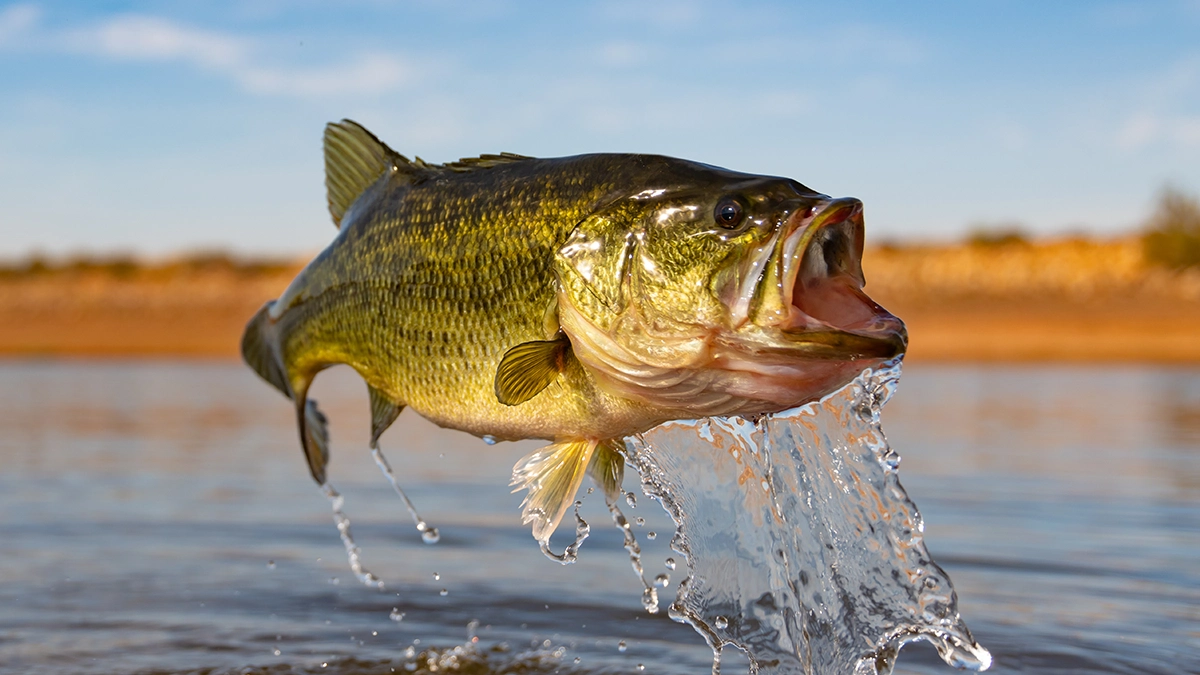
Closures can be frustrating for anglers who chase trout or other cool- or cold-water species throughout the United States. Telling folks who plan vacations a year out around a bite that they can’t fish is met with an understandable amount of disappointment. But, if you’re willing to roll with the punches, you don’t have to stay home.
Instead, find some bass and have a ball. Bass don’t need to be treated like fragile porcelain every time the thermometer climbs. They live in places where the water can get downright bathtub-like in August, and they seem perfectly happy about it. And they still eat aggressively and fight hard, even on the warmest days.
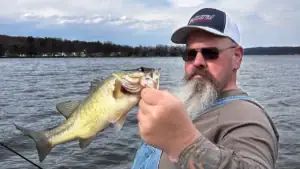
For river anglers, smallmouth bass can turn a hot afternoon into exactly the kind of fishing trip they had in mind when they loaded the truck in the first place. In many cases, they can use the same tackle and techniques as you would for trout. But, in my humble opinion, the payoff is better.
Pound for pound, it’s hard to beat the fight of smallie, particularly when it gets sideways in the current. And while fishing is not about numbers, I’ve never been mad about catching a mess of fish. On the rivers here in the East, a dozen trout is a good day. But I’ve racked up triple digits with smallies.
Largemouth are pretty awesome too, as evidenced by the throngs of anglers who pursue them.
As one estimate claims, “The United States currently has approximately 30 million anglers who target bass, linked to an estimated $60 billion industry.” Hard to argue with those numbers.
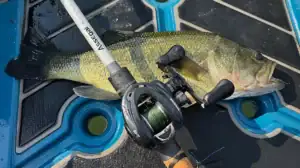
You can find largemouths just about everywhere, from a drainage ditch to impoundment, coast to coast. They readily attack all manner of baits, from live shiners to artificial flies and everything in between. Oh, and they get pretty big, too.
An Ethical Pivot
If the river is running unusually warm, if the fish are sluggish, if they’re congregating in isolated cold-water pockets, and especially if fisheries officials are telling you that hooking them could turn an already bad situation into a fish kill, the ethical answer is pretty straightforward. Don’t fish for them.
Go find a bass lake. Throw a spinnerbait along a weed edge. Fish a plastic worm around the docks. Take the kids somewhere they can catch bluegills until they get bored and then switch to bass. Learn a new body of water. Explore a warmwater fishery you’ve driven past for 20 years on the way to your favorite trout stream. Tell them Wired2fish sent you. After all, we’ve been telling you for the past 17 years that bass are more fun to chase anyway.