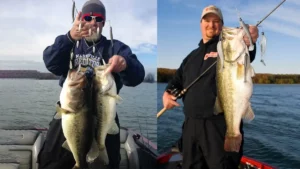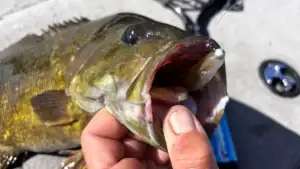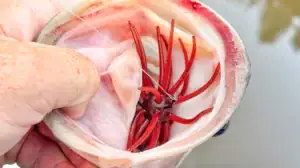
Returning from Japan, Bryan New brought home a bag stuffed with JDM tackle purchases and meaningful gifts from his hosts. All valuable stuff, no question. But the most important thing that the Bassmaster Elite pro brought back from the Land of the Rising Sun was perception.
Specifically, that perception relates to properly presenting the D-Style Geelacanth. Hang with us to the end and we’ll get to that key thought. Some context is necessary first.
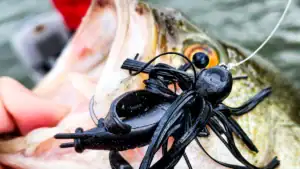
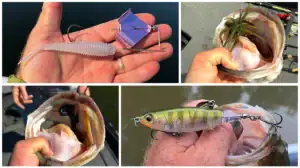
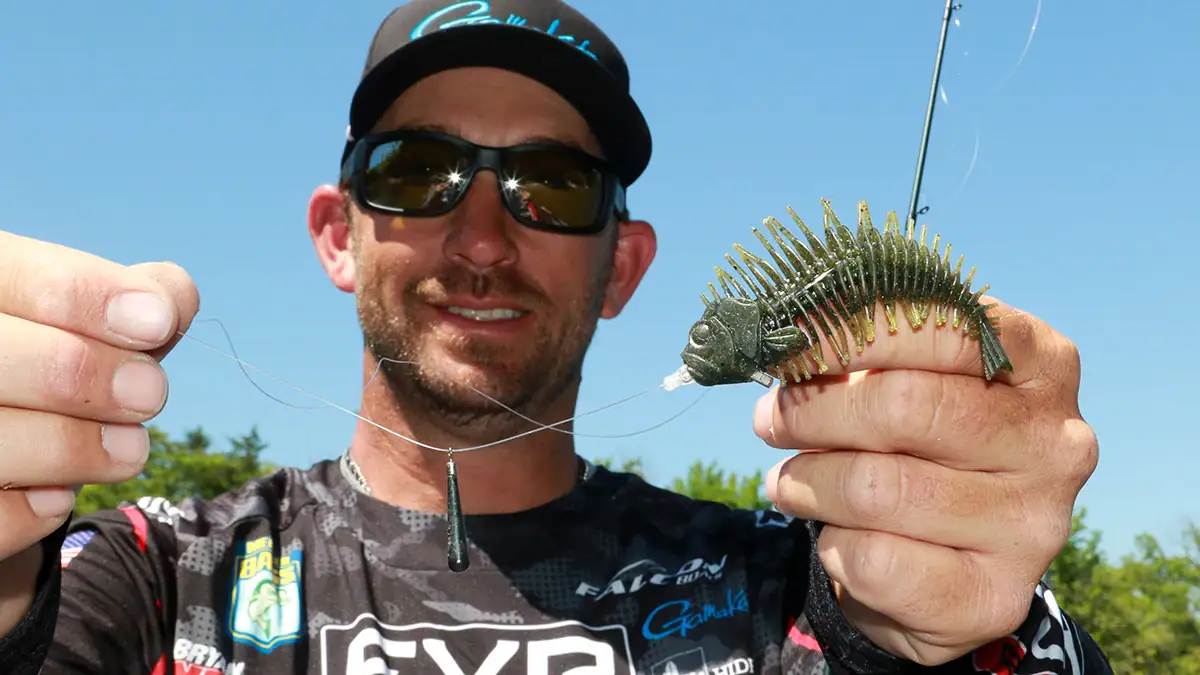
The Geelacanth is designed with a realistic bluegill face and internal core frame. It also sprouts a series of ribs on its dorsal and ventral sides. Those ribs are tipped with sensitive antennae, which react to the slightest influence with lifelike action. A unique VIROLA tail enhances that action.
“Honestly, it’s just alive. It has so much action with all those little tentacles,” New said. Offered in 3- and 4-inch sizes, this elastomer bait offers a ton of motion with the slightest of movements. “Just the slightest movement, a light current, even the wind current makes this bait come alive.”
New added: “So many baits look good, but they don’t look alive. Some baits have a lot of action, but you have to impart a lot of movement to make it look alive. This bait looks alive on its own.”
The Applications
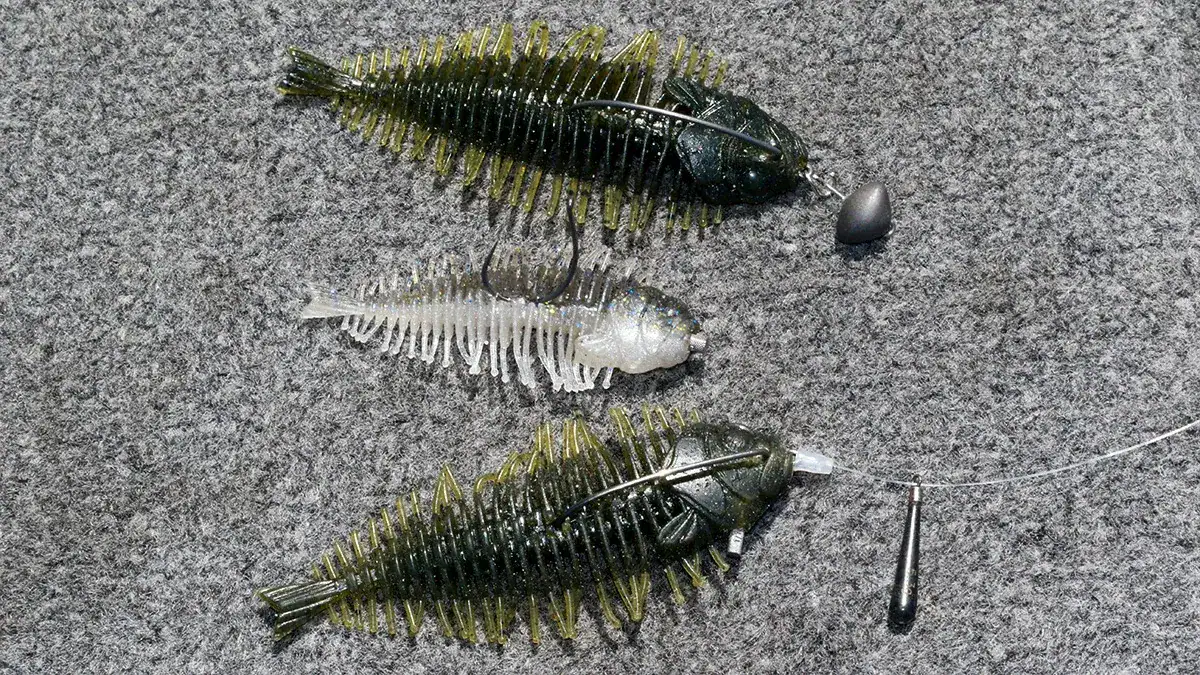
New explained that the Geelacanth’s diversity has earned it a prominent position in his arsenal. It’s a bait he called the next big thing.
“You can fish this bait a handful of different ways: You can fish it shallow, you can fish it really deep, you can fish it in grass, open water, sand bottom,” he said. “It really has no limitations. It’s probably my favorite all-around bait at the moment.”
Taking a realistic step back, New said his Geelacanth confidence wanes in dirty water. Not that a fish wouldn’t eat this bait in a turbid river or a wind-whipped bay, but the action is the appeal. And that’s largely a visual thing.
“At the Bassmaster Classic, I had such a good practice with the Geelacanth that I had three of them rigged up,” New said. “We had a big rain right before the tournament and the water got dirty, so I had to do other techniques. But it’s that good of a bait.”
The Rigging
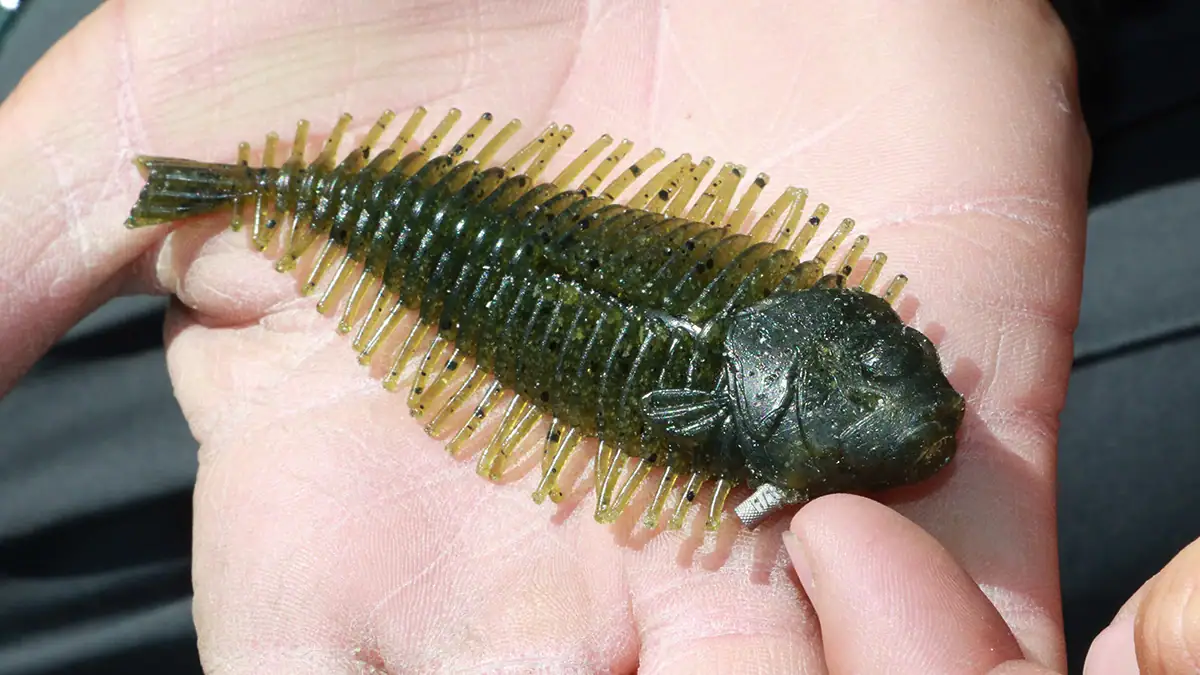
As with any new bait, innovation and “what-if?” creativity will squeeze every possible option from the Geelacanth. For New, the free rig dominates his presentations.
“The free rig is the No. 1 technique in Japan, and it’s hard to argue with any Japanese technique,” he said. “The Japanese anglers (often) are so far ahead of us, because their lakes are so pressured.”
New sets up his free rig by threading an open eye dropshot weight onto his line, followed by a free sliding stopper. He adds a sliding stopper (but a bead also works) to prevent his sliding weight from hanging on his knot. New then ties on a 3/0 Gamakatsu Hybrid Worm Hook made of thin-but-strong Tournament Grade Wire and treated with a Nano Smooth Coat for easy penetration.
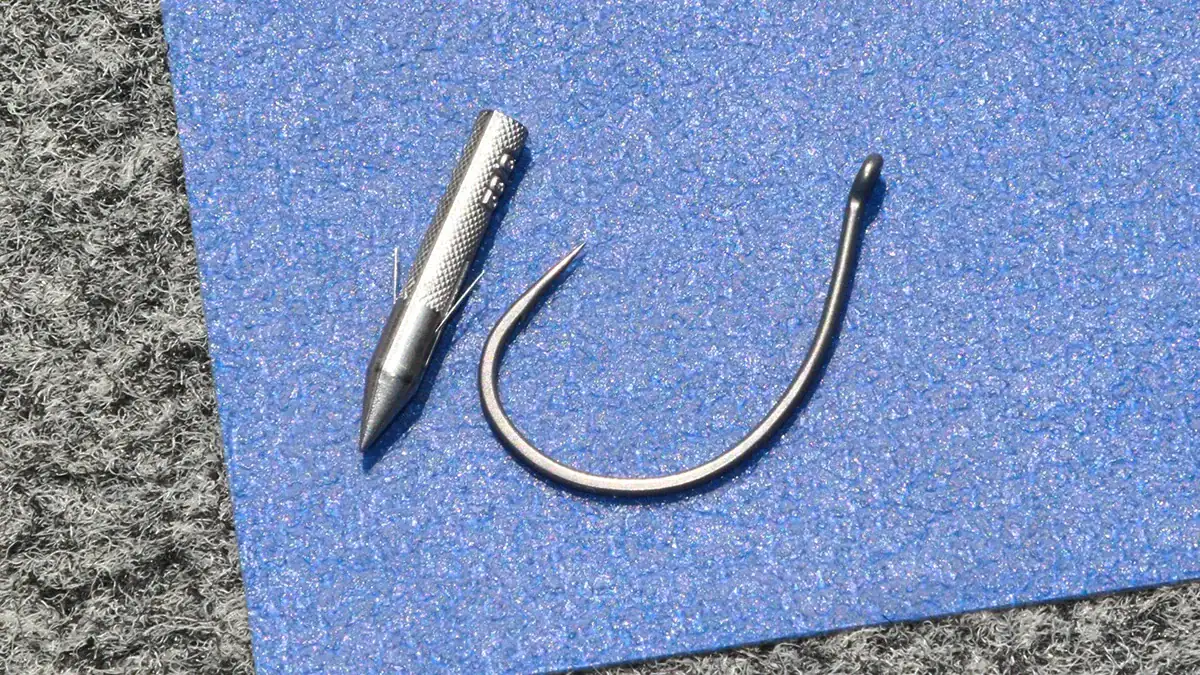
The Hybrid Worm Hook is New’s choice for lighter line and clear, open water. When he’s expecting bigger bites or fishing around cover with heavier line, he’ll go with the stouter Gamakatsu 34R, which allows for stouter hook sets.
The key step is the nail weight, which fits into a pre-molded hole in the bait’s chin to maintain an upright posture. New uses a Gamakatsu TK Trigger Nail Weight with a sharp point and thin wire barbs that help hold the weight inside the elastomer body. (A drop of Super Glue’s also not a bad idea.)
Neko Rig: Fished in a lateral position, this rig gets the nail weight in the bait’s snout and a 1/0 or 2/0 Gamakatsu Bead Hook. Targets are the usual stuff: docks, grass clumps, stumps, bream beds, or bedding bass.
Wobble Head: Using the same hooks he’d use for the free rig, New adds a Gamakatsu Tungsten Hybrid Swing Head weight to create that rumbling motion with the articulated mobility that ensures maximum action. It’s ideal for gravel, shell, or any hard bottom. This setup lets him both cover broad areas and easily adjust his retrieve speed to dial in the daily preference.
The Key to Presentation
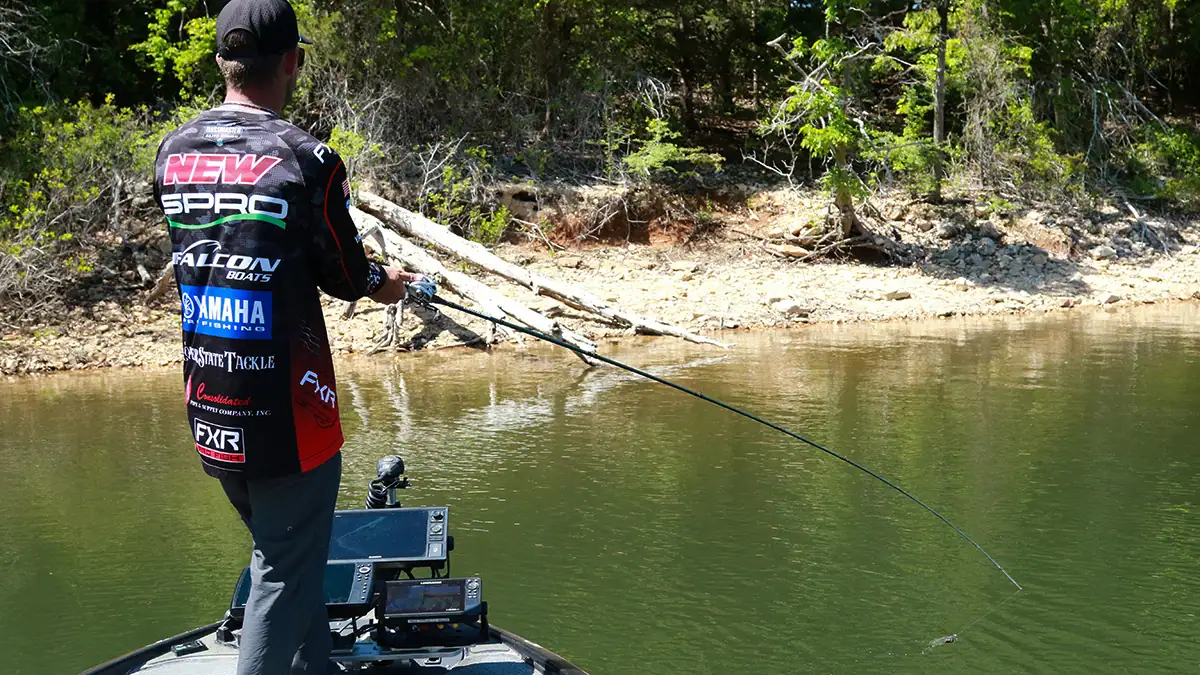
About that nugget of knowledge New brought home from Japan.
“I had a complete misunderstanding of the free rig, until I went to Japan,” he said. “I knew how to rig it, but I was thinking you needed to give it hard pops up and let the weight fall and separate. But it’s really a small, but sharp sideways pop.
“The bait scoots across the bottom. It also rises as it separates from the weight and then it falls more naturally. This being a bluegill-style bait with that stabilizing weight under the chin, it’s gonna scoot and then come back down and sit naturally on the bottom.”
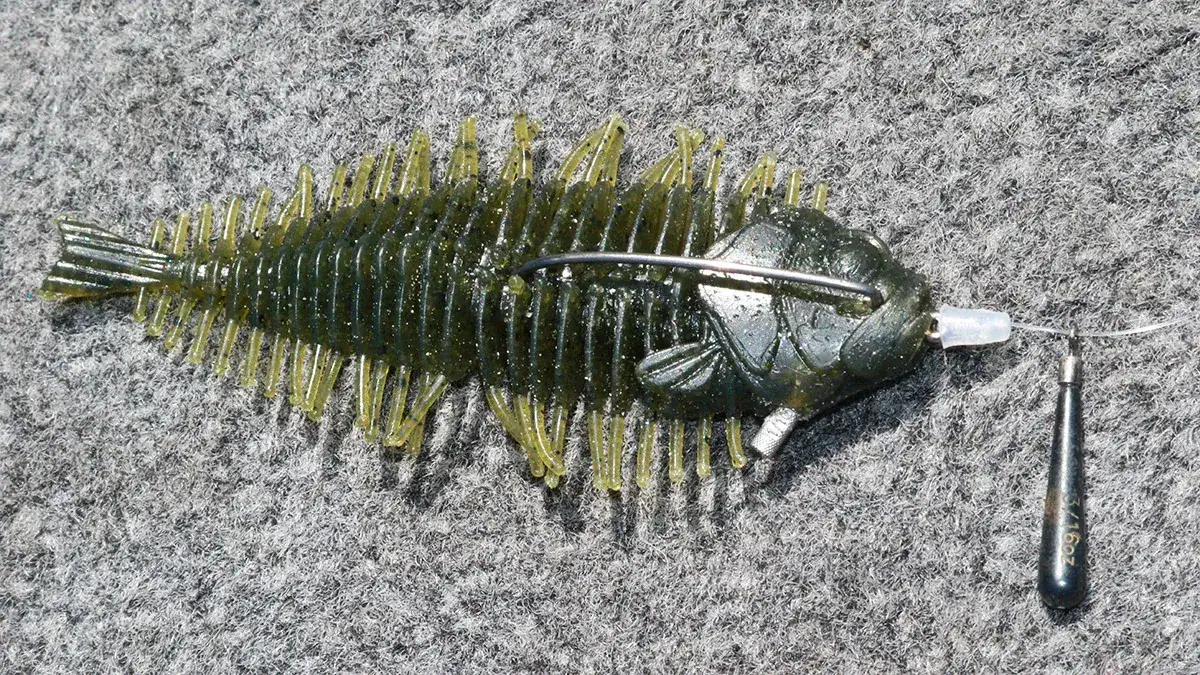
Noting the correlation to a Carolina rig-style sweep, New points out a modification by which he loses the sliding weight and upsizes his nail weight. Working no deeper than eight feet, he’ll fish this arrangement like a jig — some dragging, some popping.
Closing tips: New dusts his Geelacanth with Nories Bite Powder fish attractant, which coats the baits and forms a protective film as it contacts water while also adding an enticing flavor that makes the fish hold on longer.
“It prolongs the life of the bait,” New said. “Also, because this bait is made of elastomer, don’t leave it on your rod, because it will somewhat dry out. It’s not going to happen overnight, but over a period of weeks, it’ll dry out. I like to store them back in the packaging.”