For most anglers in the U.S., the phrase “freshwater game fish” begets thoughts of largemouth or smallmouth bass, various trout or walleye. But likely not carp.
Granted they are bottom feeders and won’t aggressively pursue lures. And, sure, they look more homely than sexy. Yet across the United Kingdom and much of Western Europe, as well as South Africa and Japan, carp are widely esteemed and sought as game fish. The fish is described as intelligent and wary, making them a challenging catch-and-release trophy target. In fact, carp fishing decades ago gave rise to carp-fishing organizations such as the UK’s Carp Society and international tournaments such as the World Carp Classic and the European Carp Angling Championships.
But wait: It turns out carp do have a dedicated following in the U.S., such as the Carp Anglers Group (founded 1993) and the American Carp Society (2002). Granted their numbers aren’t quite up to those of the Bass Anglers Sportsman Society but their members are no less enthusiastic, with tournaments such as the Wild Carp Classic (New York) and the Carp Slam (flyfishing, in Colorado).
Progressive American anglers will likely realize the terms “trophy” and “carp” are not antithetical. But what of the ultimate trophy carp — the all-tackle world record catches? There is no single carp record, because there’s no single species of carp. The International Game Fish Association currently recognizes seven, with an eighth pending, though many more are found around the world. Here are the all-tackle world records by weight for these species, listed alphabetically.
Biggest Bighead Carp Ever Caught (Hypophtalmichthys nobilis)
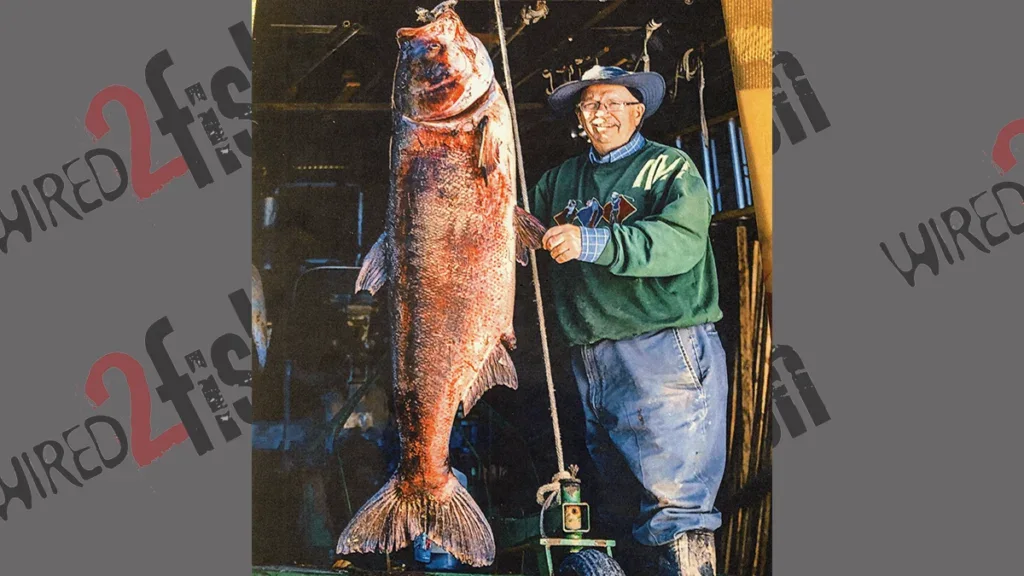
Details
- 97 pounds
- Mississippi River in Missouri
- March 19, 2024
- George Chance
- 50-pound braid, bait not specified
- Fishing from shore; fish landed after 20-minute fight
Bighead carp are native to southeast Asia, considered (highly) invasive in the U.S. where they’ve gained fame for “flying” out of the water at the sound of an outboard motor, often landing in open boats. Eyes set very low on their head, near the mouth, give them a distinctive appearance.
Bigheads are widely farmed in China (along with other carp species) with more than three million tons produced in 2013. Bighead are filter feeders, eating zooplankton and algae, which makes legitimate sport catches a rarity indeed. Considered poor quality as food by U.S. anglers, but valued in many countries. In fact, the flesh, while very bony, is lighter and milder than the common carp (no close relation). A two-part video from LSU shows how to clean bighead carp and related species.
Note that in April 2025, angler Bryan Baker landed a 118-pound 10-ounce bighead from Grand Lake of the Cherokees. The fish was snagged and thus not eligible for IGFA consideration, but set a state record for the species.
Biggest Black Carp Ever Caught (Mylopharyngodon piceus)
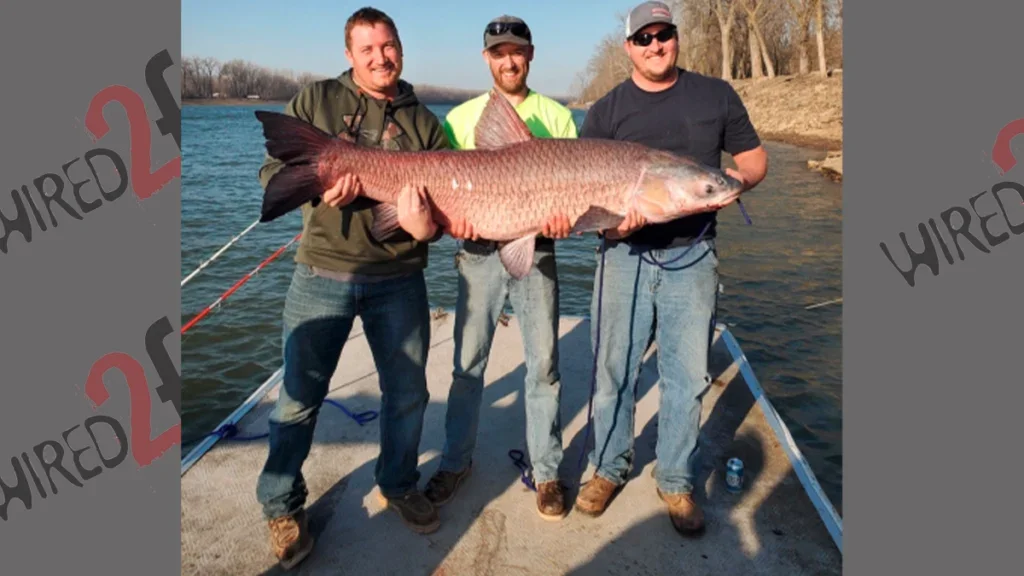
Details
- 112 pounds, 5 ounces
- Osage River in Missouri
- March 4, 2021
- Jesse Hughes
- Caught on “cut bait” (but otherwise not specified)
Another invasive carp species from eastern Asia, imported as a biological control agent to stop the spread of disease-carrying pests as well as a potential food source, that escaped into the Mississippi River drainage by the 1990s and is now established in most adjacent states. They are not likely to leap wildly in response to engine noise. Blacks prefer deeper habitats of rivers and lakes, but need long stretches of turbulent rivers to spawn. They’re known to reach 150 pounds.
Biggest Common Carp Ever Caught (Cyprinus carpio)
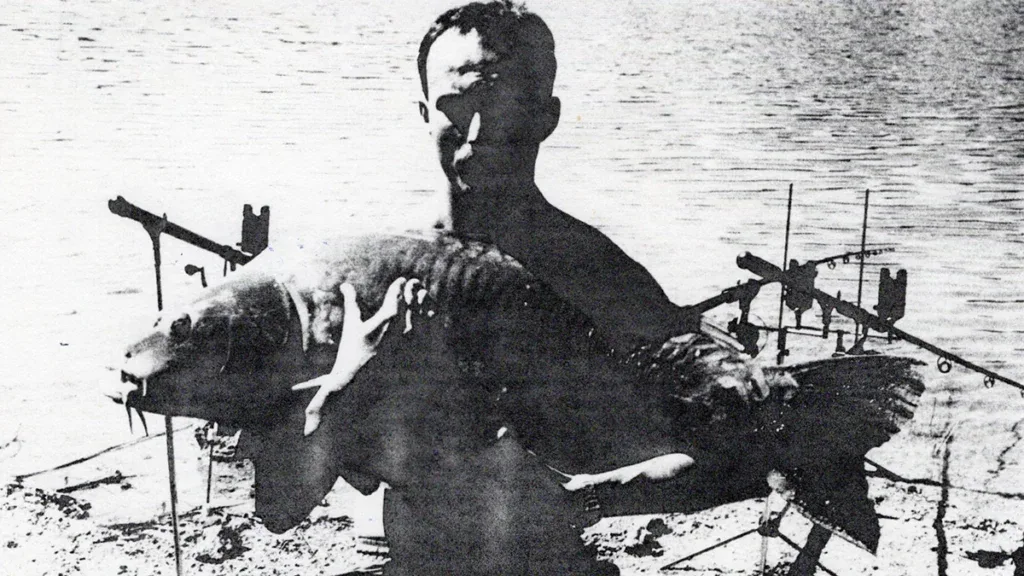
Details
- 75 pounds, 11 ounces
- Lac de Cassien, France
- May 21, 1987
- Leo Van de Gugten
- 8-pound line (tested in 12-pound class; also that line-class record)
- Caught on prepared carp bait
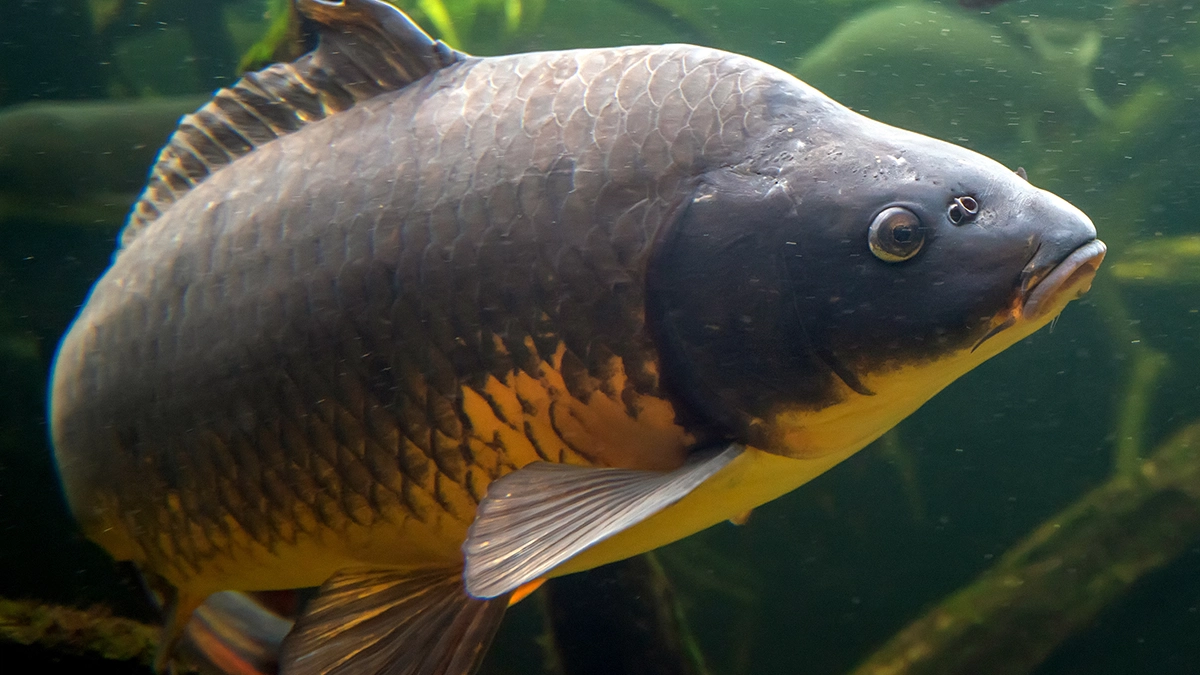
Originally from Asia and Europe, the common carp is now widely distributed in North America below the 50th parallel south to the Florida Panhandle. The species resembles buffalo fish (Ictiobus) in North America but the two species are in completely different families. Carp are very prolific and tolerate a wide range of conditions and bottom types.
In Europe, where highly regarded, they’re farmed and selectively bred and may show several colors and body shapes, and may be fully scaled, partially scaled (“mirror carp”) or lacking scales (“leather carp”), though after a few generations in the wild, would revert to their natural form.
Other Common Carp World Records
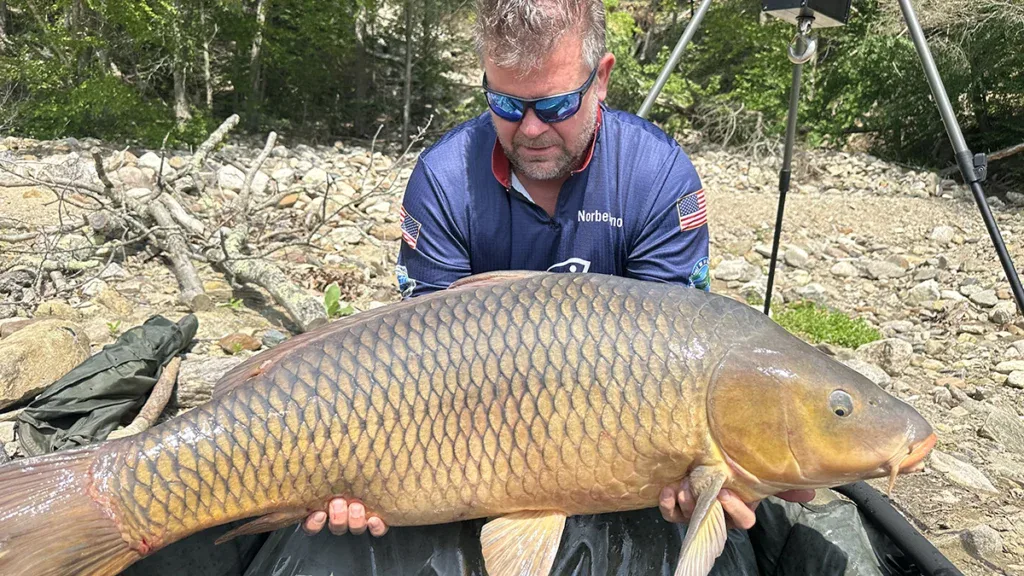
- 41.73 inches, all-tackle length record (the 75-11 weight record above measured 43.7 inches, by the way) from Oxford, Connecticut in June, 2025.
- 60 pounds, 12-pound-tippet fly-rod record from the Piedmont Region of Italy in April, 2023.
Biggest Crucian Carp Ever Caught (Carassius carassius)
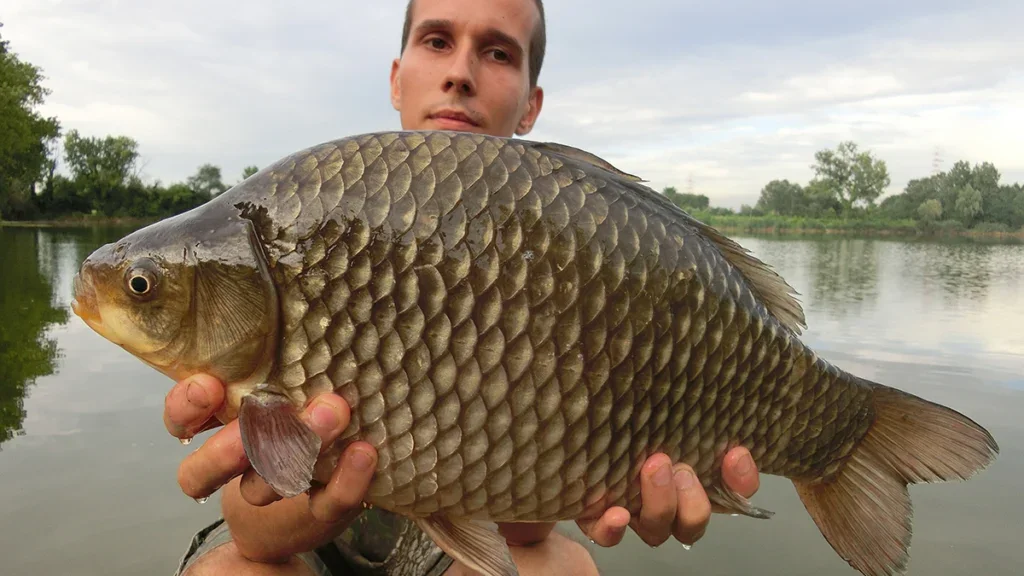
Details
- 5 pounds, 5 ounces
- Lago Fasson, Italy
- July 31, 2014
- Giacomo Schiavon
- Caught on a worm
This small carp is similar to the closely related common goldfish. The Crucian has not been widely reported in the U.S. and is apparently not an invasive species here. It seems to be particularly hardy, surviving thanks to anaerobic respiration and suspended animation in anoxic waters near 0 degrees C (freezing). They’re found in lakes but spawn in rice paddies and drainage ditches. They’re widely cultivated as food fish in China.
Biggest Grass Carp Ever Caught (Ctenopharyngodon idella)
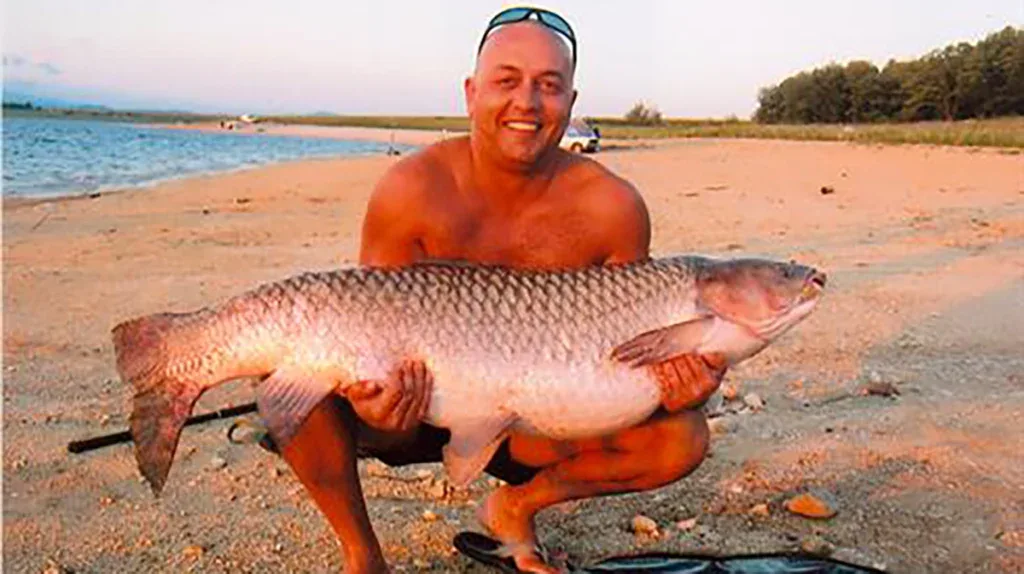
Details
- 87 pounds, 10 ounces
- Piasuchnik Dam, Bulgaria
- July 22, 2009
- Stoian Iliev
- Lure or bait not specified
Grass carp are native to the rivers of China and eastern Siberia (notably the Amur River system) that flow into the Pacific. They’ve been widely introduced around the world for both aquatic weed control and aquaculture purposes. Distinctive features of the long, slender species include a mullet-shaped head with terminal mouth and no barbels and coarse, dark-edged scales. While getting this herbivore to bite any angler’s offering is a rare feat, once hooked they’re known to be strong fighters and even jump.
Biggest Koi Carp Ever Caught (Cyprinus rubrofuscus)
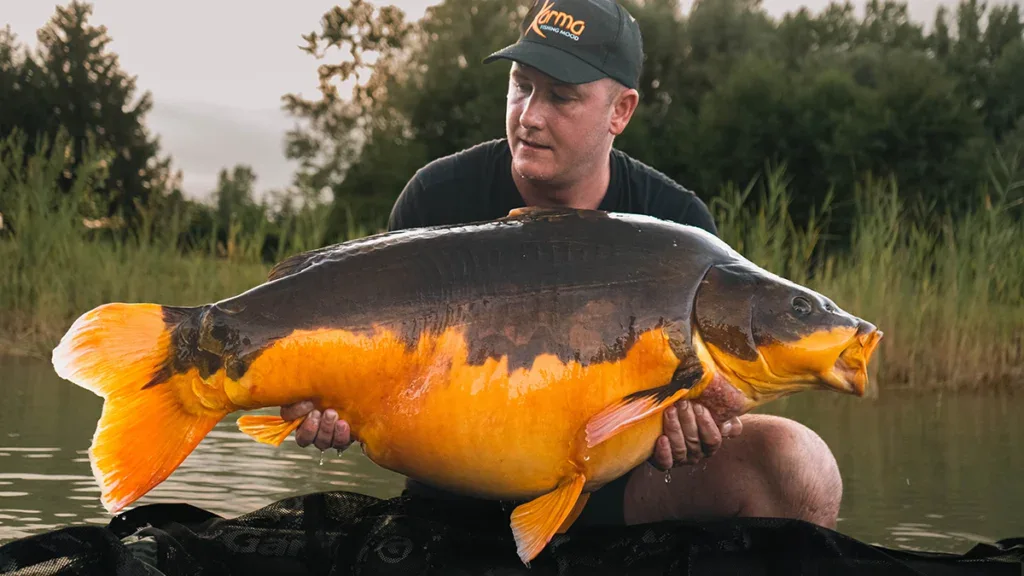
[Note: Not an official record yet; this is pending per current IGFA review of catch and photo. The following will be a world record only if it is officially approved.]
Details
- 65 pounds, 1 ounce
- Gyékényes Kotró, Hungary
- June 23, 2025
- Attila Toth
- Apparently caught with prepared carp bait
Also known as amur carp, the koi is native to eastern Asia and is today found in parts of the eastern U.S. (notably Florida and northern mid-Atlantic states) as well as Australia and New Zealand, where it may be mistaken for the common carp (C. carpio). Like most types of carp, the koi is an opportunistic benthic roamer, eating a great variety of plants and animals as it scours the bottom. That problematic feeding behavior stirs up the bottom, damaging plants and making waters muddy, leading to oxygen depletion. C. rubrofuscus is tolerant of poor water quality, though it prefers still waters. The ornamental variety, sporting familiar, brilliant orange, whites and blacks, accounts for roughly 200 aquaculture farms that grow koi. In Asia, the species remains an important food fish.
Biggest Predatory Carp Ever Caught (Chanodichthys erythropterus)
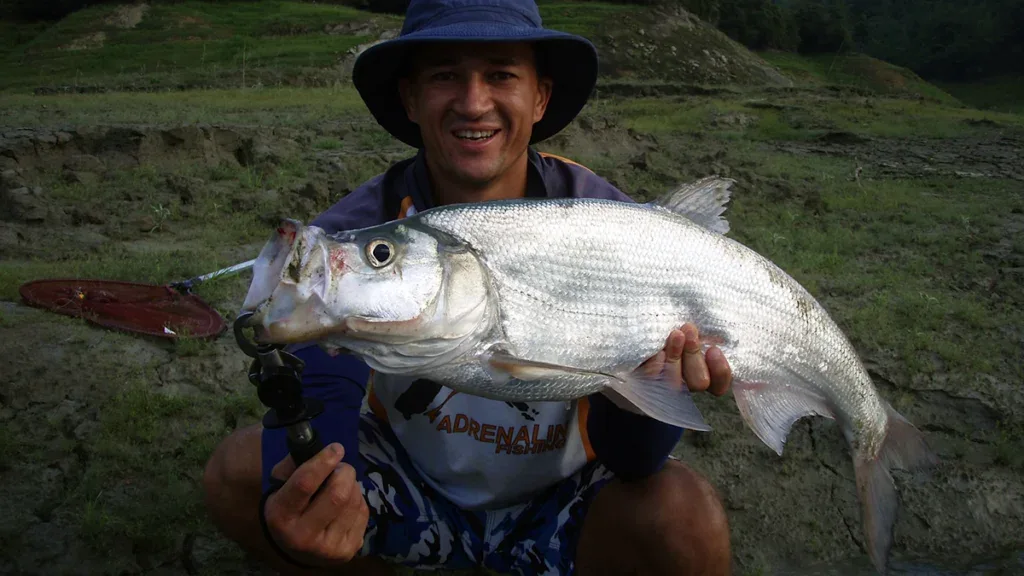
Details
- 10 pounds, 7 ounces
- Chengwen Reservoir, Taiwan
- May 18, 2014
- Duane Jeffrey Christie
- Rapala lure
Clearly, not all species of carp are plodding bottom feeders. Some species, such as the aptly named predatory carp, eat other fishes and aggressively attack lures. Although considered a carp here, it’s worth noting this genus is not a member of the diverse worldwide family of carps and minnows, Cyprinidae, as are others in this article, but is in a different family, Xenocypridade.
In northern Asia, to which it’s indigenous, it’s also known as redfin culter or skygazer. The species prefers lakes, ponds, reservoirs and slow-flowing rivers. The web site fishing-worldrecords.com has a photo of C. erythropterus from China weighing 30 pounds. The fish is about four feet long, though the authoritative site Fishbase lists its maximum length as 102 centimeters or about three feet.
Biggest Silver Carp Ever Caught (Hypophthalmichthys molitrix)
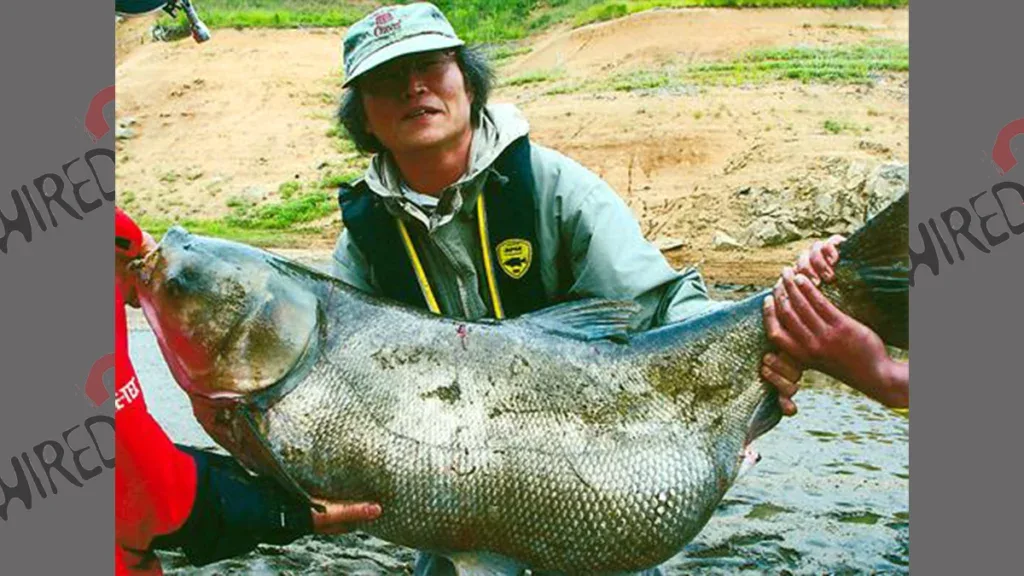
Details
- 70 pounds, 8 ounces
- Korea
- June 4, 2006
- Chongdae Lim
- Caught using 8-pound line with a “rubber jig”
Very similar to the bighead carp (same genus), these plankton feeders were introduced to the U.S. from their native China/eastern Siberia in part to help control algae growth. They’re now found in most of the U.S. South and East. As with bigheads, they leap wildly at the sound/vibration of a nearby outboard motor. Though eschewed as food in the United States, silver carp bring high-dollar prices in China if wild caught.