Micropterus is a genus of freshwater fish known as black bass. With seventeen species of black bass, correctly identifying each species takes some practice and basic knowledge of fish anatomy. While it’s easy to identify a smallmouth from a largemouth based on color quickly, it isn’t as simple with a spotted bass and largemouth bass.
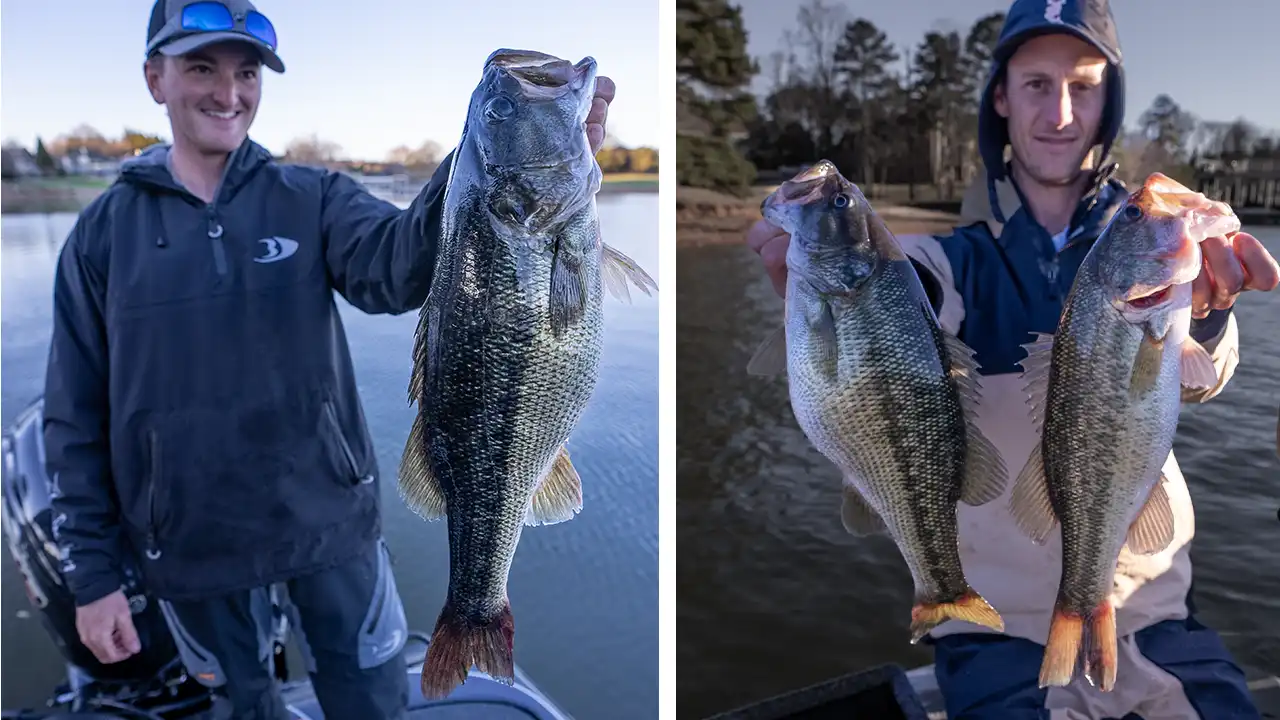
Spotted and largemouth bass can be strikingly similar in appearance at a casual glance, but several physical features set them apart. Brandon Cobb shares four easy ways to differentiate a spotted and largemouth bass using a mix of physical attributes.
Methods to Differentiate Spotted Bass and Largemouth Mass
- Color. Color is the fastest and least accurate way to differentiate the species. In most instances, spotted bass feature a darker green coloration pattern, while largemouth bass tend to be paler. But that’s not always true. Cobb notes that spotted and largemouth bass often share the same color in certain water clarities, usually dingy or dark in color, so we need to note a few other attributes to confirm the correct species.
- Jaw bone extension. In spotted bass, the upper mandible (jaw bone) does not extend back to or beyond the rear edge of the eyes, while with largemouth, the mandible extends past the eye. The jaw bone comparison method requires a closed mouth, so gently close the mouth and then draw an imaginary line from the back of the eye down to the mandible.
- Tongue. A quick finger rub on the tongue of a spotted bass indicates the presence of teeth just like those that rim the outer mouth (sandpaper texture), whereas a largemouth tongue is smooth.
- Dorsal fin. The spiny dorsal fin of a spotted bass connects to the soft dorsal fin. The spiny dorsal fin terminates on largemouth bass before the soft dorsal fin begins.
As Cobb demonstrates, correctly identifying spotted bass from largemouth is easy if you know what to look for. Consider using a few or all of the above methods to determine the correct species.
A Bonus Consideration
When the two distinct species are in the same waterbody, location can play a factor too. Let’s say you’re fishing a famous spot such as Lake Lanier, Lake Guntersville, Lake Texoma or Table Rock Lake, remember that the two species act a bit differently. In fact, they likely prefer different parts of the lake. Largemouths prefer quiet, weedy, slack water, while spotted bass prefer deeper, clearer water with more current or rocky bottoms.
And rarely the two species will spawn together to create a meanmouth bass. If a smallmouth and largemouth spawn together, or a spotted bass spawns with a largemouth, the product is an aggressive bass known as a meanmouth. Recently, one angler in New York chronicled his once-in-a-lifetime meanmouth bass catch.