December is here and the cold has come. Even in the Southeast where I’m from, we’ve played the bob and weave game with old Jack Frost as long as we can. The nights will be consistently in the 30s and 40s for the next 30 days or so. And that’s a far cry from anything worth complaining about when I start thinking about what my boys in Michigan, New York and Idaho are having to endure.
One thing’s for certain, as this cold weather kicks in across the country, things will change when it comes to fishing. For the most part, it’s time to slow down to a crawl. But there are still some ways to catch them on moving baits too. I’ll break down what to expect in the Southeast and we’ll have a couple pros chime in on what’s happening around the country. These are the baits we’re throwing in December.
Berkley Chop Block
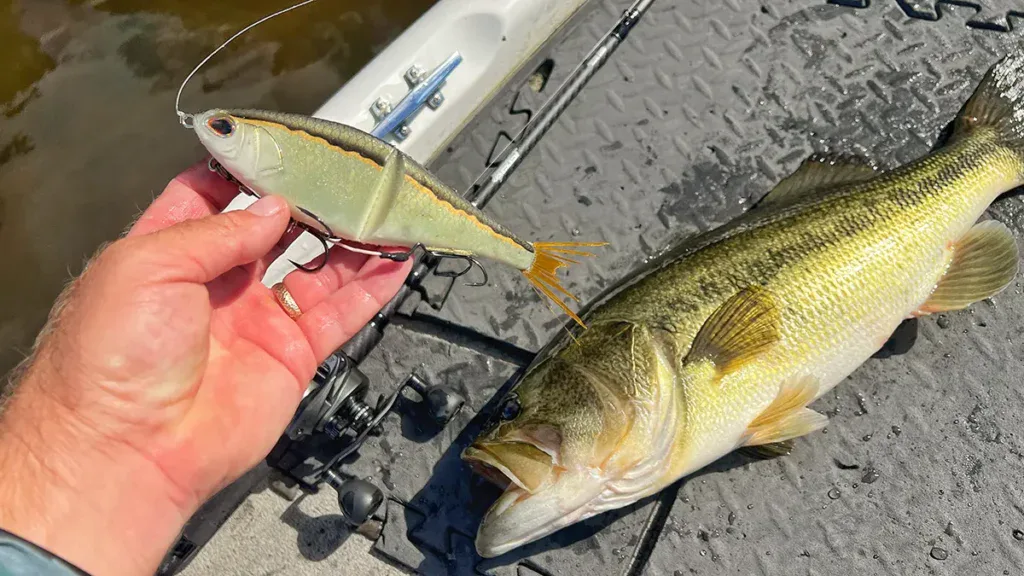
Although December can be a little late in the year for a glide bait in many places, it’s still a great option from Tennessee south. This slow moving big meal may be a bit intimidating to some bass, but a bucketmouth won’t think twice about trying to gulp it down. And I’m really liking the 8-inch Berkley Chop Block in particular lately. I’ll go on record stating this is the best glidebait ever made, in my opinion. It’s easy to work, has an innovative and effective hook harness, and it skips—something hard glide baits can’t do. It’s priced affordably as well, at $25. It nearly suspends when it stalls, which is great in cold water. Whether it’s the Chop Block or your personal favorite, a glidebait is a great option around docks, trees, stumps, rip rap, and nearly every other piece of hard cover you can think of where bass like to hang in the winter.
Small Crankbaits
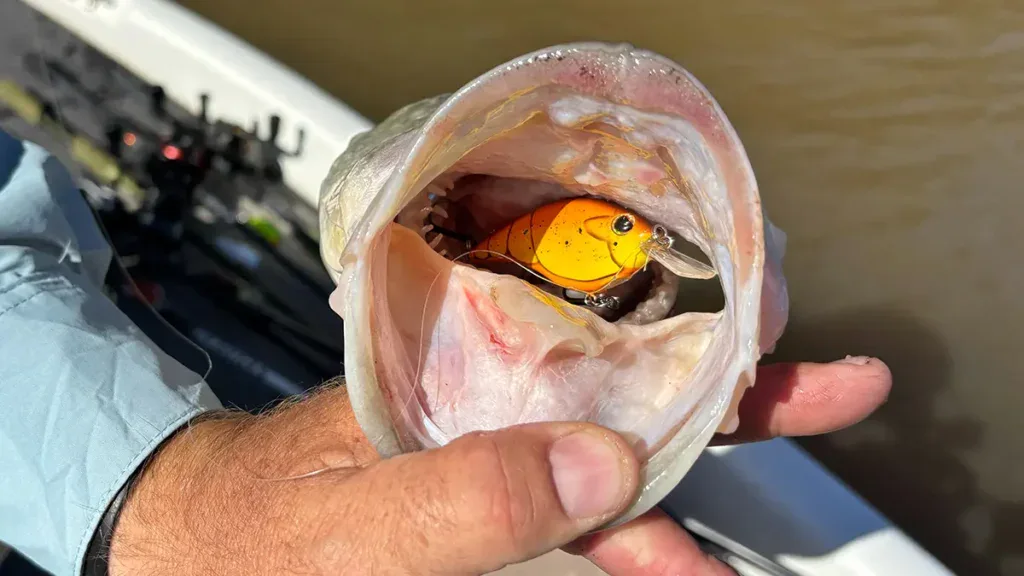
There’s really not a bad month to throw a crankbait, but December is one of the best ones—for shallow cranks in particular. I like squarebills, flat-sided cranks and Shad Raps as the water really starts to cool, because these baits can be fished slowly and tight to cover. Bass like to hunker down in trees or sun themselves on rocky points. In either instance, a small crankbait swam right by their face is hard to pass up. Squarebills typically work better at coming through cover, and then the flat-sided baits and Shad Raps crawl across and through rocks well.
Finesse Jig
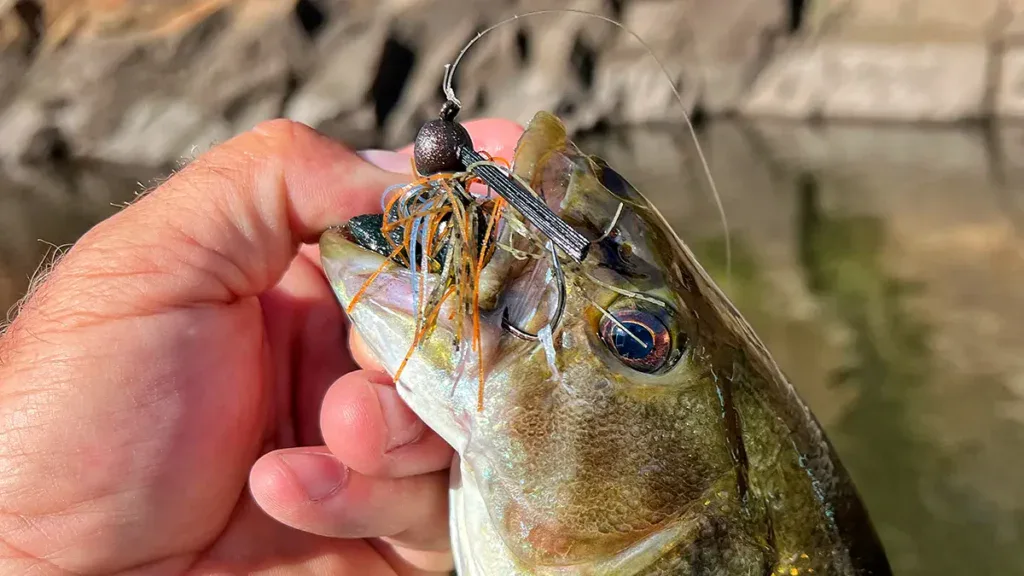
All types of jigs are great in the winter, from swim jigs to flipping jigs to football jigs. But the best is likely a finesse jig, like Berkley’s F19 finesse jig. Spotted bass, smallmouth and largemouth all relate to rock during the winter in the Southeast, especially if there’s current. This can be a clean hard bottom of gravel, an area with scattered boulders, or even larger chunk rock. While the finesse jig isn’t a good option for rip-rap-size rock (because it hangs up too much) it is great for these other hard bottom situations. Put either a small creature bait on as a trailer or a larger craw, depending on the mood and size of the fish, and you’ll be catching fish in no time.
Vibrating Jig
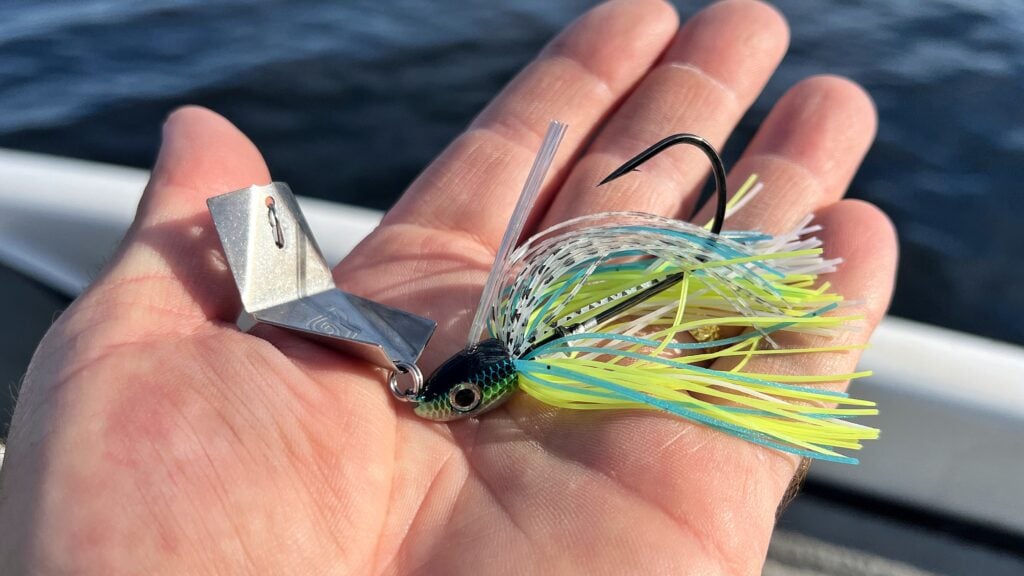
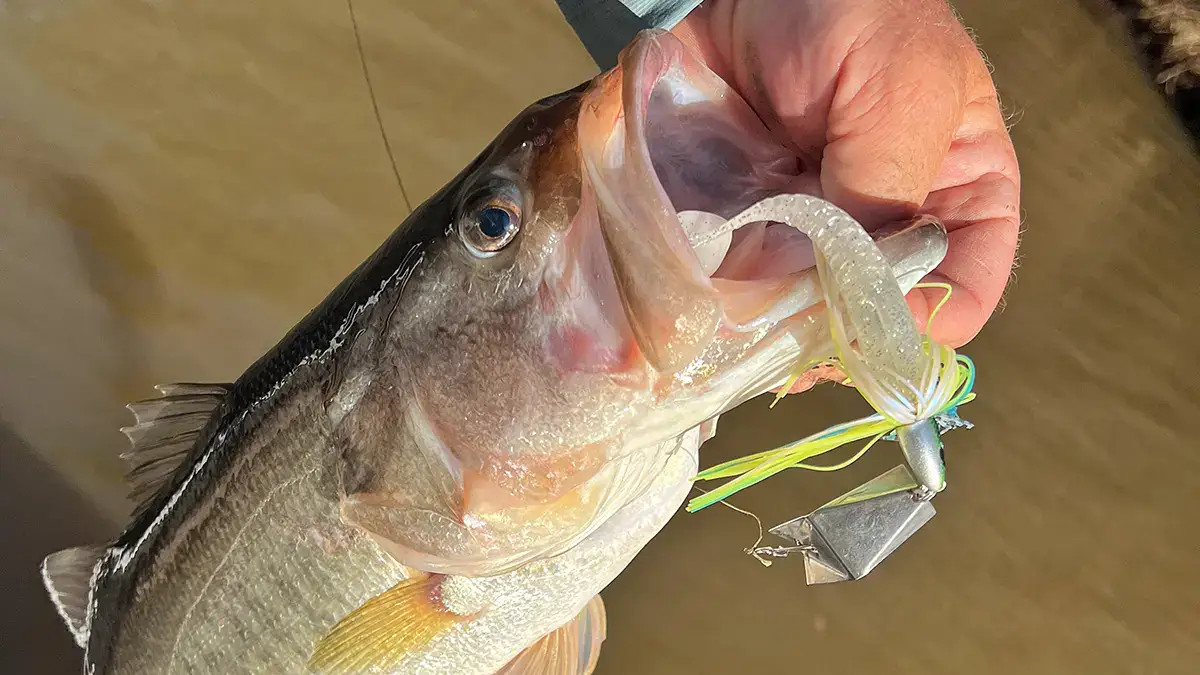
I was debating as to whether to put a vibrating jig down as my last recommendation or a spinnerbait. Both are fantastic baits for December, but I caught a 4.5-pounder on a vibrating jig the last week of November, so it’s fresh on my mind at the moment. Vibrating jigs are great to fish around submerged vegetation that is dying off, something that is prevalent in December in the South. They also work really well around docks, seawalls, and other hard cover. You have to be careful with these baits around wood, but they can certainly catch giants there too. If you want to fish them through laydowns and brush, try out a bait with a weed guard, like the Teckel USA Bladewaker Bladed Jig.
Kyle Patrick’s Guide to Scoring in New York
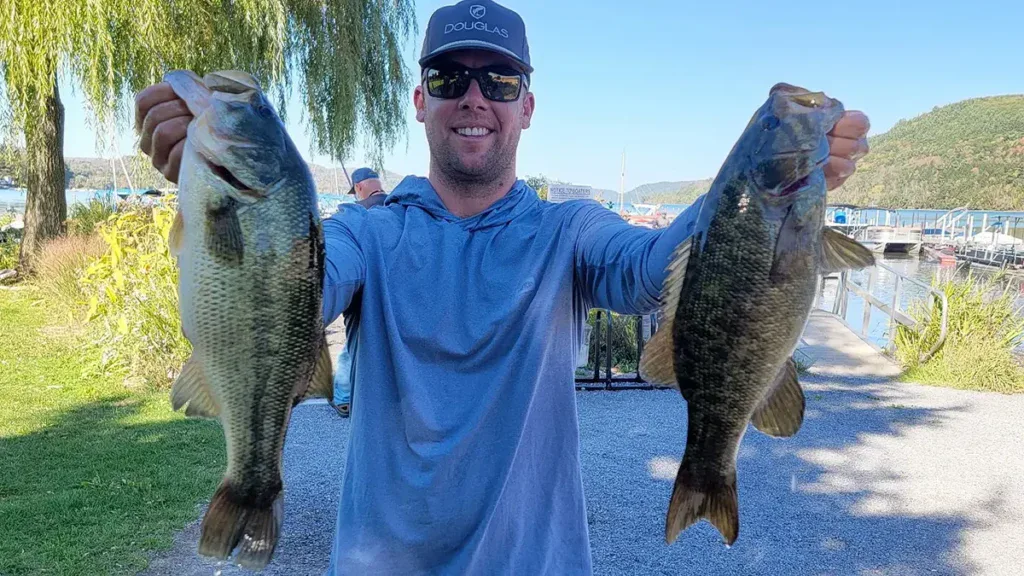
“In December in New York, one of the most slept-on baits is a 1/2-ounce Strike King Red Eye Shad. Our lakes get cold fast but fish still group up tight on hard spots, like small rock transitions, little drains, and anywhere the bottom changes. I fish it on a Douglas LRS C724F with Sunline fluorocarbon in the 12- to 15-pound range, which lets me rip it clean. I use short hops and tight pumps, and let it fall on a semi-slack line. A lot of the bites come on that fall. When the water is super cold or calm, I slow the cadence down and keep it close to the bottom.
“This time of year the smallmouth start setting up in true wintering holes in that 25- to 45-foot range on our natural lakes. A simple X Zone Finesse Slammer on a drop shot is hard to beat. I fish it on a Douglas XMatrix DXS744XF with a light Sunline fluoro leader and I barely move the bait. The less you do in the winter the better. I look for steep breaks that fall into a basin, because those areas always hold a few big ones this time of year.
“It’s no secret how successful you can be with FFS and suspended fish. X Zone has a new minnow-style bait coming out soon and it has already been really good up here. I fish it on a Gamakatsu Horizon Head with Sunline fluoro on a Douglas XMatrix DXS 744XF. I make long casts, count it down, and slow roll it. The key is keeping the bait in the middle of the water column. When fish are roaming on smelt or alewives, this is one of the easiest ways to get bit.” — Kyle Patrick
Casey Scanlon’s Keys to Success in Missouri
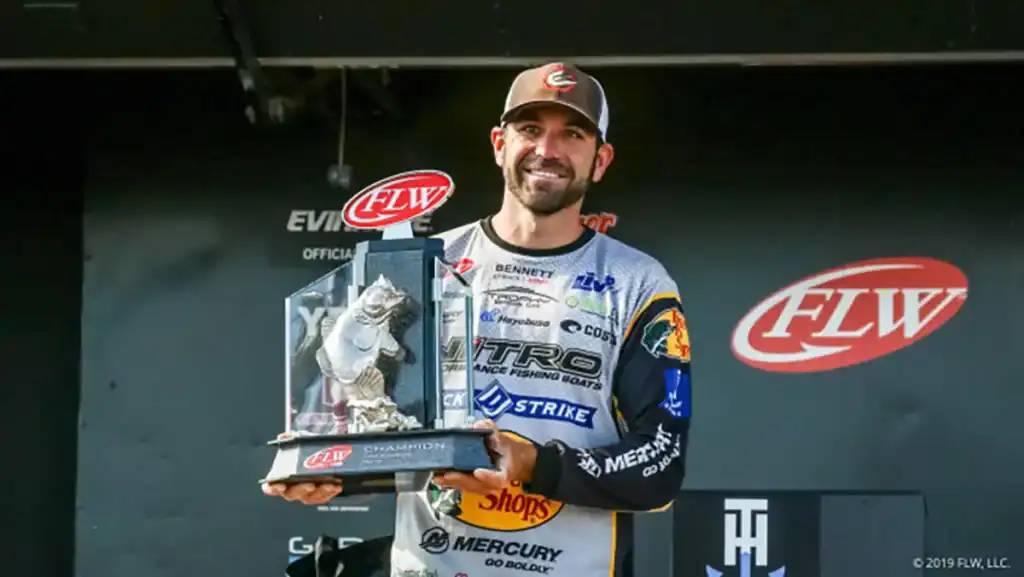
“I like a Bass Pro Shops XPS Cover jig (3/4 or 1/2 ounce) for docks and brush piles, and for days when the fish are not up on the bank. When the fish are shallow, I like an XPS Buzzer Beater buzzbait in black with a gold blade (1/2 or 3/8 ounce). I throw that around shallow rocks, bluff ends, flat banks and anywhere gizzard shad are present on the bank.
“Then there’s the XPS Stare Down jerkbait. Any shad color will work. I fish it around the back halves of creeks around shad schools and suspended fish roaming on flats, utilizing Livescope to pick off individual roaming fish. I fish the jerkbait on 12-pound XPS fluoro and fish faster in warmer water and slow down as the water cools.” — Casey Scanlon