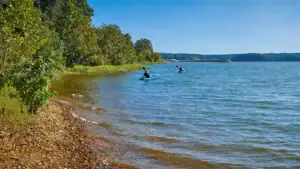
Bass fishing is huge in California. Boaters and kayakers alike have plenty of options to fish up and down the state, where largemouth, smallmouth, spotted, and striped bass species are all among the top targets. Waterways include lakes, rivers, reservoirs and deltas that can all grow fish year-round, with temperatures getting cold in certain months but never particularly frozen.
Unsurprisingly, California is a big bass destination. One of the current International Game Fish Association (IGFA) All-Tackle Length record largemouth bass measures 65 cm (25.59 inches), which George Coniglio caught in Lake Mission Viejo in May 2015. Harold Hardin holds California’s smallmouth bass record, landing a nearly 10-pounder on Pardee Reservoir in July 2007. And the state record largemouth is a 21-pounder from Castaic Lake in 1991.
The Golden State is at least partially behind the explosion of swimbait fishing and custom swimbaits that have become recognizable bass subculture. Some California anglers went all in on big swimbaits years ago when targeting double-digit trophies. Other states were doing it too, but anglers such as Oliver Ngy were fishing swimbaits in the 1990s.
Here’s a tip for competitive anglers: The state of California has a database called the California Department of Fish and Wildlife (CDFW) Fishing Contests Data Portal where tournaments must register. You can look up all the year’s tournaments to pick the ones you want to compete in. Even if you’re not a tournament angler, it can help you research what waterways are healthy and vibrant enough to handle large-scale tournaments that put an emphasis on limits, heavy weights and inches.
You can also dig into our roundup of the top bass fishing lakes in California, listed in alphabetical order.
Lake Berryessa
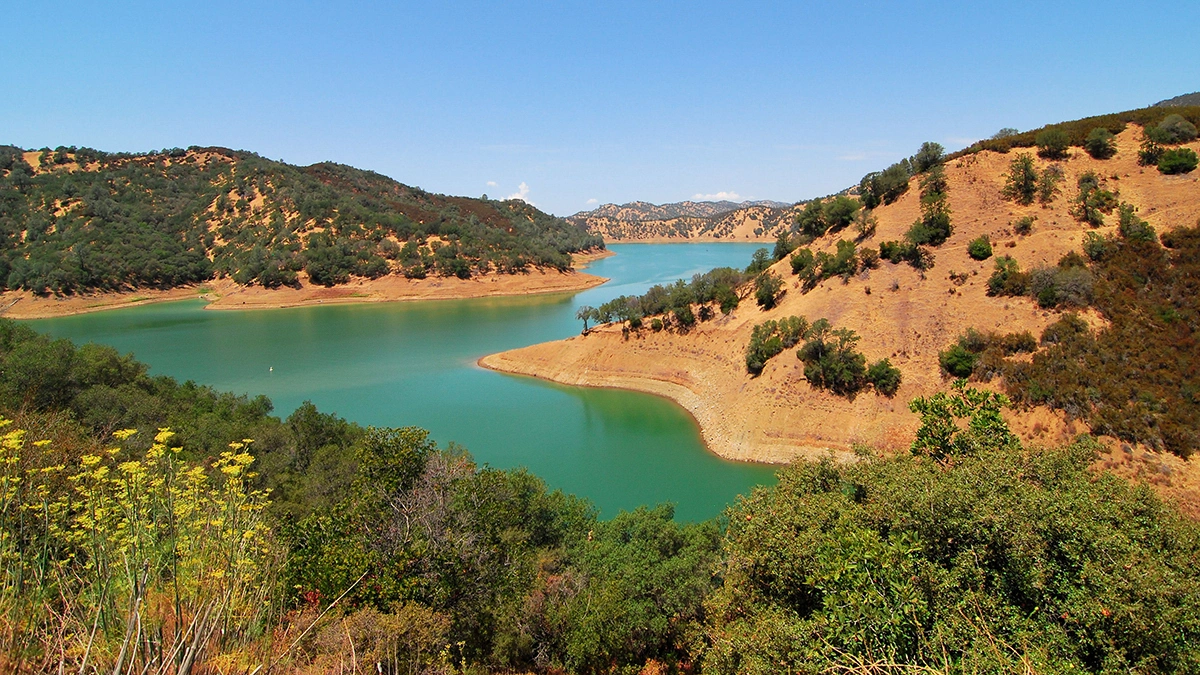
Lake Berryessa is one of California’s most reliable bass fisheries, located in Northern California—primarily in Napa County—with parts of the lake extending into Solano County. It’s a deep, clear reservoir with miles of rocky shoreline, submerged creek channels, long points, bluff walls, and offshore structure that consistently hold fish. That structure is perfect for anglers who like to pattern bass rather than just run shallow water.
Berryessa shines for spotted bass, with a strong population of quality fish that fight hard and bite year-round, but it also produces plenty of largemouth and smallmouth. Because the lake is deep, it doesn’t get nearly as muddy after wind events and storms, so you can fish it after a cold front. The lake rewards anglers who understand electronics, depth changes, and seasonal movement. You can catch bass here 12 months a year—jerkbaits and A-rigs in winter, swimbaits and jigs in spring, and topwater late in summer.
Tournament anglers love it because limits are dependable. Add clean water, beautiful scenery, and easy access from Northern California cities, and you get a bass fishery that delivers over and over again. Lake Berryessa isn’t about hype—it’s about results.
California Delta
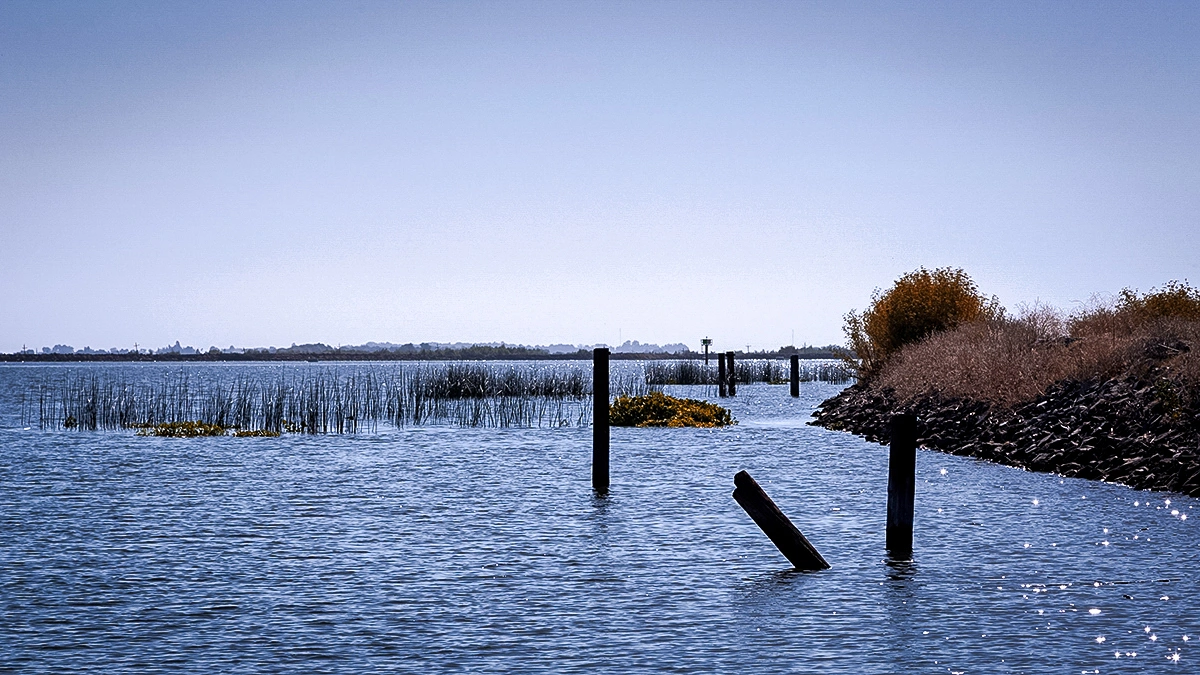
The San Francisco Bay’s salt water mixes with fresh water from the Sacramento, San Joaquin, and other rivers to create a massive bass-producing estuary. Many folks call it the California Delta, but it’s officially the Sacramento-San Joaquin River Delta—and it’s filled with bass and stripers. Anglers can launch up north near Sacramento, in the middle stretches, or south closer to Stockton.
With a total area measuring 1,153 square miles, more than 1,000 miles of navigable rivers, sloughs, and channels create a giant maze of shallow water pieced together with levees. The delta itself is a massive, living tidal system where bass feed, move, and position themselves based on current, tide, and cover. That tidal influence creates aggressive fish and endless patterns: One day you’re flipping flooded tule lines, the next you’re throwing frogs over matted hyacinth, cranking rock levees, or chasing schooling fish on moving water. Few places like the delta force you to fish in different day-to-day conditions.
Bass feed constantly because water is always moving, so you can catch fish in every season—pre-spawn, spawn, post-spawn, summer, fall, and even winter. Add in miles of fishable shoreline, countless sloughs and backwaters, and near-limitless water to explore. You can fish here for years and still find new water.
Lake Camanche
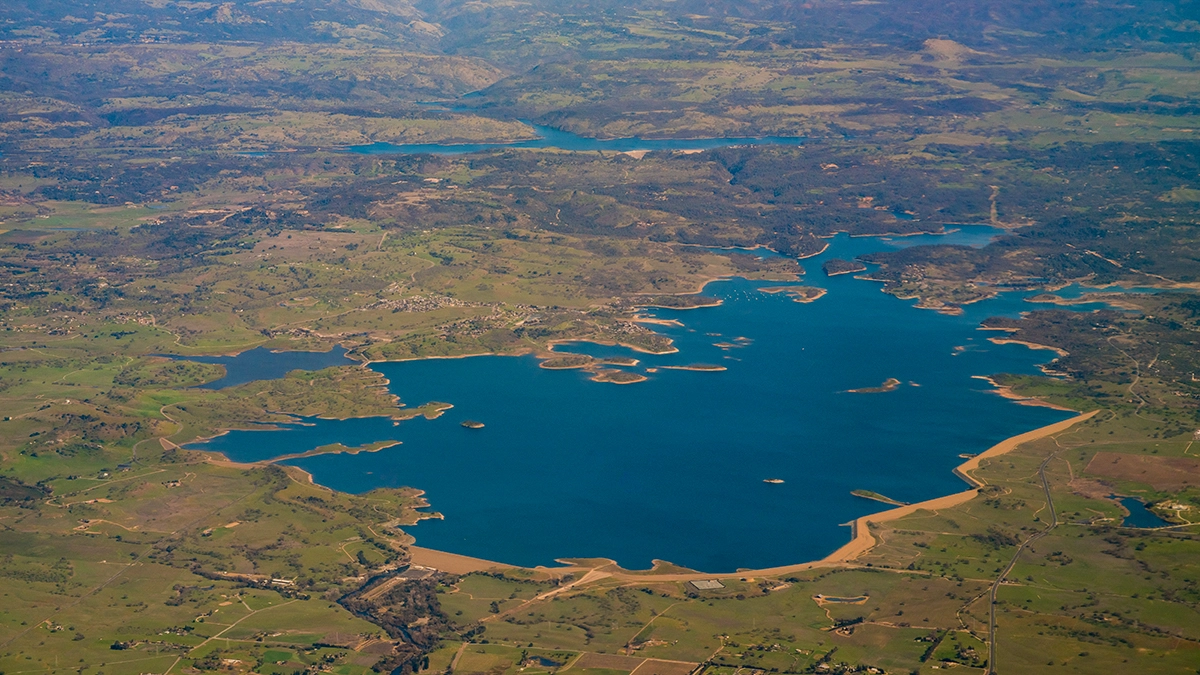
Lake Camanche is a premier bass fishing destination located in the Sierra Nevada foothills of Central California. It sits at the junction of Amador, Calaveras, and San Joaquin counties. Most importantly, the reservoir offers a mix of consistent fish populations, diverse habitat, and year-round opportunity, all without the extreme pressure you see on some of California’s more famous waters.
Camanache has long rocky points, submerged creek channels, shallow flats, flooded brush, and standing timber when water levels are up.That variety creates perfect habitat for largemouth, smallmouth, and spotted bass, all of which thrive here. The lake fishes well shallow or deep, which means anglers can flip, throw reaction baits, or fish offshore structure depending on the season.
During the spring spawn, Camanche is strong too, producing both solid numbers and quality fish, while fall brings aggressive feeding windows. Combine that with easy access, multiple launch ramps, and a fishery that supports competitive tournaments, and you get a lake that delivers dependable, consistent bass fishing.
Castaic Lake
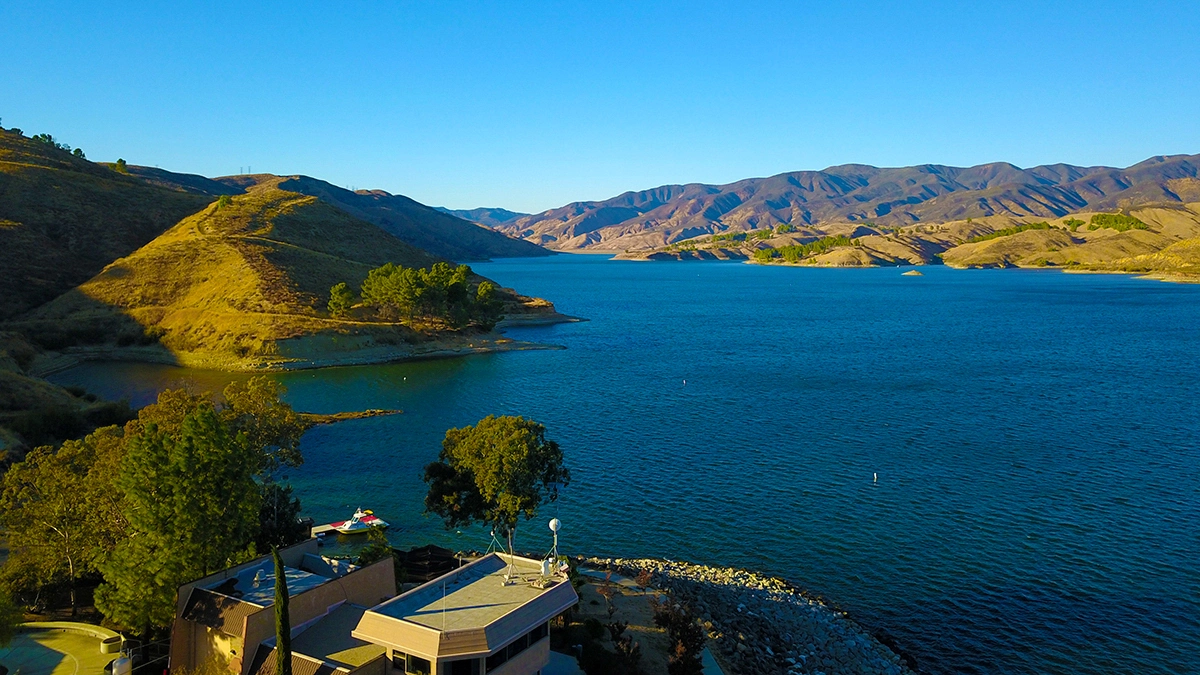
You’ve probably heard of Castaic Lake. Its perfect storm of trout stocking, big bass potential, and lure innovation nurtured the lake’s legendary reputation in Southern California bass circles for swimbait fishing. Throwing big trout‑imitating swimbaits really took off in the late 1980s and early 1990s in Southern California reservoirs like Castaic and Lake Casitas, where both bass and striped bass aggressively slurped stocked rainbow trout.
Castaic Lake is famous for its monster largemouth bass. It has a history of producing fish exceeding 20 pounds, including some of the largest bass ever caught in California. The lake’s diverse structure—rocky points, submerged timber, weed beds, creek channels, and deep drop-offs—provides year-round opportunities and makes it possible to target bass in shallow or deep water. The combination of structure and forage, including abundant shad and stocked rainbow trout, allows anglers to experiment with topwater, swimbaits, jigs, and finesse tactics.
Beyond size and variety, Castaic is easily accessible. The state water reservoir offers productive fishing on weekends, and anglers even then consistently catch limits. Its proximity to Los Angeles and the I-5 corridor makes it easy to reach, while still offering rolling hills and clear water. Throw in a strong tournament presence, a thriving bass culture, and the adrenaline rush of targeting massive fish, and you can’t go wrong.
Clear Lake
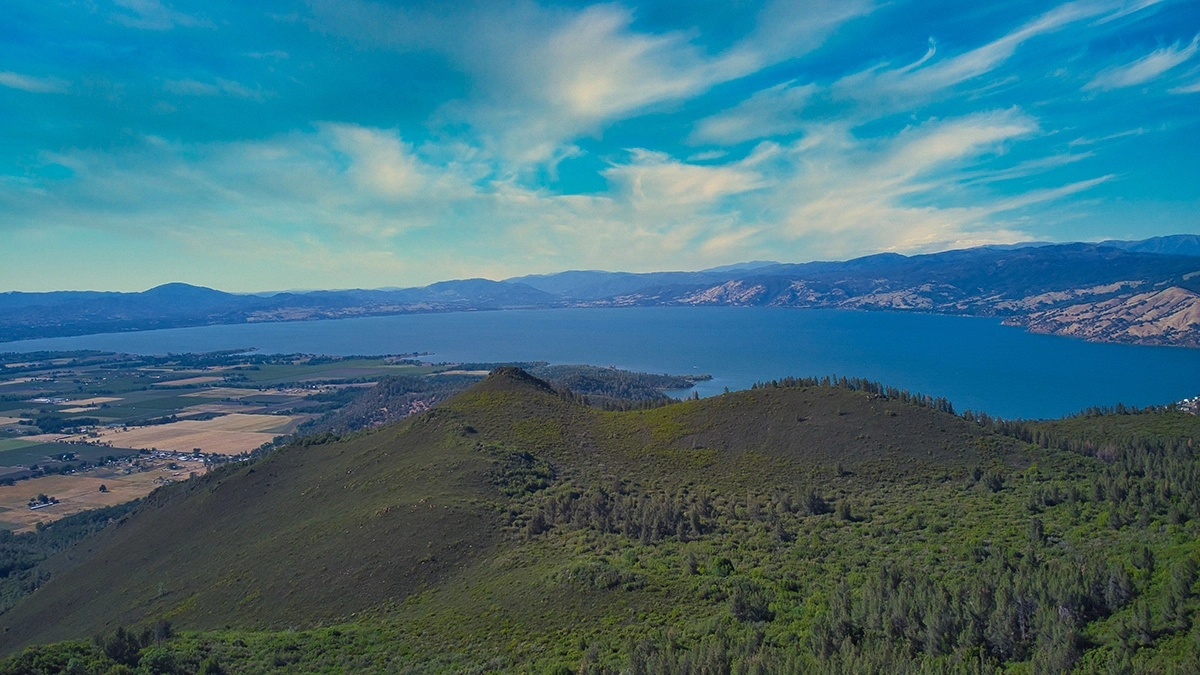
Clear Lake—the largest natural freshwater lake in California—is widely considered one of the state’s best bass fishing destinations for its sheer size, varied terrain, and diverse fishery. Spanning 68 square miles of surface area in Lake County, it offers expansive waters with rocky points, weed beds, drop-offs, and shallow flats, providing ideal structure for both largemouth and smallmouth bass. The lake is home to a strong, self-sustaining bass population, including trophy-sized fish, with anglers regularly landing bass that weigh more than 10 pounds.
Clear Lake is a popular location for professional tournaments, such as the Fishing League Worldwide and Bassmaster Elite Series, further underscoring its status as a top-tier fishing destination. Kayakers flood the lake for the Bassmaster Kayak Series, Western Kayak Anglers Alliance, and BAM Kayak Series as well.
What truly sets Clear Lake apart is its consistent fishing opportunities throughout the year. While spring and fall offer prime conditions for bass, anglers can find success year-round, thanks to the lake’s moderate winter temperatures. In February 1990, Jerry Basgel set Clear Lake’s bass record with his 17.52-pound catch; the record catfish is 33.2 pounds.
Lake Oroville
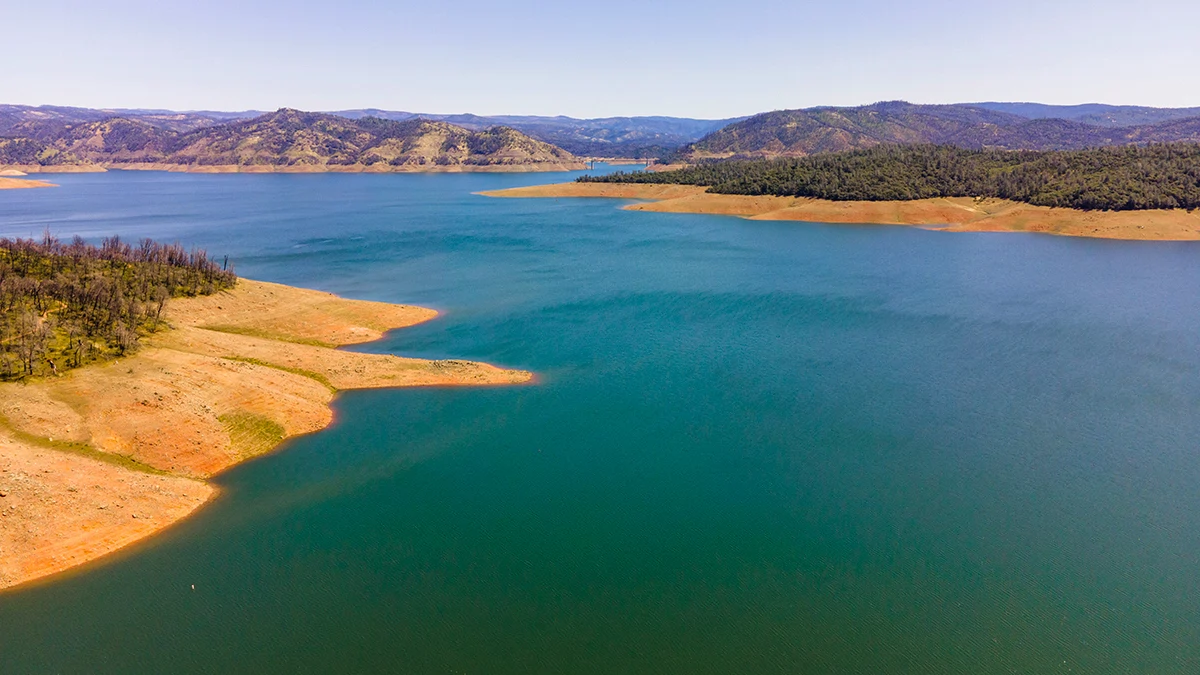
World-class bass fishing destination Lake Oroville is located in Northern California’s Butte County, approximately 75 miles north of Sacramento. The lake has several arms, so you can launch in multiple areas such as Bidwell Canyon, Lime Saddle and the Spillway Boat Ramp.
Oroville is widely considered the “Spotted Bass Capital of California,” and that’s what anglers come here to catch. While you can find largemouth and smallmouth, the aggressive spots dominate the lake. The reservoir is fed by the Feather River, blessed with varied structure including deep drop-offs, rocky points, creek channels, submerged timber, and coves.
The lake offers consistent fishing throughout the year, with spring and fall producing active feeding and summer deep-water opportunities. Public boat ramps, shoreline access, and guide services make it easy to fish even for newcomers, while tournament anglers love it for its potential big weights.
Lake Tahoe
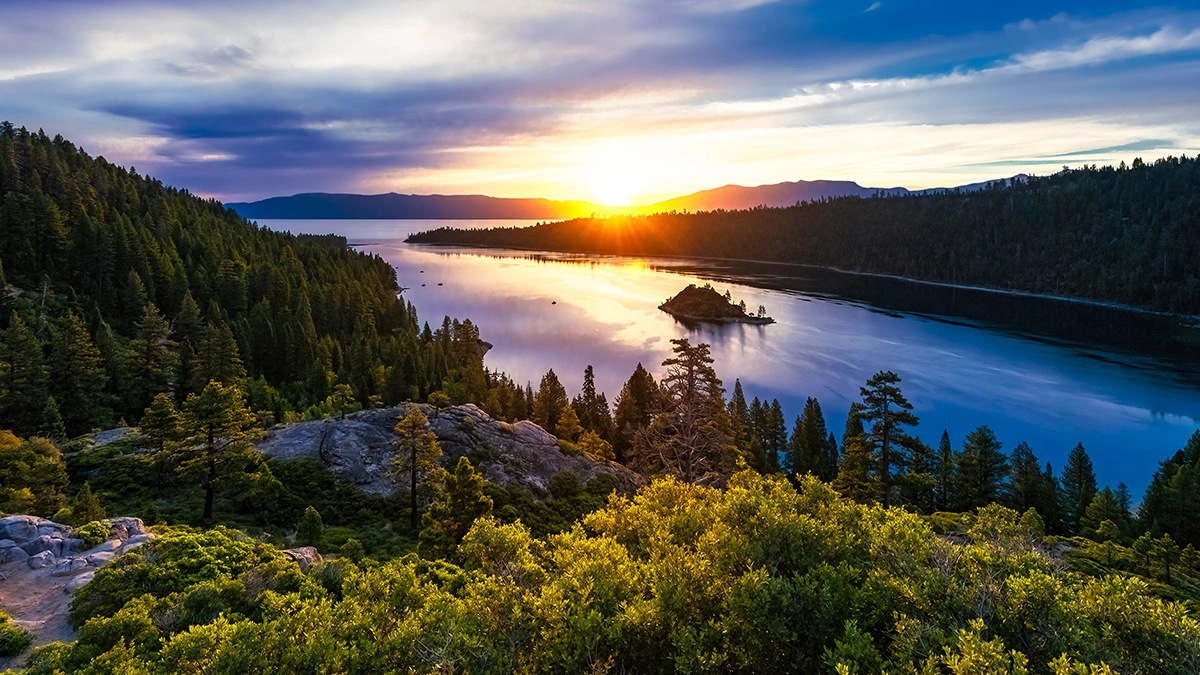
While it’s famous for boating and other recreation, Lake Tahoe also offers healthy populations of largemouth and smallmouth bass in select coves, bays, and shallow flats—especially during the spring and early summer months when the water warms. This sizable lake sits on the state line of California and Nevada; to shorten the learning curve, try areas such as the Tahoe Keys, Cave Rock, Logan Shoals, and the channels near Zephyr Cove.
The lake’s clarity and structure make bass fishing here both rewarding and visually stunning, as you can often see fish reacting to your lure in crystal-clear water. Local bass are smart, often holding around rocky points, submerged timber, or near river inflows, so anglers must use a variety of lifelike lures to trigger bites.
Fish early morning or late evening for more aggressive bites, and to avoid the summer crowds. Keep your presentation slow and natural; in clear water, subtle action often triggers strikes better than fast, erratic retrieves. Most importantly, while you’re out there, enjoy one of California’s most iconic settings.
Honorable Mentions
- New Melones Lake is a 25-mile-long reservoir located in Central California, primarily in Calaveras County, with portions extending into Tuolumne County.
- Don Pedro Reservoir reaches depths of 250 feet and is situated on the Tuolumne River, formed by Don Pedro Dam in Tuolumne County.
- Rancho Seco Lake is a 1,100-acre reservoir located 25 miles southeast of Sacramento in the Rancho Seco Recreation Area.
- Trinity Lake is formed by the Trinity Dam on the Trinity River, a major tributary of the Klamath River, located in Northern California.
- Folsom Lake is formed by Folsom Dam on the American River, spanning approximately 11,450 acres at full capacity.
- Diamond Valley Lake is a large, manmade reservoir located in Southern California, primarily in Riverside County.
- Lake Casitas is a man-made reservoir located in Ventura County, sitting about 40 miles northwest of Los Angeles.
- Shasta Lake is a 30,000-acre reservoir located 10 miles north of Redding, California.
- Pyramid Lake sits in the Angeles and Los Padres National Forests, roughly 60 miles northwest of downtown Los Angeles. It’s the deepest lake in the California State Water Project system, reaching depths of up to 700 feet.