Things really start to shift for the better in February. The month might begin with some of the year’s coldest days, but the frost fades further into the month. That makes way for full-blown pre-spawn across much of the South in March, and even the spawn in some places.
Now, my bassin’ brethren farther north have a ways to go before this is a reality on their lakes and rivers. But things are changing slowly and surely for them, as well. Check out what conditions we look for in the South, we’ll check in with a couple guys from other places, and we consider some of the best bass lures to get catches on in February.
Lipless Crankbaits
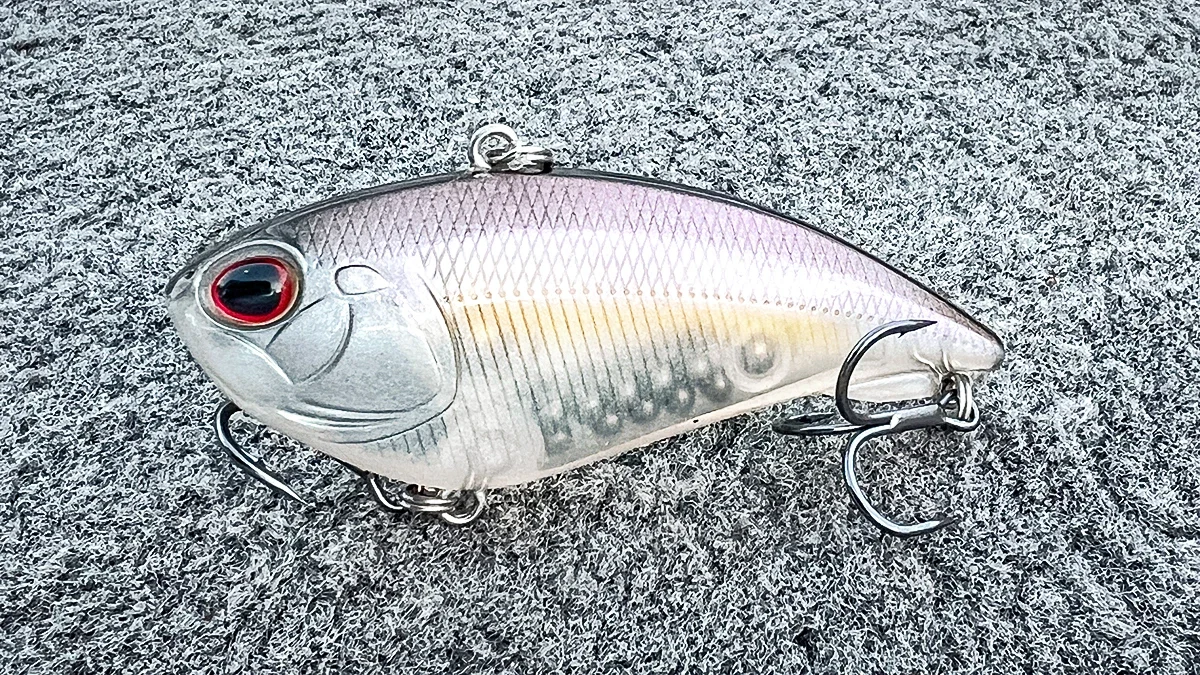
Lipless crankbaits catch fish all year, but arguably the best timeframe for this bait is when February fades into March. Late in the month, the bass will really start to push up toward spawning areas, positioning in the three- to eight-foot depth range around any cover and/or structure they can find. Since a lipless crankbait sinks, this is the perfect lure for the situation. You can throw the lipless up shallow and fish it a little quicker with your rod tip held high, and then follow the contour of the bottom as you cross over humps and drops, lowering your rod and slowing your retrieve to keep your bait near the bottom.
You can catch fish just casting and reeling in a lipless crankbait like this, but you can typically trigger even more strikes with the bait by yo-yoing it. To do this, rip your bait up through the water column and then let it fall on a semi-slack line, being sure to reel up the slack as it falls back down. Just before the bait hits the bottom, rip it up again and repeat the process. This works really well when the fish are suspended off the bottom a bit, and especially well when bass are in submerged vegetation. If you can find fish in hydrilla, coontail, or some other vegetation, let your bait tick the grass and then rip it free. This is a great way to catch big ones in February.
ChatterBait
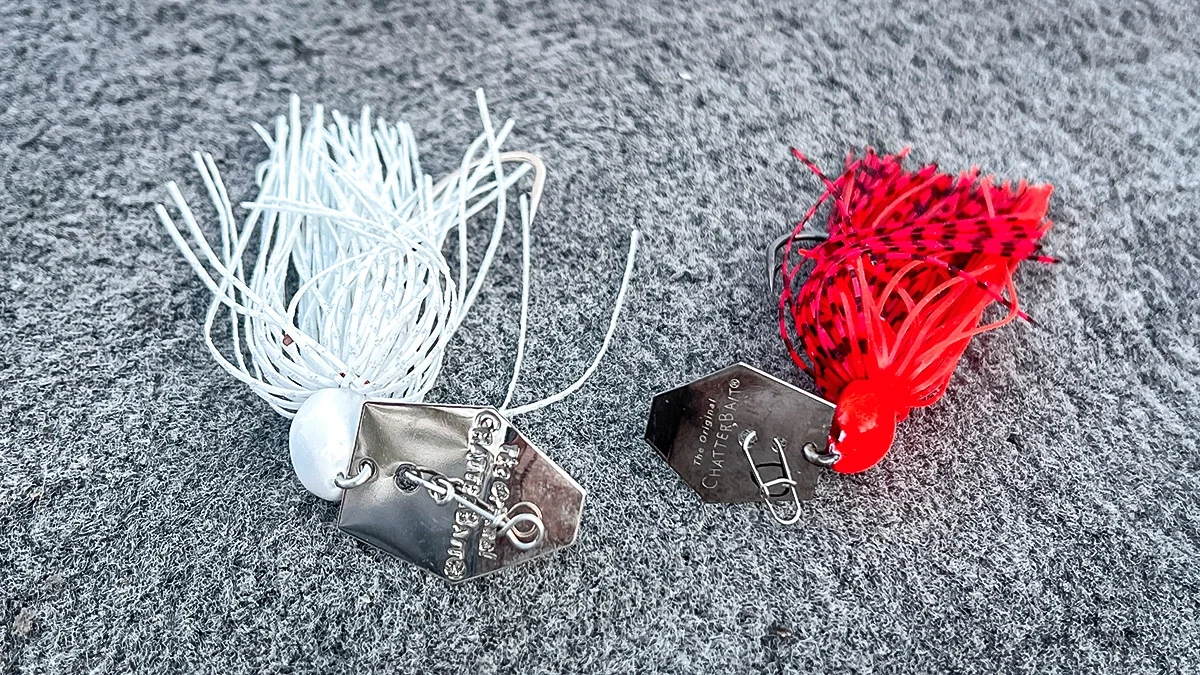
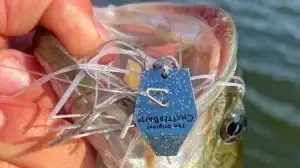
Late in the month, the ChatterBait bite explodes. Fish feed heavily ahead of the spawn, when wintertime lethargy and necessary aggression collide head on. Though the water is still quite cold, the days are getting longer and the bass know the time is near. They’ll position themselves around drops and shallow to mid-range cover like wood, rock and vegetation. A vibrating jig is fantastic in this situation, since it appears to be a big meal and can be fished effectively from one foot out to about eight feet where the fish are staging.
Reds and oranges are always a favorite in February, and that’s because they work extremely well on fisheries with large crawfish populations. But pay attention to the bait present in your area, as shad patterns still work really well around shad, and green pumpkin with gold blades mimic the gold shiners in Florida fisheries well.
Jerkbait
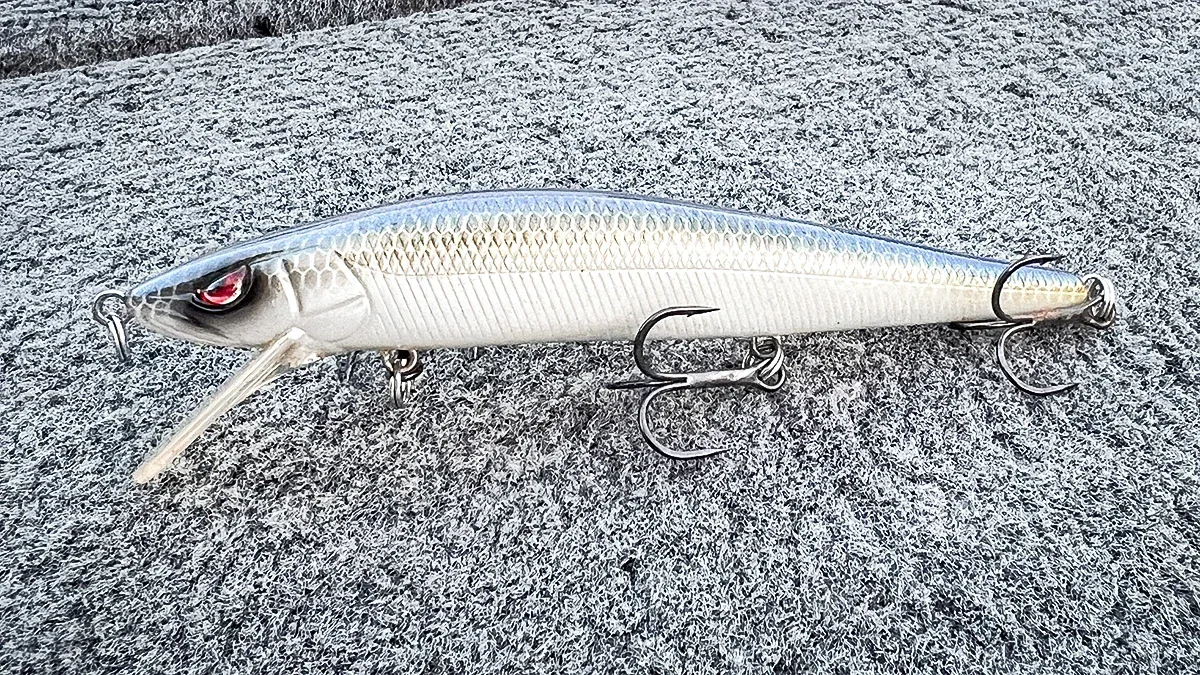
As fish begin to push shallow and stage on bluffs, 45-degree banks, and riprap, a jerkbait becomes the weapon you can’t ignore. These bass are hungry, but a large part of their population will still be a little sluggish, fighting off the lethargic effects of cold water on their cold-blooded bodies. Fishing a jerkbait with a slow pump-pump-pause cadence has boated a ton of bass in February on fisheries from Florida up to Missouri. And the same will be the case this February.
You’ll first select a quality jerkbait, then tailor your color selection to water clarity and weather conditions. The Megabass Ito Vision 110 has become the gold standard in this arena. In low-visibility situations, try a solid or matte-color bait like the French Pearl OB. When the water is clear and the sun is shining, lean more towards a translucent color, like GP Pro Blue
Ned Rig
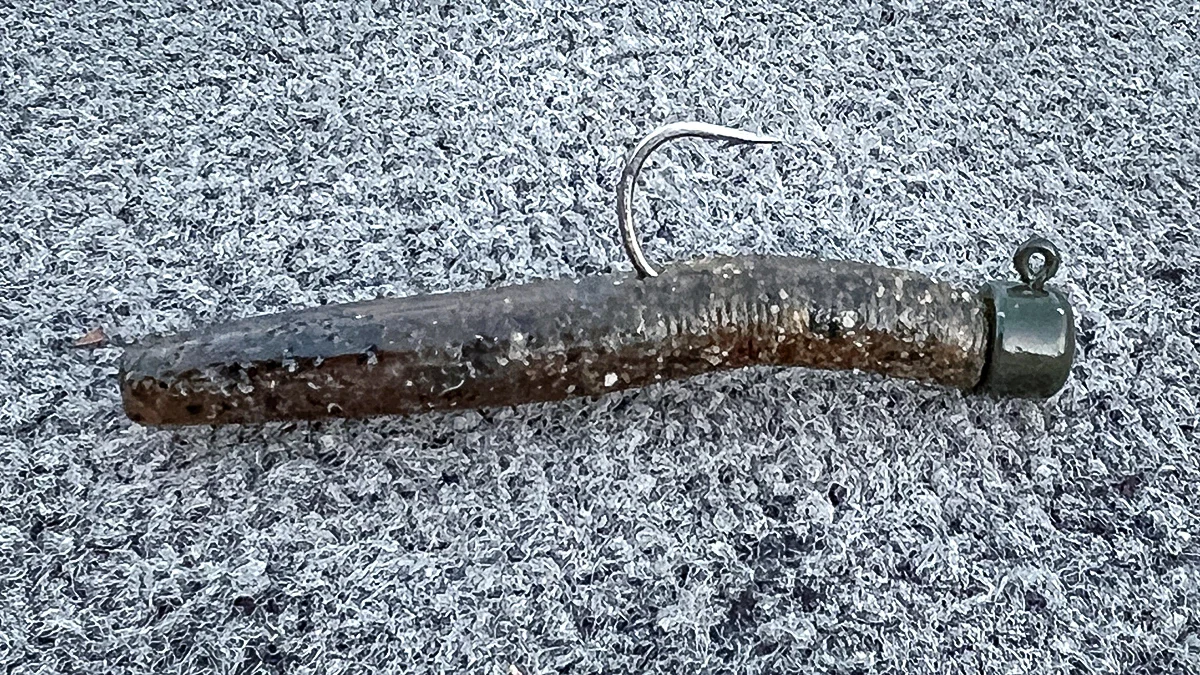
The Ned rig is still the cleanup bait to go with this month. Fishing in February can be plain miserable on account of the cold. Any bait that’ll get a bite knocks the frost off the soul, making the day a little less bitter. And what’s even better than that? A bait that generates lots of bites — where the Neg rig excels. Now, the bass aren’t always big on this finesse presentation. But you can catch bass on this bait in numbers rivaling any other bait, any other time of year.
You’ll likely want to fish this on a spinning rod. Don’t over think your bait selection. The beauty of a Ned rig is that it is simple. Any small, straight bait like a Ned TRD will work great. I do specifically prefer the TRD because it’s super buoyant and durable, which helps the bait stand up and keeps me from going through a pack or two of other Ned baits in a day. If you can get one of these little guys rigged up straight to start with, I’ve fished a single bait across multiple trips before.
Anglers in Action
Two southern-based fishers added some additional insights into how they’re approaching fishing this February, as well as the experiences driving their top choices for late-winter lures.
Stetson Blaylock (Arkansas)
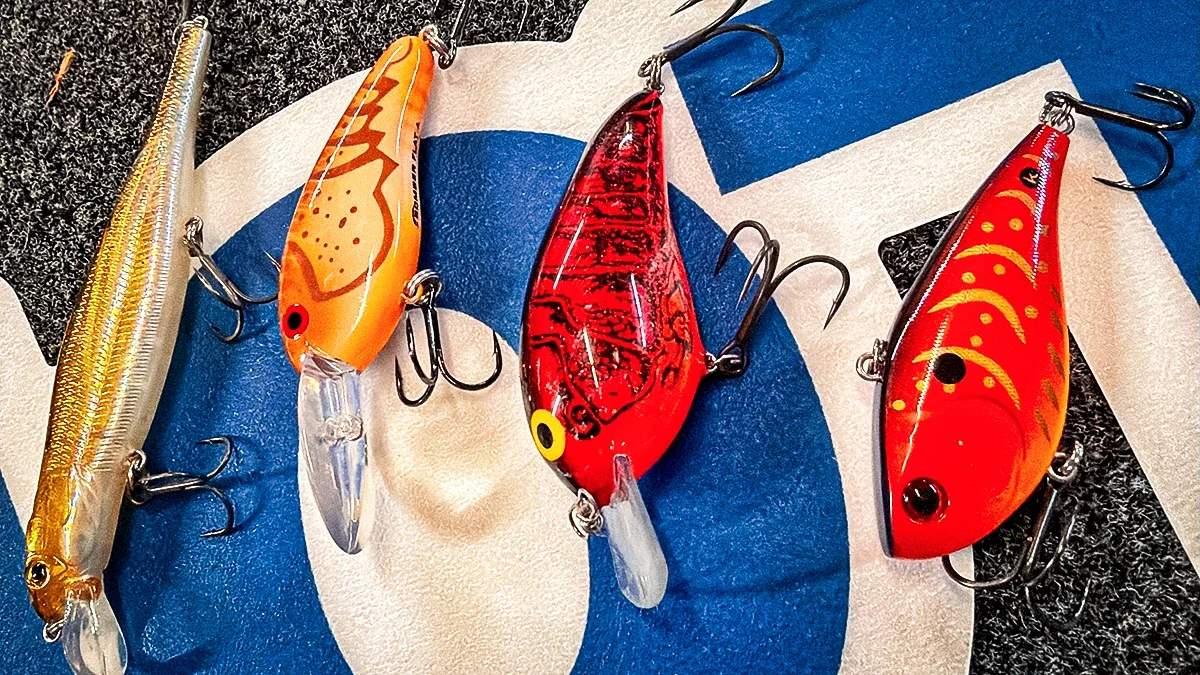
“I’m going to be throwing a Bomber Flat A around grass. It will work around rocks too, but I’ve had more success with it around grass myself. It’s a 10- to 12-foot diving crankbait depending on line size. It’s more of a slower style, working it through there, flat-side crankbait,
Then the Norman Speed N, which will dive pretty deep. But you can put it on bigger line and keep it up shallower. It’s just a really good cold, pre-spawn type bait. I throw it on 20-pound Seaguar Invizx most of the time.
Then you’ve got your Booyah Hard Knockers and One Knockers. I kind of categorize those together as lipless crankbaits. That’s something that has to be a staple this time of year, when you’re coming up on springtime. It doesn’t necessarily have to be red, but a lipless crankbait is hard to beat this time of year.
Last for me is going to be the Booyah Flash Point Jerkbait. I’m going to throw that around vegetation, docks, shallow brushpiles, anywhere I think they’re starting to stage before they move in. If you keep those baits in your hand, depending on the structure you’re fishing, you will get bites.”
Brandon Cobb (South Carolina)
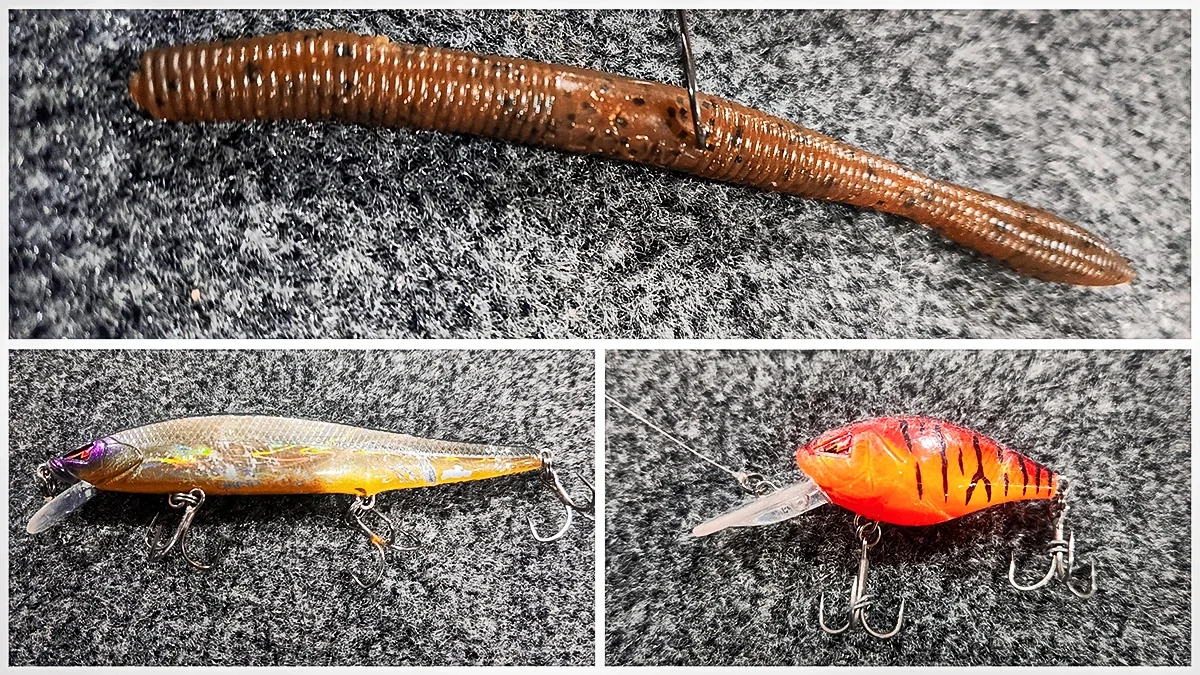
“I would definitely say No. 1 is a jerkbait for February. I use it in a lot of places, but I guess primarily in the cleaner water areas of lakes. I throw it to a lot of fish on stumps. It’s also productive when fish get bait corralled into ditches, pockets, things like that. And over shallow rock piles, just anything basically fish are on when the water is clean.
And then I would say No. 2 would be a crankbait. I use it in clear water some, but especially when the water is dirty. And I actually have gotten to where I really like a finesse, tiny crankbait. I’ve been using the red or craw colored ARK CM36, a finesse crank that is super small. And that one is definitely for shallower brush and rock in dirty water.
And then I’ve pretty much gotten to where I always have a Neko rig rigged up. I’ve been using the Zoom Thick Trick with a nail weight. I use that if I find a group of fish. The good thing about a Neko rig is you can fish it kind of shallower like around docks, or you can fish it out to 25 feet on a rock pile or something if they’re deep. So it’s kind of just one of those baits that’s good if they won’t bite the reaction bait up shallow or if you want to get down to some of those deeper fish that are sitting on some type of structure.”