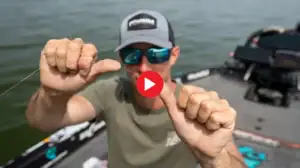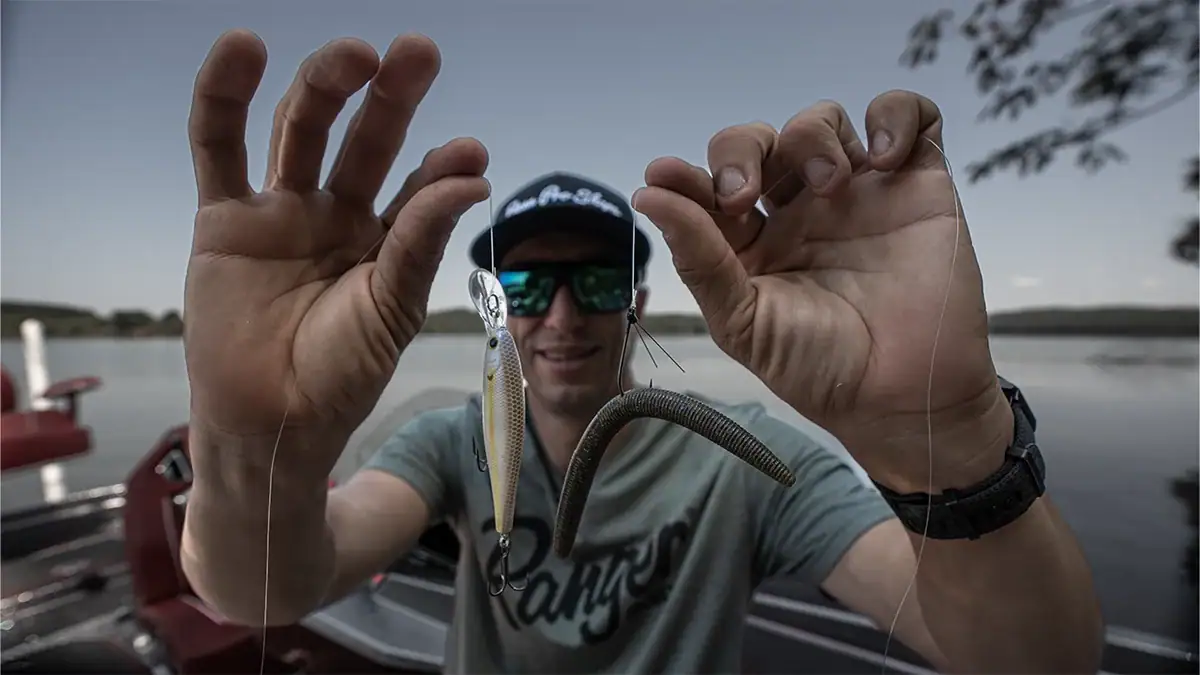
Brent Ehrler breaks down the two knots he trusts most when tying directly to a bait. Instead of using one knot for everything, Ehrler chooses based on how he sets the hook. When a fish loads up and pulls, Ehrler relies on the palomar knot. When he drops slack and cracks the hook, he switches to the double uni knot. Each one solves a specific problem and protects fluorocarbon from breaking.
Featured Product
- FLUOROCARBON – Sunline FC Sniper Fluorocarbon (12 lb): Buy at Bass Pro Shops | Buy at Tackle Warehouse | Buy at FishUSA
- CASTING ROD – Daiwa Tatula Elite Casting Rod: Buy at Bass Pro Shops | Buy at Tackle Warehouse | Buy at FishUSA
- REEL – Daiwa Tatula Elite Baitcast Reel: Buy at Bass Pro Shops | Buy at FishUSA
- ROD – Daiwa Tatula Elite Spinning Rod 7’1″ Medium: Buy at Bass Pro Shops | Buy at Tackle Warehouse | Buy at FishUSA
- REEL – Daiwa Tatula MQ LT Spinning Reel: Buy at Bass Pro Shops | Buy at Tackle Warehouse | Buy at FishUSA
Palomar Knot for Reaction Baits
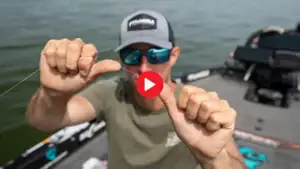
The palomar knot stays fast, strong, and clean for reaction baits like jerkbaits, crankbaits, and moving lures. Since these strikes create steady pressure instead of a violent snap, the knot never cinches into itself. Ehrler runs the line through the split ring twice to form a loop. Next, he ties a simple overhand knot while keeping the lure hanging in the middle. Then he slides the bait through the loop, controls where the knot tightens on the split ring, wets it, and pulls it snug. That control keeps the knot from slipping into the split ring gap. It also protects sensitive fluorocarbon from burning.
Double Uni Knot for Hard Hooksets
When fishing worms, jigs, and bottom baits, Ehrler avoids the palomar knot completely. A hard hookset can cause it to cinch tight and cut fluorocarbon. Instead, he uses the double uni knot. He starts by running the line through the hook eye twice to form a loop along the main line. From there, he creates an overhand-style loop and wraps the line through it three times. As it tightens, he feathers the knot so it seats smoothly against the hook eye.