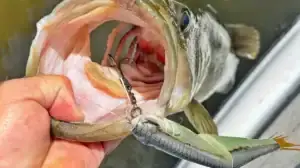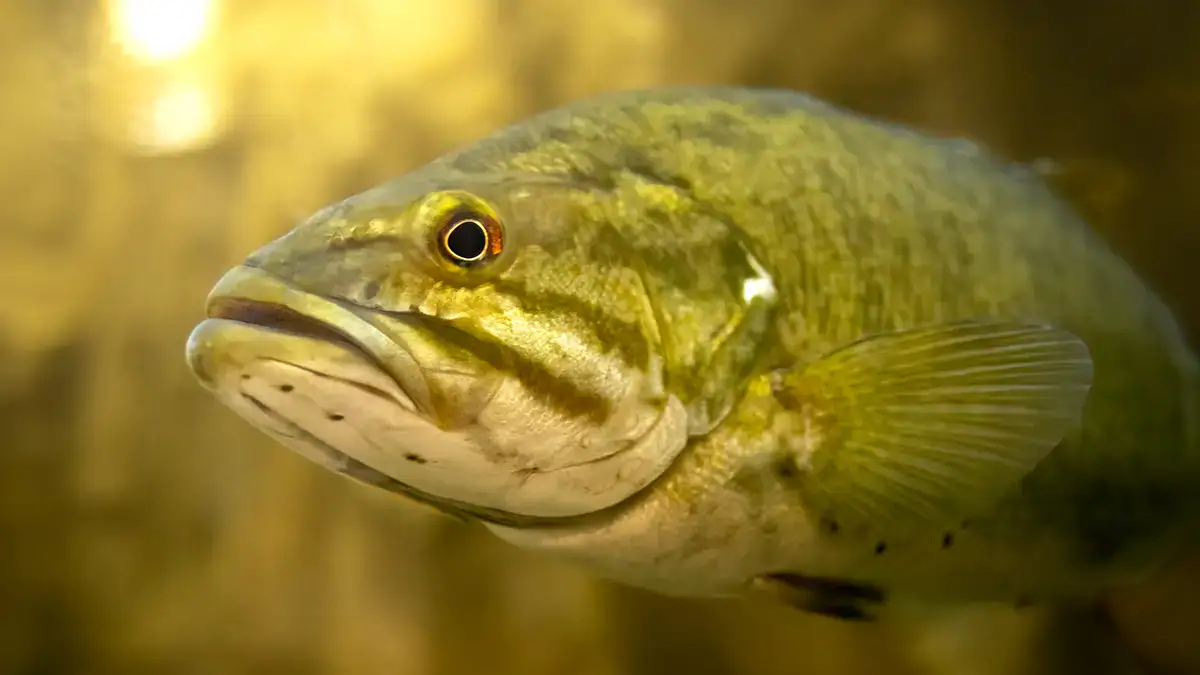
The Minnesota Department of Natural Resources (DNR) has officially added a new catch-and-release bass season for 2026, opening largemouth and smallmouth bass fishing on inland waters year-round.
Under the updated regulations, anglers can now target bass immediately after the traditional harvest season closes, rather than waiting for the May fishing opener. The rule was adopted in January and took effect Feb. 23, creating a continuous bass season that alternates between harvest and catch-and-release periods with no closed gap.
A Welcome Change
According to Eric Altena, Little Falls area fisheries supervisor with the DNR, the agency made the move after both acknowledging anglers’ support and reviewing current population data.
“We’re improving bass fishing opportunities after hearing strong support from anglers for earlier bass fishing,” Altena said. “Bass populations are thriving, and have increased abundance and sizes — and compared with past decades, have broader geographic distribution in our state.”
The DNR reports that the Minnesota bass spawn typically peaks in late May, and says there is no biological evidence that catch-and-release angling prior to the harvest opener poses a conservation risk.
In 2023, the DNR surveyed anglers about extending the bass season. Of 3,041 respondents, 91% said they supported or strongly supported the proposal.
The Leech Lake Band of Ojibwe (Gaa-zagaskwaabiganikaag) and the Mille Lacs Band of Ojibwe (Misi-zaaga’iganiing) also supported the regulation change. The Leech Lake Band expressed support with the understanding that the DNR will continue monitoring bass populations to ensure that expanded angling opportunity does not negatively impact the resource.
Importantly, harvest season dates for bass remain unchanged. The new regulation only expands catch-and-release opportunities outside the traditional opener.
Anglers fishing border waters should note that separate regulations still apply. Those details are available in the 2026 Minnesota Fishing Regulations book on the DNR’s website.
Other 2026 Regulation Changes
The new bass season isn’t the only update for 2026. John Dunn, DNR fisheries rules and regulations coordinator, urged anglers to review the new book before hitting the water.
“In the regulations book available now, anglers should check for what’s new before they head out fishing,” Dunn said. “There are some updates for inland waters and border waters, and also updates that apply to specific lakes and rivers.”
Among the notable changes:
- New or modified regulations now apply to nine bodies of water in Beltrami, Crow Wing, Itasca, Jackson, Martin, Morrison, and Todd counties.
- The stream trout harvest opener is now set for the second Saturday in April each year.
- On Lake Superior, the one-fish Atlantic salmon limit has been removed. Anglers may now keep five salmon in combination.
- The brook trout and splake season on Lake Superior and its tributaries below posted boundaries will now close Sept. 30.
- A new rule allows up to three hooks within 18 inches on a single tackle configuration.
- Updated language clarifies that only one bait is allowed per line, and stinger hooks are allowed only on artificial baits.
- Ice anglers may now use nonmotorized hook-setting devices.
- Updated rules address crayfish harvest in infested waters and trap labeling requirements.
- There is no closed season for taking dead freshwater mussel shells.
- Inland portions of Mississippi River Pool 3 now align with adjacent Wisconsin-Minnesota border water regulations listed as “Mississippi River Pools 3-8 including Lake Pepin.”
- The regulations book includes updated fish consumption guidance from the Minnesota Department of Health (MDH).
Angela Preimesberger, who leads the Fish Consumption Guidance program at MDH, emphasized that fish remain an important part of a healthy diet but that anglers should review updated contaminant guidance.
“Fish are an important part of a nutritious, well-balanced diet, and part of many traditions and cultures in Minnesota,” Preimesberger said. “Our fish consumption guidance can help you decide how much fish you can eat, depending on where you caught it, how old you are, whether you are or may become pregnant, and other factors.”
For More Information
The 2026 Minnesota Fishing Regulations book is now available online through the Minnesota DNR website.
Printed copies will be available by March 1 anywhere Minnesota fishing licenses are sold.