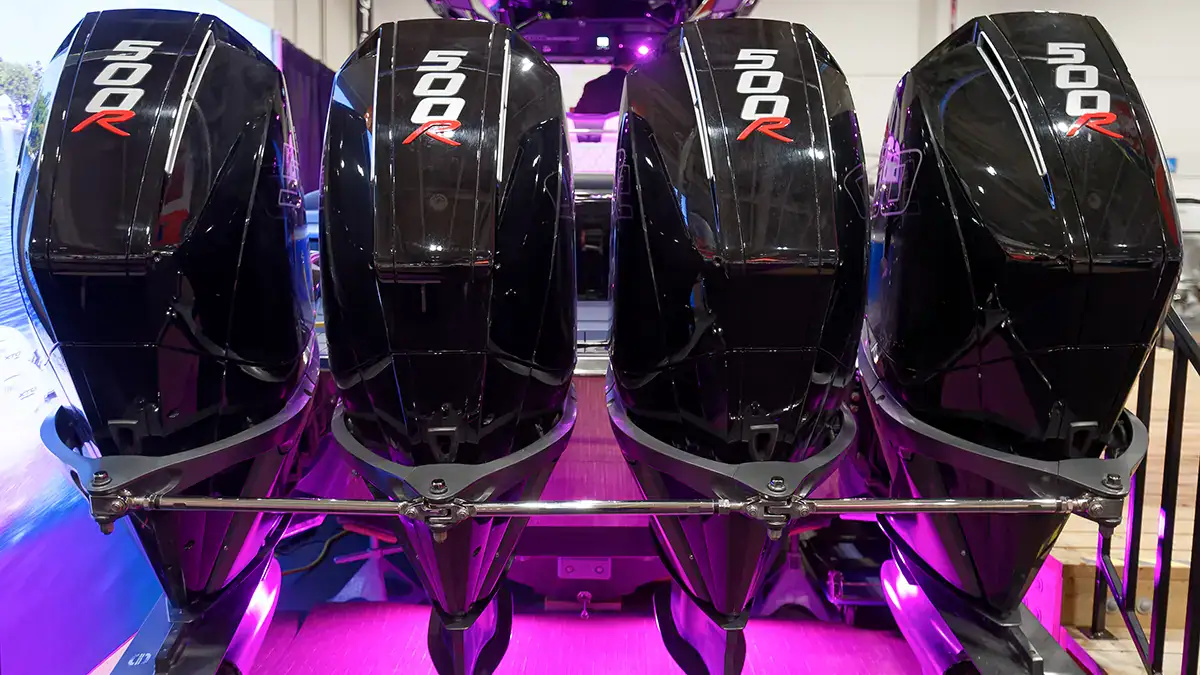
I could easily make this the shortest article in boating history by summing up horsepower in a single phrase: as much as you can afford. But it is a little more complicated than that, as there are a few factors that go into deciding just how much oomph your boat needs.
Maximum Horsepower
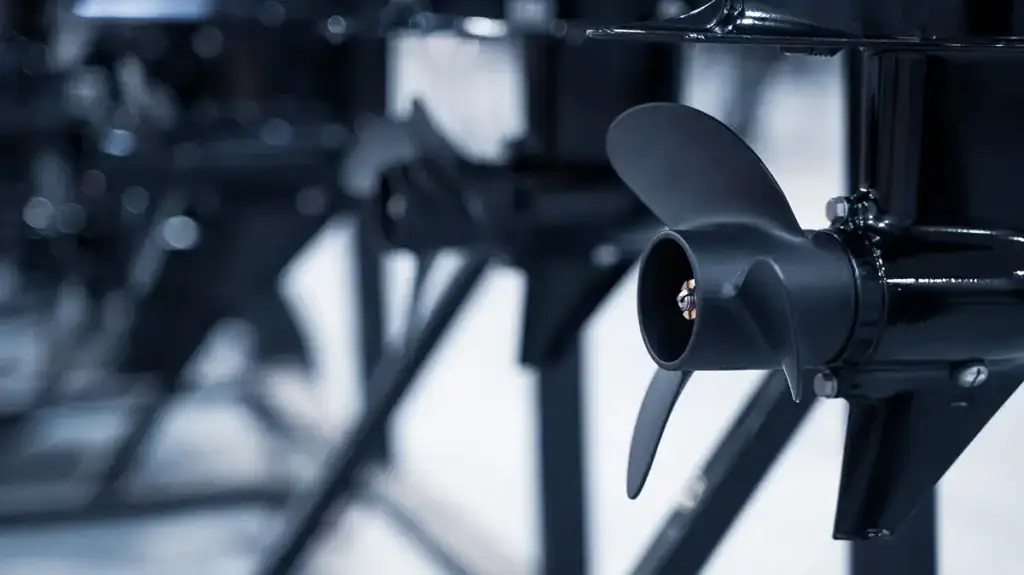
First things first: There is a maximum allowable horsepower capacity for each vessel, from jon boats to bass boats and beyond. As the government laid out and codified in the Code of Federal Regulations under § 183.53, there is a somewhat straightforward formula — or for some small boats, a performance test — to figure this out.
In most cases, the maximum horsepower rating is calculated by multiplying the boat’s length by its width at the transom (the back of the boat). That number is matched to a horsepower limit in an official table, with slight adjustments for certain hull designs like flat-bottom boats. There are also different considerations with inboard engines, stern drives, and jets, so we’ll just go over outboards here.
For very small boats (13 feet or less) that meet specific steering and height requirements, manufacturers may instead determine the rating through on-water performance testing. These boats must pass controlled steering and high-speed maneuvering tests without losing control, and even then, they cannot be rated above 40 horsepower.
In short, a boat’s horsepower number is carefully determined using size calculations or safety testing, and it represents the maximum engine power the boat can safely handle. This info, as well as passenger and weight capacity, should be visible on the Coast Guard’s required placard.
To ensure safety on the water, do not exceed these ratings. Depending on your location, it may be illegal to overpower a boat. And most insurance companies won’t cover a vessel with a powerhead that exceeds the rating on the Coast Guard plate.
So, How Much Is Needed?
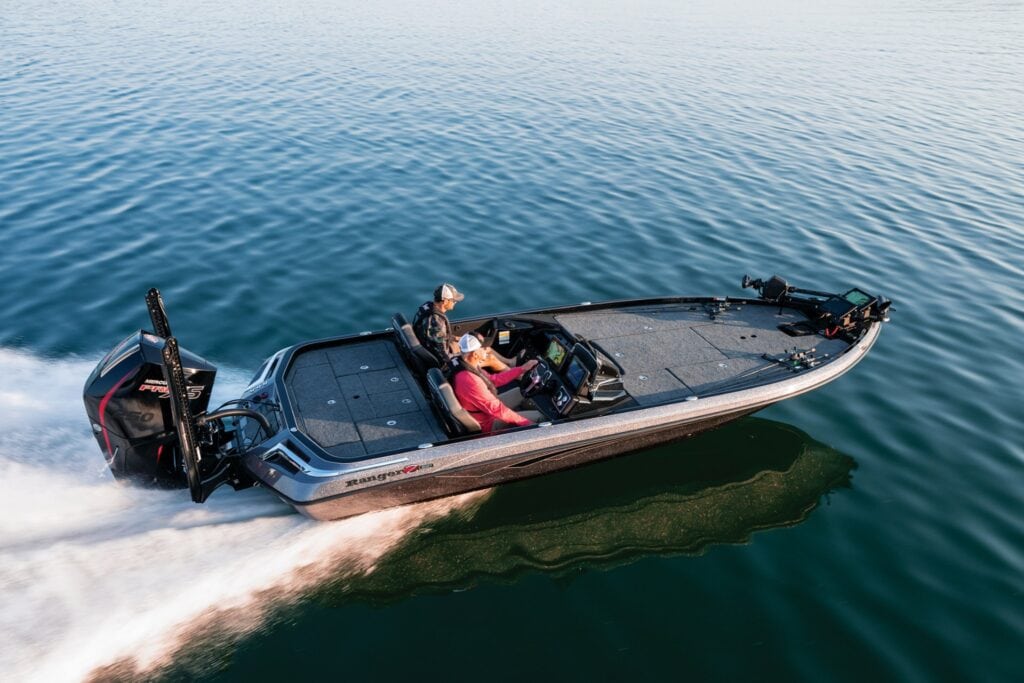
Now that we know the maximum we can put on our boat, we should find the ideal amount for your vessel. Figuring out how much horsepower a boat needs starts with understanding the boat itself; especially its size, weight, and hull design. Heavier boats require more power to move efficiently through the water, while lighter boats can achieve good performance with less horsepower.
Hull type matters, too. Displacement hulls, like those found on Downeasters and sailboats, are seaworthy hulls that move through the water instead of over it, and typically require less horsepower but are limited in speed. Planing hulls, which are common in fishing vessels like bass boats or center consoles, are designed to lift up and glide across the surface of the water as speed increases. There is a minimal amount of horsepower they need to get on plane, which is dependent on a number of factors.
Typically, you’ll want somewhere around 25 to 40 pounds of the total boat weight per horsepower for a planing hull boat of around 20 feet or longer. For example, a Ranger Z521 has an overall length of just under 22 feet and weighs in around 2,300 pounds. So, if we wanted 25 horses per pound, we’d want about a 90 horsepower motor. The same calculation using 40 pounds per pony comes out to around 60.
While motors of those sizes would work, you wouldn’t win any races. And underpowering a boat can put unnecessary strain on the engine, leading to premature wear. As the old adage goes, it’s better to have it and not need it then need it and not have it. A practical rule of thumb is to choose an engine that falls within about 70-90% of the boat’s maximum rating. This usually provides a good balance of acceleration, top-end speed, fuel efficiency, and engine longevity.
If you want strong hole-shot performance, lean toward the higher end of the range. If you mainly cruise at moderate speeds with light loads, mid-range horsepower is often sufficient. But if you load your boat toward the upper limits of its capacity, you’ll need more power to maintain performance — think duck season and a deck full of decoys. And if towing skiers, wakeboarders, or inflatable tubes is on your agenda, you’ll need significantly more power for both strong acceleration and sustained speed. Plus, you’ll want to always have a little power in reserve in case you have to outrun a sudden storm.
According to Ranger, you can put up to a 300 horsepower outboard on the Z521. Top speed depends on propeller selection, load, and a number of other factors, but many are reporting speeds that exceed 70 miles per hour. That’s more than enough to get from one end of the lake to the other in case the weather turns.
What’s Right For You?
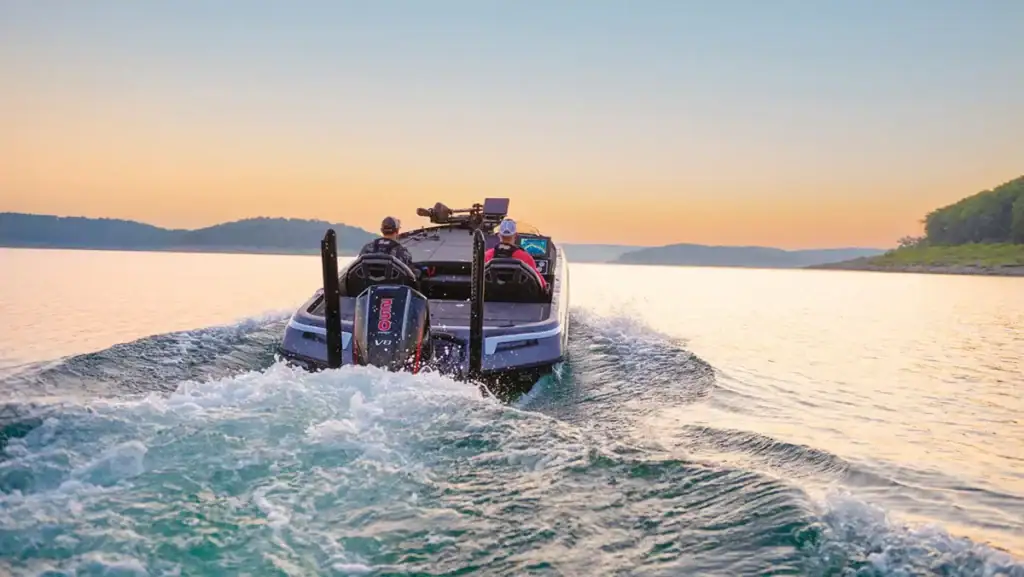
Boats have come a long way in my lifetime. My first offshore trips were in a sturdy Downeaster, which traded speed for seaworthiness with its rounded displacement hull. We’d leave at 2 a.m. to be on the bite at sunrise. The last time I was scooted to the tuna grounds was in a center console wearing triple 350-horse outboards, ticking away at 70 MPH. Thanks to the speed, we got more sleep before that trip.
So, how much horsepower do you need on your boat? You first have to decide how important speed is to you. Then, balance your performance goals with your budget. Higher horsepower engines generally cost more upfront and consume more fuel, but they provide better acceleration and flexibility. Remember: You don’t have to run wide-open all the time.
Underpowering a boat can strain the engine and make getting from Point A to Point B slower than you’d like, while overpowering (beyond manufacturer and/or Coast Guard limits) is unsafe and potentially illegal. The right horsepower is the one that matches your boat’s design, allowing the boat to operate efficiently, perform safely under your normal conditions, without constantly running at full throttle.