The spawn is the most glorious time of year for shallow-water bass fishing. Sure, there are flashes of fun speckled throughout the year when you can catch big fish consistently shallow. But the spawn is when the majority of bass push shallow all at once, and they are hungry.
It can be a little tricky to navigate the bedding and bass-catching process, though. But we’re here to help. From an overview of the whole spawning process to a deeper look into the pre-spawn, spawn, and post spawn periods, we’ll cover everything you need to know.
What is the Spawn?
“The spawn” is a broad term that typically refers to the pre-spawn, spawn, and post spawn. But the actual spawning process happens in the middle, when bass make beds, lay eggs, and then guard those beds and eggs. This portion of active spawning only lasts for a few days for each individual fish. But spawning can stretch on for weeks on a given lake as all of the bass cycle through the shallows.
When you factor in the pre-spawn and post spawn, the overarching spawning process can take a couple of months. It can last even longer in the deep south where it’s warm throughout the winter. Conversely, it’s a much shorter windows in the extreme north, where conditions are ideal for only a few weeks.
Disclaimer
When talking about the bass spawn as a whole, we’re trying to capture the commonalities among largemouth, spotted bass, and smallmouth, which is an insurmountable task in itself. Then take into consideration every drop of water from Lake Okeechobee to Lake Erie. It’s fair to say that everything we mention here won’t translate to every bass and every fishery.
But, there are certain things that all of these bass will do. So we’ll focus on that.
Pre-Spawn
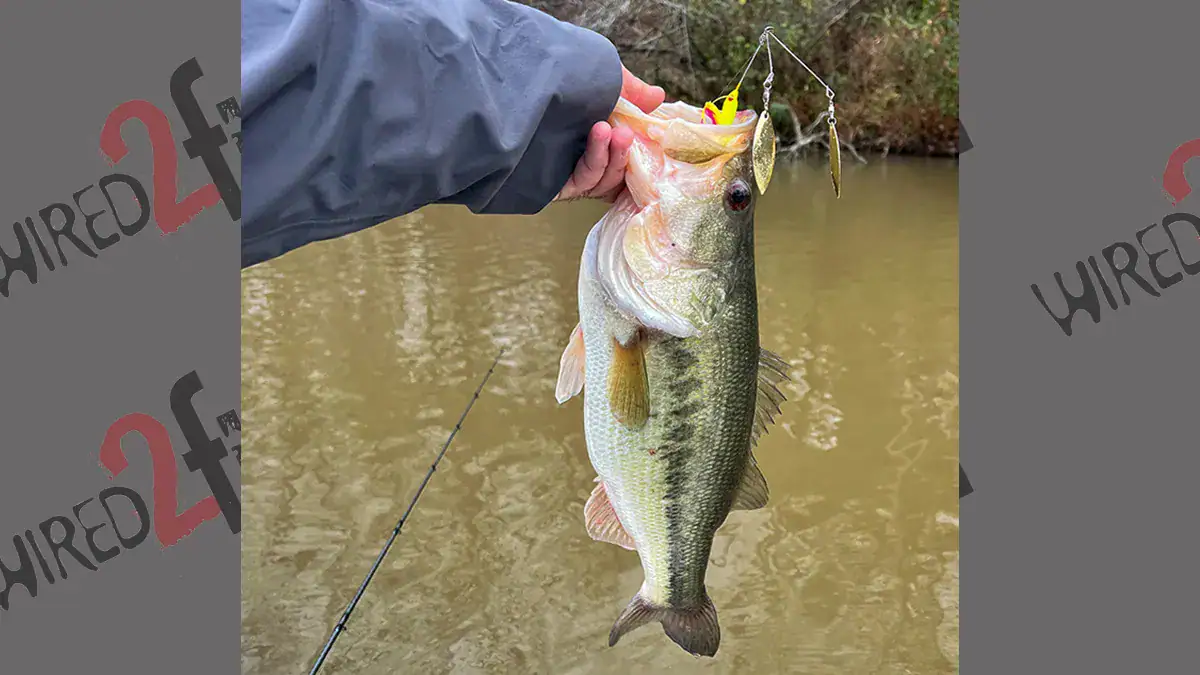
During the pre-spawn period, bass are feeding heavily and preparing for the wearisome bedding process. These fish will be fairly stationary for several days and won’t eat much. Despite that, they’ll spend a good bit of energy fanning beds and warding off intruders during this time. In preparation, bass strap on the feed bag and hit the buffet in early spring.
While the water is still cold — less than 55 degrees — look for bass staging near mid-range and shallow structure and cover. These depths are relative depending on the fishery, water clarity, and bass species. Smallmouth on a clear lake may stage on a rock vein in 25 feet of water. Or, largemouth may be in a foot of water by a stump in the mud. In either case, getting a bait by them will likely result in a strike, as bass are super aggressive overall in the pre-spawn.
For the deeper fish, bottom-dwelling baits like shaky heads, Ned rigs, football jigs, and drop shots are all good choices. Moving baits like ChatterBaits, spinnerbaits, and squarebills work well shallow. And, of course, LIVE sonar has shown us that a large number of bass suspend and chase bait in the pre-spawn. Minnows on jigheads and jerkbaits work really well around these fish.
Spawn
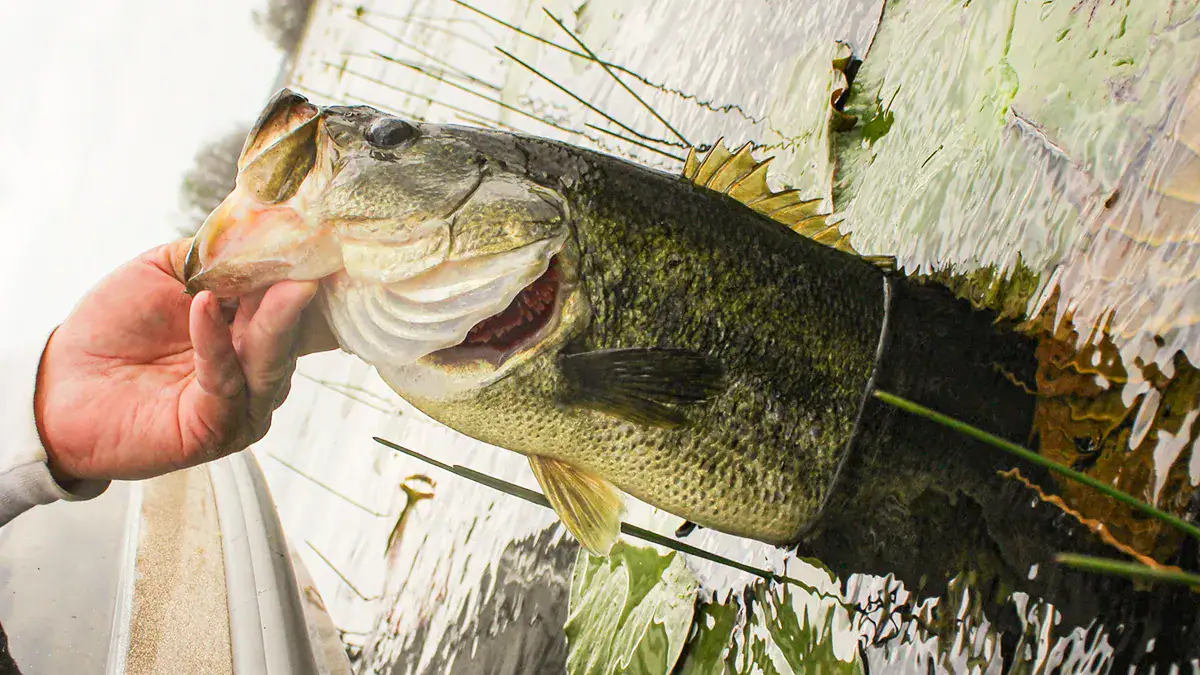
When the water temps hit about 55 degrees, the bass actively begin to spawn, typically looking for a spot that’s protected from waves and current, and easy to defend against predators like bluegill and other bass. Spawning bass also want a hard bottom, so they can lay their eggs in the open where they can get enough sunlight to incubate. On a crystal clear glacial lake, this depth can be 20 feet or more, while a muddy or tannic fishery in the south may restrict the bass to five feet of water or less. A lot goes into picking the perfect spot to spawn.
Once bass locate a good place to bed, they fan out an area, typically a foot or two in diameter. The smaller male bass is usually responsible for this part of the process, but larger females are often caught with bloody tails, showing that they too fan the beds. When the hard bottom is free of debris, the female will lay her eggs and the male will fertilize them.
After fertilization, the male aggressively guards the bed against any predators, and the larger female will typically hang around in a wider radius, especially largemouth. To catch these spawning bass, you often have to throw something directly into the bed to threaten the eggs, like a Texas rig or drop shot. Or you have to stay way back and fish the beds “blind” with finesse techniques like wacky rigs, Neko rigs and floating worms. Once the eggs hatch into baby bass fry, the post spawn phase has begun.
Post Spawn
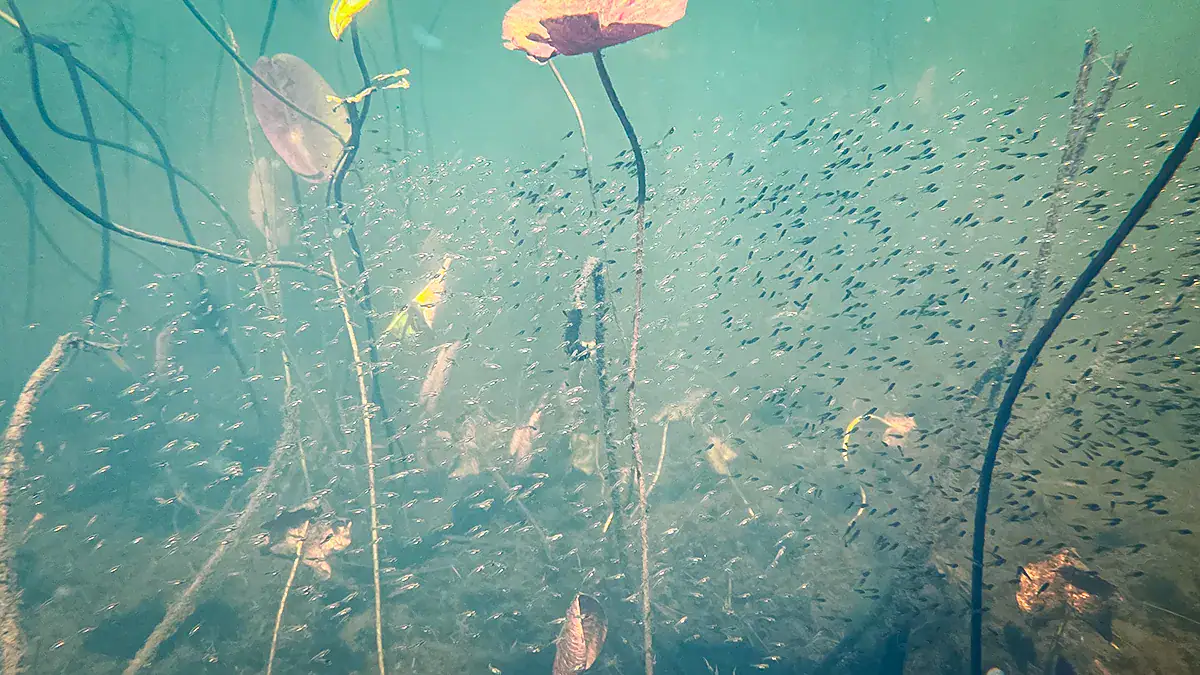
The post spawn phase starts as soon as the fry hatch and the bass leave the beds. This phase is all about survival for the newly hatched baby bass and nourishment and recuperation for the tired mama. The fry swim around in a tight school, hanging near cover when possible for protection. The male bass will guard these fry, keeping them corralled to where he can defend against threats.
Surprisingly, the females will actually eat their young, thus becoming the biggest threat to survival for these baby bass. The male often has to chase after and ram into the female to get her to leave the fry alone. And then there are bluegill, small bass, and other threats lingering all around as well. Studies show that less than 5% of the eggs survive the post spawn phase; even fewer mature beyond that.
After a few days, bass separate from the fry to look for rest, reprieve, and a bigger bite to eat. When water temps get into the 70s and higher, bass start looking for cooler water, around 10 feet or deeper. Bass will post up in brush piles or around boulders, becoming susceptible to slow moving finesse techniques, like shakeheads and drop shots.
Some bass stay shallow though, opting to hunt easier meals instead of resting in cooler waters. This time of year is when you have a lot of baitfish spawning and insects hatching. Getting on a good shad spawn or mayfly hatch in the post spawn can be magical. As the water warms, looking for deeper bass on ledges or in currents beneath dams, where they can find cooler water, better oxygen levels, and more food.
What’s Next
Breaking down the entire bass spawn is a lot, which is why this is the first installment of our four-part series. We’ll take a more in-depth look at the pre-spawn phase next. After that, we’ll spend some time on the spawn and post spawn.
The main takeaway is this: Now is the time to get on the water. The weather is warming, the bass are as big as they’re going to be all year, and some portion of the spawn is on for the majority of us. Whether it’s pre-spawn, spawn, or post spawn, hopefully these stories will help you better understand what’s going on beneath the surface and how to catch big bass.