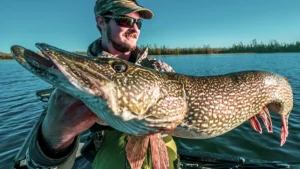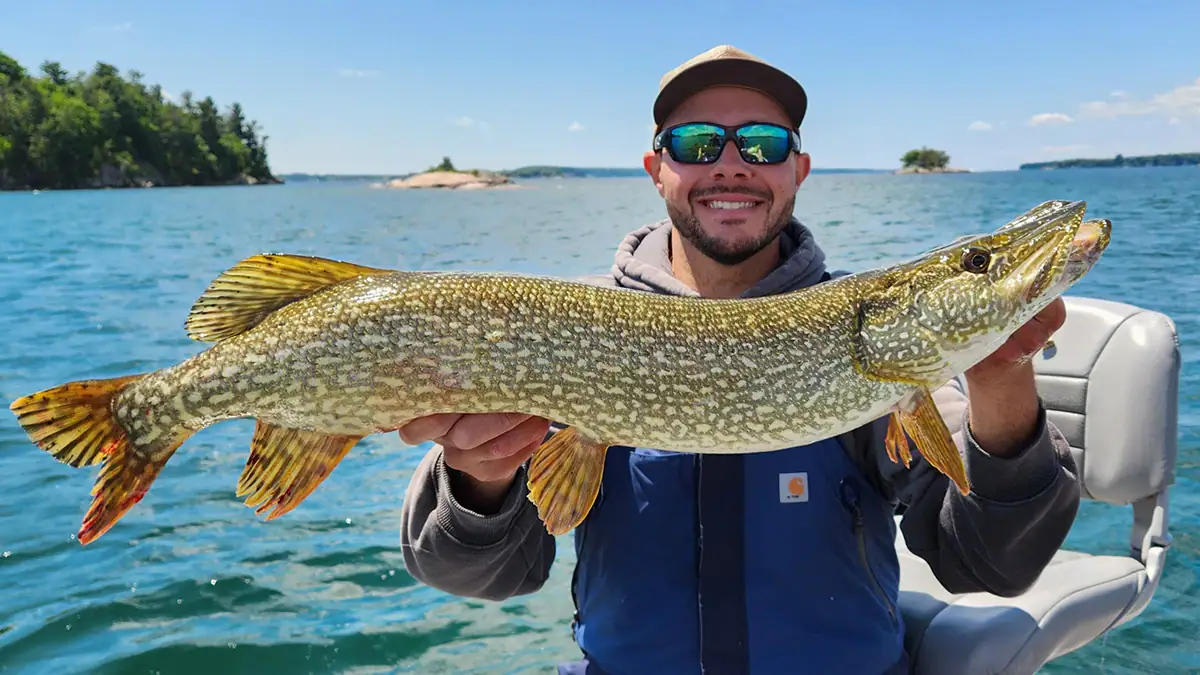
There’s a small window every year when fishing for northern pike almost feels unfair. Ice has just pulled back, the water is cold but waking up, and pike are sliding into predictable areas with recovery, spawning, and easy meals on their minds. If you understand what drives their behavior in the early season, you can put together some of the most consistent fishing of the entire year.
This isn’t random casting: It’s calculated, and once you dial it in, it becomes repeatable. If you live in an area that doesn’t have a closed pike season in the spring, or if you can catch the open-water window before it closes, then you need to pay attention. Here in New York, if the stars align, we get into some pre-spawn ice-out pike action that is just off the charts. It’s something I look forward to every year when we get the right conditions.
The Post-Ice Mindset

Early season pike are coming into the spawn, which happens immediately after ice-out in most northern fisheries. Unlike bass, they don’t wait for warm water. They get it done in the cold, often in flooded vegetation, marshes, and shallow back bays. After spawning, pike aren’t sprinting back to deep water. Instead, they linger nearby in areas that offer two things: slightly warmer water and easy access to food.
They’re not at peak aggression yet, but they are opportunistic. Think of them less as hunters chasing down prey, and more as ambush predators conserving energy. I like to think of this as if I’m fishing for early spring largemouth. They are too tired and cold to hunt down and chase a bait, but are opportunistic to swipe at anything that comes by.
Where to Find Early Season Pike
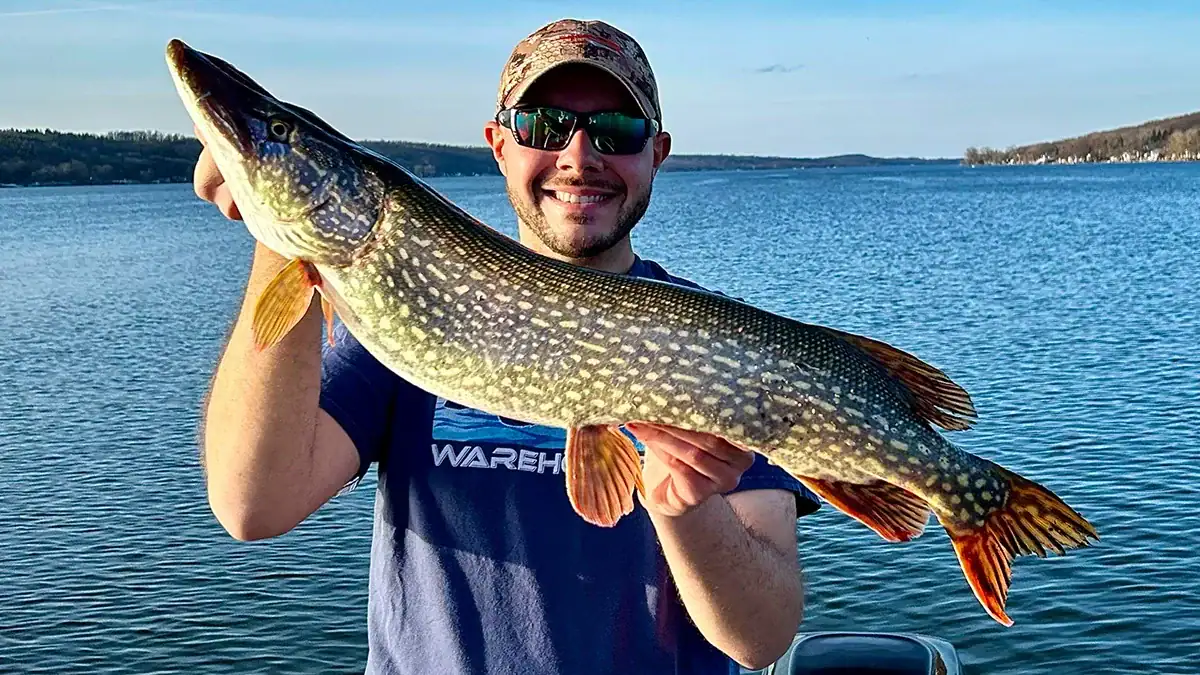
If you’re struggling to find pike this time of year, you’re probably fishing too deep. These fish are going to be on the bank looking for the warmest water possible.
The best early season areas are:
- Shallow bays with dark bottoms
- Flooded grass or last year’s vegetation
- Creek mouths and inflows
- Protected coves out of the wind
These spots warm faster than the main lake, sometimes by just a couple degrees, but that’s all it takes. Baitfish move in first and then the pike follow. Depth-wise, you’re often looking at water anywhere from two to eight feet — yes, it’s really that shallow.
One key detail a lot of anglers miss: proximity to spawning areas matters more than anything else. If you can locate where the pike likely spawned, fish just outside of it. They don’t leave far right away.
Water Temperature is Everything
Early season fishing is less about the calendar and more about water temperature.
- Mid-30s to low 40s: Pike are sluggish, but still catchable. Slow presentations shine.
- Low to mid-40s: Prime time. Pike are active but still predictable.
- Upper 40s: They begin spreading out more, and the bite becomes less concentrated.
Even a two- to three-degree difference in temperature between two areas can completely change the bite. Always check multiple spots and prioritize the warmest water you can find. It might take some searching, but when you find the right water, the stars can align perfectly.
Best Presentations for Early Pike
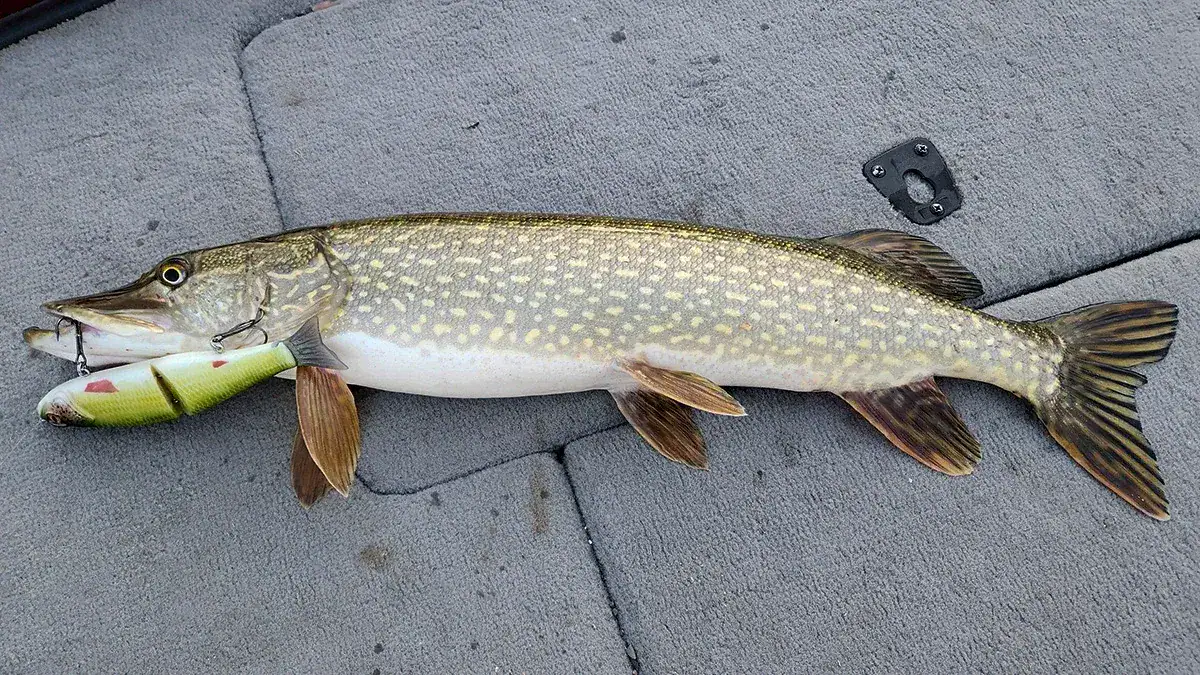
You don’t need a giant tackle box this time of year: In fact, simpler is better. While the typical pike baits you’d find success with will shine most of the year, this is when you have to think a little differently. Downsizing, slowing down, and keeping things simple is the name of the game.
Suspending Jerkbaits
This is arguably the most effective early-season pike bait. Work the bait with long pauses, sometimes up to 10 seconds. Pike will follow and sit behind it before committing. Those pauses trigger strikes. Having a neutrally buoyant bait is key, so when a pike is following behind, the bait can be paused and sit ever so still in front of its face. This is where baits like the Rapala Mavrik PXR Jerkbait come into play. Its suspension makes it perfect for triggering bites from lethargic pike. You’ll want to match the hatch when it comes to colors. Try to mimic what the pike normally feed on in your lake, whether it be perch, shiners, or other baitfish.
Soft Swimbaits
A slow-rolled swimbait is deadly when fish are cruising but not chasing. Keep it just above the emerging vegetation, moving at a steady pace. The key is maintaining a natural, easy-to-catch look. This is a bait that pike can follow at a slow pace and be tricked into eating. The slow-and-steady presentation is key for tempting big, toothy critters into biting.
You’ll want a swimbait that will swim slowly enough without dragging on the bottom. That’s where the Berkley Cull Shad and the Megabass Magdraft come into play. They swim slow enough to flutter over vegetation and not get caught in the bottom.
Glide Baits
This is an often overlooked bait for chasing pike. Mainly because of cost as most of these baits are very expensive. But as far as action goes, there is no better bait than a big glide. The slow sinking action and hard 180-degree chopping action can make a chasing pike into pike in the boat.
Just because they are pretty pricey and the probability of losing them is high, I tend to stick with cheaper glide baits. The River2Sea S-Waver is the most cost effective bait that is usually pretty durable. These baits have great chopping action that pike love when paused.
Spoons
This is an old-school bait that still not only crushes pike but also remains incredibly effective. A simple wobbling spoon can mimic an injured baitfish perfectly. Fish it slowly and let it flutter on the drop. Many strikes come as it falls even in shallow water. This is a proven bait for big pike all across the county.
Of course, timeless favorites include the red Dardevle Spoon and the Johnson Silver Minnow Weedless Spoon. This is such a classic bait that will always have a spot in a pike angler’s tackle box.
Speed Control: The Biggest Mistake
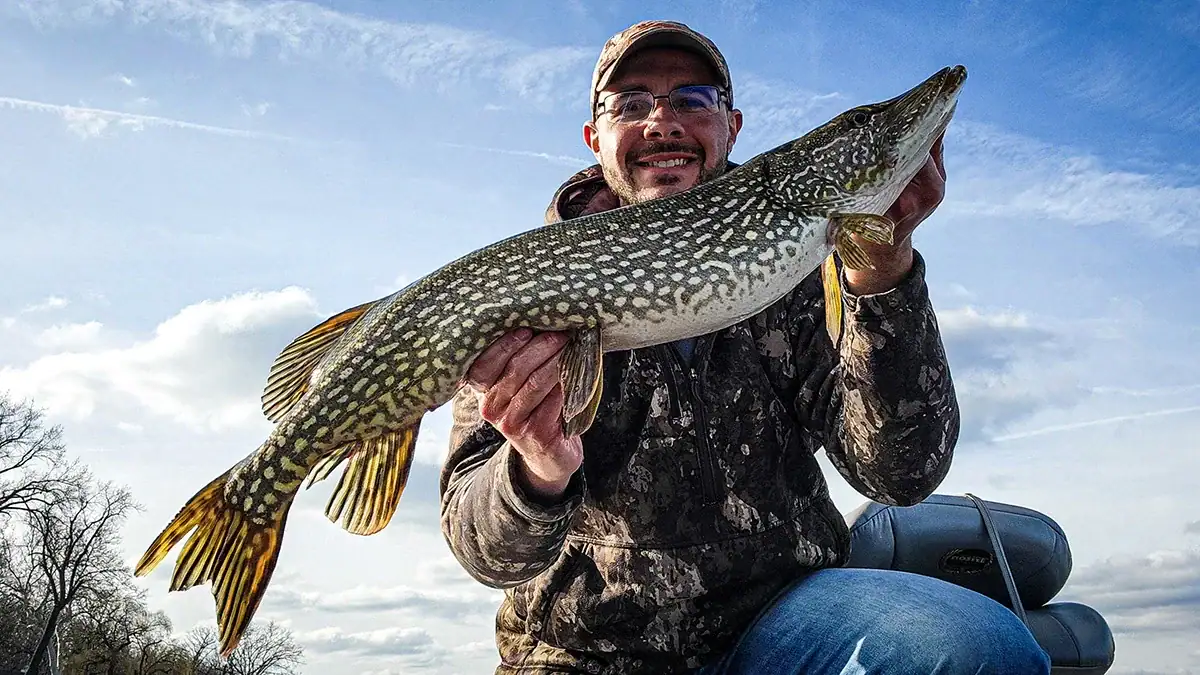
Most anglers fish too fast in the early season. Cold water means a slower metabolism for all fish species. Pike will eat, but they’re not going to burn energy chasing something down unless they have to.
Again, if you think you’re fishing slowly enough, slow down even more. This applies to everything:
- Longer pauses on jerkbaits
- Slower retrieves on swimbaits
- Letting spoons fall all the way to bottom
Early season pike fishing is about giving them an easy meal, not forcing a reaction. Let them follow the bait and fish it as natural as possible.
Timing the Bite
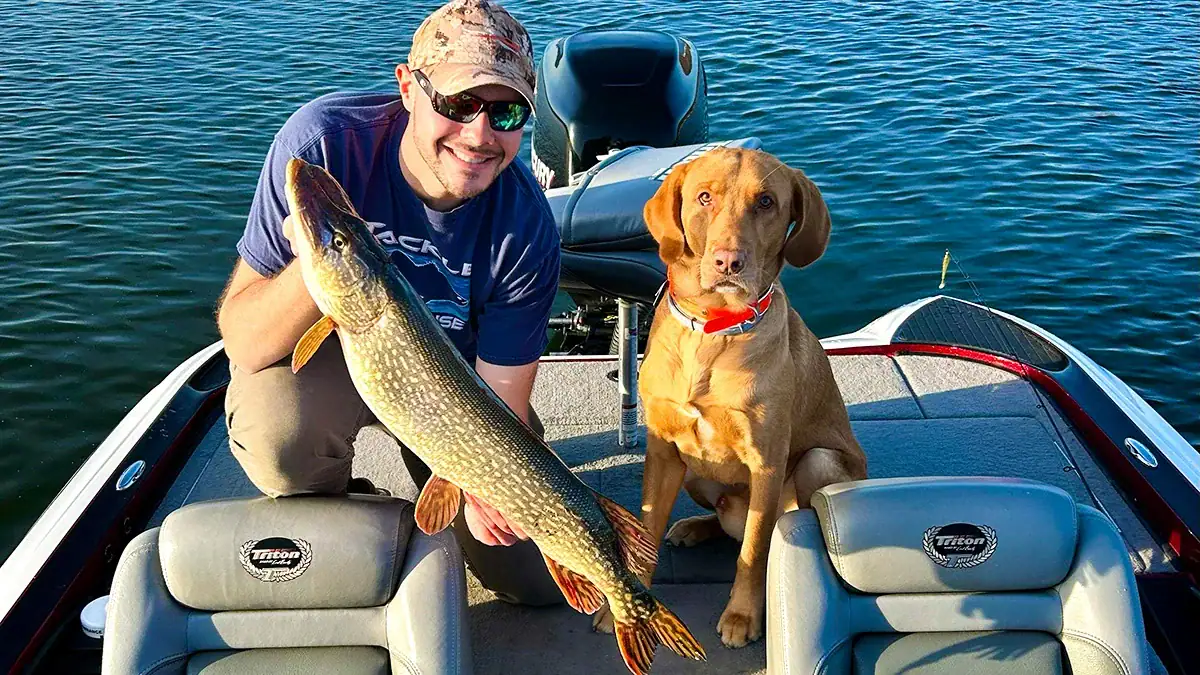
Unlike summer, early season pike often feed in shorter, more defined windows. Pay attention to:
- Mid-day warming (often the best bite)
- Sunny conditions heating shallow bays
- Wind pushing warm water into pockets
That “afternoon window” can be lights out. A spot that’s dead in the morning can suddenly turn on after a couple hours of sun. Sun and warming trends can be your friend in the early parts of the year. Just that little bit of warmth can trigger these fish to bite.
Final Thoughts
Early-season northern pike fishing rewards anglers who fish shallow and slow, and who pay attention to small details like temperature and location. It’s not about covering miles of water: It’s about finding the right water where the fish are. When you do, that action can be as consistent as anything you’ll experience all year.
The best part? Most anglers are still stuck in winter mode or waiting for other species to heat up. Meanwhile, pike are sitting in predictable spots, ready to eat.
If you time it right, you can have some of the most productive days of your season before most people are even launching their boats.