It’s generally not a good idea to mix fish and politics. There’s going to be a loser — and it is usually the fish, since they don’t vote.
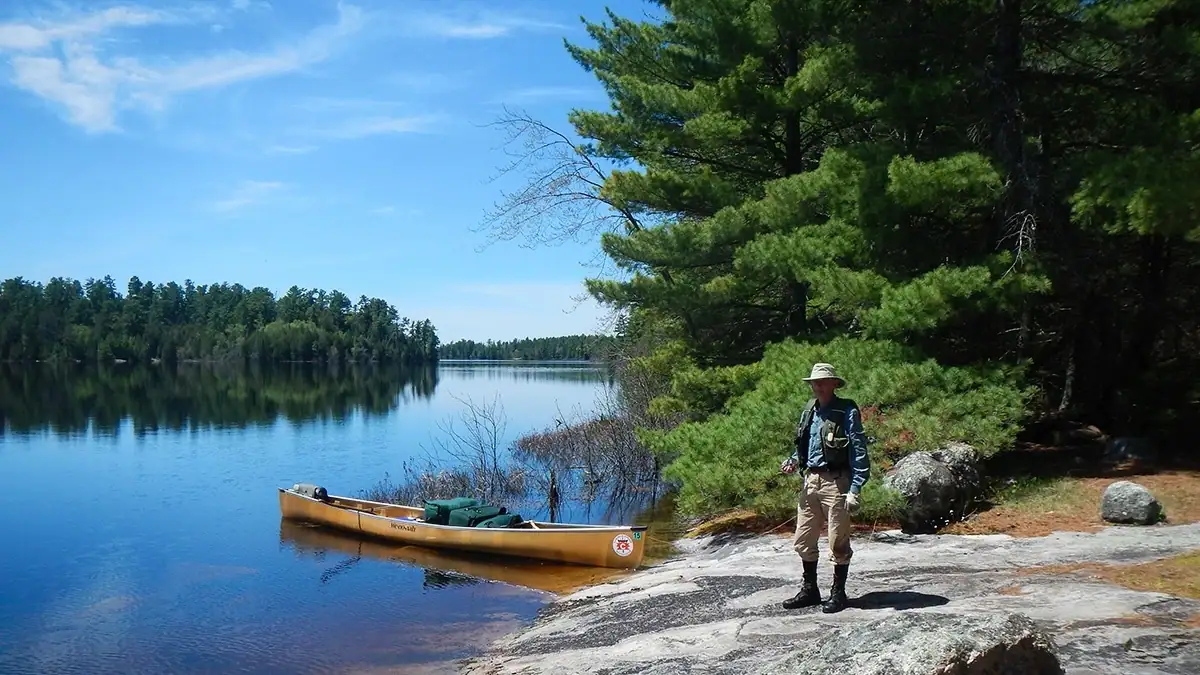
That’s the case in Northern Minnesota for the Boundary Waters Canoe Area Wilderness (BWCAW). The BWCAW is a 1.1-million-acre network of interconnected lakes and rivers in Minnesota’s Superior National Forest, adjoining Ontario’s Quetico Provincial Park. It is the most visited wilderness area in the United States.
Often-Challenged Protections
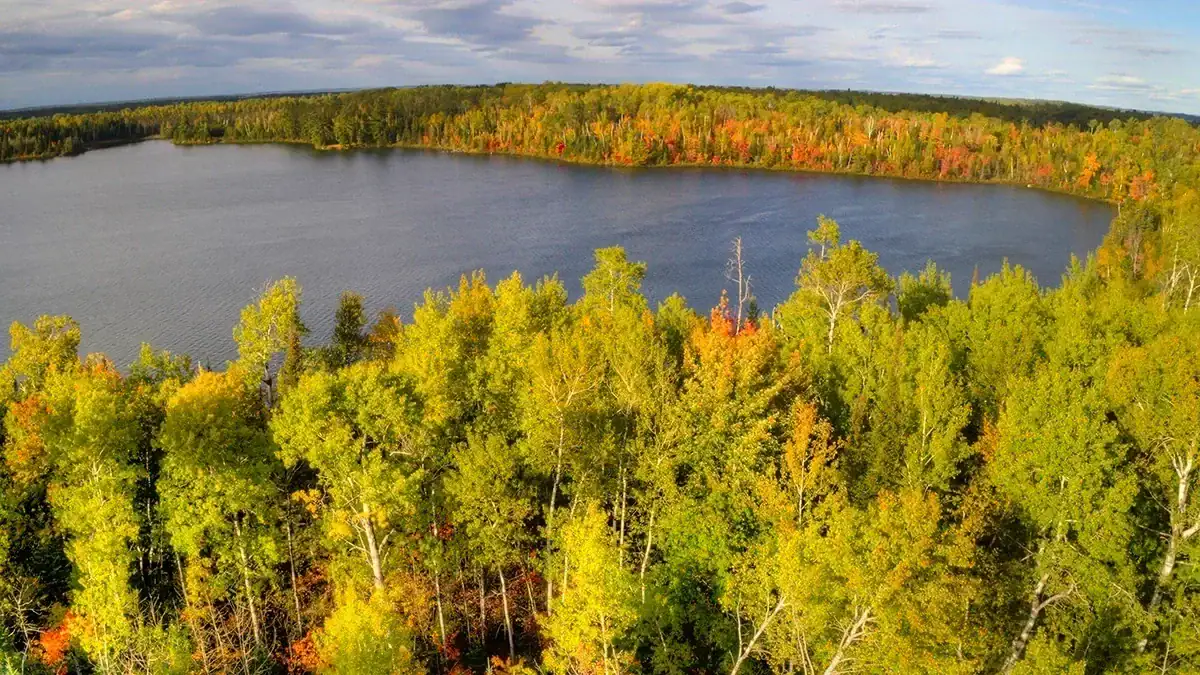
This large tract of untouched land and water has been recognized for its pristine water quality and extensive fishing and hunting opportunities. The area supports fisheries for smallmouth bass, walleye, Northern pike, and lake trout. And, until recently, federal protections prevented its development.
Preserving a large area like this is a constant struggle, and the dramatic fight over the BWCAW shows that it’s no exception. In January 2023, the U.S. Department of the Interior finalized a 20-year moratorium on new mining activities in the region, designating the area a forbidden zone for sulfide mining. However, this ban has faced intensive lobbying efforts and political challenges.
Recent congressional action concerning the BWCAW marks one of the most consequential environmental and public lands decisions in modern U.S. history. Through the passage of House Joint Resolution 140 (H.J. Res. 140), Congress voted to nullify the Biden administration’s 2023 mineral withdrawal restriction order. This eliminated federal protections that had prohibited mining on approximately 225,000 acres of public land near the Boundary Waters.
The action, enabled by the Congressional Review Act (CRA), reopened the door to copper-nickel mining projects in the region, most notably those proposed by Twin Metals Minnesota, a subsidiary of the Chilean mining conglomerate Antofagasta PLC. The legislative move triggered an outcry from recreation-based businesses, environmental organizations, and tribal governments. Those entities all warn that it could irreversibly damage one of America’s most ecologically sensitive watersheds and set a dangerous precedent for all public land protections nationwide.
In January 2023, the Department of the Interior under Secretary Deb Haaland implemented Public Land Order 7917, establishing a 20-year ban on new mineral and geothermal leases in the Rainy River watershed that feeds into the Boundary Waters. This followed a multi-year environmental study by the U.S. Forest Service examining the risks of sulfide-ore copper mining, a process known to produce acid mine drainage from a chemical reaction among exposed sulfide minerals, air, and water that generates sulfuric acid capable of leaching heavy metals such as copper, arsenic, and lead into waterways. The review concluded that mining posed an unacceptably high risk to the watershed, which lacks effective remediation options once contamination occurs.
An Unprecedented Reversal

The CRA, enacted in 1996, allows Congress to overturn certain executive branch regulations through a streamlined process requiring only simple majority votes in both chambers, and while not subject to filibuster does require a 60-day period within which the review must happen — not several years, as in this case.
Crucially, once a rule is struck down under the CRA, agencies are prohibited from issuing a “substantially similar” rule in the future without explicit congressional authorization. It’s a built-in mechanism that can lock in reversals for decades.
In early 2026, Rep. Pete Stauber, a Republican from northern Minnesota, invoked the CRA to target Public Land Order 7917, arguing that the Biden administration had failed to properly submit the withdrawal to Congress in 2023, rendering it procedurally vulnerable. The House passed H.J. Res. 140 by a 214-208 vote in January 2026, followed by a 50-49 Senate vote this April. The measure now heads to President Trump for his signature, which he is expected to sign, rescinding the ban on mineral leasing and reversing the 2023 science-driven decision.
This use of the CRA is unprecedented in the realm of public land protections. Historically, the law has been applied mainly to regulatory actions targeting administrative rules with clear economic implications, such as environmental or labor regulations — not to overturn land withdrawal orders made under the Federal Land Policy and Management Act (FLPMA). Environmental advocates fear that Congress’s interpretation here could open all federal land management decisions, including national monument designations or habitat protections, to political reversal via simple-majority vote.
So, not only has there been an opening of the BWCAW to the risks of sulfide-ore copper mining, it opens the possibility of other reversal of environmental protections. This operation, which will benefit a massive Chilean mining company, is hardly “America first.”
It will also test how firmly the nation values ecological preservation over short-term industrial pressures. The use of the CRA to dismantle environmental protection blurs the line between oversight and opportunism. This effectively trades sustainable recreation-based and irreplaceable assets for speculative mineral extraction. It is a reversal that does not pass the risk-and-reward smell test.