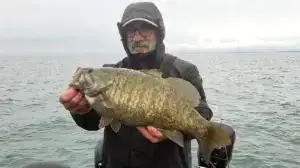
Spring pushes smallmouth bass shallow, and that creates a strong swimbait bite. In this video, Bob Downey focuses on covering water across rock flats to locate active fish fast. He targets boulders and scattered rock near areas holding largemouth bass. That overlap often signals a productive zone.
Featured Product
- SWIMBAIT – Rapala CrushCity The Mayor Swimbait: Buy at Bass Pro Shops | Buy at Tackle Warehouse | Buy at FishUSA
- JIGHEAD – VMC Redline Series Tungsten Swimbait Jighead (3/16 oz.): Buy at Bass Pro Shops | Buy at Tackle Warehouse | Buy at FishUSA
- ROD – St. Croix Avid Series Spinning Rod 7′ Medium Fast: Buy at Bass Pro Shops | Buy at Tackle Warehouse | Buy at FishUSA
- REEL – Daiwa Tatula MQ LT Spinning Reel: Buy at Bass Pro Shops | Buy at Tackle Warehouse | Buy at FishUSA
- BRAIDED LINE – Sufix 832 Advanced Superline Braid, 10-pound: Buy at Bass Pro Shops | Buy at Tackle Warehouse | Buy at FishUSA
Why a Swimbait Produces
A swimbait matches what smallmouth bass expect in spring. It imitates baitfish, but it can also resemble insects during hatch periods. Downey throws a black swimbait, which stands out from common minnow colors. That different look can trigger more bites in pressured water. The strength of a swimbait is efficiency. It covers water quickly and finds active fish. Finesse baits still work, but they slow the process. Downey uses the swimbait first, then adjusts if needed.
Key Areas to Target
Rock flats hold fish throughout the spring, and isolated boulders act as key targets. These spots warm faster and attract feeding fish. Depth stays shallow across this pattern, and many fish cruise or stage near spawning zones. Some may already be on beds. Mixed species areas can be a clue. Catching largemouth and smallmouth in the same zone points to strong habitat. Stay in those areas and keep covering water.
Locking In the Pattern
Downey confirms a consistent shallow bite. Fish continue to show up on rock flats and respond to the swimbait. Numbers stay steady, even if size varies. The pattern holds across similar areas, as anglers can expand it across the lake. If the bite slows, a slower presentation can help. Still, the swimbait remains the fastest way to locate fish and build a pattern.