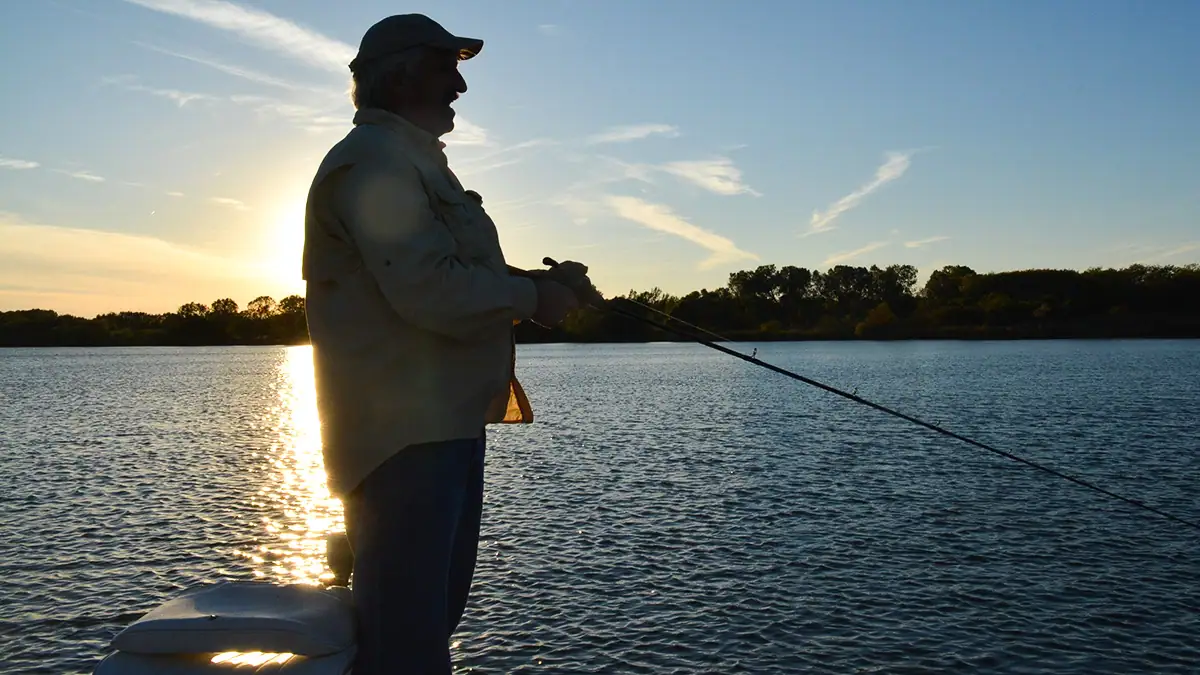
Shortly before sunrise, the lake was the picture of summer tranquility: glass calm with few signs of what was stirring beneath the surface.
Little did we know that this was the calm before the storm.
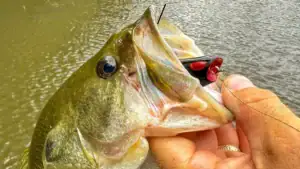
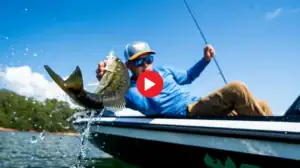
Above image: During the heat of summer, fishermen often look forward to dawn and dusk to fish the jumps — when packs of gamefish push the shad to the surface and go into a feeding frenzy. Photo by Brent Frazee
As the sky began to lighten, the aquatic world woke up with a jolt. The surface churned with activity as gamefish slashed through a school of shad, sending panicked baitfish leaping out of the water in a desperate attempt to escape.
The backs of a pack of largemouth porpoised through the roiled water, making waves as they attacked.
The Action Begins
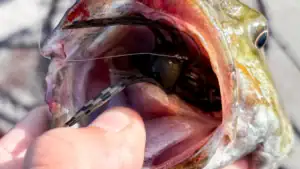
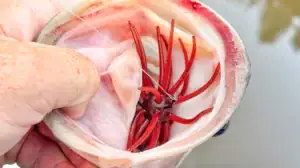
My daughter and I both launched long casts and burned our Chatterbaits right through the turbulence. We both got immediate hits from healthy bass, quickly unhooked them, and fired again. You don’t waste time when the fish are on top.
The school stayed up for about 10 minutes, and we caught four more bass before the calm returned and we were finally about to exhale.
“Wow, that was exciting,” Becky said as she got her heartbeat back in rhythm. “I wonder how many bass were in that school? They were everywhere.”
They weren’t alone. Across the lake, we spotted other pods of bass pushing baitfish to the surface. The trick was getting the boat to that activity soon enough to make a few long casts to the feeding bass before they moved on.
We were successful several times, and enjoyed frenzied fishing before the sun began to bear down and the fish descended into the depths.
By mid-morning, the temperature pushed toward the mid-90s and calm was restored. Iit was time to head for the air conditioning.
But we had already enjoyed one of summer’s greatest displays: the early-morning show.
Early Risers
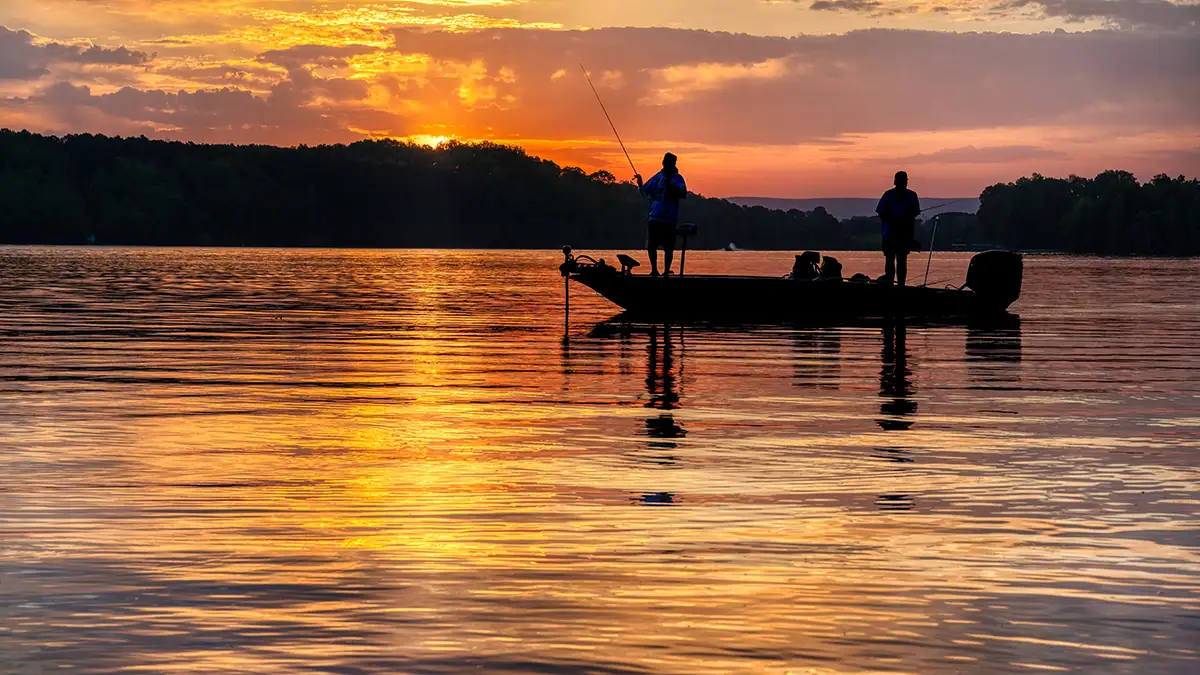
Forget about sleep. You’d better set the alarm and get out early if you want to fish “the jumps.”
When it gets hot and humid, gamefish such as stripers, hybrids, and largemouth bass are active for about 90 minutes in the morning, gathering into packs and pushing shad to the surface.
That time period often is extended on overcast days. And on sunny days, the last hours of the day can be productive, too.
But I’ve always preferred the morning show. I like to pull my boat into open water over the deepest part of the private lake I live on and just wait for the fish to show themselves.
It’s not one of those deals where you can put an X on a map and say, “Here’s where they’re going to be.” They can surface anywhere, at any time. You just need luck on your side for them to come close enough to your boat so you can get to them before the often short-lived feeding frenzy calms down.
Some days, there will be separate schools of gamefish pushing shad in numerous locations. Other days, they won’t show up at all.
Baits
Think shad imitations, and you’re on the right track. But that can encompass a lot of different baits.
I like to throw a larger Chatterbait with a plastic trailer to appeal to the larger bass in the school. But I’ve also used topwater lures, buzzbaits, shad-colored spinnerbaits, Rat-L-Traps, jigging spoons, crankbaits, and grubs.
Some days, they won’t be too picky about what they will hit. Other times, they will be amazingly size-specific. If it doesn’t look like the size of the baitfish they are feeding on, they won’t hit it.
Topwater Wipers
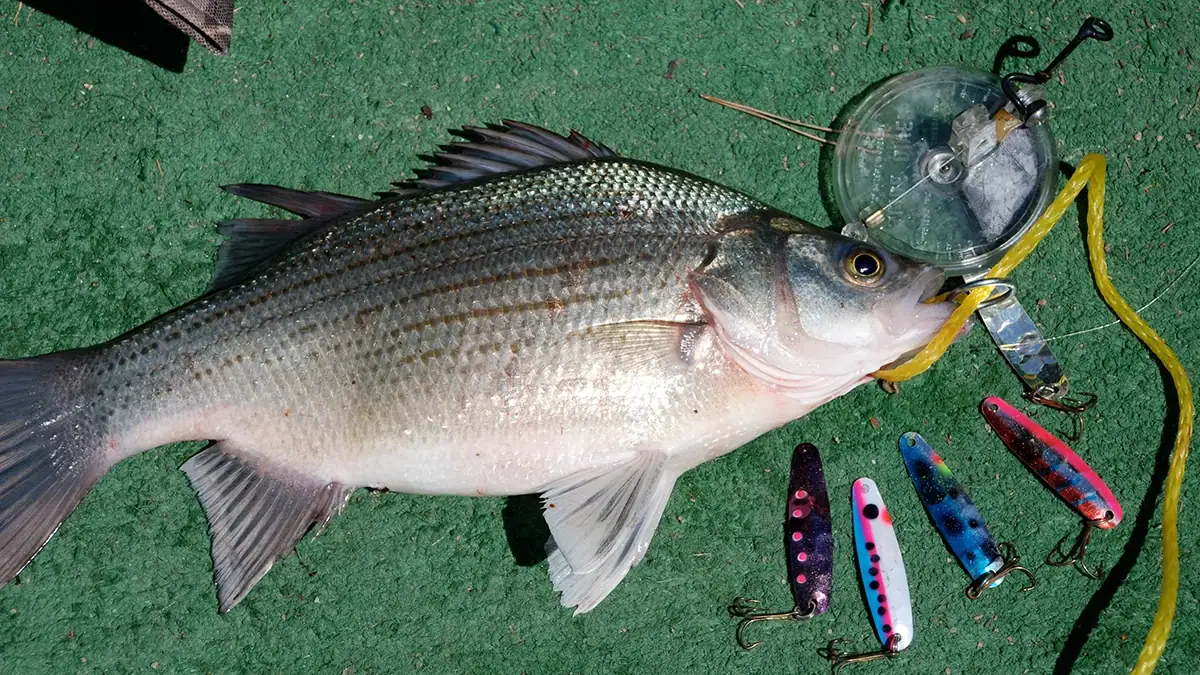
There’s nothing subtle about the way a wiper (a cross between a white bass and a striper) hits a topwater lure when it is feeding in a pack.
I remember the time I joined my friend Rick Dykstra on Milford Lake in Kansas, and a school of wipers erupted in a main-lake cut. We were using large Chug Bugs and one fish hit my bait so hard that it flew into the air. When it landed, another fish grabbed it and put up a spirited fight.
Since then, I’ve caught wipers on everything from big Zara Spooks to Chatterbaits at Milford, and it’s always about as much excitement as this old guy’s heart can handle.
A Fishing Tip
After the initial flurry dies down, try casting a jigging spoon or a Jigging Rap into the area where the fish surfaced.
Sometimes, the bigger fish are lying below the surface activity, waiting for the leftovers to drift down. Just remember to fish above the thermocline, the layer separating oxygenated water from the depths that are devoid of oxygen.
When to Go
The surface activity during low-light conditions often runs through the heat of summer and continues into early fall. Bring some binoculars to see where the fish are on top busting shad. Sometimes, the gulls diving on the water are a dead giveaway.
So, set your alarm clock, get up early, and get ready for some hot summer fishing.