When modern lure companies boast about “building a better mousetrap,” Bill Sonnett has to smirk.
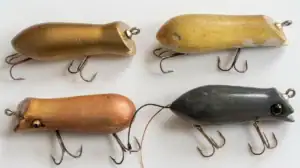
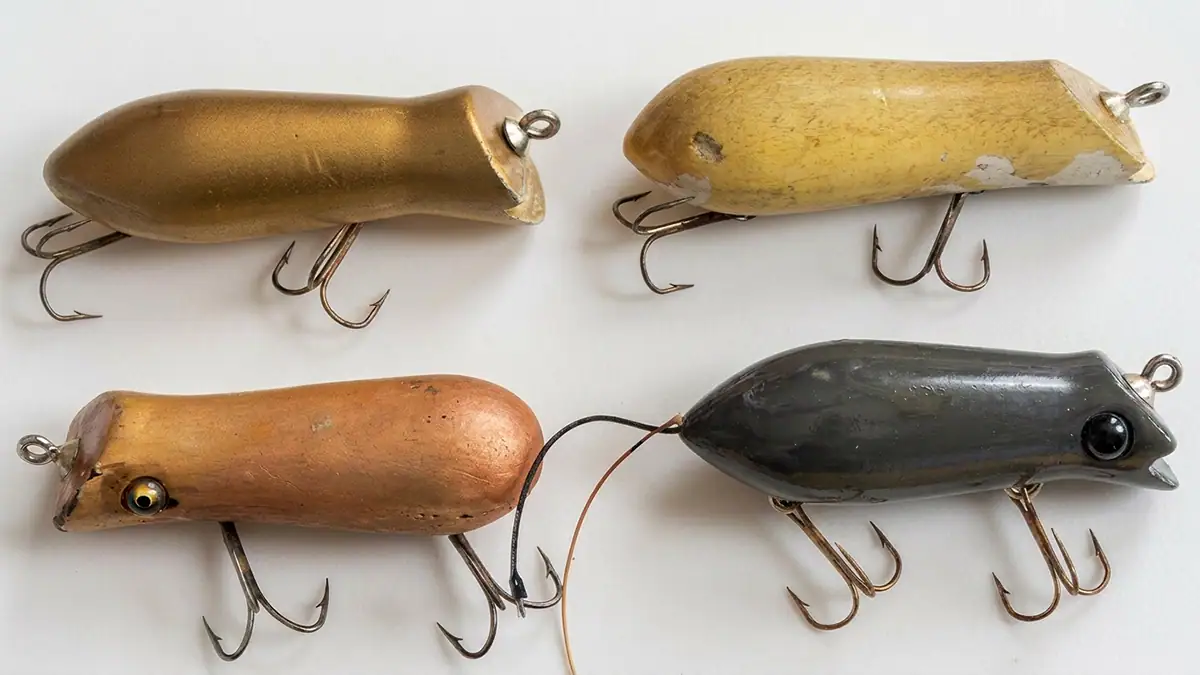
He knows better. And he’ll tell you: The mouse topwater lures that have made waves in recent years are merely adaptations of one of the most popular baits of yesteryear.
“When I was growing up in northwest Ohio in the 1950s, every adult bass fisherman I knew preferred the Shakespeare Swimming Mouse to all other plugs,” said Sonnett, 82, a nationally known fishing historian.
“But about the time I could afford one, they just disappeared. When fishermen learned Shakespeare was going to take them out of production, they would buy every one they could find.”
The Necessity of a DIY Lure
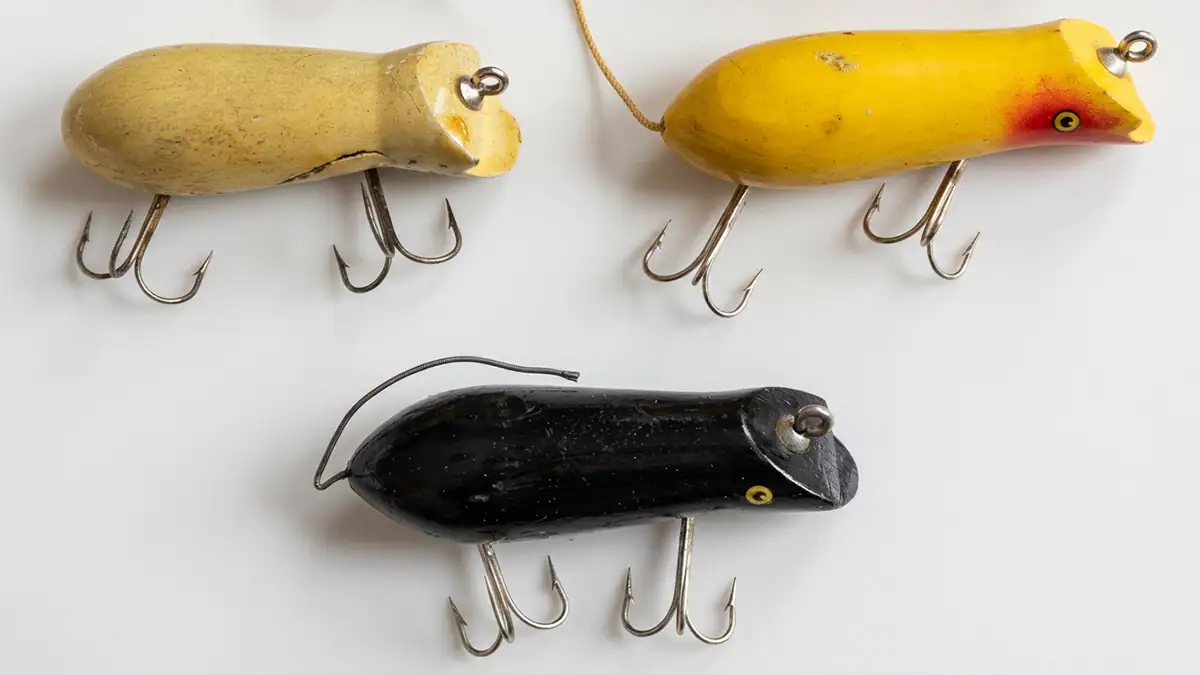
Sonnett searched bait shops, garage sales, everywhere, and could find only one. Finally, he decided he had only one option: to make his own mouse baits.
Though he had no experience as a wood worker, he began using a lathe his grandfather had left behind. He used chunks of white cedar to copy the general shape of the original Swimming Mouse topwater lures and learned through trial and error.
“I didn’t know what I had until I got them in the water,” he told Wired2fish.
But it wasn’t long before he crafted lures the bass couldn’t resist.
“I had several that caught a bass on my first cast,” he said.
Fast forward 55 years. Sonnett still has one of his homemade lures tied to a rod when he fishes the small glacial lake where his southeast Michigan cottage is located. And the bass still hit with vengeance.
“Bass hit like they hate the dickens out of that bait,” he said with a chuckle.
A Mouse Bait That Bass Bite
So what makes it so special? Sonnett fishes with vintage equipment, from the rods and reels he uses to the lures he ties on. His mouse baits are a perfect fit.
He likes to get into a weedy pocket and use the oars on his boat to position himself for a sneak attack. He makes long casts to the edge of lily pads or holes in the weeds, and uses subtle retrieves to make the baits look like something injured.
“My baits are made of white cedar, so they are very light and land softly on the water,” said Sonnett, who lives in Jackson, Michigan. “They don’t spook the fish. I start dabbling around with that bait and I get a lot of impulse strikes.
“If I don’t get a strike right away, I’ll start to retrieve that bait right below the surface and they’ll hit it that way, too.”
(To learn more about Sonnett’s techniques, you can check out what he has to say in this Wired2fish piece about fishing with antique tackle.)
A spell in late spring proved their effectiveness. Sonnett caught and released several bass weighing more than five pounds on the wooden mice he made years ago.
“They put up quite a fight on this old tackle,” Sonnett said. “The reels don’t have a drag, so your thumb can take a beating.
“One of the bass hit so hard it looked like someone had dropped a concrete block in the water.”
Still Going Strong
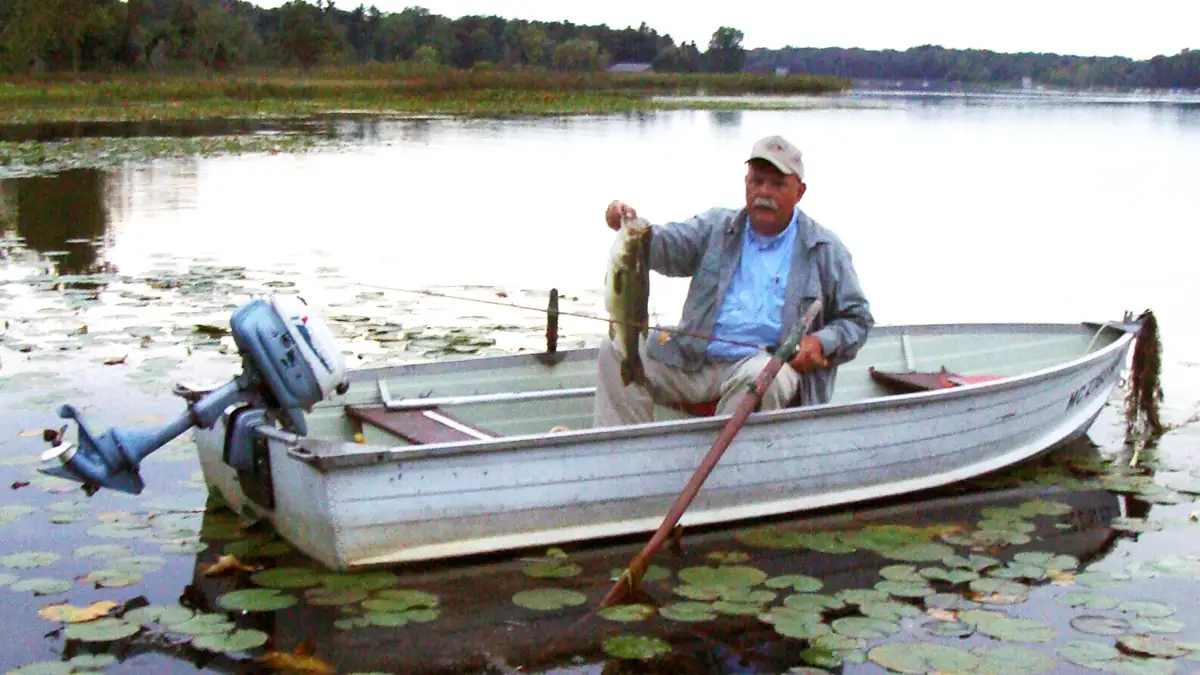
Sonnett likes to fish from late afternoon to sundown. In his younger days, he would even fish into the early-morning hours when the bass would leave the weed beds and move shallow to feed. But advancing age has kept him from doing that now, he said.
Still, he loves getting out during the late-afternoon hours and using his hand-crafted lures to lure more big bass out of their weedy lairs.
“They have a short, tight wiggle to them, and they even have a tail that trails behind,” Sonnett said. “I’ll use other vintage lures when I go out, but I always have a mouse tied to one of my rods.
They caught bass back in the day, and they still do.”