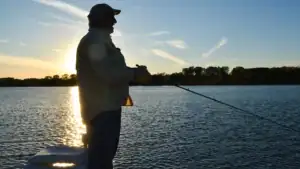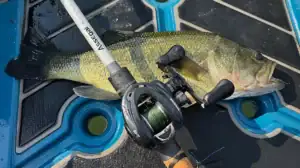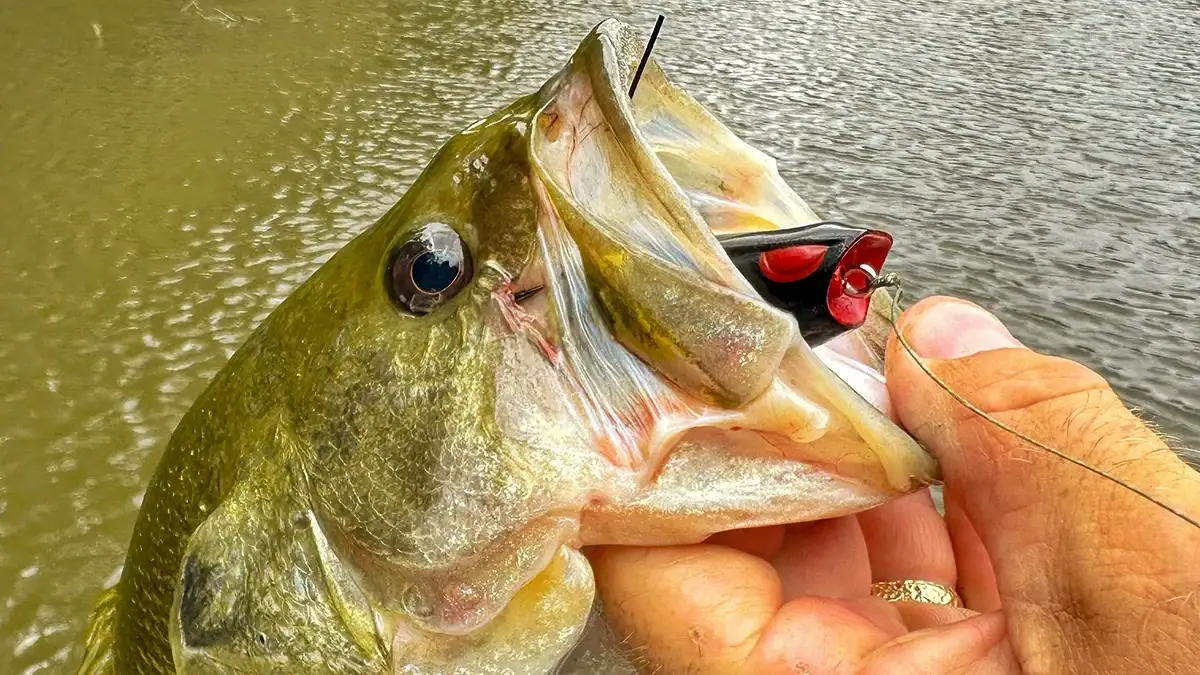
A lot is happening right now for anglers all across the country, with a few fish still bedding, others out deep on shad, some still shallow chasing bream, and others still relating strongly to current.
We’re all navigating different weather and temperature conditions. July is hot here in the South; in the far reaches of northern bass land, it’s getting pretty warm, with a short-lived spring quickly dissipating into summer. I’ll touch on what’s working in the South, and a few others will chime in to cover other regions.
Here’s what we’re all catching them on in July.
Berkley Moeba
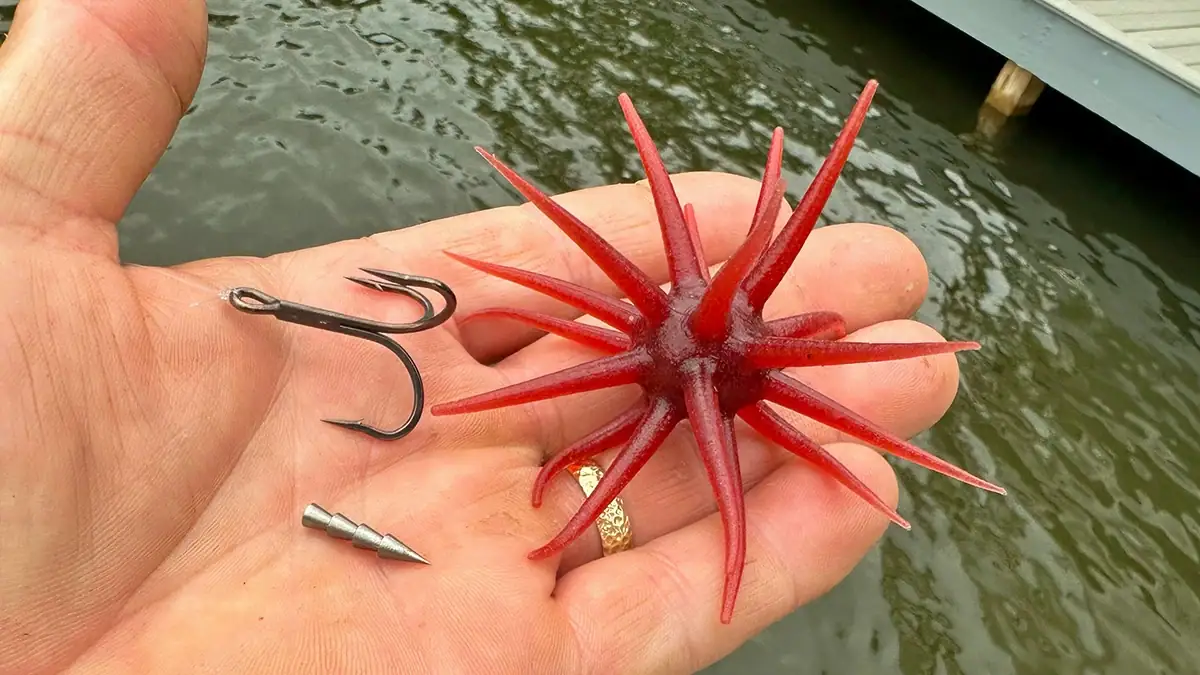
The urchin-style bait is currently the hottest thing in bass fishing. Since the days of the Alabama rig, Senko, and ChatterBait, we haven’t seen anything take the whole sport of bass fishing by storm like what we’re seeing with the Hideup Coike and similar baits. These lures are versatile and extremely effective at getting both active and lethargic fish to bite.
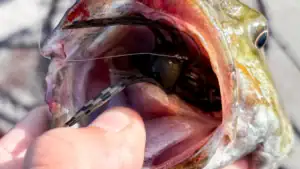
The new Berkley ’Moeba is made of PowerBait Maxscent material, which is scientifically proven to make fish hold on longer. And what I’ve seen from this bait so far is that fish inhale it: The first impression you’ll get is that this bait is hitting the back of their throats.
I’ll be playing with one of these a lot this month. I plan to fish this bait around shallow bluegill beds in July, both rigged conventionally with a nail weight and a treble, but also on a free rig and a dropshot. I also am eagerly anticipating the day I get to work it weightless along the surface through a mayfly hatch — it ought to be game on doing that.
SPRO Poppin’ Frog 60
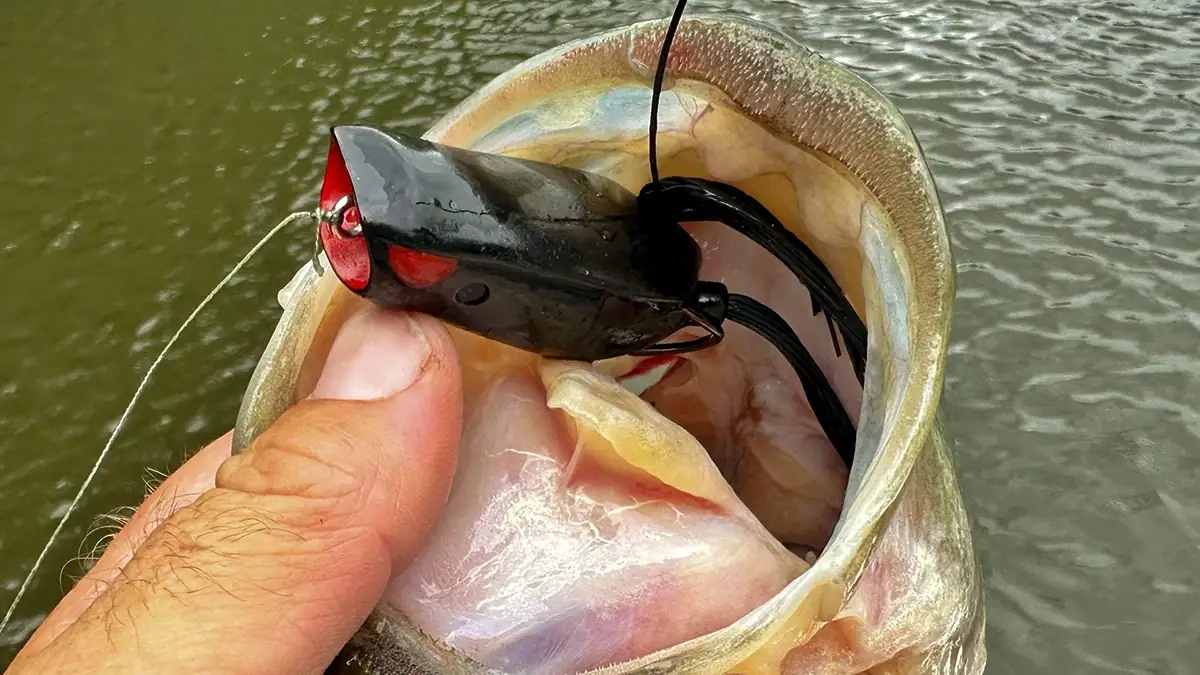
You can go one of three routes in July in the South: out deep, into strong current, or up shallow. I love staying shallow with a topwater and enduring the hours of boredom for the moments of sheer insanity. A popping frog is the best bait for this. You can skip it under bushes and docks, work it through and over vegetation, and pop it along or walk it in place. In my opinion, this is the most versatile and effective of all topwaters.
The SPRO Dean Rojas Bronzeye Poppin’ Frog 60 is the gold standard. It’s durable, walks well, has a nice chug, skips better than most frogs, and has a sharp and strong hook. I especially love this bait in a mayfly hatch when it perfectly imitates a small bream eating the flies along the surface. A popper with treble hooks works well for this, too, but it lacks the all-terrain characteristics, and the frog can be fished on heavy gear to be able to manage big bites in cover more easily. You can also catch bass on this bait around bream beds and just fishing around grass, docks, or other shallow cover.
Lunker Lure Buzzbait
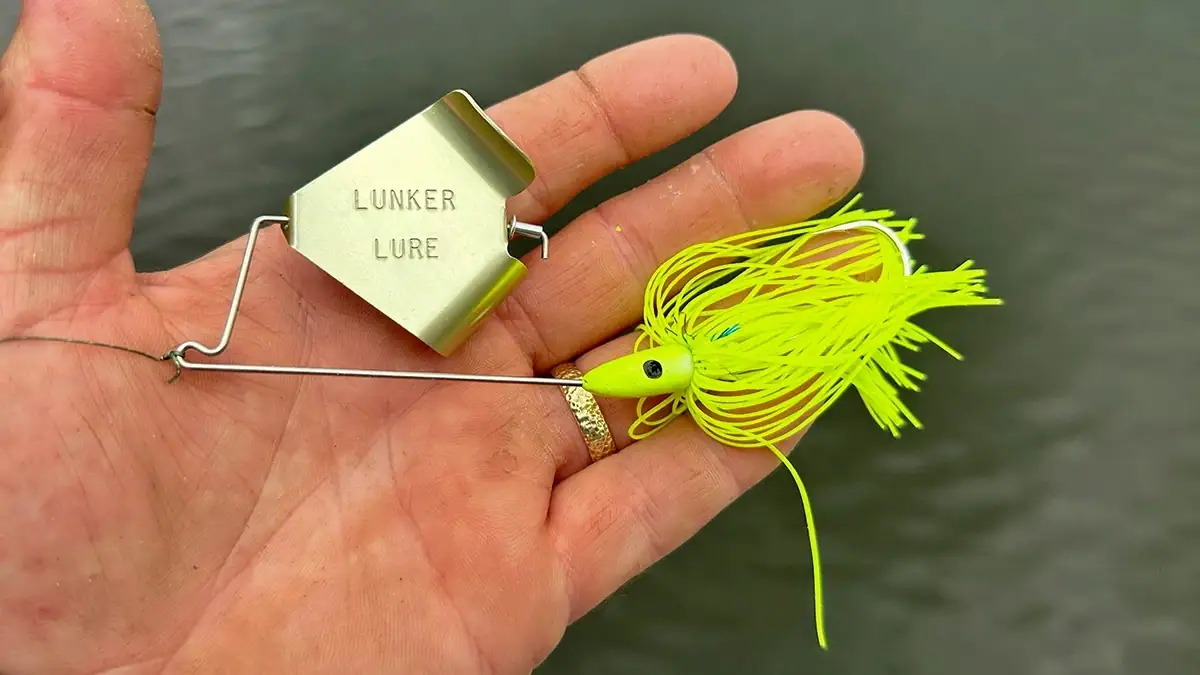
The Lunker Lure is another great topwater for July. I like to use this bait when I want to cover water, and keep the frog on deck for when I want to work a small area thoroughly or cast to isolated targets. Sometimes they’ll just boil on the buzzbait too and not get it — then I’ll drop back to the frog again to try to get the fish to commit. But, when they do want the buzzbait, it makes for a great lure to cover lots of water and get big bites.
Dawn, dusk, and during summer showers are the best times to throw a buzzbait, and the original Lunker Lure in particular is great for this time of year. With the 3/8-ounce bait, you can slowly creep it along the surface with a nice prop plop and a sweet squeal. Consider using a trailer hook if you’re getting short strikes, but know that it will come through cover better without it.
Shallow-to-Medium-Diving Crankbait
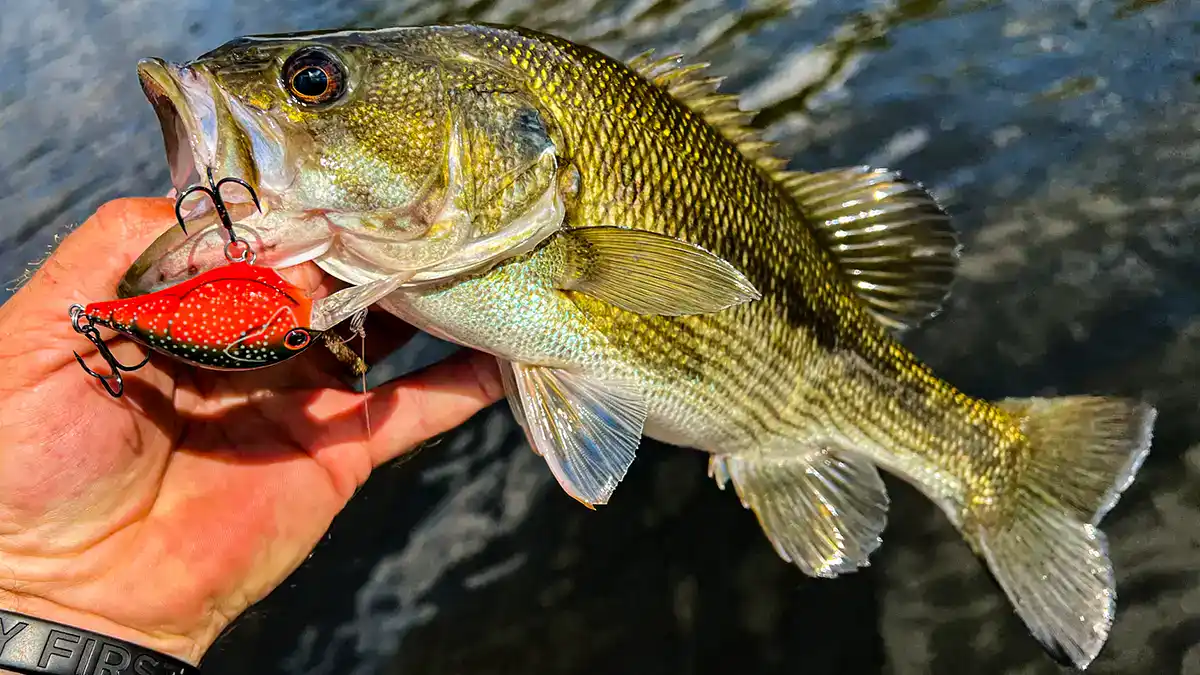
Shallow-to-medium-diving cranks, like the Jackall Bling and Berkley Dime 4, work really well in strong July currents. Underneath hydroelectric dams, the governing authorities have to pull a lot of water to generate power to run air conditioners and a plethora of other electronics in the summer. This creates a cool discharge of swift, highly oxygenated water, which draws both bait and bass by the boat load. While swimbaits and umbrella rigs are great for these areas, shallow-to-mid cranks are easy to fish and super effective, too.
The water beneath these dams is often shallow, with large areas of hard bottom and scattered boulders in less than eight feet, running up shallower until the rocks break the surface. Cast your crankbait out and crank it down ‘til it hits the bottom, and then reel it as fast as you need to to where you’re regularly making contact. You’ll want to use the shallowest diver possible to achieve this, as dredging the bottom with a deep diver will lead to a lot of hangups.
What Trey McKinney is Throwing in Illinois
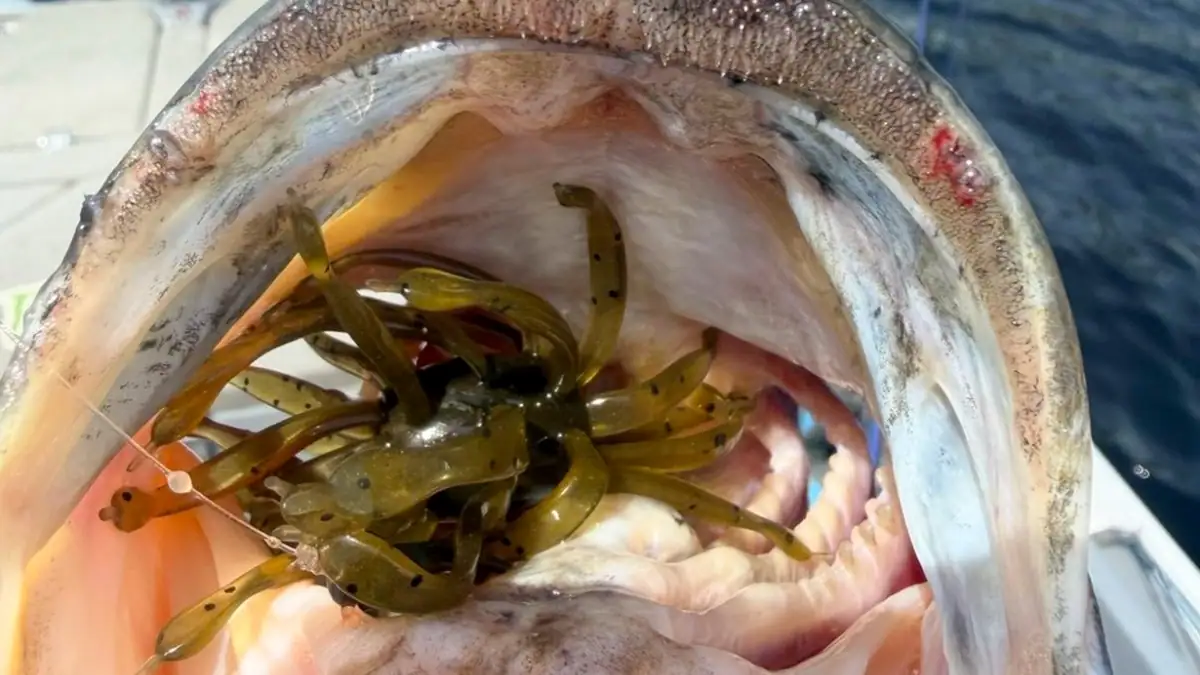
Around my neck of the woods, a lot of those fish are getting offshore. There are a few fish that stay shallow year round no matter where you’re at or what you’re doing. But for me, a lot of times right now I catch them feeding up after that postspawn. That’s when they start getting in schools.
I’m looking for that first piece of cover that a fish would get on. It’s more or less obvious where they’re going to be a lot of times. Maybe on the first secondary point or any kind of good long point or hump. Anywhere that has a good percent chance of having some fish. And any kind of cover on the points like brush or vegetation is really good to target.
My hottest baits would be a 7-inch Sixth Sense Shindo on a jighead, a half-ounce jig, and then probably the Sixth Sense Abstract, because that’s a new, hot bait right now. On the Abstract, you just put a Sixth Sense nail weight in it and then put a 1/0 round-bend Gamakatsu treble hook right through the top. And then snap snap — and when they hit it, you just cross their eyes.
What Stetson Blaylock is Throwing in Arkansas
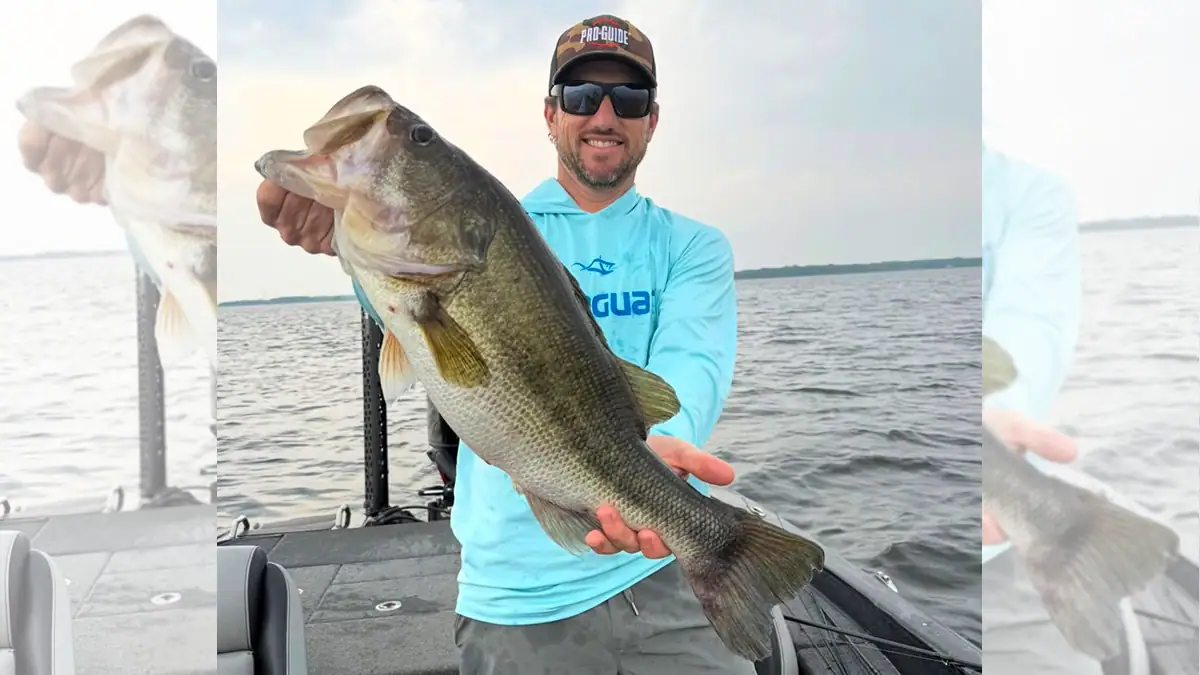
I’m going to always have a Heddon One Knocker Spook on this time of year. It’s a few years old now, but it’s one of the newer Spooks in the lineup and it’s become my favorite. I throw that on 30-pound Seagar stealth gray SmackDown braid. It’s just a bait that will draw fish up out of brush. If they’re schooling, you can really get a long cast out of it. It’s kind of the best of all the worlds when it comes to Zara Spook fishing; it’s just a necessity to have that on this time of year.
Secondly, it’s going to be a 10-inch YUM Ribbontail Worm. I’m going to throw that on 15-pound Seaguar InvizX, and I’m going to have it on a 5/16- or 3/8-ounce tungsten weight, just depending on the depth I’m fishing and the cover that I’m fishing.
And then a Norman NXS Crankbait. That’s a 12- to 18-foot diving crankbait depending on the line size. I usually start out with one on 12-pound Seaguar InvizX, and then I’ll also have one on 15-pound InvizX, just for different depth ranges. But that bait is a very critical part of the three-pronged approach for the month of July.