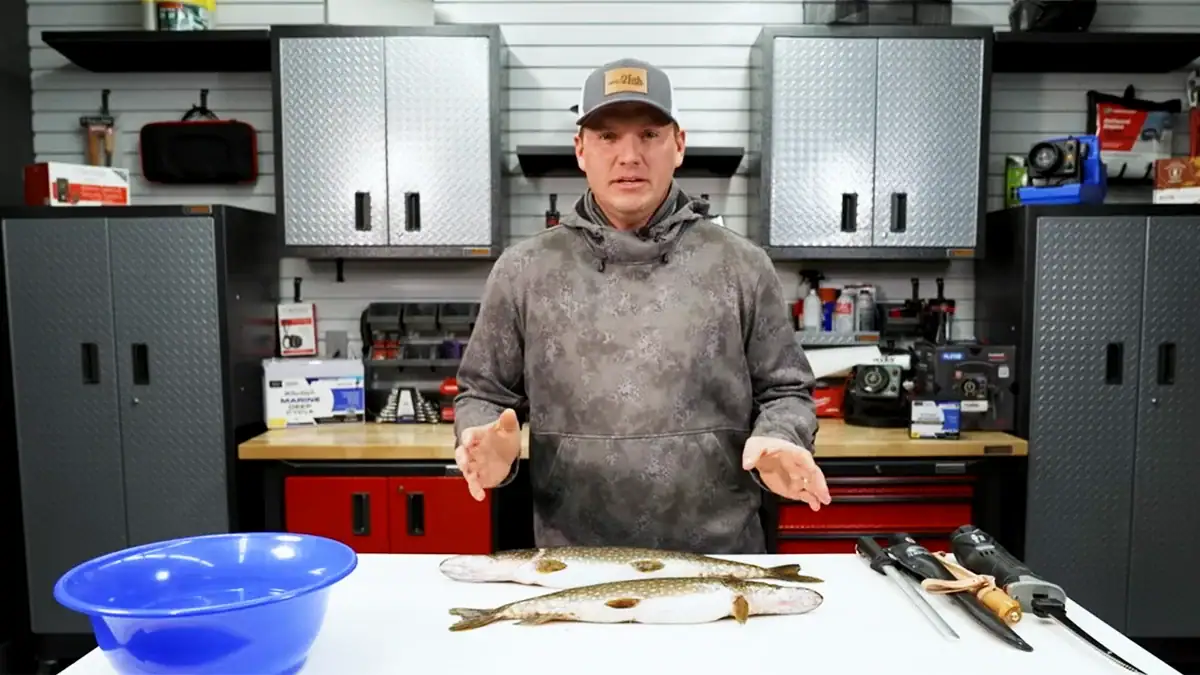
Northern pike offer excellent table fare, but many anglers avoid them because of the well-known Y-bones. Fortunately, the right fillet approach makes cleaning pike simple and efficient. In this video, Kyle Peterson breaks down his proven five-piece method for cleaning pike while maximizing usable meat.
Featured Product
- FIXED-BLADE KNIFE – Rapala Fish ‘N Fillet Knife: Buy at Rapala
- FIXED BLADE KNIFE – Rapala Soft Grip Fillet Knife: Buy at Rapala
- ELECTRIC FILLET KNIFE – Rapala R12 Heavy-Duty Lithium Fillet Knife: Buy at Rapala
- CUTTING BOARD – Rapala Pro Series Fillet/Prep Board: Buy at Rapala
Essential Gear for Cleaning Pike
Before starting the fillet process, Peterson highlights a few simple tools that make cleaning fish easier and cleaner. A basic cleaning station includes a sturdy cutting board, several knives, and a container of cold water for finished fillets. In addition, a bucket helps manage carcasses and scraps while working. Peterson also notes the importance of bleeding fish before cleaning them. This step improves meat quality and keeps fillets looking clean.
Understanding Pike Y-Bones
The biggest challenge when cleaning pike involves the Y-bones that run along the upper portion of the fillet. However, Peterson explains that once you locate these bones, the rest of the process becomes much easier. Peterson begins with a cut behind the head and follows the backbone toward the tail. This first cut exposes the Y-bones and sets up the rest of the five-piece fillet method. From there, Peterson carefully works the blade along the outside of the bone structure. By staying tight to the bones, anglers keep the most meat possible while avoiding the bone structure.
The Five-Piece Pike Fillet Method
After removing the main sections of meat, Peterson shows how the five-piece method takes shape. The final result includes two tail pieces, two side fillets, and the backstrap section. Each section requires slightly different trimming. Peterson explains how to remove the skin cleanly while preserving as much meat as possible. He also demonstrates how splitting the backstrap section helps remove the remaining backbone piece before finishing the fillet.