There’s so many good options for bass fishing lines these days that it’s getting hard to identify the best options. And when it comes to bass fishing, numerous techniques and their different classes of lures make a wide array of fishing lines necessary.
It is a market dominated by a handful of players. However, a push in Japan these past few years to make highly technical braided lines, monofilaments, and improved fluorocarbons for bass fishing means that we’re always reviewing and testing high-quality fishing lines.
The trend toward improved castability, manageability, and smaller diameters in stronger lines led to a lot of positive development in bass fishing lines in recent years. And as new brands come to the market, they push top companies to keep innovating, which will hopefully lead to more affordable options for anglers on a budget.
Most bass anglers seem to throw fluorocarbon or braid for most applications; mono gets the nod as a more affordable option, or when you need a little stretch or don’t want your line to sink. We reviewed a mix of the newest and best options available right now for anglers, knowing that the best bass fishing lines usually boil down to quality for the price, manageability, castability, strength, and durability.
OUR PICKS FOR BEST BASS FISHING LINES
- Best Fluorocarbon – Seaguar JDM R18 Fluorocarbon
- Best Flipping Braid – Cortland Silent Flip
- Best Sinking Braid – Sunline Almight
- Best Small Diameter Braid – Seaguar JDM PEX8 Lure Edition Braid
- Best BFS Braid – Varivas Bass PE
- Best Value Fluorocarbon – Daiwa J-Fluoro
- Best Monofilament Line – Maxima Ultragreen
BEST FLUOROCARBON
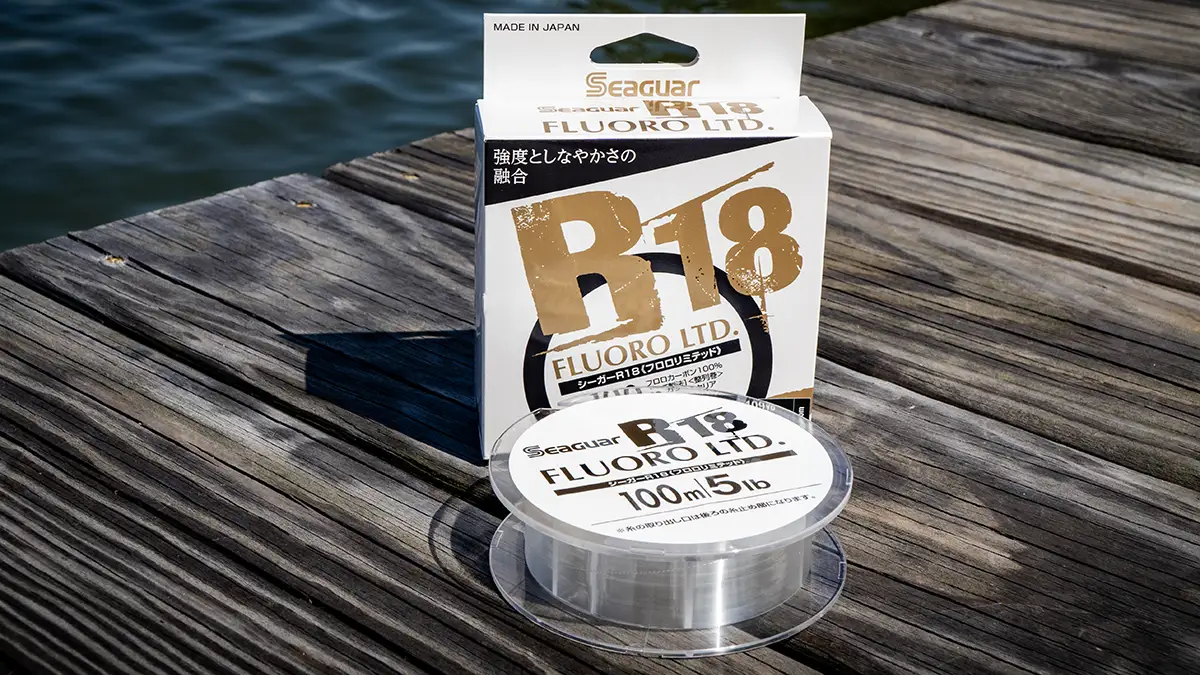
Seaguar JDM R18 Fluorocarbon
I’ve long been a Seaguar guy, and eagerly awaited the JDM lines arriving stateside. Seaguar invented fluorocarbon, and this — considered the premium fluorocarbon in Japan — is the company’s latest take on absolute top-of-the-line fluorocarbon.
Using the proprietary Flexible Non-Twist FNT production method with the strongest polymers available, Seaguar made a very thin diameter fluoro that has both incredible knot strength and a rigidity that resists kinking and line twists, making the line more manageable and worry-free.
This line is very sensitive and really excels with bottom-contact baits. It’s been great as a mainline for casting Texas rigged worms and football jigs out deep. I really like how strong it is in the light pound tests, and how well I could feel the bites on lighter line. It’s a really impressive fluoro option.
Check out these other good options for a fluorocarbon line.
BEST FLIPPING BRAID
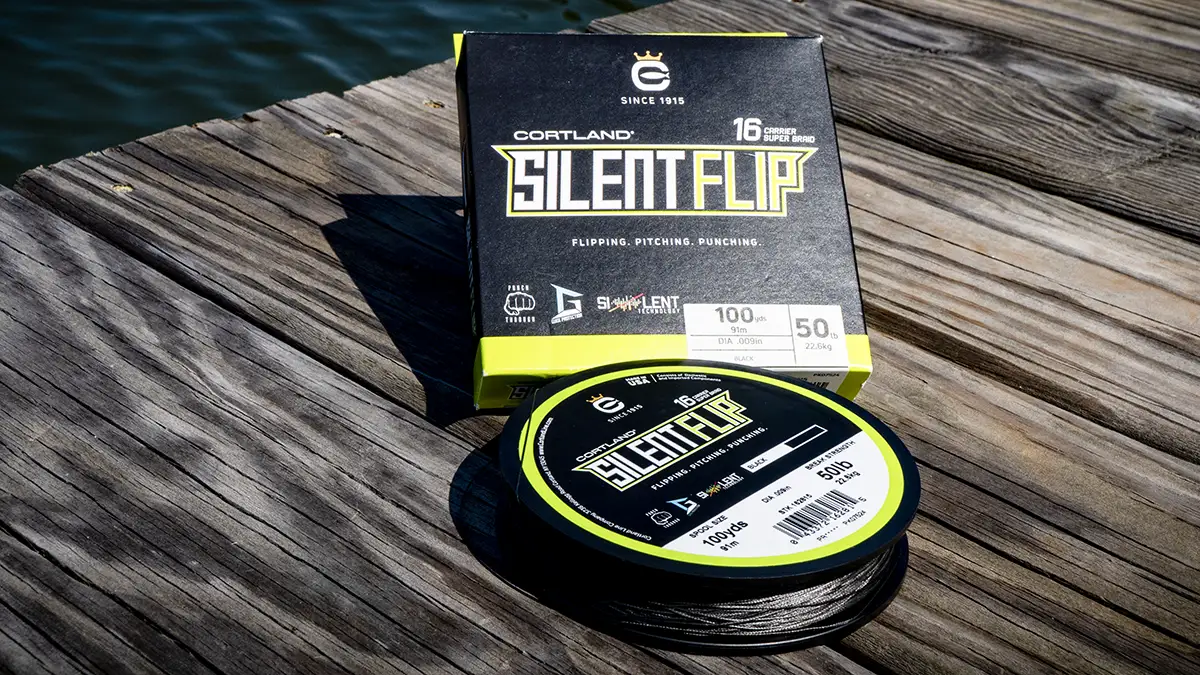
Cortland Silent Flip
I have used Cortland lines a bunch for fly fishing, but was recently introduced to its very impressive lines for bass fishing. The Silent Flip uses a 16-carrier super braid structure that makes it lay flat on the spool, and it moves effortlessly through the guides and the cover without a sound.
Its Fibertech and Colorlast technology prevent fraying, color fading, and bleeding, and gives the line an excellent abrasion resistance. This line is perfect for flipping in heavy vegetation, and I also really like it for topwater fishing.
The 50-pound size is a very small diameter with a nice limpness that makes it very manageable and castable. I get a really smooth pitch with this braid, and you can bomb a topwater.
BEST SINKING BRAID

Sunline Almight
This braid made for finesse applications offers impressive small diameters for the pound tests they offer. The line is made for more deepwater applications so it’s specially formulated to sink quickly for your bottom contact and deep water finesse applications. A special ULT-PE material wrapped around a gravity fiber core achieves the small diameter and sinking properties. There is an orange stripe every 81 inches so you can gauge depth and distance a little easier, as well.
I saw some negative comments related to this line, and I think it’s because people are trying to use the really light pound tests on too-heavy gear. Because this line is so small, you can beef up to about 16- or 18-pound and it fishes like a lot of brands’ 10-pound test.
The seven-pound test is very small and can be hard to get a good knot in (you need more wraps). I recommend sizing up because the diameter is so small, and you’ll like it for deep contact baits. It performed really well when I used it crappie fishing with BFS gear.
BEST SMALL DIAMETER LOW STRETCH BRAID

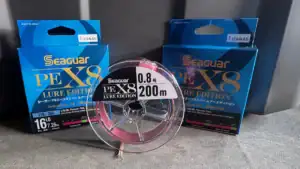
Seaguar JDM PEX8 Lure Edition Braid
The JDM PEX8 Lure Edition braid uses Seaguar’s proprietary GrandMax PEX8 braid technology to offer the lowest stretch in their line-up of braids. The hi-vis multi-colored Passion Pink and Lime Green color allows anglers to see their line clearly and recognize depth changes quickly. The premium eight-strand construction has an extremely thin diameter, perfect for spinning gear, micro jigging, or bait finesse techniques.
This is a premium finesse braid, arguably one of the best on the market now. I’ve enjoyed using it in finesse applications for bass, panfish, and even trout. This is one of the best braids offered in Japan.
Check out these other good options for a braided fishing line.
BEST BFS BRAID

Varivas Bass PE
Varivas is another premium fishing-line brand from Japan. It’s really been pushing the finesse fishing line game to a much higher level. I personally believe we’re seeing more high-end JDM lines stateside because of this brand. The company is making some of the best saltwater and trout fishing lines in Japan, and it makes some of the best BFS lines in both braid and fluorocarbon.
The BASS PE braid offers a very thin diameter line that’s also very strong, sensitive, and durable. From 10-pound to 30-pound sizes, this small diameter line uses a four carrier weave to deliver great performance on your favorite BFS bait casters. This line works for finesse spinning applications as well, but I really love it on my BFS reels.
I’ve caught trout, bass, and crappie on this braid with a fluoro leader. With a minimal roll cast, I can achieve great distance on my small hard baits and finesse plastics.
BEST VALUE FLUOROCARBON

Daiwa J-Fluoro
Most bass fishers are looking for an affordable fluorocarbon that offers enough strength and castability for everyday applications. It’s admittedly hard to find a fluorocarbon offering both high performance and a lower price point; at $14.99, this one is a very good value. While it can’t be expected to perform like higher-end fluorocarbon, it is a pretty good line for the money.
Daiwa uses premium materials from Japan to process this line, which I found to be pretty good. It worked well for swimbaits, jerkbaits, and even some bottom-contact baits. I haven’t used it as long as some of the others, but it’s been good so far.
Maxima Ultragreen
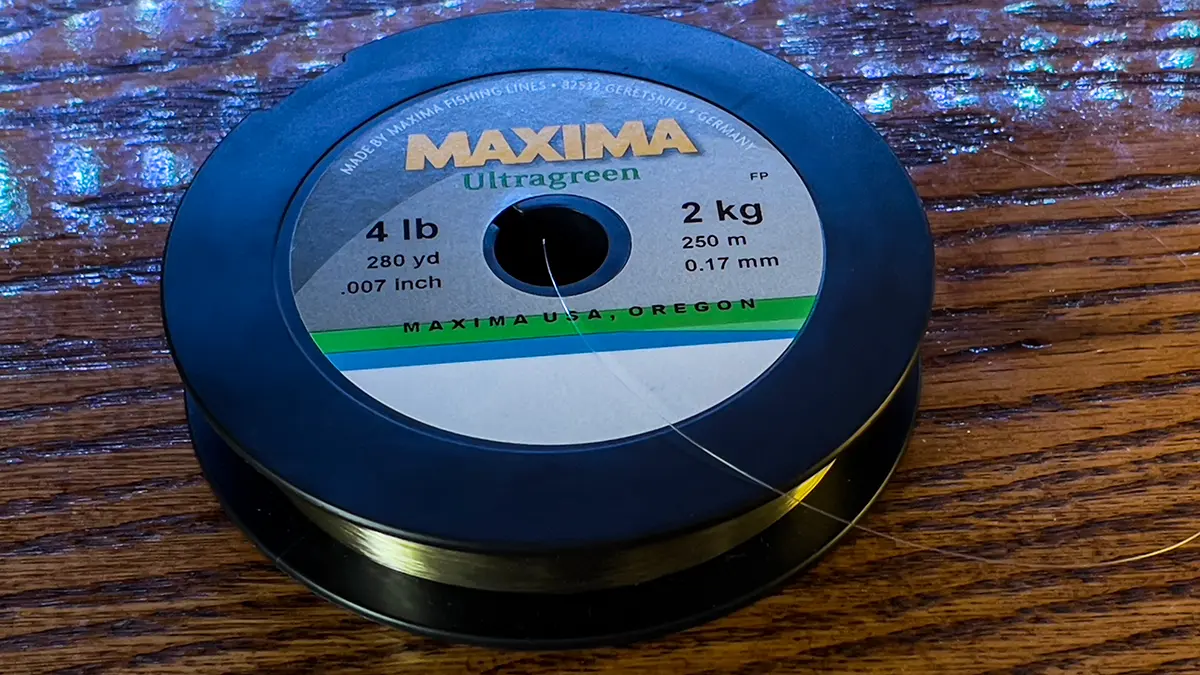
This remains among the best monofilaments ever made, in my opinion. Its diameter is small and the line is tough. But most importantly, it is some of the most supple and castable copolymer monofilament ever made. The biggest part of fishing is getting the fish to bite. Your line not giving away the deception is a big part of that.
For how small the diameter is on this line and how supple it remains and how well it casts, this is one of my long-time favorites for monofilament. I will admit that I had used a lot of other lines these past few years; after pulling the lines together to test and review, I was again reminded how good this line is. It even got me to order a couple of big bulk spools.
It is on the high side when it comes to monofilament. But buying bulk spools helps offset the cost and, if you are a guy who likes to use a lot of monofilament, you can get some huge spools of this line for a very low cost per reel fill up.
I use this a lot of finesse setups where I don’t want to use braid. It’s a favorite among trout anglers fishing ultra clear waters, and it’s good stuff in high pound test for swimbaits.
Check out these other good options for a monofilament fishing line.
WHAT TO LOOK FOR IN BASS FISHING LINES
With bass fishing, you’re generally using either heavy line to employ power-fishing techniques or smaller-diameter lines in lighter pound tests for finesse fishing applications. While bass fishing makes use of both spinning and baitcasting gear, a lot of lines are available due to the many different techniques and options for lures. You might need heavy braid to wrestle a big fish from heavy cover, or you might opt for light line in ultra-clear open water to fool big, healthy smallmouth.
And because bass fishing happens in all types of water across the country, you need a diverse range of fishing lines. The line you need for fishing St. Clair in Michigan is not the same line you need for fishing Florida’s Lake Okeechobee.
For a long time, everyone chose their line by pound tests. Now anglers factor a lot more into their decisions because there has not been a single standard for line size. Knowing how diameter, suppleness, and stretch affect your fishing applications will make you a better angler. Generally speaking, smaller-diameter lines will have lower break strength, but will be a little easier to cast and fish more effectively in deep water. A larger-diameter line will offer a lot more abrasion resistance and knot strength, but less stretch.
DIFFERENT TYPES OF FISHING LINE

Fishing line has progressed exponentially over the past few decades. Some of the oldest lines in fishing are actually braids; however, they weren’t made with the modern materials we’re now used to seeing. Instead, it was woven with other materials such as silk glands, creating a stiff and slightly transparent line.
Fast forward many years later, to the creation of monofilament. It quickly became the norm and remained a bass-fishing staple for decades, thanks to both revolutionary durability and transparency.
Since then, both fluorocarbon and modern versions of braided fishing line have taken over the bass fishing market. While fluorocarbon is likely the most commonly used line, all three still have their own time and place based on your chosen technique.
For more information, you can check out our guide on how to choose bass fishing line.