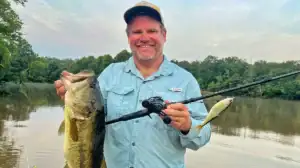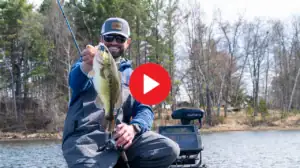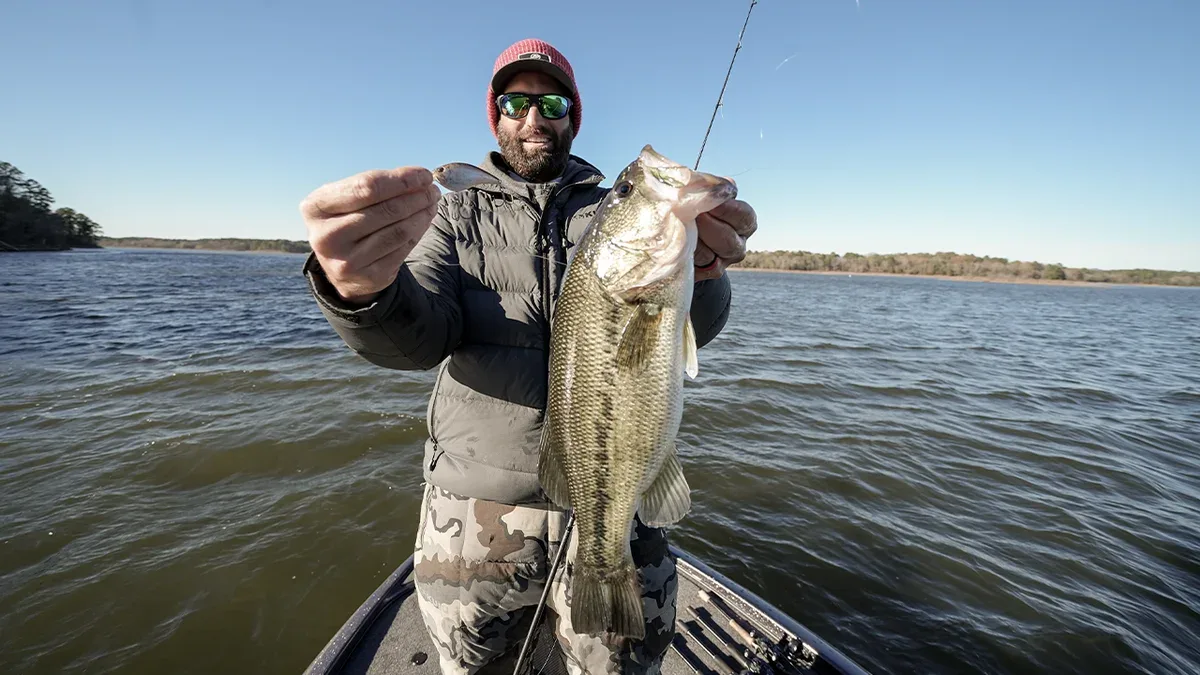
Cold weather puts bass in a state of transition, with some fish moving deep while others remain shallow and slide along channel swings. Spencer Shuffield breaks down this early winter pattern while fishing cold, rocky river banks and explains why these areas continue to produce when water temperatures drop into the low 50s.
Featured Product
- CRANKBAIT – 4-7′ Diving Crankbait: Shop Crankbaits at Bass Pro Shops
- ROD – Ark Invoker Pro Series Casting Rod 7′ Medium: Buy at Tackle Warehouse
- LINE – Yo-Zuri T7 Premium Fluorocarbon Line (12 lb.): Buy at Bass Pro Shops | Buy at Tackle Warehouse | Buy at FishUSA
Why Channel Swings Produce Bites
Channel swings bring deep water tight to the bank, which allows bass to move and feed without leaving shallow cover. These areas also concentrate fish along edges, turns and subtle points where rock meets the channel. Shuffield breaks each bank into three parts by looking at where it starts, where it transitions and where it ends. He pays close attention to rock changes, since bluff rock shifting to chunk rock often signals a strike zone that holds multiple fish. Any rock that sticks out farther than the rest creates a high-percentage target, and most bites come from subtle turns and small points along the bank. He keeps his boat parallel to the rocks so he can run his crankbait tight to cover.
Crankbait Color and Presentation
Color choice matters, but Shuffield keeps it simple by starting with a shad color crankbait when fish feed on bait in the low 50s. If fish miss or swipe at the bait, he switches colors to see what they prefer. As the water continues to cool, he moves to crawfish patterns, since bass shift toward bottom-oriented forage during colder conditions. He avoids wild colors and sticks with shad or reddish brown tones that match what bass naturally eat. He keeps his bait tight to the rocks and bumps it into cover, since contact with the rock often triggers reaction strikes. A light chop on the water helps this bite, while calm conditions can slow it down.
Breaking Down a Channel Swing Bank
Shuffield treats each stretch like a puzzle by watching where the bank turns, noting where the rock changes and checking where the channel runs closest to shore. He targets places where the rock gets broken up, since those areas often hold bass during early winter.
Boat Setup
- FISH FINDER – Garmin ECHOMAP Ultra 2 126sv Fish Finder/Chartplotter with Navionics+: Buy at Bass Pro Shops
- FORWARD-FACING SONAR (FFS) – Garmin LVS34 LiveScope Plus Live Scanning Sonar Transducer: Buy at Bass Pro Shops
- TROLLING MOTOR – Garmin Force Trolling Motor: Buy at Tackle Warehouse
- MOTOR – Mercury Pro XS 250hp: Check out at Mercury