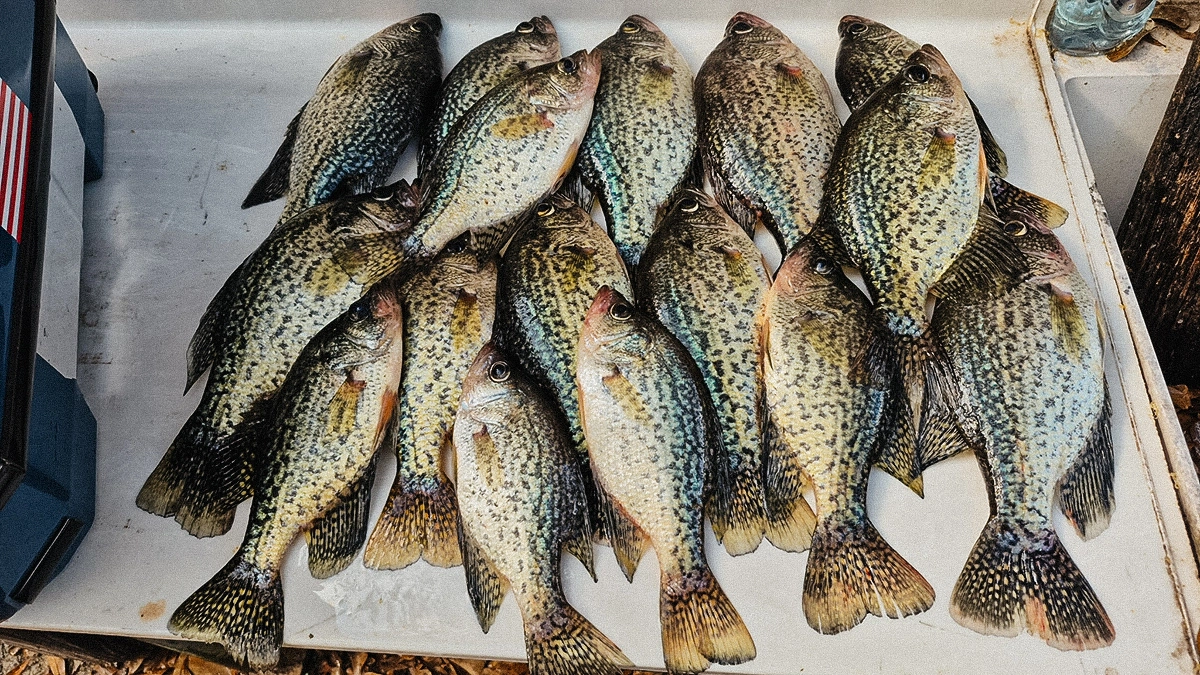
Growing up in Louisiana, spider rigging for sac-a-lait, or crappie, wasn’t all that uncommon. Long rods fanned off the bow and a slow creep across open water were familiar sights long before high-end electronics entered the picture.
The first time I really paid attention to the spider-rig technique was on northern Louisiana’s Caney Creek Lake. My friend Brent and I were struggling just to find fish, while another angler nearby steadily put crappie in the boat. Brent pointed him out and summed it up simply. “He’s spider rigging,” he said. “Basically, it’s trolling with a lot of poles.”
Setting Up Your Rods and Bow
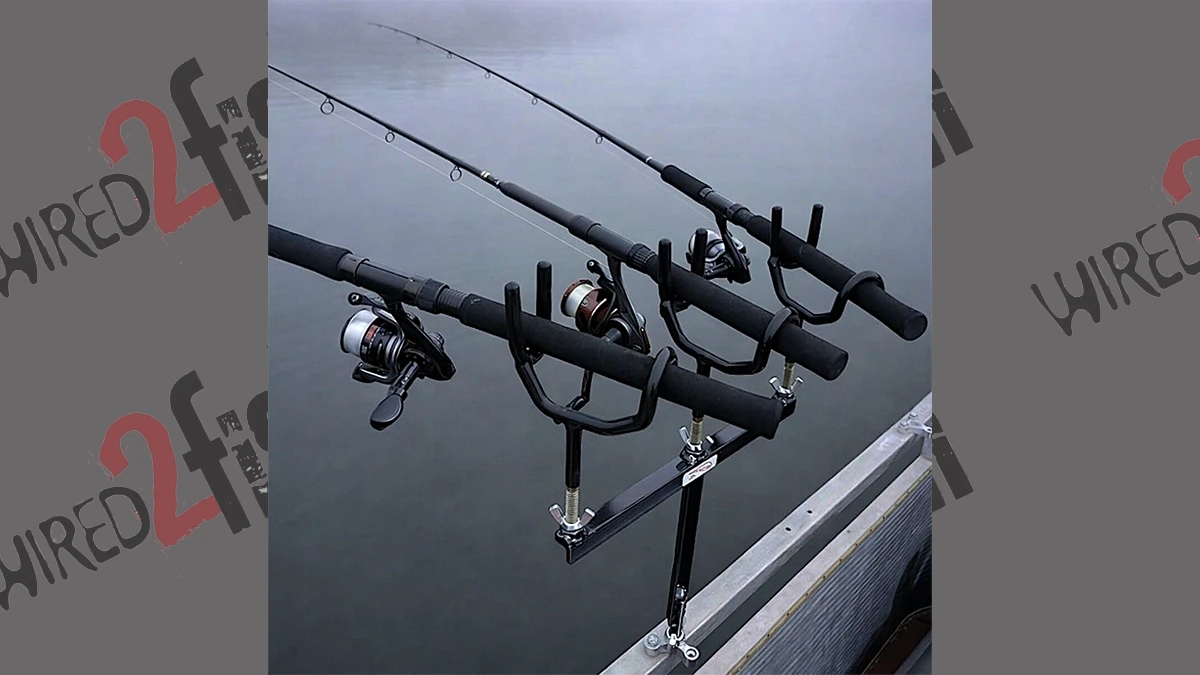
A typical spider rig setup starts at the bow, with multiple rods spread forward to fish a wide path of water. The number of rods often depends on crew size and comfort level. With two anglers on the bow, managing multiple rods is easier. Many experienced spider riggers find that running six to eight rods offers a good balance between coverage and control. I credit the two-man system for many invites on spider rigging trips.
Rod length also plays a role. Longer rods in the 14- to 16-foot range help push baits farther from the boat and naturally separate lines. Sensitivity is important, since spider rigging bites are often subtle. Rods designed specifically for the technique, such as those from B’n’M Poles, are popular for their balance and ability to detect light bites.
You’ll typically mount a rod off the bow using rod holders that fan the rods evenly across the front deck. Proper spacing is critical. Each rod needs enough room to fish clean without lines crossing as speed or direction changes. Good spacing improves bite detection and makes handling multiple hookups more manageable.
Proven Spider Rig Rod Holders
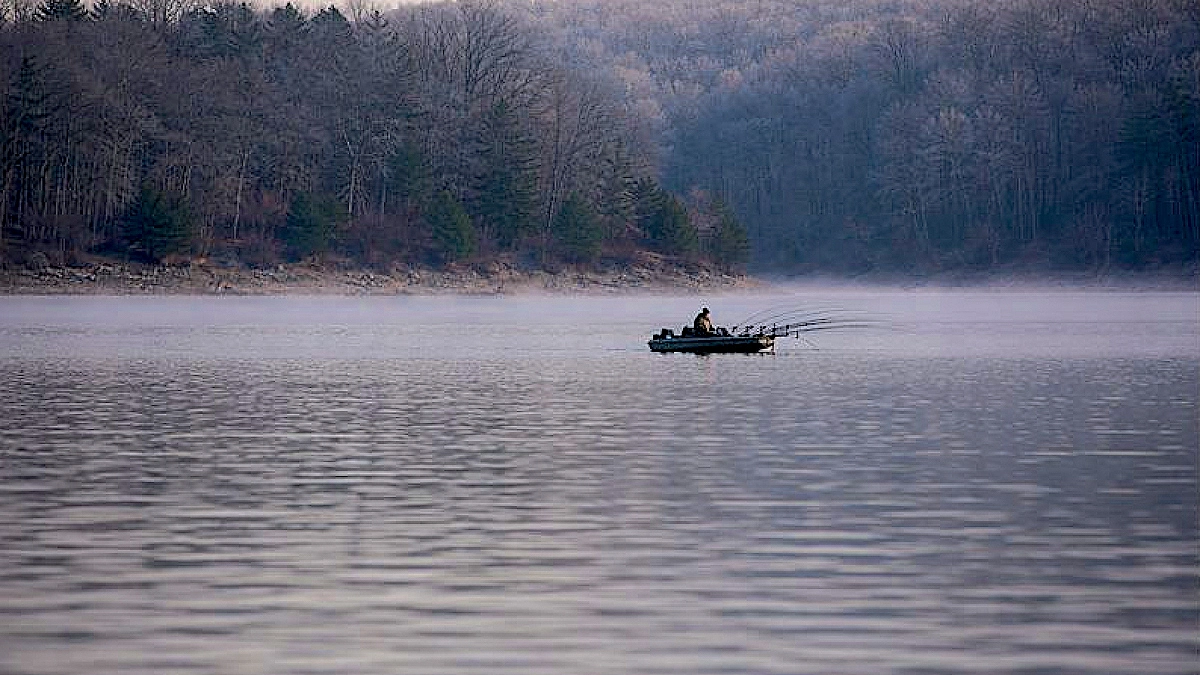
Running multiple rods off the bow calls for a rod holder system that allows for precise spacing and easy adjustments. Rod holders play a big role in controlling rod angles and keeping lines separated, especially when fishing slowly with long rods.
Tite-Lok: Tite-Lok rod holders are among the most widely used options for spider rigging. Their adjustable mounts allow anglers to fine-tune rod angles and spacing, which is critical when running multiple rods off the bow.
HiTek Stuff: HiTek Stuff produces modular spider rigging systems commonly used by tournament crappie anglers. Their rod trees and adjustable bars are designed specifically for forward-facing spreads and are easy to customize.
R100 Spyderlok Gen 2: The R100 Spyderlok Gen 2 is a compact, adjustable rod holder designed specifically for spider rigging. Its locking system securely positions rods while still offering quick angle changes, making it a solid option for anglers running multiple rods in tight bow layouts.
Extreme Fishing Concepts: Often referred to as EFC, these holders offer heavy-duty construction and stability, especially when running long rods or heavier spider rigging setups.
Speed Control
Speed is one of the most important factors in spider rigging. Even with the right rods, baits, and locations, improper speed will pull baits out of the strike zone.
Most spider riggers operate in the 0.3 to 0.5 MPH range, especially in water temperatures around 50 degrees or colder. Moving too fast causes baits to lift and rods to angle back, often resulting in fewer bites. Small speed changes can make a noticeable difference, particularly when crappie are following bait but not committing. Wind, current, and depth all influence speed, making constant monitoring important.
Lures to Use
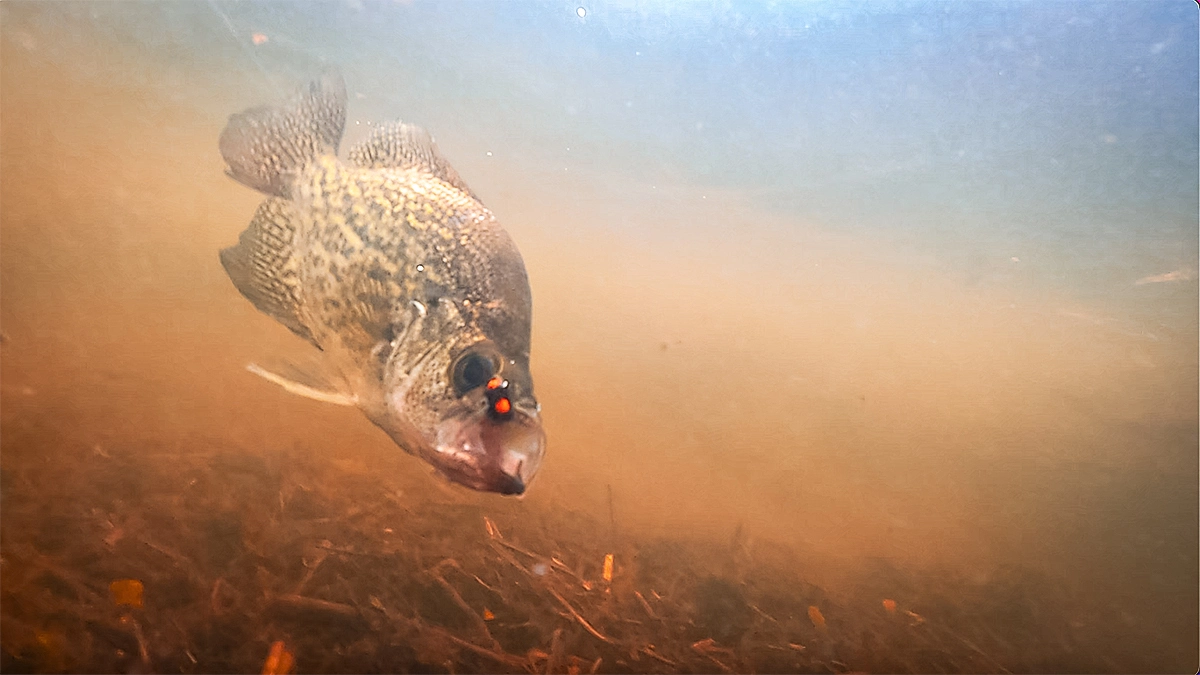
Spider rigging works with a lot of bait options, but most anglers rely on jigs, live minnows, or a combination of both. Jigs are popular for their simplicity and depth control, especially shad-style plastics like the Bobby Garland Baby Shad and tube jigs such as the Strike King Mr. Crappie Slab Slanger.
Spinner jigs are often mixed into a spread when added flash is needed. Underspin options like the Blakemore Road Runner work well at slow spider rigging speeds and help fish locate baits in stained water. When crappie are finicky, adding a live minnow or running jig-and-minnow combinations can increase bites. Regardless of bait choice, keeping baits at the correct depth matters more than the lure itself.
Fish On!
When a crappie jumps on, quick but controlled action helps keep the rest of the spread fishing clean. The fish is already hooked by the time you see the pole bend, so lifting the rod smoothly and reeling immediately are often more effective than a hard hookset.
Extending the rod with the fish on it helps keep it from the remaining lines to reduce tangles. I’ve seen some anglers even bump the boat speed up slightly, pushing other lines back under the boat while keeping the hooked fish out front.
If a fish becomes tangled with another line, continuing to reel is the best option. Attempting to untangle lines while the fish is still in the water often leads to lost fish. Untangle and reset your line after landing the fish.
While spider rigging may sound overwhelming at first, proper rod spacing, dialed-in speed, and consistent depth quickly simplify the process. Once those pieces come together, it becomes a reliable way to cover water, locate crappie, and stay on fish once you find them.