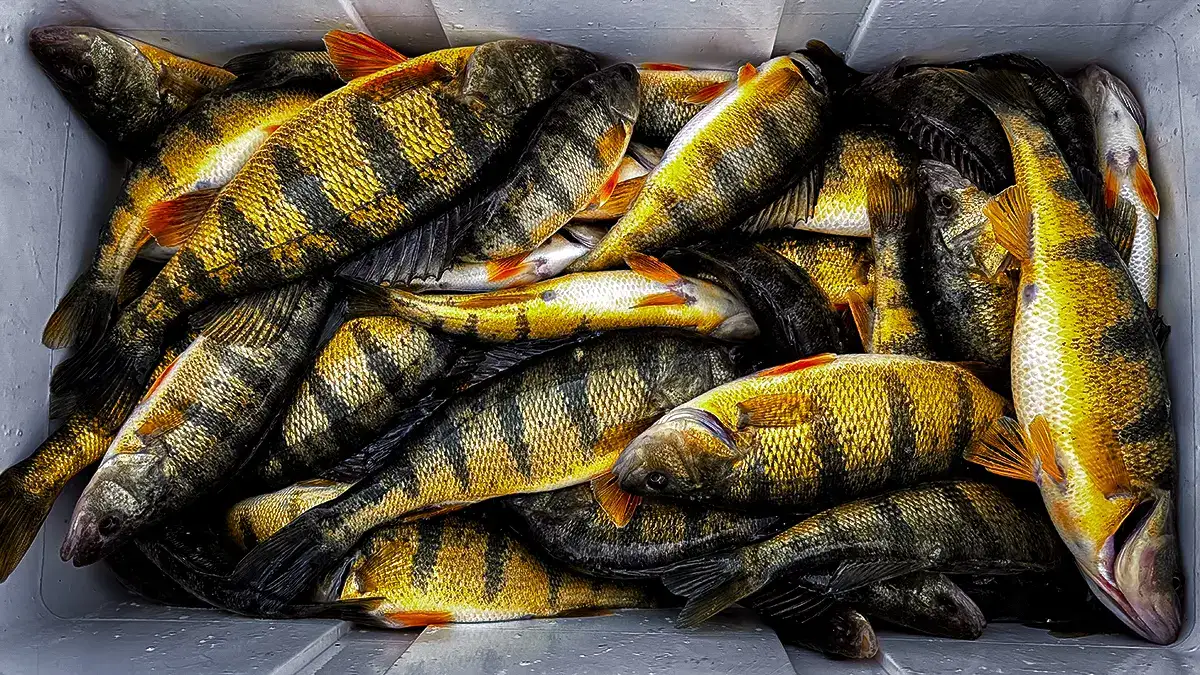
There’s something special about perch fishing once winter settles in. The lakes go quiet, the crowds thin out, and those bright-barred perch start to bunch up in tight schools that can keep a rod bent all day—if you know how to find them.
Whether you’re fishing through a foot of ice or easing a boat along a deep contour line before freeze-up, wintertime perch fishing can offer some of the year’s most consistent, rewarding action. It’s also a great way for anglers to keep their skills, as well as their minds, dialed in during the long winter months. But like anything in fishing, it takes the right mindset, the right gear, and adapting to whatever the season throws at you.
Here are a few tips and techniques to help you put some more yellow perch in the livewell or on the ice this winter.
Why Winter Perch are Worth the Effort
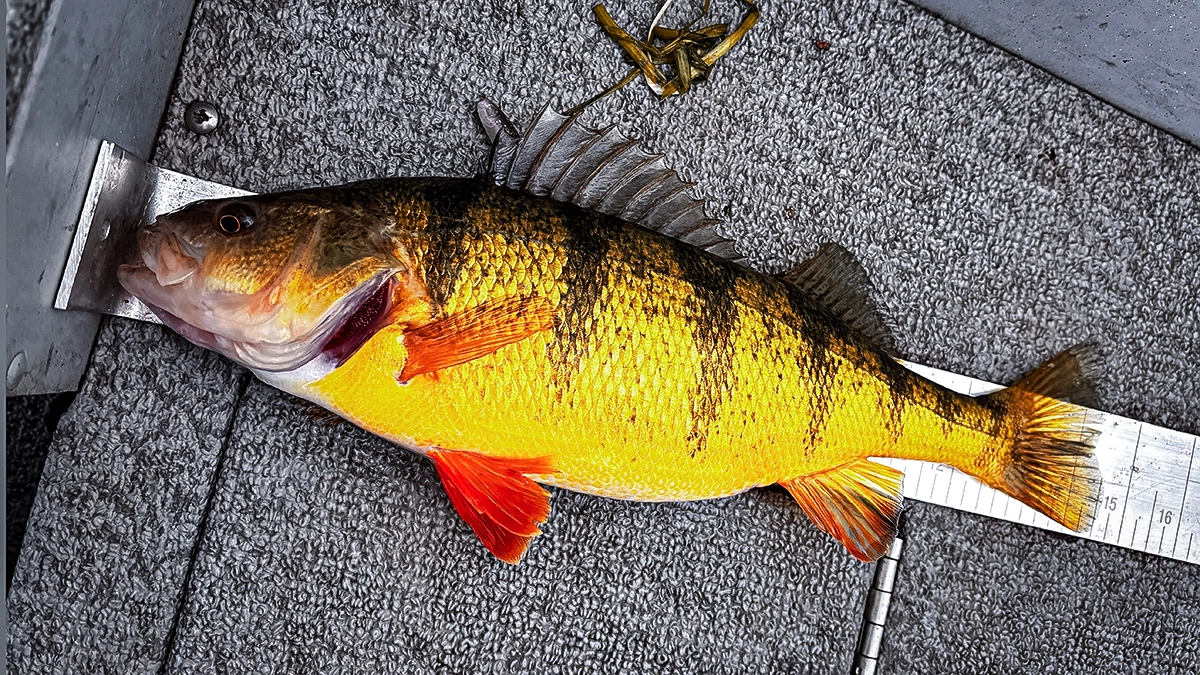
To make the most of the winter pattern, you have to approach perch differently depending on whether you’re fishing early-winter open water or full mid-winter ice, since yellow perch behave differently in winter. For one, their metabolism slows but they don’t stop feeding; they do, however, shift to smaller meals like zooplankton, freshwater shrimp, and small minnows.
Additionally, as water temperatures drop into the 30s and even low 40s, perch tend to form large schools and hold tight to predictable structures—think weed edges, transition lines, mid-depth flats, and low-lying structures. That concentration is why winter can be one of the best times to put together big numbers and even find true jumbos.
Fishing for Winter Perch Before Ice-Up … From A Boat!?
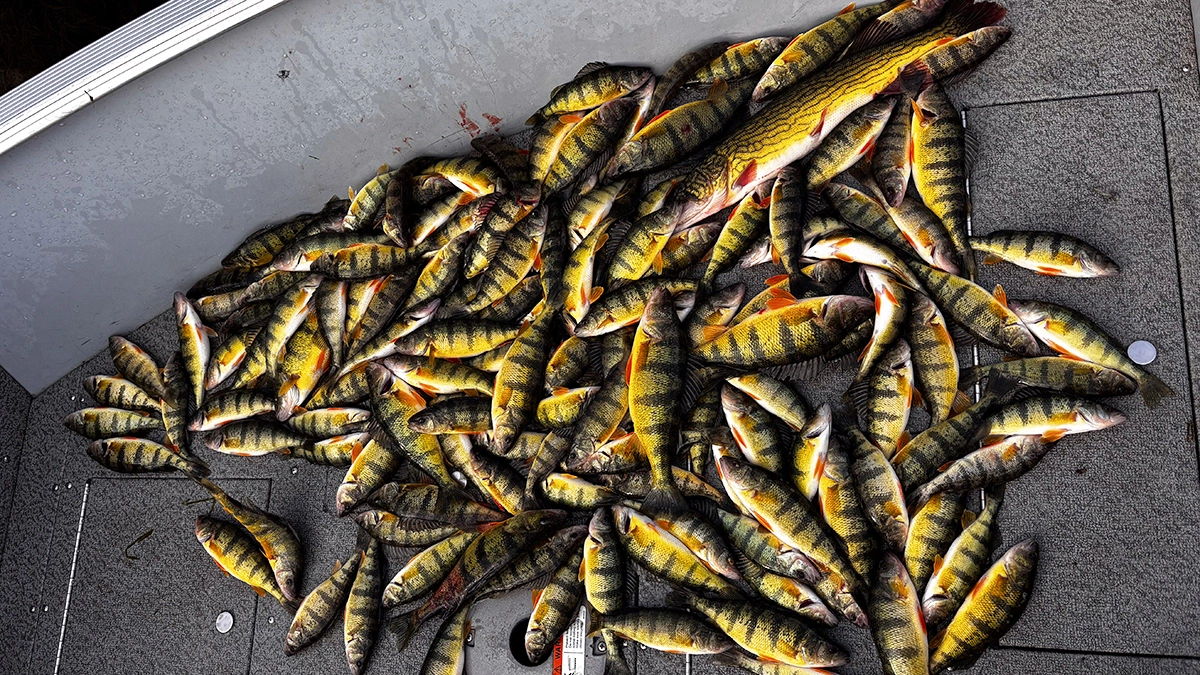
If you live in a region where lakes don’t freeze immediately, you’ll get a window of opportunity to target perch by boat when most anglers have already hung it up for the season. I’ll admit, I’m one of those crazy dudes who waits to be perchin’ during this time of year. This can be a golden period because the fish are already transitioning into their wintering areas but are still aggressive enough to chase.
Find the Edges
Late fall and early winter perch will often hang around areas where the last green weeds meet mud or sand. As the weeds die off, they kick out invertebrates, and perch will feed heavily around that decay—it’s one of the few instances where fish will actually relate to dying vegetation. A good side-imaging or forward-facing sonar makes a massive difference, allowing you to see them on bottom as little bumps or clouds gathering both in and around the vegetation.
If there’s no weed growth, focus on the transition lines—anywhere the bottom shifts from sand to muck or from mud to gravel. These spots hold the tiny critters that perch rely on this time of year, such as sculpins, gobies or small baitfish.
Vertical Presentations are King
Unlike the other seasons where perch are more actively moving around, winter is all about vertical finesse: Drop-shotting a small minnow or micro-plastic can be deadly. Use a size six or eight hook and just barely nose-hook your minnow. The minnow doesn’t always even need to be lively since perch aren’t picky this time of year.
Another killer setup is a tungsten panfish jig tipped with a piece of minnow tail, a waxworm, or a micro-plastic. Especially when light winds allow for you to feel the lightest baits near the bottom. Drop it straight down, hold it still, and let the perch come to you. When you mark a school on your electronics, drop right on them—perch rarely chase far in the wintertime.
Anchor or Spot-Lock, Don’t Drift
Perch often hunker close to the bottom in tight pods. Drifting or dragging your bait through them can work, but staying put and fishing vertically over the school usually outfishes anything else. Use spot-lock or double anchors to keep the boat locked in place, and then wait for the school to drift through. Winter perch roam in predictable circles: Give them time and they’ll come back around.
I explain this to clients as “building the life.” When I get on a school of fish, I’ll generally tell my clients where the school is related to the boat. Once we start getting bites and fish coming in the boat, the school will gradually move underneath us, which makes for the best vertical, up-and-down fishing.
Top Open Water Perch Baits
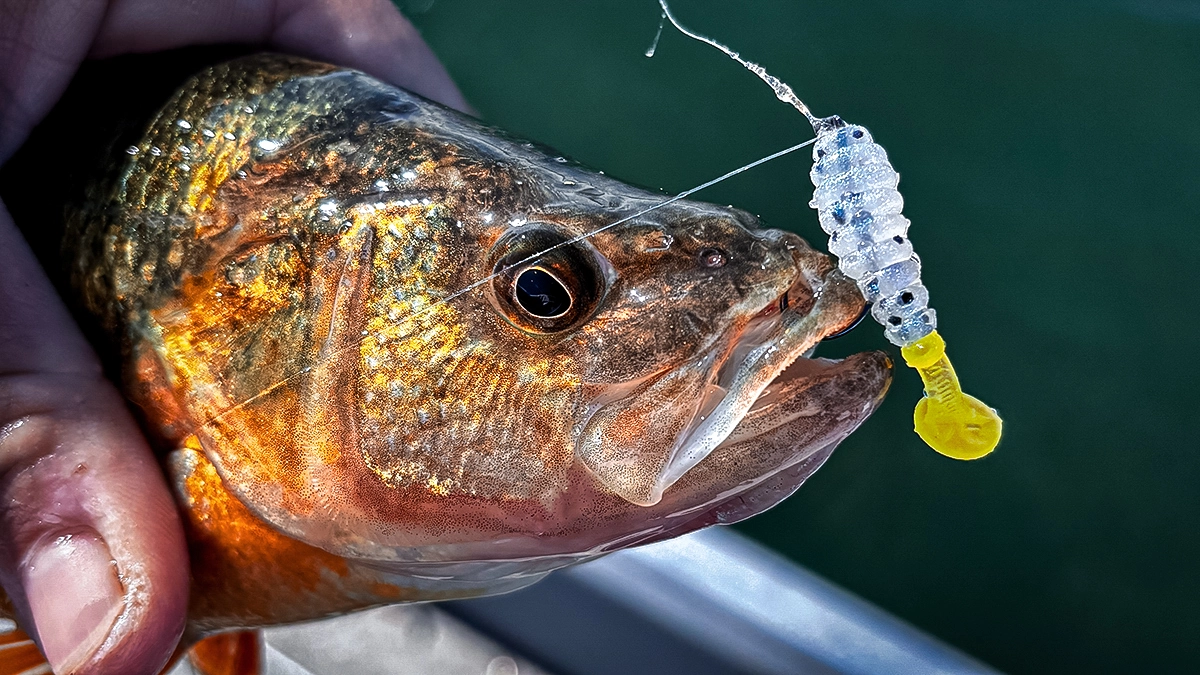
There’s so many different plastics and baits on the market that it can sometimes feel overwhelming. Whether I’m fun-fishing or putting clients on perch, I normally carry these baits, which have proven to catch fish even when the bite is tough.
- Reins Rockvibe Shaker: This bit has so much action in the tail that it drives perch nuts. Rigged on a smaller jighead with the appropriate hook, this little bait makes for the best vertical presentation on the market.
- Berkley Gulp! Alive Minnow: When the bait shops sell out of fatheads or small shiners this time of year (and with first ice coming, they do quick), this is the next—and sometimes even better—alternative. Rig on a single or double dropshot, and then get to work filling your cooler!
- PRIORity Baits Glider Grub: Arguably my other favorite dropshot bait or to rig on a small jighead. This little boot-tailed swimbait gets the jobe done wherever perch are swimming. Designed in the Finger Lakes specifically to attract big perch, this little plastic puts them in the boat.
- Rapala Jiggin’ Rap – You can’t go anywhere in the winter vertical fishing without a jigging rap. The unique darting action when presented right below the boat makes fish go crazy.
Ice Fishing for Yellow Perch
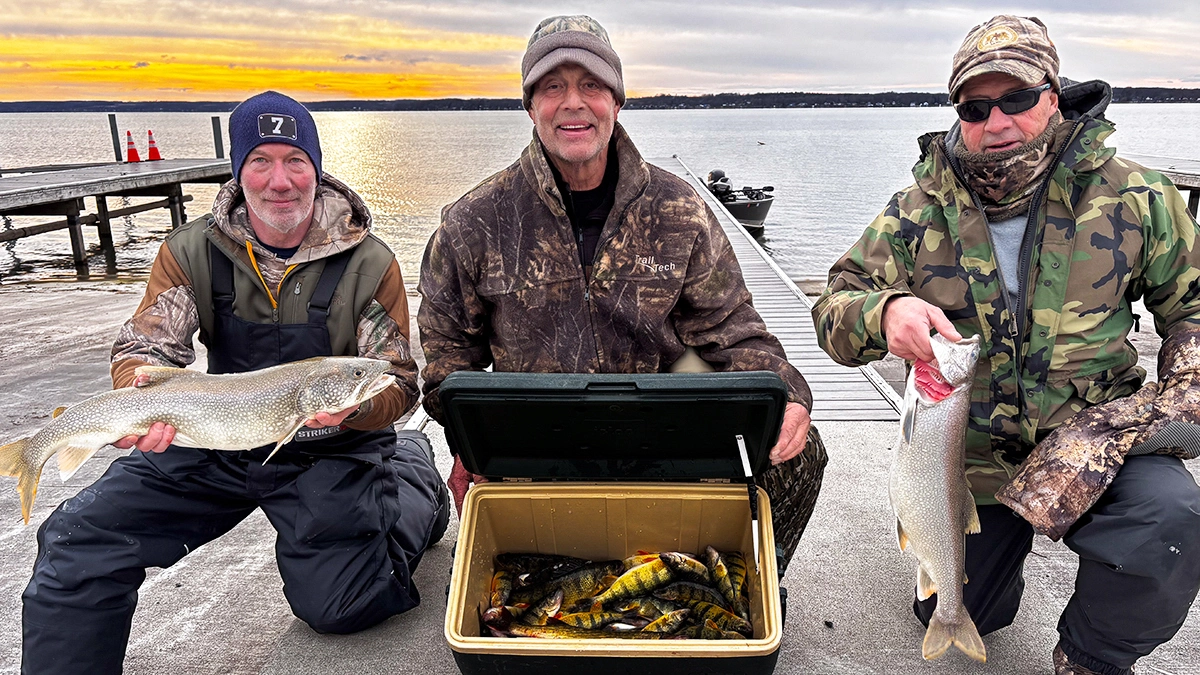
Once the lake locks up, it’s time to switch gears. Ice fishing for perch is a mix of drilling, searching, and making small baits shine in cold, clear water. When you find a good school, you can catch fish until your hands hurt from unhooking them.
Start Shallow, End Deep
Early ice perch often stay surprisingly shallow—sometimes in less than 10 feet of water around the last surviving weeds. Those weeds trap heat, hold invertebrates, and shelter minnows, making them perch magnets. As winter deepens and oxygen levels drop in the shallows, perch shift out to the basins and mid-lake flats, often in 20 to 40 feet of water.
The key is mobility. Drill a grid, fish each hole quickly, and move until you see fish on the flasher. Perch don’t hold tight to one exact spot; they drift back and forth across structure lines. When you’re on them, stay put. When they leave, you can decide to either follow or wait them out.
Use Electronics, But Use Them Right
A flasher or LCD sonar is practically required for consistent winter perch fishing. Watch how the fish react: If they rise to your jig, keep them coming; if they refuse, downsize or change colors. Some days, perch want bright chartreuse or glow; other days, natural browns and blacks outfish everything else.
Forward-facing sonar has changed the game even more. Instead of guessing where the school moved, you can track it in real time and stay right on top of feeding pods. It’s not essential, but it absolutely boosts your odds.
Top Perch Ice Fishing Baits
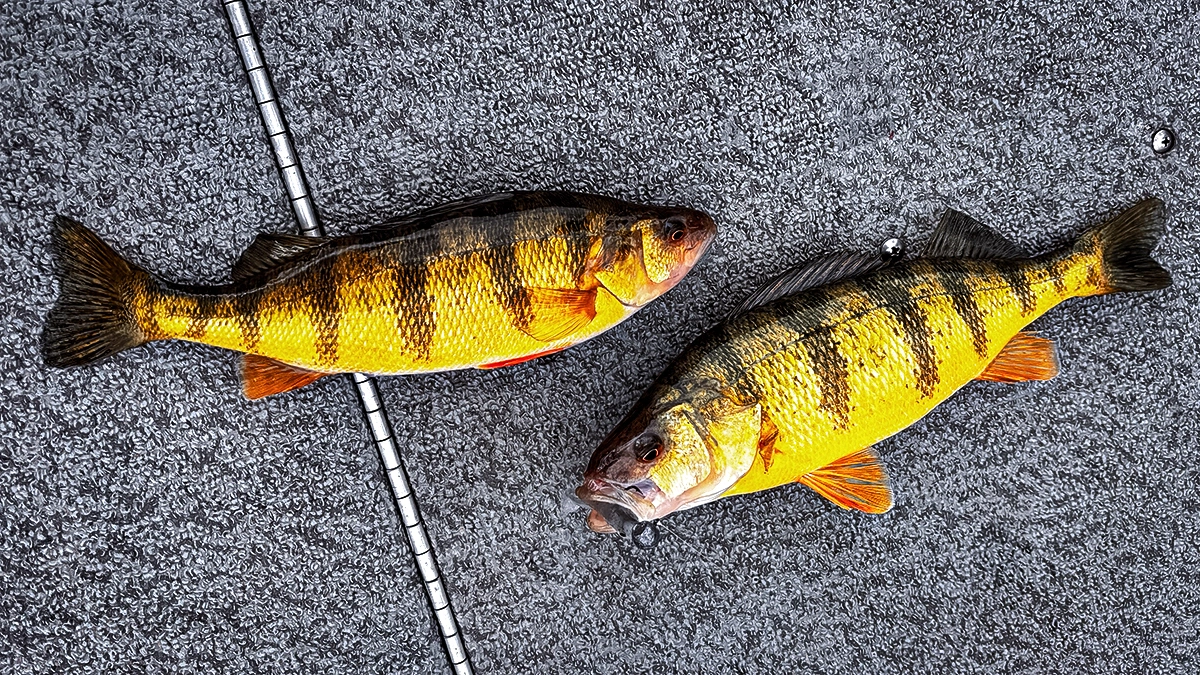
Winter perch are notorious nibblers, and subtle tackle usually wins. A few classic ice presentations never fail:
- Tungsten jigs, like a Widow Maker Lures Dropper, tipped with spikes, waxworms, or a tiny plastic tail.
- Small spoons (like Swedish Pimples) tipped with a minnow head or perch eye.
- Deadstick rods with live minnows for bonus jumbo perch.
Your jig cadence matters. An aggressive start draws in fish, then follow it with an immediate pause—perch often hit when the bait pauses. But if they’re neutral or negative, keeping your bait barely quivering an inch off bottom can be the difference between limits and frustration.
Dialing In Big Jumbos vs. Eating-Size Schools

Not all perch behave the same. Jumbo perch—those 12- to 14-inch trophies—often separate from the seven- to nine-inch eater schools. The big ones tend to hang on the edges of structure, or slightly deeper than the main pack.
If you’re pulling up fast eight-inchers every drop but you’re after jumbos, move 20 to 40 yards deeper or shallower. That soft boundary area is often where you’ll connect with the giants. Fish do school by size, but every school has big ones around it.
Safety and Comfort Matter More Than Ever
Winter perch fishing is only fun if you’re safe. Remember that early ice can be unpredictable. Bring a spud bar, wear picks, and fish with a buddy. For boat anglers, dress warm, bring a throwable, wear your PFD, and always treat cold water with respect. A dunk in 35-degree water is serious—and potentially fatal—business.
A good shelter, heater, and quality gloves are among the essentials that make long days on the ice much more enjoyable. When you’re warm, you’ll fish harder and stay longer.
Final Thoughts
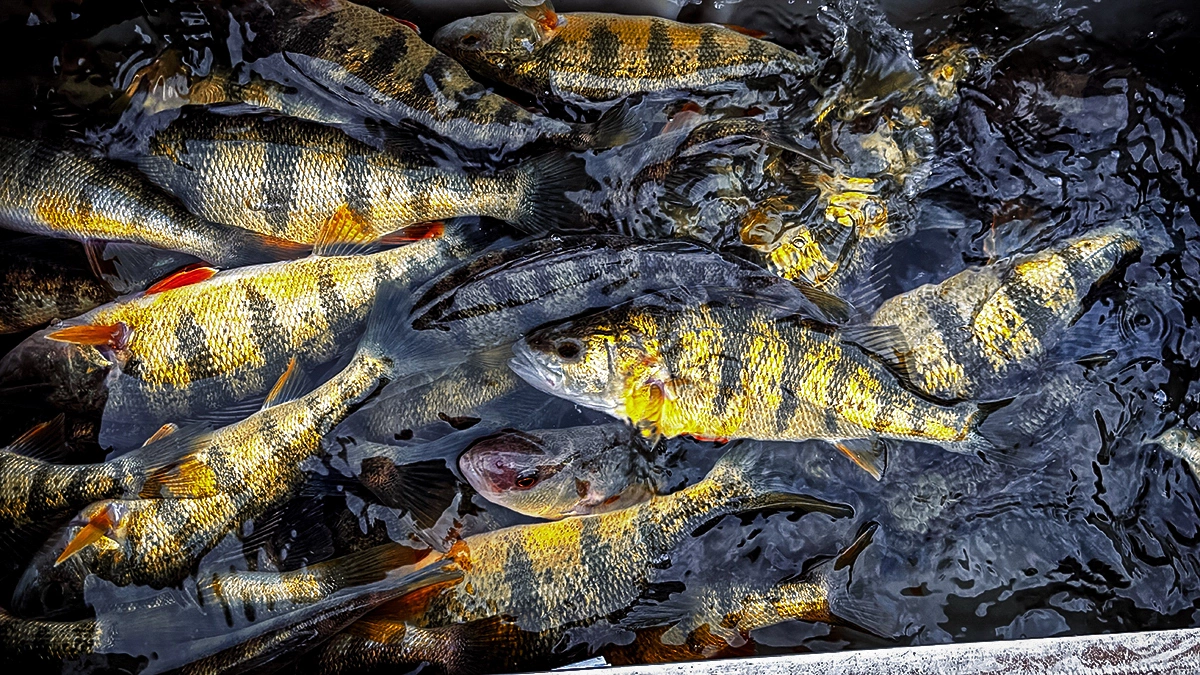
Winter perch fishing is one of the true joys of the cold season. Whether you’re easing a boat around a weed flat before freeze-up or punching holes through the ice, perch offer steady action, great eating, and enough challenge to keep things interesting.
Find the structure, use subtle baits, stay mobile until you land on a school, and winter will quickly become your favorite time of year to chase those golden bars. Perch fishing is arguably the best way to beat the winter blues.