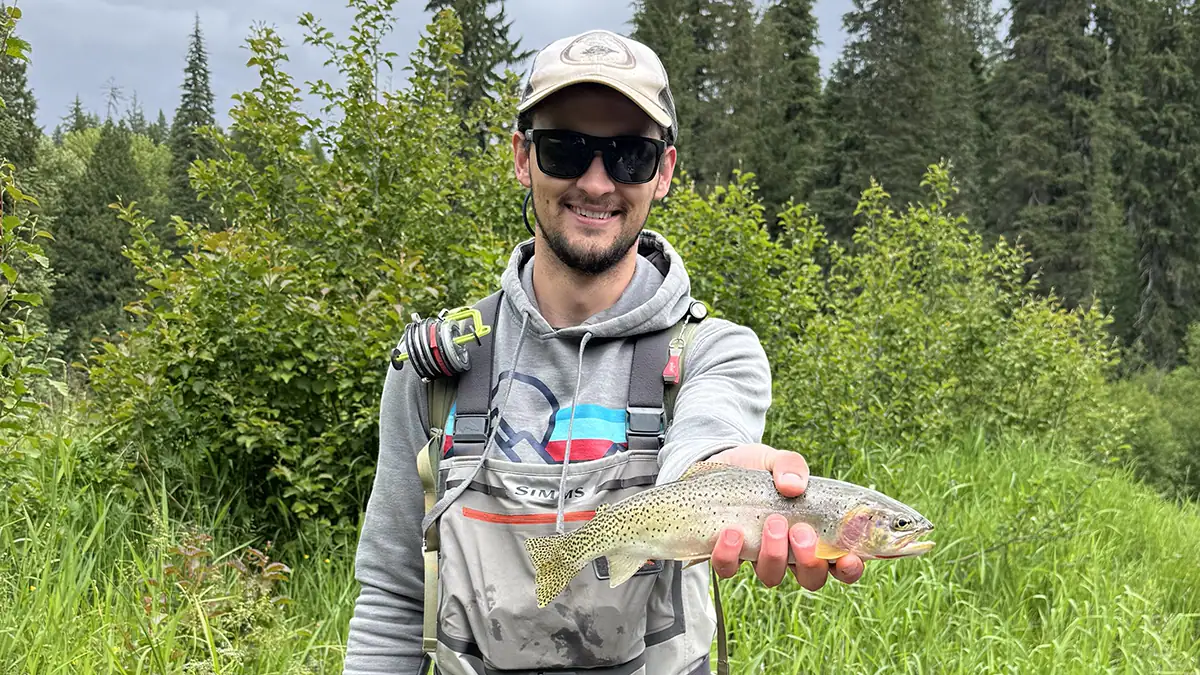
When Luke Anderson headed to Idaho’s St. Maries River on June 6, he was looking for Westslope cutthroat trout. He probably wasn’t expecting to land a record.
The Moscow, Idaho, angler landed a 13.6-inch Westslope cutthroat that weighed 0.95 pounds, officially establishing a new Idaho certified-weight state record for the subspecies. The fish is small enough that, under other circumstances, it might barely register as a remarkable trout.
Above photo from Idaho Fish and Game
Idaho’s Westslope cutthroat trout (Oncorhynchus clarkii lewisi) can get much bigger. Earlier this year, another Idaho angler caught a 27-inch Westslope cutthroat from Lake Pend Oreille, establishing the state’s catch-and-release length record. And in Washington, the certified-weight record for Westslope cutthroat is 4.71 pounds.
So Anderson’s trout isn’t the biggest Westslope in Idaho — or even close. So how does it sit atop the state’s record books?
Two Very Different Record Books
Idaho separated its cutthroat records by subspecies in 2016, creating individual categories for Westslope, Bonneville, Yellowstone, and Lahontan cutthroat. The state also added catch-and-release records.
Traditional weight records require the fish to be killed and weighed. In many Idaho waters, Westslope cutthroat harvest is restricted or prohibited. Even where harvest is legal, anglers targeting native trout increasingly release their fish.
As a result, Idaho’s biggest Westslopes are much more likely to appear in the catch-and-release records than the certified-weight book.
Anderson’s 0.95-pound fish replaced a 0.56-pound Westslope caught by Spencer Smith in 2024.
Even the 0.56-Pound Record Required a Backcountry Pack-Out
That previous certified-weight record illustrates just how strange this category has become.
In August 2024, Smith was fishing Alpine Creek Lake No. 14 in Idaho’s Sawtooth Mountains when he caught an approximately 11-inch Westslope cutthroat.
He suspected the fish could qualify for the state’s new subspecies-specific certified-weight record. After catching the fish, Smith had to pack it out of the mountains and eventually have it weighed on a certified scale near Pocatello.
The 0.56-pound fish became the first Westslope cutthroat entered into Idaho’s certified-weight record book since the state had separated the subspecies categories in 2016.
Anderson’s new record is only the second fish to occupy a record category that has existed for a decade.
Idaho’s 27-Inch Westslope Cutthroat Is the Real Giant
Idaho Fish and Game notes that Westslopes occur in lakes as well as rivers. Historically, large North Idaho lakes provided an especially productive environment, where trout could spawn in tributary streams and then move into larger lakes where abundant food allowed them to grow substantially larger.
Fish and Game’s work at Priest Lake found that Westslopes were historically an important component of the lake’s fishery, and that cutthroat populations subsequently benefited from harvest restrictions and habitat improvements.
Lake Pend Oreille is Idaho’s deepest lake, and also supports an unusually diverse and productive fish community. That lake environment helps explain how a trout that would rarely reach 20 inches in many stream environments can occasionally become a 24-, 25-, or even 27-inch fish.
On Feb. 1, 2026, Coeur d’Alene angler Kyle Hatrock was fishing Lake Pend Oreille when a Westslope cutthroat made a run that turned an ordinary day into angling history.
Hatrock’s fish measured 27 inches, establishing a new Idaho catch-and-release state record. It beat the previous record of 25 inches, set by Daniel Whitesitt in 2024.
Whitesitt’s fish had itself been a remarkable trout. He caught the 25-inch Westslope on the Clark Fork River on April 13, 2024, photographed and measured it according to Idaho’s requirements, and released it.
That fish had displaced a 24-inch Westslope caught by Madison Nackos at Priest Lake in 2021. Idaho’s catch-and-release Westslope record has grown by three inches in roughly five years.
Why Idaho Protects Westslope Cutthroat
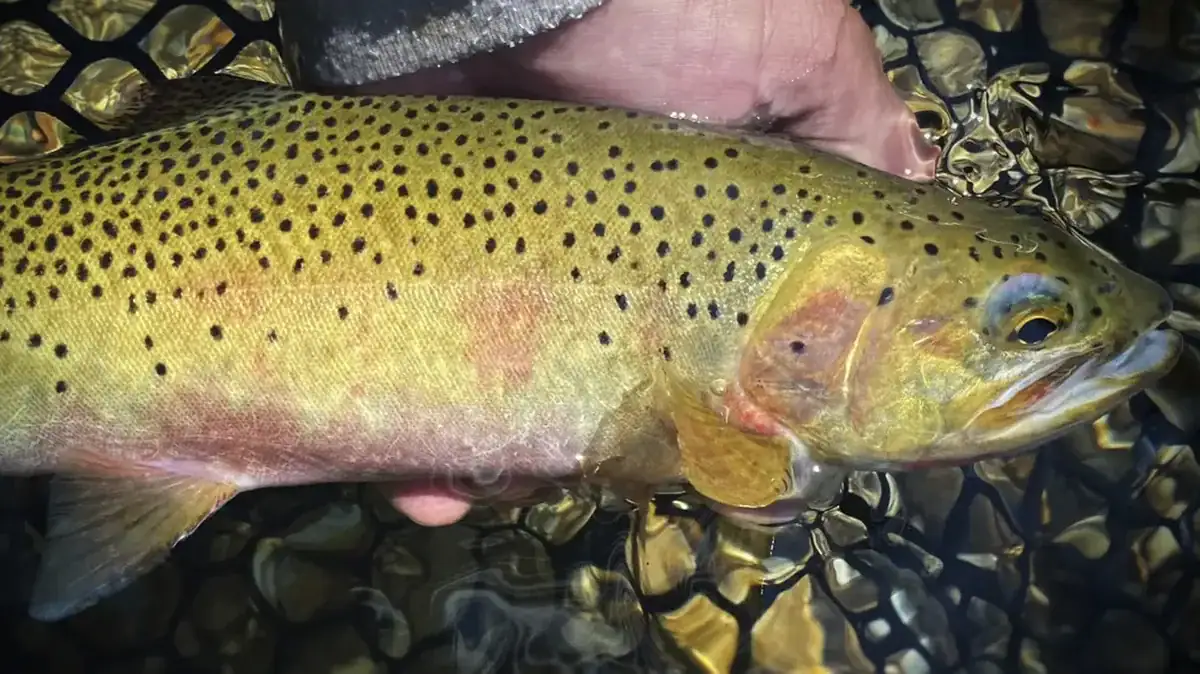
Westslope cutthroat are native to central and northern Idaho and were once abundant across much of the region. Over the past century, however, populations were hit by overharvest, habitat loss, logging, mining, roads, dams and interactions with introduced fish.
Managers responded with harvest restrictions, habitat restoration and other conservation measures.
Those efforts have helped. Research by the U.S. Forest Service indicates that Idaho Westslopes now occupy roughly 80 percent of their historical stream range.
Large lake systems can produce especially impressive fish. Westslopes can spawn in tributaries before moving into lakes, where greater food availability allows some individuals to grow well beyond the size typical of stream fish. That helps explain the giant Westslopes documented from waters such as Priest Lake and Lake Pend Oreille.
The Record Is Really About Conservation
Anderson’s 0.95-pound trout isn’t evidence that Idaho’s Westslopes are small. It’s evidence that very few fish enter the state’s certified-weight record book.
The 27-inch Lake Pend Oreille fish is a better measure of the subspecies’ potential size. But the smaller certified-weight record illustrates how modern regulations and angler ethics mean many of Idaho’s largest native cutthroat are measured, photographed, and released rather than killed for a shot at the record books.