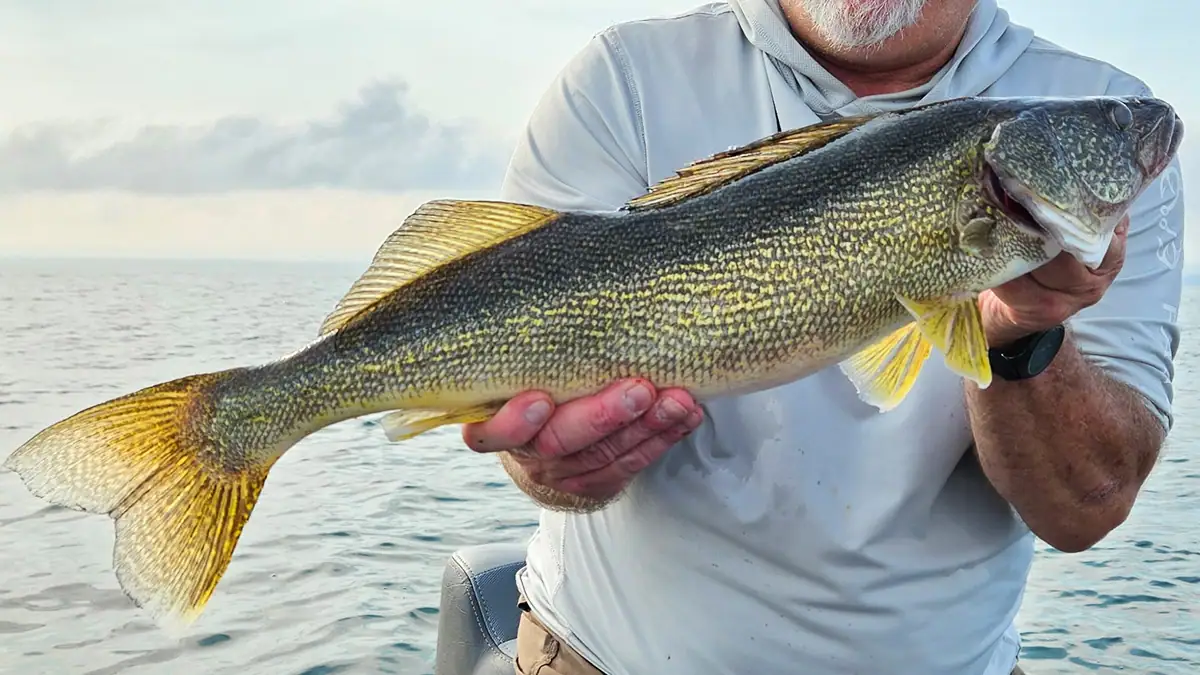
If there is one thing that has changed walleye fishing more than any new lure or technique over the past two decades, it is the game of electronics. Today’s sonar units allow anglers to locate fish, identify structure, track baitfish, and even watch individual walleyes react to a jig in real time. The technology has worked for years in the bass fishing scene. But now, walleye anglers are utilizing this same form of technology to win big and fill the freezer.
Anglers still catch plenty of summertime fish by trolling and casting, but vertical jigging remains one of the most efficient and exciting ways to target walleyes, especially when using electronics to their full potential. Whether you’re fishing natural lakes, reservoirs, rivers, or the Great Lakes, understanding how to use 2D sonar, side scan, and forward-facing sonar can dramatically increase your success when summertime walleyes set up offshore.
While this is the start of my normal summer routine, I’ve enlisted the help of some of the top walleye anglers around in the western New York and eastern Pennsylvania area. Here are some tips that break down electronics for jigging summertime walleyes.
Finding Summer Walleyes
In the summer, walleye often relate to specific structures. Mid-lake humps, points, breaklines, rock piles, temperature breaks, river channels, and schools of baitfish all attract fish once water temperatures rise. The challenge isn’t usually getting a walleye to eat: It’s finding fish in vast available waters.
This is where electronics become your greatest tool. Instead of drifting or trolling without direction until you locate fish, modern sonar allows you to eliminate unproductive sections and focus on areas holding active walleyes. Walleyes could be everywhere in certain places you fish, but understanding where the fish are in the water column and positioned on bait and structure is the difference between getting bit and going home empty-handed.
Using 2D Sonar
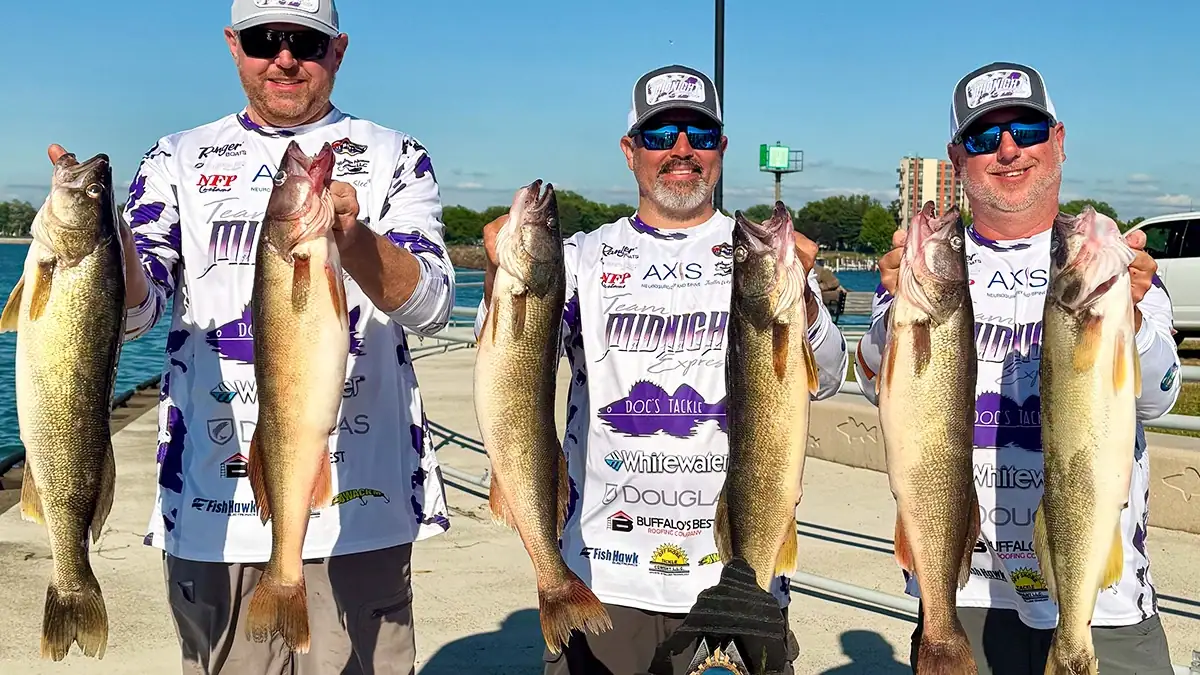
Even with all the technology available today, 2D sonar remains one of the most important tools on any boat. “The biggest advantage that I have on my boat for finding summertime walleyes is my high-speed chirp 2D sonar on my Lowrance HDS unit,” said National Walleye Tour pro Craig Sleeman.
When searching for summertime walleyes, constantly monitoring your 2D screen while moving across structure or open bottom can point out more than you think. A quality sonar unit clearly shows bottom composition, baitfish, and fish arches. Even better if you can pick things up at a higher speed.
“The fact that I’m able to pick up marks and bait on my screen when running at 30 miles per hour from spot to spot is a true game-changer. As well as being able to drop waypoints on those fish and bait balls,” Sleeman said.
One of the biggest mistakes anglers make is ignoring what’s directly beneath the boat. While side scan and forward-facing sonar get much of the attention these days, 2D sonar provides the clearest picture of fish positioned under your transducer.
As you drive around, look for several key things:
- Individual fish arches near bottom
- Schools of baitfish
- Hard-bottom transitions
- Rock piles and isolated structure
- Fish suspended off bottom
Many summer walleyes will appear as thick arches tight to the bottom or suspended high in the water column, even during the daytime. If you see multiple fish stacked along a contour, immediately drop a waypoint and prepare to fish.
Side Scan to Cover Water
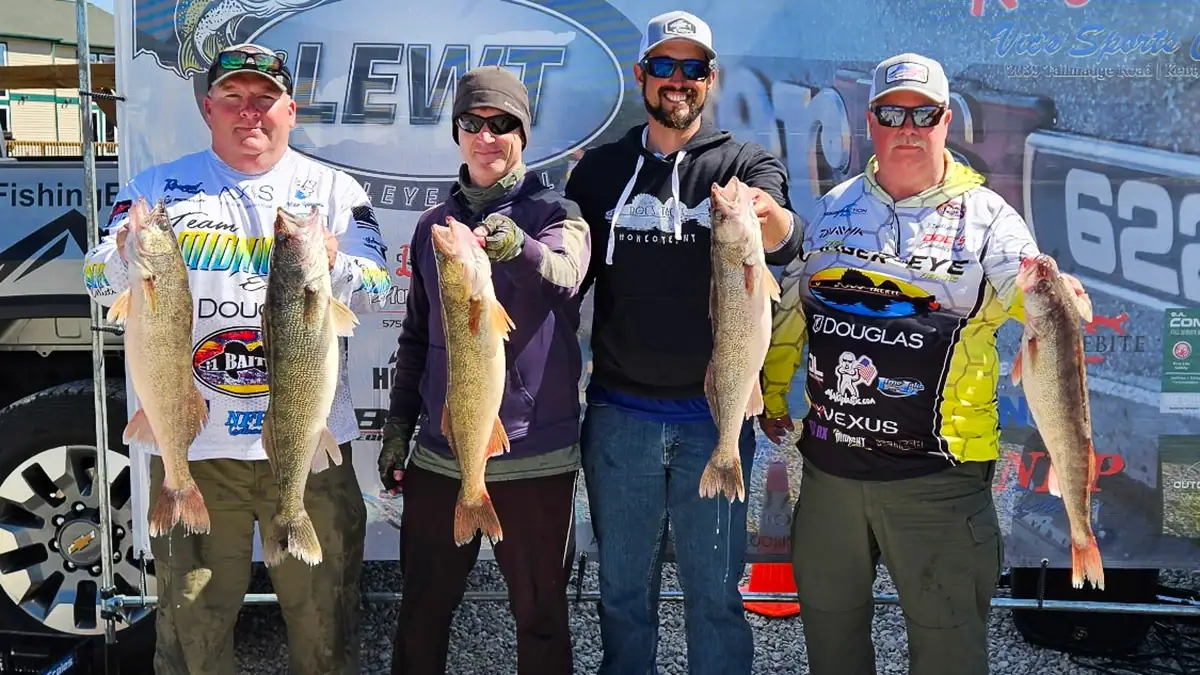
While 2D sonar shows what’s under the boat, side scan shows what’s around it. Side scan is one of the most powerful tools for finding summertime walleye, allowing anglers to cover large areas quickly without going directly over fish.
When searching offshore structures, typically you want to run side scan while idling between three and six miles per hour. This gives a broad view of both sides of the boat and reveals details that otherwise would be nearly impossible to locate.
“My side scan is my main tool when trying to find isolated pods of summer walleyes holding tight to structure,” said Destin DeMarion, former Bassmaster Elite Series pro and owner of Big Fat Bass Guide Service. When DeMarion isn’t out putting clients on big Lake Erie smallmouth, he’s jigging walleyes out of his port of Presque Isle Bay on Lake Erie.
Rock piles and schools of baitfish stand out clearly. Individual fish can often be identified by their shadows on the screen often suspended above the bottom. “It can be effective when walleyes aren’t keyed in on bait as much as they are gobies in and around the rocks,” he said.
One of the best summertime applications for side scan is searching expansive flats adjacent to deeper water. Walleyes frequently roam these areas feeding on perch, shiners, smelt, or young-of-the-year baitfish. They relate to bait in a body of water more than structure and weeds in most cases.
Rather than fishing blindly, side scan helps identify scattered pods of fish and mark them with waypoints. The real advantage is efficiency. In a matter of minutes, you can scan hundreds of yards of water and pinpoint the exact areas worth fishing. Many anglers spend too much time casting or drifting water that doesn’t hold fish. Side scan helps eliminate that problem.
Forward-Facing Sonar Changes the Game
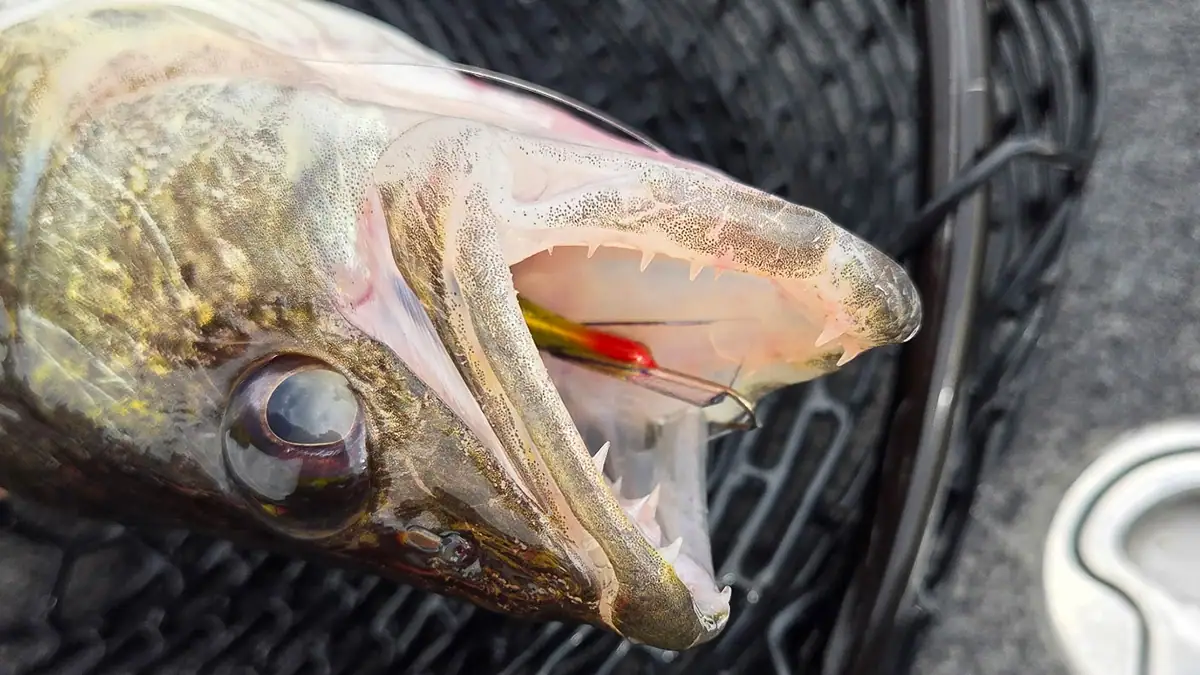
Forward-facing sonar (FFS) has arguably become the most talked-about fishing technology in recent years, with good reason. For vertical jigging walleyes, it offers a perspective we’ve never had before. Instead of looking at history like traditional sonar, forward-facing sonar allows anglers to see fish in front of the boat in real time. You can identify individual fish, watch schools move, and track your lure as it approaches them.
For Sleeman and DeMarion, FFS gets them the biggest bites and allows them to understand how the walleye react to their baits. All in real time
By sweeping the transducer around the area, you can determine exactly where fish are positioned. Sometimes they’re sitting on top of a hump. Other times they’re on the downwind side, Occasionally they’re suspended well off the structure chasing bait and you can see which direction they are going. Once fish are located, position the boat precisely and drop a jig directly to them.
“On top of forward-facing sonar, I run a second transducer in perspective mode to see what direction the fish are going. Utilizing two different facing FFS transducers, I am able to make the precise cast and lead the fish before it swims into the bait,” Sleeman explained. He added that it’s just like leading a duck or a goose when hunting: The more in front of the fish you can get, the better.
The most exciting part is watching the interaction. You can see fish approaching the lure. Sometimes, they’ll charge aggressively; other times, they’ll follow for several feet before losing interest. Those reactions provide immediate feedback. If fish are following but not committing, you might want to switch jig colors, adjust jigging cadence, or change bait profiles. Instead of guessing, you’re making informed decisions based on what fish are actually doing.
Boat Control Is Critical
Electronics are only effective if your boat control is solid. Wind, current, and waves can all quickly move your boat away from fish. Modern trolling motors with GPS anchoring have become almost as important as sonar itself. Like me, Sleeman is running a Minn Kota Ultrex Quest, while DeMarion runs a Lowrance Ghost trolling motor. Both are extremely effective cable steer electric driven trolling motors that hold their spot lock as well as have enough power to keep you close to the fish. Without a good trolling motor, jigging walleyes would be non-existent.
Once fish are located, use your trolling motor to hold position directly over them or maintain a controlled drift along a contour. The ability to stay on top of fish dramatically increases the efficiency of vertical jigging. Without proper boat control, even the best electronics won’t help much because your lure won’t remain in the strike zone.
Final Thoughts
Vertical jigging for summertime walleyes has always been an effective technique, but modern electronics have taken it to another level. Today’s anglers can locate fish faster, understand fish behavior better, and spend more time presenting their lure to active walleyes. The key is remembering that electronics are tools, not magic. They won’t make fish bite, but they will put you around more fish and help you make better decisions throughout the day.
Learn to interpret your 2D sonar and side scan as well as take advantage of forward-facing sonar’s real-time capabilities. When all three are used together, you’ll spend less time searching and more time fighting walleyes. The most successful summertime walleye anglers don’t rely on a single sonar view. They combine all three technologies.
Also, you don’t have to use the top-of-the-line equipment. Start out buying used and work your way up. Facebook Marketplace is a great way to find good used equipment to get started out. Hiring a guide who runs electronics classes is also great to help get the ball rolling. Sometimes it’s worth the investment to get a head start on what to look for instead of going in blind. Through my guide service Natural Outfitters, I run electronics classes on how to use your own electronics on your own boat: Trust me, it’s worth the investment to have a professional teach you the ropes.
When it all comes together and you can get those fish clear on your sonar, the bite can be epic.