Every bass angler has wondered about it at some point. Why does one bass seem willing to bite almost anything that passes overhead while another, equally large fish appears impossible to fool? The difference is often explained away by weather, seasonal movements, fishing pressure, or luck. But a decade-long study conducted by the Wisconsin Department of Natural Resources suggests there may be another explanation. Individual bass may simply differ in how vulnerable they are to angling, and those differences could have important implications for not only anglers, but also the way fisheries are managed.
The recently published study Vulnerability to Angling and Survival of Smallmouth Bass in a Northern Wisconsin Lake followed smallmouth bass in Pallette Lake from 2015 through 2025. Led by Northern Lakes Fisheries Research Scientist Stephanie Shaw, Ph.D., the project combined traditional fisheries surveys with detailed angler catch reports, allowing researchers to examine how often individual tagged fish were caught and released over several years. What emerged was a picture of a bass population that was far more complex than many anglers — and even some fisheries models — have long assumed.
Are All Bass Equally Likely To Be Caught?
The study began with what seemed like a straightforward question: Are all bass equally likely to be caught? For decades, many fisheries models operated under the assumption that every fish in a population has roughly the same probability of encountering an angler and biting a lure. Dr. Shaw and her colleagues found evidence that this does not always hold true.
Based on annual angler catch and estimates of the lake’s bass population, researchers calculated that if every smallmouth bass in Pallette Lake were equally vulnerable, each fish could theoretically have been caught and released between three and seven times per year. Yet when individual tag reports were examined, the pattern looked very different. During the five-year tagging period, approximately 42 percent of tagged bass were never reported caught by anglers, while another 20 percent were reported only once. At the opposite end of the spectrum, a handful of fish were caught repeatedly, with one individual reported an astonishing 18 different times. These findings did not shock Dr. Shaw.
“No, that didn’t surprise me,” she told Wired2fish. “I actually expected it to be a slightly higher number that were never reported.”
Dr. Shaw’s opinion was formed by years of studying fish populations as a whole, not focusing on individuals. While anglers often think about the next bite or the biggest bass in the lake, fisheries biologists are interested in understanding how an entire population functions.
“I think there is a misconception that all fish in a population can and will be caught,” Dr. Shaw explained. “There is variation in individual fish behavior within any population. Anglers in this study followed very similar fishing strategies over the five-year period studied. Not all fish behave in the way that mimics anglers’ preferred fishing methods.”
That distinction is important because Dr. Shaw is careful not to describe these fish as “uncatchable.” Instead, she believes there may be a mismatch between the way anglers fish and the way some bass use their environment.
“I definitely don’t think they are avoiding anglers,” Dr. Shaw said. “It certainly seems like there is a potential mismatch between angler behavior and the behavior of some fish in the population making them less likely to be caught.”
Why Are Some Fish More Likely To Be Caught?
Researchers explored several possible explanations for those differences. One is habitat use. While most anglers on Pallette Lake concentrated on traditional nearshore structure, the lake also supports a pelagic forage base that includes cisco. Previous surveys have occasionally captured smallmouth bass well offshore, suggesting that at least some individuals spend time chasing open-water prey. If anglers rarely fish those areas, those bass naturally have fewer opportunities to encounter lures. Dr. Shaw cautioned, however, that offshore habitat alone is unlikely to explain the entire phenomenon.
“I know there is a pelagic food web in the lake and we have incidentally captured bass in surveys of that offshore prey base,” she said. “There may only be a small portion of the population that relies on that specifically, but it would not account for such a high number of bass never being reported captured. That is just one theory.”
Answering that question definitively would require a much different type of study. Dr. Shaw believes acoustic telemetry, in which individual bass are fitted with transmitters and tracked throughout the lake, would allow researchers to determine how often fish move between shallow and offshore habitats and whether certain individuals consistently occupy areas that anglers seldom fish.
Behavior may be an equally important piece of the puzzle. Animal behavior research has increasingly shown that many species exhibit consistent personality traits, with some individuals behaving more boldly than others. Although the Wisconsin study was not designed specifically to measure personality, the capture histories strongly suggest that bass differ in ways that influence their vulnerability to angling.
“There was a relatively small number of individuals, maybe only 1 or 2 percent of tagged bass, that were consistently captured multiple times every year for multiple years in a row,” Dr. Shaw said. “These individuals might be considered highly vulnerable for reasons like genetic predisposition to be more aggressive, a behavioral preference for prey types that anglers mimic most often, or habitat preference for shallower habitat zones that anglers preferred to target.”
It was tougher to find a pattern in the fish that didn’t find anglers’ hooks frequently, which accounted for most of the smallmouth in the study.
“The majority of fish were not caught with any regularity,” she explained. “That may mean they are genetically less aggressive, were using habitats where anglers did not tend to fish, or their capture was based on random encounter probability.”
Interestingly, Dr. Shaw also noticed patterns suggesting that vulnerability may not be fixed throughout the year. Some fish that were rarely reported by anglers suddenly became highly vulnerable over very short periods.
“There were some trends I observed that may relate to forage availability,” she said. “A number of bass seemed to be very vulnerable in a short window of time. A bass may be captured two or three times in one day, which suggests to me that individual bass was in need of a meal, making it more vulnerable to capture over a short period of time.”
Do Smallmouth Bass Get “Hook-Shy?”
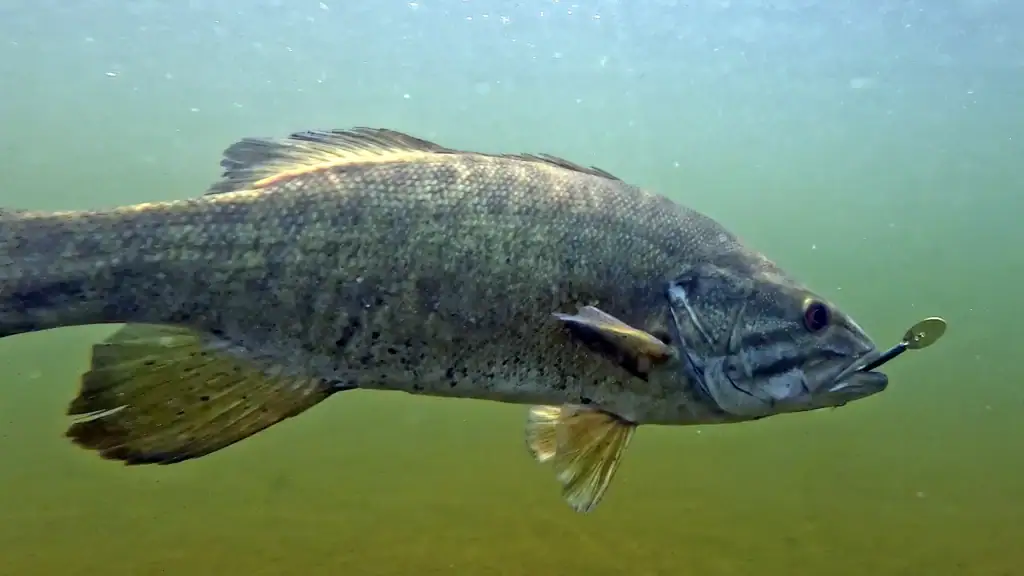
This challenges the belief that smallmouth get “hook-shy” after being caught, learning from their mistake and becoming permanently adept at avoiding hooks. Researchers calculated an average “refractory period” of 31 days between captures, but Dr. Shaw believes that statistic oversimplifies what was actually happening.
“My takeaway of the refractory period we reported is that I need to dive into that metric a little deeper,” she said. “There was a lot of variation in frequency of capture and capture rate among individuals that is not reflected when summarizing it as an average.”
Some bass were caught multiple times within hours before disappearing for months. Others were never reported again. Still others appeared to be caught repeatedly throughout multiple seasons. Averaging those very different behaviors into a single number masks much of the individual variation that made the study so intriguing.
“To me, the multiple captures in a day signify a fish that is desperate for a meal and is willing to do what it takes to get it,” Dr. Shaw explained. “The ideas of learning, lure or hook avoidance aren’t operating in this particular instance. I don’t think it means that learned avoidance doesn’t exist, but rather that desperation and survival can outweigh the risk of capture.”
Positive News About Catch-And-Release Mortality
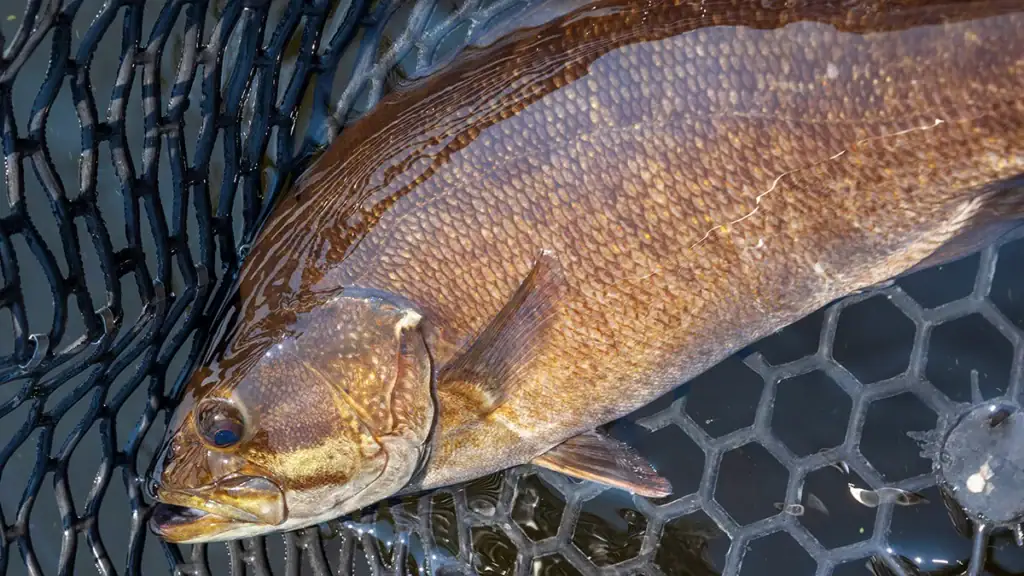
While the study revealed substantial differences in vulnerability, it also produced encouraging news regarding catch-and-release. Despite estimates suggesting that some bass could be caught several times each season, annual survival remained high. Researchers estimated survival at approximately 80 percent for males and 83 percent for females.
“I anticipated that bass that were caught and released multiple times would have higher mortality rates,” Dr. Shaw said. “In general, they survived quite well.”
She believes several characteristics unique to Pallette Lake likely contributed to those high survival rates. The fishery does not host tournaments, bass are released immediately after capture, and the lake develops a well-defined thermocline each summer, providing cool, oxygen-rich water where stressed fish can recover after release.
The study also found that male smallmouth bass were somewhat more likely to be caught than females, although the difference was relatively modest.
“I did not necessarily expect this result,” Dr. Shaw said. “I do wonder if there is some post-guarding response by male bass. Once they finish guarding their brood, they may need to increase calorie intake to recoup energy stores that were lost while nesting.”
She quickly adds that more work is needed before drawing firm conclusions, noting that the statistical difference was relatively small.
What About Forward-Facing Sonar?
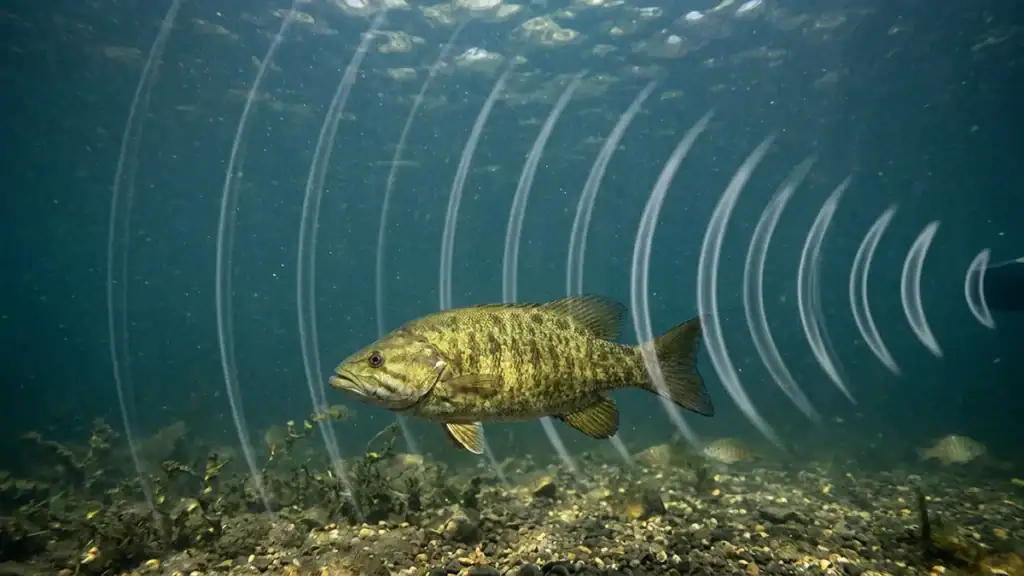
One question many anglers immediately ask is whether technologies such as forward-facing sonar (FFS) could eventually reduce the number of bass that rarely encounter anglers. Dr. Shaw believes the answer is not yet clear.
“If technologies like forward-facing sonar can help anglers pinpoint fish in uncommon locations or habitats, then maybe so,” she said. “Maybe technologies like FFS will help anglers find the hard-to-reach fish, but will they be spending so much time looking around that they don’t spend as much casting or catching as they would without it?”
She points to related Wisconsin research showing that anglers using forward-facing sonar actually caught fish at lower overall rates while spending considerably more time searching than casting, although they did target offshore habitat more frequently.
Beyond its implications for anglers, the study also carries an important message for fisheries managers. If fishing pressure is concentrated on a relatively small portion of a bass population while many individuals experience little or no angling pressure, then fishing mortality may not be distributed as evenly as traditional population models assume. At the same time, Dr. Shaw emphasizes that catch-and-release should not automatically be viewed as the best management strategy for every fishery.
Does This Impact Harvest Decisions?
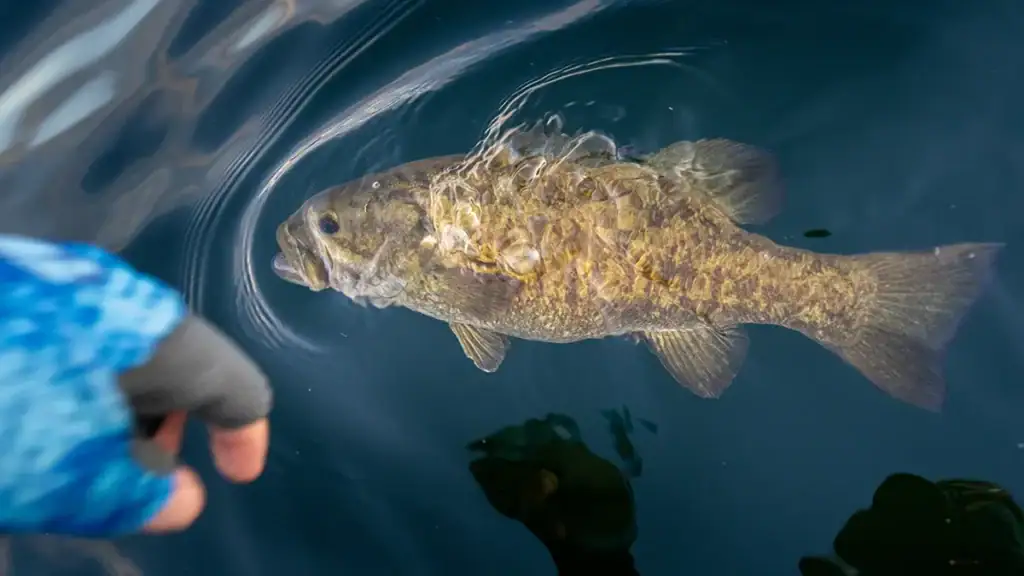
“Catch and release is a useful tool in some populations where natural mortality is already high or the population is declining,” Dr. Shaw said. “However, catch and release is not useful, from a population management perspective, for all cases.”
In many Wisconsin lakes, particularly those dominated by largemouth bass, she says a lack of harvest has contributed to overcrowded populations, slower growth, and changes in the balance between bass and other game fish. Harvest regulations, she notes, are designed to reflect the needs of individual fisheries.
“I always tell anglers that the regulation on a given waterbody will tell you where that population is at,” Dr. Shaw said. “Conservative regulations tell you there are concerns about mortality already being too high. Liberal regulations indicate overpopulation. If anglers refuse to harvest when it’s needed, managers lose their most effective method for inducing change.”
Looking ahead, Dr. Shaw believes the next phase of research should focus on understanding the relationship between angler behavior and bass behavior. During the study, she hoped anglers would report where around the lake tagged fish were caught so researchers could determine whether individual bass consistently occupied the same regions or habitat types. Unfortunately, many anglers understandably chose not to share their favorite fishing locations, leaving an important gap in the data.
“There is also the need to better understand how bass are using the habitat in the lake,” she said. “I would love to do a movement and habitat use study out there.”
Like many good scientific studies, this project answered one question while raising several new ones. It confirmed that individual smallmouth bass do not all respond to anglers in the same way, but it also highlighted just how much remains unknown about why those differences exist. Habitat use, genetics, feeding behavior, forage availability, and individual temperament may all play a role, and future research will likely reveal that no single explanation tells the whole story.
For anglers, the study offers excellent insight into fish behavior. The bass that refuses to bite may not merely be inactive, pressured, or unusually smart. It may simply belong to a segment of the population that behaves differently than the fish anglers most often encounter.
Understanding those differences won’t necessarily make those elusive bass easier to catch, but it does offer a fascinating reminder that even one of North America’s most heavily studied game fish still has plenty of secrets left to reveal.