You’ve heard of Trojan horses, but what about Trojan brook trout?
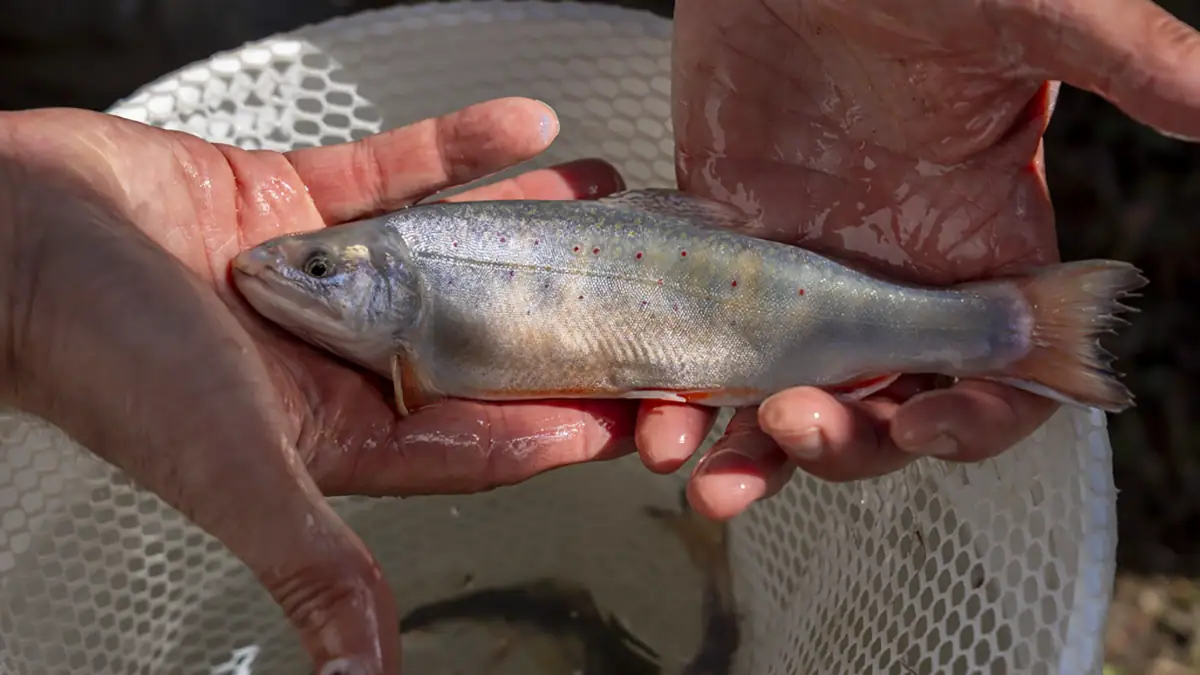
Also known as YY brook trout, Trojan males have two Y chromosomes, unlike the wild males that have one X and one Y chromosome. Photo credit: Colorado Parks and Wildlife/R.Gonzales
Far from a mythological tale, the brookies in question are the newest scientific weapon in Colorado officials’ toolbox to combat its invasive brook trout species.
The goal? Reviving Colorado’s native cutthroat trout population, an accomplishment that the fingerling brook trout’s growing numbers have historically stymied by out-eating and out-competing the region’s homegrown trout — until now.
Science Gives Native Fish a Chance
Biologists with Colorado Parks and Wildlife (CPW) are feminizing the male brook trout populations in waters up and down the Rockies. That genetic intervention means the species will taper off into oblivion once its all-male population no longer includes breeding females.
CPW biologists have targeted brook trout since 2024. That year, Colorado became the second state to launch defensive intervention on behalf of the Colorado River’s cutthroat population, armed with a technique that Idaho officials designed.
State biologists first hiked to some remote Colorado waters, collecting both male and female brook trout to ease overpopulation. Then, they returned with feminized male brook trout — the so-called “Trojans” bearing the beginning of brookies’ biological final chapter.
After all, it’s those modified males who contain the genetic YY code that will ultimately eliminate the invasive species’ reproduction potential.
Genetically Altering Colorado’s Brook Trout
Producing YY males — trout without female X chromosomes to pass along to their offspring — starts with the CPW. Its biologists fed that first round of captured male fingerlings an estradiol additive that allows them to produce viable eggs, just like a female fish would.
The difference? When those male trout are returned to Colorado waters and breed with unaltered males, one-quarter of the ensuing broods will be single-sex YY males, owing to males both laying and fertilizing those eggs. From there, some second-generation YY males will be given estradiol-additive feedings, becoming another round of egg-producing males.
And when YY sperm-producing brookies fertilize eggs from wild female brook trout, their lack of the typical XY chromosome pairing means that the fertilizing males have no female genetic material to pass along to the next generation.
All-male broods will gradually repopulate a body of water until there’s nothing but males. State officials hope that in another three or four years, brook trout will live out their life cycle as the species dies a natural death. (If you think this sounds like a potential Jurassic Park-type scenario, don’t worry: Working toward an all-male brook trout population avoids the threat of females adapting to low numbers and overwhelming their environment by reproducing in unforeseen numbers. Also: There’s no amphibian DNA gene-splicing at play here.)
Helping Nature Revitalize Native Species
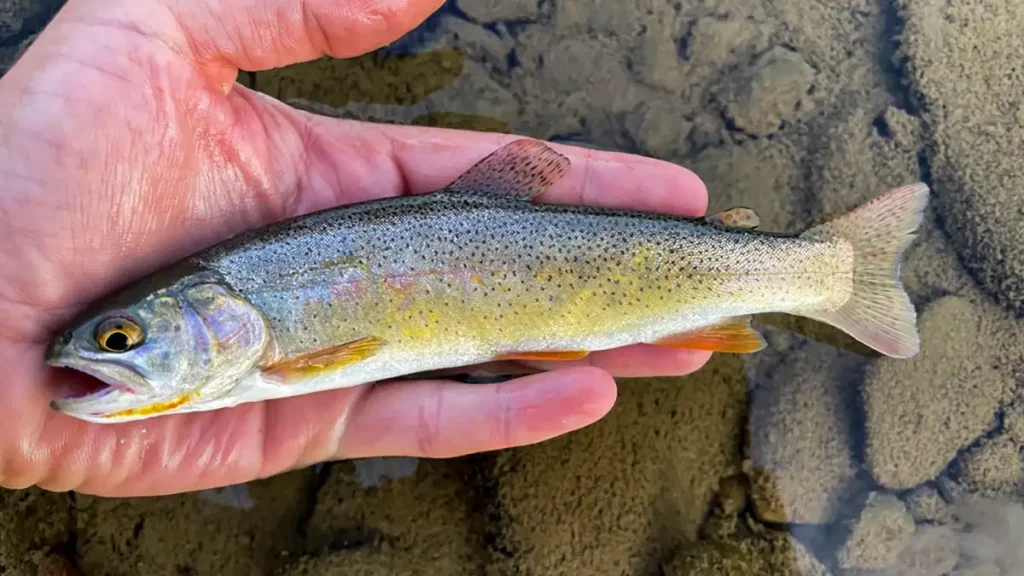
There are four cutthroat trout subspecies native to Colorado, all of which multiple state and federal agencies are researching and focusing conservation efforts on: the Colorado River cutthroat; the Greenback cutthroat — which is also Colorado’s state fish; the Rio Grande cutthroat; and the Snake River cutthroat. (CPW officials consider a fifth species, the yellowfin, to be extinct. But they haven’t completely abandoned the possibility that a few fish are still out there.)
Targeting one species’ reproductive potential by essentially sterilizing brookies in the long run means that state officials aren’t resorting to chemical usage that would impact the entire ecosystem. It also means they’ve identified a successful initiative so they can stop investing time, money, and departmental energy in more labor-intensive endeavors like electro-shocking stream sections, a removal method that doesn’t yield complete eradication of invasives.
As Hot Sulphur Springs Area Aquatic Biologist Jon Ewert said in a March 10 CPW press release, “We continue to see positive results for our native cutthroat trout population from the brook trout removal efforts. It has been really encouraging to see how far we have come in restoring the native cutthroat trout since 2011, when we only observed 123 cutthroat trout in these creeks.”
Ewert’s quote came after aquatic biologists and researchers from CPW conducted a survey of Bobtail and Steelman creeks in September 2025, when they documented more than 1,300 cutthroat trout. Compare those findings to 2011’s numbers, when Ewert’s teams captured 38 native cutthroat and 541 brook trout in a Colorado mountain stream teeming with invasive trout.
An Invasion That Spans Centuries

Colorado’s fight against brook trout goes back to the 19th century. In the late 1800s, brookies — which are native to regions like the East Coast and Upper Midwest — were introduced to Colorado waters “via sloshing milk cans dragged onto trains … to be dumped over railroad bridges to restock mountain creeks emptied by hungry miners and settlers.”
Cutthroat trout were at an immediate disadvantage. In addition to those fish having no native competition testing their survival instincts, a key factor in their demise is timing: Cutthroat eggs hatch in spring. But brook trout are usually born in the fall, making them more than large enough to gobble up cutthroats’ primary food sources — as well as cutthroat trout themselves. (It’s not unheard of for brook trout to get a lot bigger than the cutthroat’s average maximum weight of four pounds, as W2F has previously reported.)
CPW’s “Trojan campaign” has been so successful that both state researchers and out-of-state partners have begun developing since-sex broods of other invasive fish species.
“It’s a pretty simplistic approach, really,” George Schisler — who’s both CPW’s aquatics research chief and leading the consortium of states running YY-fish eradication experiments — told The Colorado Sun. “And it’s a little surprising, actually, that it took so long for management agencies to start using it. Because it’s a really elegant solution to these situations where we have populations that we don’t want to kill with chemicals.”