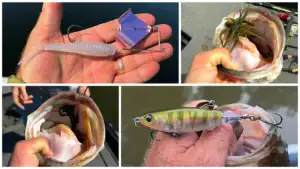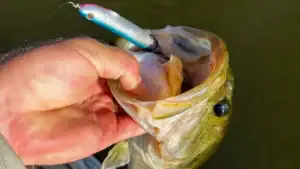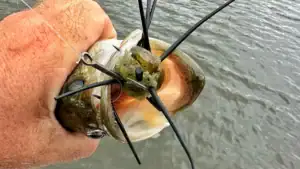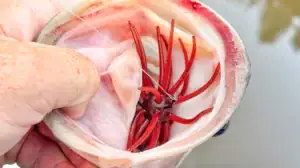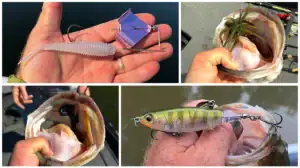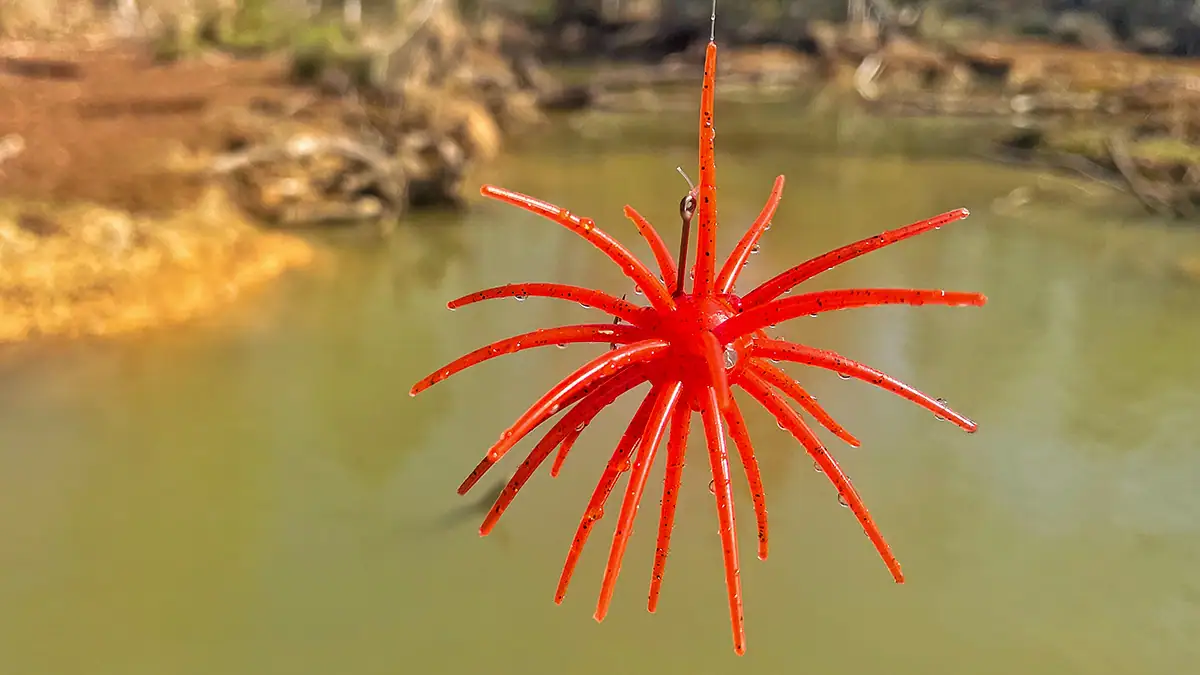
If a couple of years ago you’d have told me — an increasingly apparent old-head at this point who loves to throw a spinnerbait and a frog on braid — that I’d be searching “fuzzy dice” and “urchin-style” baits, I would have laughed in your face. However, as reluctant and shocked as I may be, I have seen with my own eyes how effective these baits are when it comes to catching big bass.
I don’t mean to imply that I have had great success with these baits: I still have no clue what I’m doing with them. But I have seen anglers whacking them on these modern meatballs through the power of digital media.
One of them is Fisher Anaya, who used one of these baits to dominate this year’s Bassmaster Elite Series event on Lake Martin — my home lake. And I had a front-row seat to that jaw-dropping performance via Bassmaster LIVE. So, putting my pride aside, I called Anaya up for a 101 primer. Here’s what he had to say.
Fuzzy Dice vs. Urchin-Style Baits
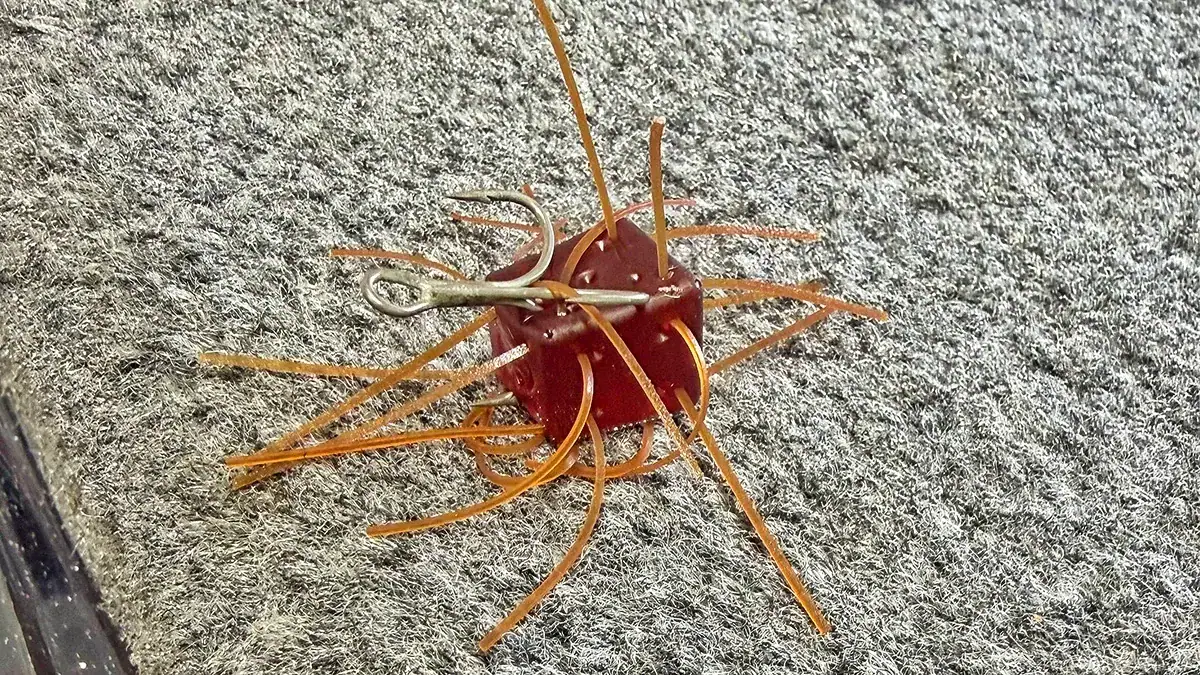
For starters, two different groups of baits have evolved for this technique: fuzzy dice and urchin-style baits. Both are fished in a similar fashion but the sizes are different, and so the gear used for them is different, too.
“A fuzzy dice is more like your smaller dice baits, more for spotted bass or smallmouth,” Anaya began. “Like a [Strike King] Tumbleweed or the 13-millimeter-sized dice that I was throwing at Martin, I consider those dice-style baits just because they’re smaller. A big style dice, a 20, I think it’s like a 24-millimeter dice, anything like that, where you’re getting into the bigger size, I consider that more of an urchin bait.”
Spinning vs. Casting Gear
The two different sizes of baits require two different rod combos to fish them effectively. Over the past year of fishing these baits, Anaya has dialed in a couple of combos that work well for him.
“If I’m throwing a smaller one — if that’s a 17, a 13, a 14, anything in that size variety — I’m going to throw it on a spinning rod. I’m going to throw a longer rod, like a 7-4 to a 7-6. I throw a medium to a medium light, something that doesn’t have much backbone on the tip, but backbone once you get down the rod. You need that limber tip to help cast that bait because they’re super light.”
He further explained: “Once I get up to the urchin-style baits, they’re a lot bigger. It’s honestly too heavy for a spinning reel or a spinning rod. I throw mine on a casting rod, like a 7-3 medium heavy to a 7-3 heavy — anything in that range, depending on the cover. I throw 15- to 20-pound line on mine.”
Treble vs. Single Hook
The next piece of the puzzle is deciding what hook to throw these baits on. This technique seems to be evolving by the minute, and the anglers with the most time throwing these are setting the standards the rest of us follow. When it comes to hooks, Anaya’s preference is based more on the species and mood of the bass than on the particular style of bait.
“You can throw one on a wacky-style hook, or you can throw it on a treble. For a fish with a smaller mouth, like a smallmouth or a spotted bass, I do like a treble just because they are notorious for swiping at it and not getting it. Largemouth, you can get away with that single hook, because when they decide to bite it, they are just going to suck it in.”
Adding Some Weight
Many of these baits, especially the smaller ones, are almost impossible to cast any reasonable distance without adding some sort of weight to them. When it comes to weighing these down, though, there are lots of options. From weighted wacky hooks to Neko weights to hinged hook-weight combos that have been designed specifically for these baits, there are, again, lots of options.
“When I add weight, I either put a Neko weight on it or I do a drop shot weight if I’m throwing it on a drop shot. Either one works,” Anaya began. “Depth is going to be the biggest thing. When I’m fishing deeper, I’ll throw a heavier weight; shallower, I throw a lighter weight. It’s kind of the same preference like a Texas rig, anything like that. The shallower you get, the less weight you want in it just to make the bait float a little better. Once you get out deeper, I add more weight to it to help it sink, so I can get on the fish better.”
Color Selection
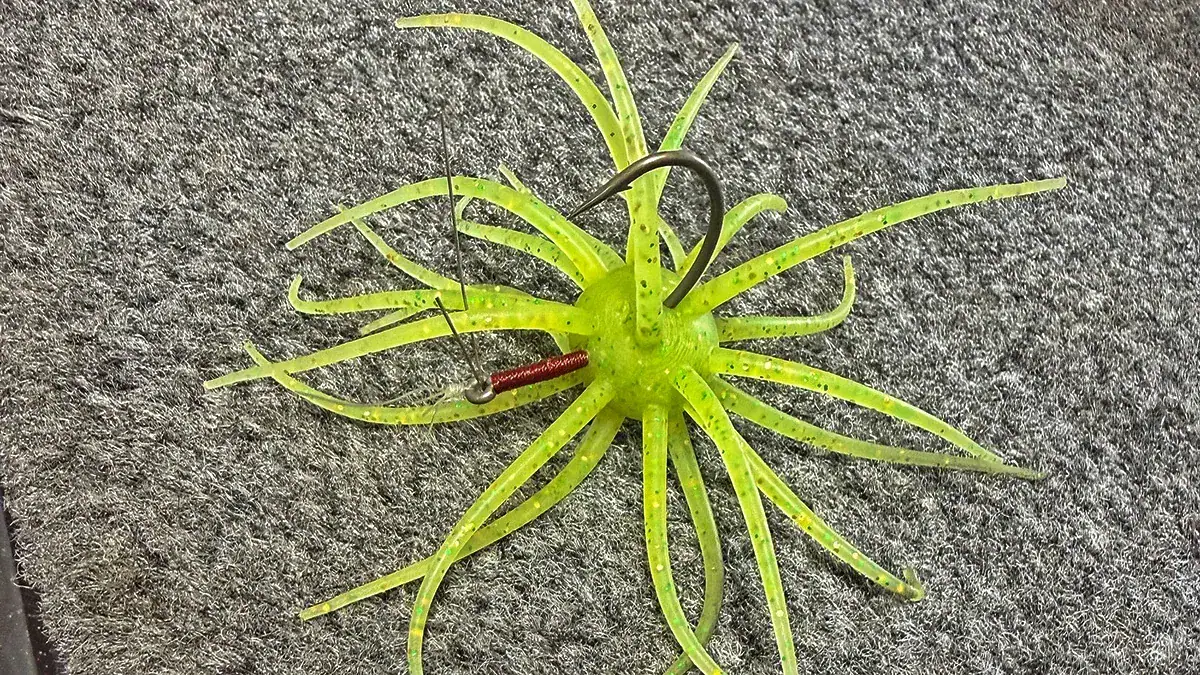
These baits come in a wide array of colors, from bright white and pink to dark green pumpkin and scuppernong. Naturally, Anaya has a method for choosing hues, too.
“I’ll usually have multiple different colors on because each fish is a little different. I might throw a green pumpkin, I might throw a white, I might throw a scuppernong — you don’t really ever know,” he explained. “I’ll get into some bright colors like a methylate or chartreuse for some spots. Any color works. It’s just going to depend on the lake, the water clarity, and how the fish are reacting to it.”
Final Thoughts
The technique of fishing fuzzy dice and urchin-style baits is still brand new, with tweaks and mods coming to light daily. And the demand is so high for these baits that it seems like every soft plastics manufacturer is rushing to develop their own version to get in on the action. With dozens of options now in brands and a wide range of sizes and colors, knowing where to start can be challenging.
Take Anaya’s notes to heart: He’s been fishing these baits for more than a year now, and that might as well be a decade of experience compared to the majority of us. Pick your bait style based on the mood of the fish and the cover. Select gear to throw it on based on the style of bait. Choose your hook based on the bass species. And add weight based on the depth you want to fish.
Keep it simple, build up some confidence, and you’ll be a fuzzy-wuzzy-urchin expert in no time. At least, that’s my goal.