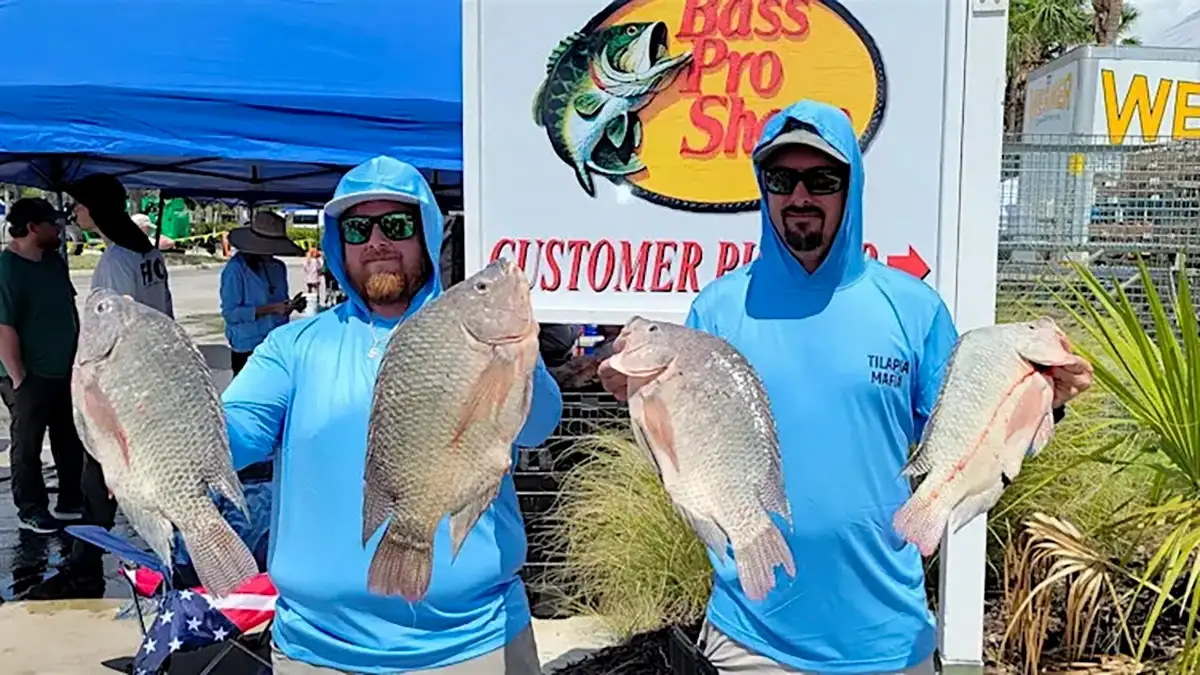
Anglers across Florida have a unique opportunity to turn their time on the water into meaningful conservation action by participating in the SWFL CISMA Invasive Freshwater Fish Roundup, an annual event that invites the public to help remove harmful non-native fish from local waterways. Scheduled for April 24–26, 2026, the roundup blends fishing, citizen science, and environmental stewardship, culminating in a public weigh-in at Bass Pro Shops in Fort Myers, Florida, that showcases just how many invasive fish call the state’s waters home.
Organized through partnerships that include Bass Pro Shops and the Florida Sea Grant, the event allows anglers to help protect Florida’s ecosystems while hopefully having a good time. Registration is open to anyone willing to cast a line for a cause. Participation helps support research that would otherwise be difficult to conduct.
Why It’s a Problem
Invasive species in Florida are defined as nonnative organisms introduced by humans that cause harm to the environment, economy, or human health, and they have become a serious and widespread problem across the state. Many anglers regularly encounter species like blue tilapia, Mayan cichlid, and oscar without realizing they are not native. These fish often originate from aquarium releases or aquaculture escapes, and thrive in Florida’s warm, interconnected waterways.
Once established, they can outcompete native fish for food and habitat, prey on smaller species, and alter the natural balance of aquatic ecosystems. According to the Florida Fish and Wildlife Conservation Commission (FWC), invasive species also carry a significant economic burden, with management efforts costing millions of dollars annually. Beyond cost, they are recognized as a major cause of biodiversity loss, quietly reshaping habitats and reducing the diversity of native wildlife.
How Anglers Help
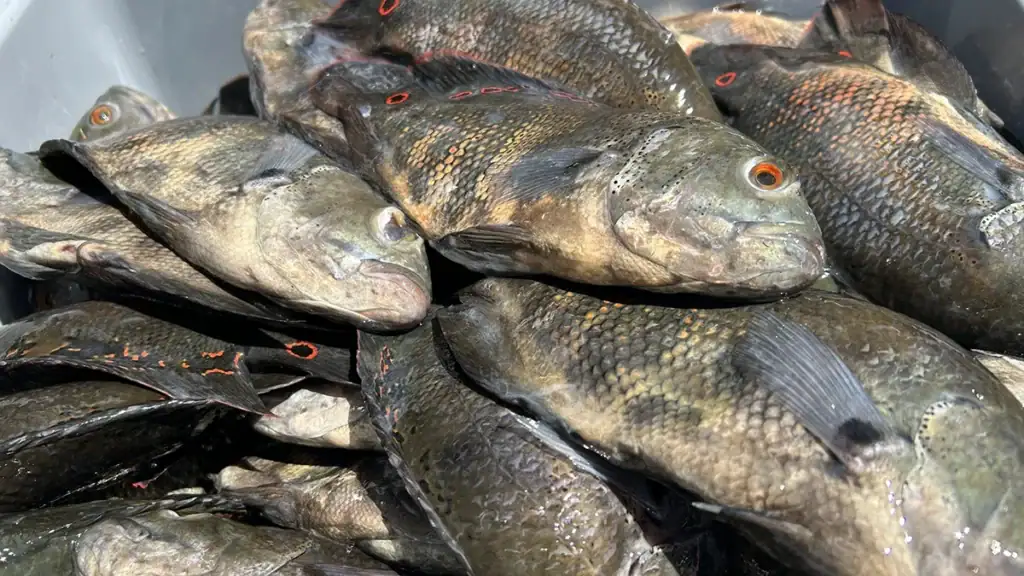
The Invasive Freshwater Fish Roundup shows just how helpful anglers can be in addressing this issue. During the 2025 event, 144 participants removed an astonishing 16,736 invasive fish weighing a combined 4,939 pounds, representing 16 different species. The largest fish brought in was a 5.4-pound blue tilapia, one of the most widespread invasive fish in Florida’s canals and retention ponds.
Data collected during the roundup has supported a range of scientific studies, including research on mercury contamination, species distribution, and even potential uses for invasive fish such as composting. These efforts provide valuable insight into how invasive populations not only are spreading but also might be better managed.
As funding for natural resource management becomes increasingly limited, volunteer-driven efforts like the roundup are more important than ever. Anglers have always been at the forefront of conservation, and their participation helps fill critical gaps in data collection and species removal.
Whether by entering the tournament, attending the public weigh-in, or simply choosing to harvest invasive fish instead of releasing them, individuals can make a difference. Education, prevention, and community involvement remain the most effective tools for slowing the spread of invasive species, and Florida’s anglers are proving that conservation can start with a day of fishing.
Anglers can register using this link. For more info, visit the SWFL CISMA Facebook page.
Common Invasive and Non-Native Fish in Florida
The list of non-native and invasive species is quite long. I found over 400 listed in my research for this article. Here are some of the more common ones anglers are likely to encounter:
- Peacock bass (Cichla ocellaris)
- Arowana (Osteoglossum spp.)
- Clown knifefish (Chitala ornata)
- Electric catfish (Malapterurus spp.)
- Bullseye snakehead (Channa marulius)
- Northern snakehead (Channa argus)
- Walking catfish (Clarias batrachus)
- Asian swamp eel (Monopterus albus)
- Mayan cichlid (Mayaheros urophthalmus)
- Oscar (Astronotus ocellatus)
- Jaguar cichlid (Parachromis managuensis)
- Black acara (Cichlasoma bimaculatum)
- Chanchita (Cichlasoma dimerus)
- Convict cichlid (Amatitlania nigrofasciata)
- Blue tilapia (Oreochromis aureus)
- Nile tilapia (Oreochromis niloticus)
- Spotted tilapia (Pelmatolapia mariae)
- Suckermouth catfish / pleco (Hypostomus and Pterygoplichthys spp.)
- Grass carp (Ctenopharyngodon idella)
- Bighead carp (Hypophthalmichthys nobilis)
- Silver carp (Hypophthalmichthys molitrix)
- Black carp (Mylopharyngodon piceus)
- Lionfish (Pterois volitans & P. miles)
- Moorish idol (Zanclus cornutus)