Despite ongoing debate about how much tech anglers should incorporate onboard, fish finders remain one of the best tools for boosting catches and analyzing fish behavior. What began as basic depth sounders morphed into sophisticated systems capable of breaking down massive, unfamiliar lakes into manageable territory — saving you decades of trial and error.
Today’s technology offers unprecedented visibility and control. Modern units integrate GPS mapping, side and down imaging, 360 sonar, and forward-facing live sonar, giving you a complete view beneath the surface. However, while these advanced capabilities make your setup endlessly scalable, they can also quickly drive up costs.
To help you navigate those overwhelming offerings and price points, we’ve done the heavy lifting for you. We narrowed down hundreds of possibilities to highlight some of the best options on the market, balancing high-end features, budget-friendly picks, and specialized setups for every style of fishing.
OUR TOP PICKS FOR FISH FINDERS
- Best Fish Finder for Live Sonar – Garmin ECHOMAP Ultra 2 – BUY NOW
- Best Overall Fish Finder – Humminbird XPLORE – BUY NOW
- Best Budget Fish Finder – Lowrance Eagle Eye – BUY NOW
- Best for Ice Fishing – Vexilar FLX-38 – BUY NOW
- Best Imaging Fish Finder – Humminbird Apex – BUY NOW
- Best Kayak Fish Finder – Garmin ECHOMAP UHD2 73SV – BUY NOW
- Best for Custom Mapping – Raymarine Axiom 2 Pro – BUY NOW
Best Fish Finder for Live Sonar
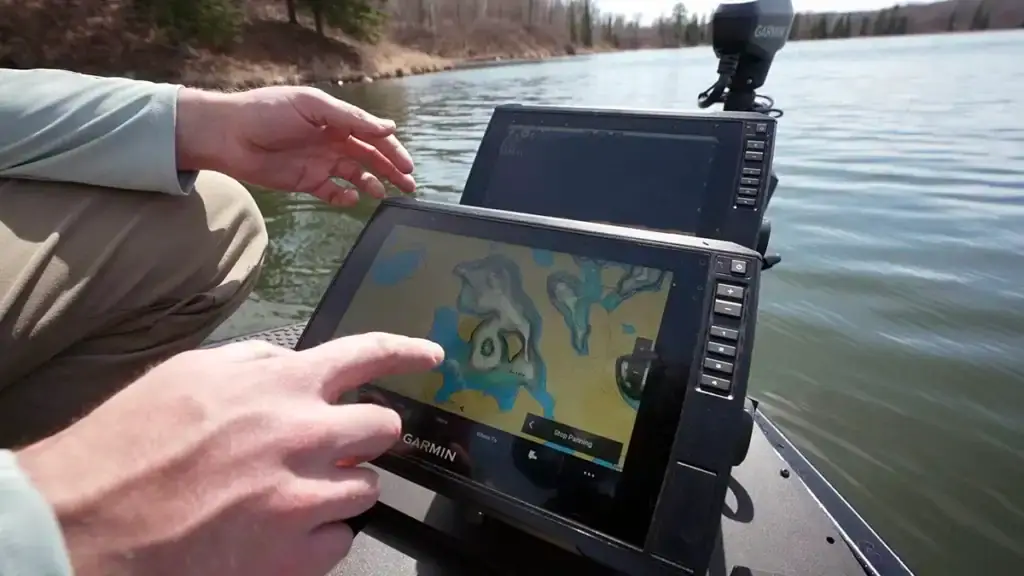
Garmin ECHOMAP Ultra 2
If you’re serious about spending your weekends pick-pocketing bass, the Garmin ECHOMAP Ultra 2 series is hands-down the lineup to consider. It sits in that absolute sweet spot where you get top-tier tournament performance without needing a commercial budget. When you’re standing on the foot pedal in blinding noon sunlight, those ultra-bright IPS screens give you crisp, wide viewing angles so you never lose track of your lure.
One of Wired2fish’s bass boats is rigged with four Echomap Ultra 2 SV units — two 12-inch and two 10-inch screens. “There are only necessary buttons on the side,” explained Wired2fish’s Will Stanley, “and the rest is an easy to use touch screen.” What really makes the Ultra 2 line the ultimate tool for scoping bass is how practical it is when you’re actually out there grinding. You get a lightning-fast touchscreen for tweaking your gain and depth ranges on the fly, backed up by physical hotkeys for when your hands are soaked.
Under the hood, the processing power handles high-frame-rate LVS34 returns without a hiccup. When a 4-pound tank comes charging off a ledge, what you see on the screen is happening in real time — zero frustrating redraw lag or phantom ghost targets. If you want the ultimate bow setup, skip the guesswork and bolt down the 12-inch 126 SV. It’s the undisputed king of the front deck because it gives you enough display real estate to track subtle bait movement 50 feet out (without completely blocking your view when running down the lake at full throttle).
Plus, the Ultra 2 models give you full wireless unit-to-unit networking, so you can share maps and waypoints with your console without snaking cables through a cramped hull. “One feature I need to point out is the quick release cradle,” said Stanley. “It is super quick and easy to remove the units after a day on the water. With other graphs, you have to unscrew each cord and then unscrew it from the gimbal mount. There is only one latch for the ECHOMAPs.”
Pros
- Wireless unit networking
- High-precision multi-band GPS
- Ultra-bright IPS display
- Touchscreen with physical buttons
- Built-in screen recording
Cons
- Higher overall price
- Heavier battery consumption
- Larger physical footprint
Best Overall Fish Finder
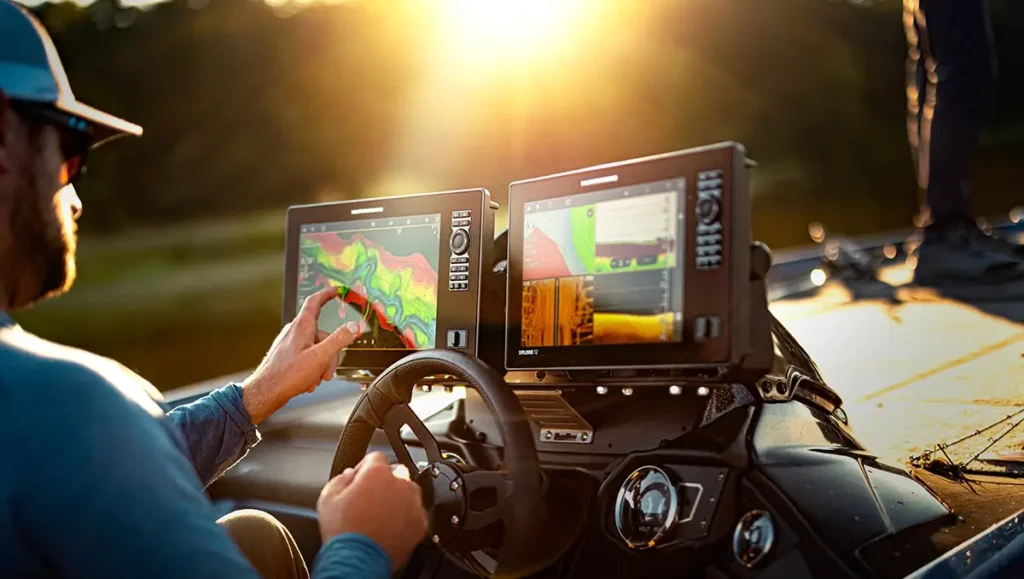
Humminbird XPLORE
One of our Wired2fish bass boats is rigged with three Humminbird Xplore 12s, and one Apex 13. Below the surface, we have Mega Live 2 and Mega 360 transducers. “This setup works for any fishing scenario, but the one-two punch of Mega Live and 360 is very hard to beat for offshore situations,” said Wired2fish’s Nick Dumke. “Mega Live helps see fish on or off structure and helps accurately throw baits on fish that are floating, on rocks, or on grass edges.”
Humminbird’s 360 really helps visualize the structure more, and gives a better understanding of the structure you’re fishing. And so that means seeing grass lines, bottom composition changes, and rock to sand edges is pretty easy to do. One of the greatest features in Humminbird units is LakeMaster Mapping. It is incredibly accurate, and if a lake is not mapped, then you can create your own map with AutoChart. These units are also packed with other features like screen recording, waypoint sharing with your phone, and a lot more options that are hard to beat.
Pros
- Easy-view HD display
- Touchscreen and button controls
- Included LakeMaster mapping
- Fast quad-core processor
- Seamless Minn Kota integration
Cons
- Max of a 12-inch screen size
- Expensive sonar add-ons
- Higher power consumption
Best Budget Fish Finder
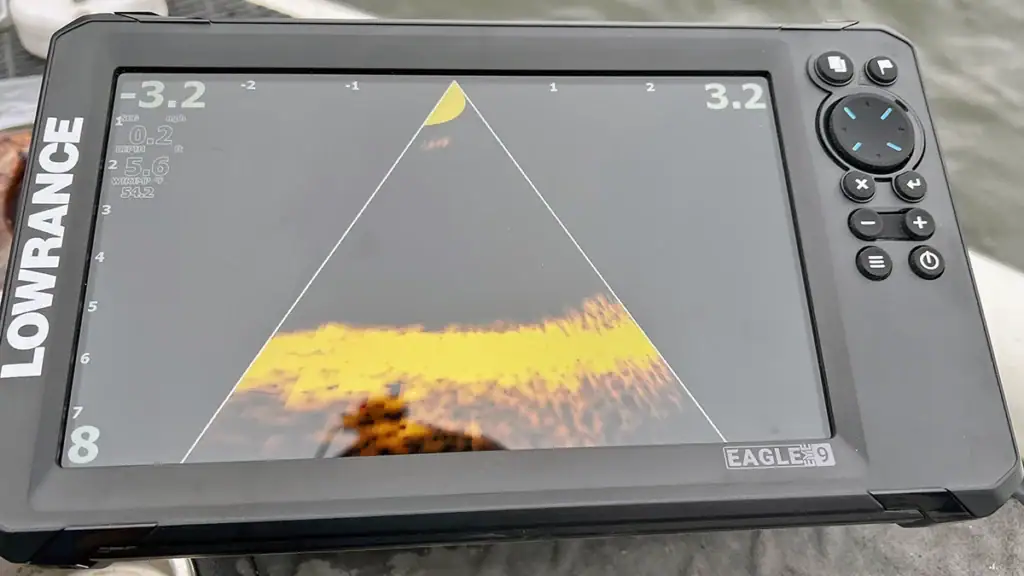
Lowrance Eagle Eye 9
The Lowrance Eagle Eye 9 is one of the few sub-$1,000 units to offer forward-facing sonar (FFS) straight out of the box. It drastically lowers the entry barrier for FFS technology without requiring an external black box. Installation is simple: a built-in pin-and-slot design on the transducer eliminates orientation guesswork, and setup requires only connecting power to the graph and running the transducer cable to the trolling motor.
On the water, the unit pairs FFS with traditional sonar, DownScan, C-MAP charts for over 17,000 U.S. lakes, and Genesis Live custom mapping, all readable on a 9-inch IPS display that handles bright sun and polarized lenses well. The live sonar reliably tracks cover, fish, and lures up to 60 feet out. Even for shallow-water bank fishermen, it excels at revealing hidden cover and tracking fish trailing a lure, allowing anglers to alter their retrieve in real time to trigger strikes.
The low price point does come with functional trade-offs. Live Forward mode blacks out the area directly beneath and immediately surrounding the boat — requiring a swap to Live Down for vertical targets — and the top few feet of the water column can briefly drop out when panning the trolling motor. While touring professionals may need a higher-end setup, the Eagle Eye 9 provides everyday anglers an unbeatable, user-friendly entry point.
Pros
- Affordable live sonar
- No blackbox needed
- Easy plug-and-play setup
- Bright IPS display
- Auto-tuning sonar settings
Cons
- No networking capability
- Button-only operation
- Narrower live sonar view
- No Wi-Fi or Bluetooth
Best Electronics for Ice Fishing
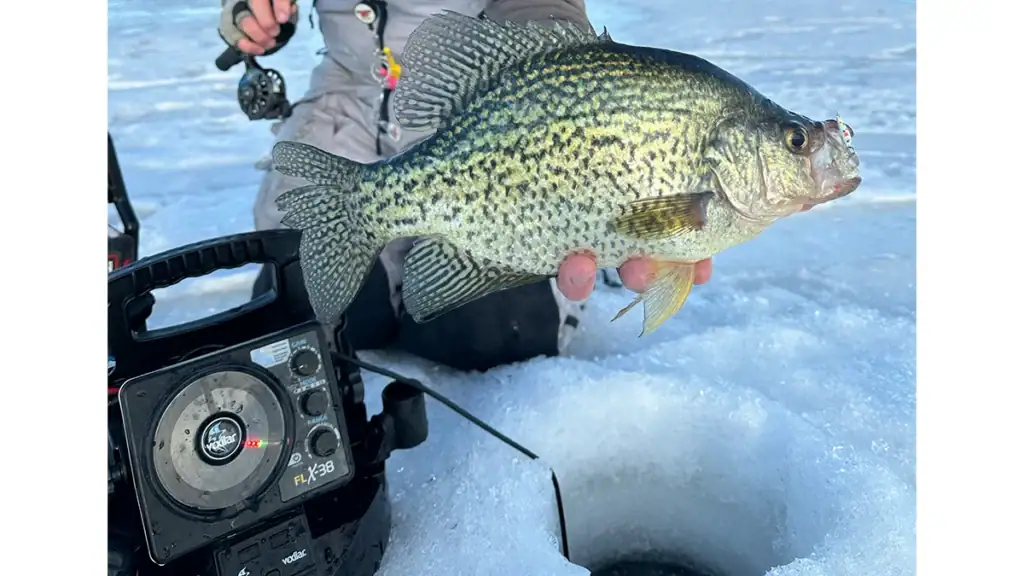
Vexilar FLX-38
“I ran the Vexilar FLX-38 last winter and absolutely loved it,” said Sam Sobieck, of the Sobi YouTube channel. “The knobs/ settings are a little different from the traditional Vexilars I ran in the past but it’s by design. It’s the Cadillac of ice flashers.”
The real magic of the FLX-38 comes down to total signal control, starting with its broadband transducer. With 15 selectable frequencies between 160 and 300 kHz, you can adjust your beam angle on the fly — going wide when you’re searching shallow flats or tightening it up when dropping on deep structure and heavy weeds. Toss in seven different power settings (including three ultra-low options), and you can fish shallow water without blinding your screen with clutter, keeping high-power pulses from spooking line-shy fish.
One tip Sobieck has is if you enjoy catching big panfish (bluegills and crappies) learn to use your Vexilar in extremely shallow weeds. Turn your unit on low power mode, play with your gain so you can barely see your jig and you’ll be shocked at the amount of big panfish that hide in shallow weeds all winter. Turning your unit to low power mode really helps you see through the weeds and overall a better picture in the shallows.
Targeting suspended crappies or bottom-hugging walleyes is remarkably easy thanks to how customizable the FLX-38 screen view is. Unlike flashers locked into a fixed bottom zoom, the FLX-38 lets you dial in a 6-to-18-foot zoom window and slide it anywhere in the water column in precise one-foot increments. Combined with the ability to set manual depth ranges in one-foot steps from 5 to 30 feet, you get razor-sharp target separation so you can watch a fish rise to your tungsten jig.
If you spend time hole-hopping with buddies or packed into a mobile ice house, the 300 Interference Rejection (IR) settings are a lifesaver for killing annoying screen crosstalk. Everything reads crisp on the multi-layer display, which pairs Vexilar’s classic 525-segment, 5-color flasher wheel.
“The new FLX-38 is butter,” said Sobieck. “I can fish as deep or as shallow as I’d ever want and dial in my jig perfectly. And the adjustable zoom window is so nice especially for suspended crappies.” Ice fishing is different in the sense that Sobieck truly believes FFS is for finding the fish and a Vexilar is for catching the fish. “We are still limited to an 8-inch hole and I love being able to bounce around holding an auger in one hand and a light, dialed in Vexilar in my other. There is no vertical sonar reading out there today that is faster and more responsive than traditional Vexilar sonar.”
Pros
- 15 broad-band frequencies
- Adjustable variable zoom
- Seven power modes
- Excellent target separation
- Sunlight-readable display
Cons
- Higher price
- Traditional flasher only
- No GPS mapping
- No live sonar
Best Imaging Fish Finder
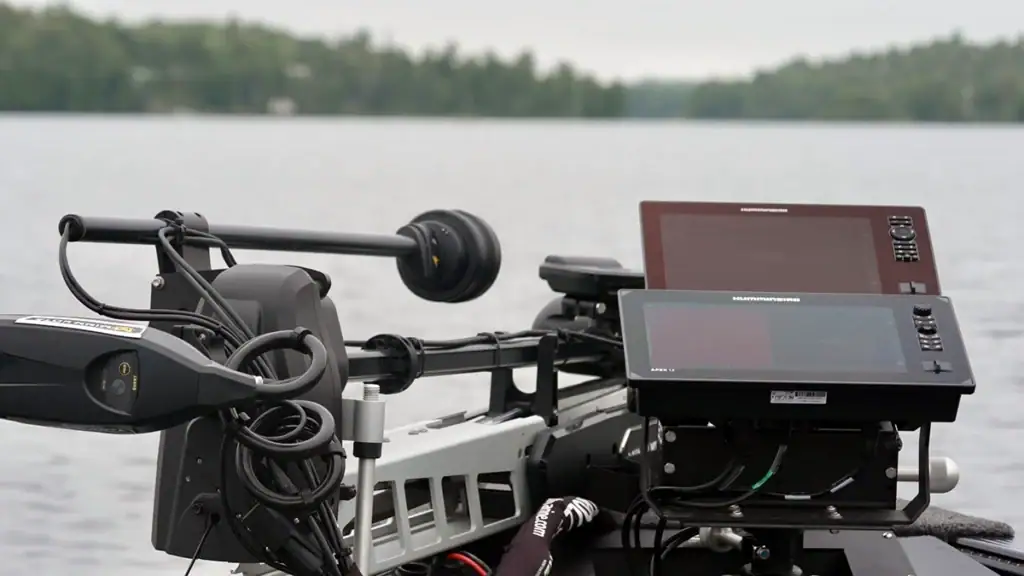
Humminbird Apex
Consider the two options from Humminbird covered in this guide. The Humminbird APEX is still the flagship series featuring a Full HD screen and extensive networking ports, while the newer Humminbird Xplore is a mid-to-high tier unit with a faster quad-core processor and a lower price point. Brad Hawthorne, of Hawthorne’s Guide Service near Mille Lacs, runs both Apex and Xplore units. He readily admits the Xplore line is the fastest unit he’s ever run. But he also has plenty to say about the Apex.
“Target separation is actually what sets Humminbird apart,” said Hawthorne. “The units easily distinguish between weeds, rocks, and soft targets like fish. As long as you know what you are looking at, you can pluck fish out of any cover with the Apex.” He is currently running the MEGA 360 and MEGA Live, running three side-imaging transducers: two on the back and one on the front trolling motor.
“For the layout, I have an Apex 16 on the dash and three units upfront — two 12-inch Xplore units and one 16-inch Apex dedicated to MEGA Live,” he said. “Humminbird has always led the pack in mapping. The AutoChart Live feature is outstanding; I have mapped several lakes myself, and having these custom maps is a major secret to my success.”
Plus, Hawthorne believes Humminbird units are user-friendly, completely fishable straight out of the box, and the factory settings get you 99 percent of the way there. “I do recommend taking the boat out after rigging and tying on a half-ounce jig to fine-tune the sensitivity, gain, and color palette,” he said. “That’s what I do every year.”
Pros
- Full HD resolution screen
- Dual-channel CHIRP sonar
- Touchscreen with keypad control
- Built-in HDMI ports
Cons
- Costly upfront
- Heavier power consumption
- Larger footprint
Best Kayak Fish Finder
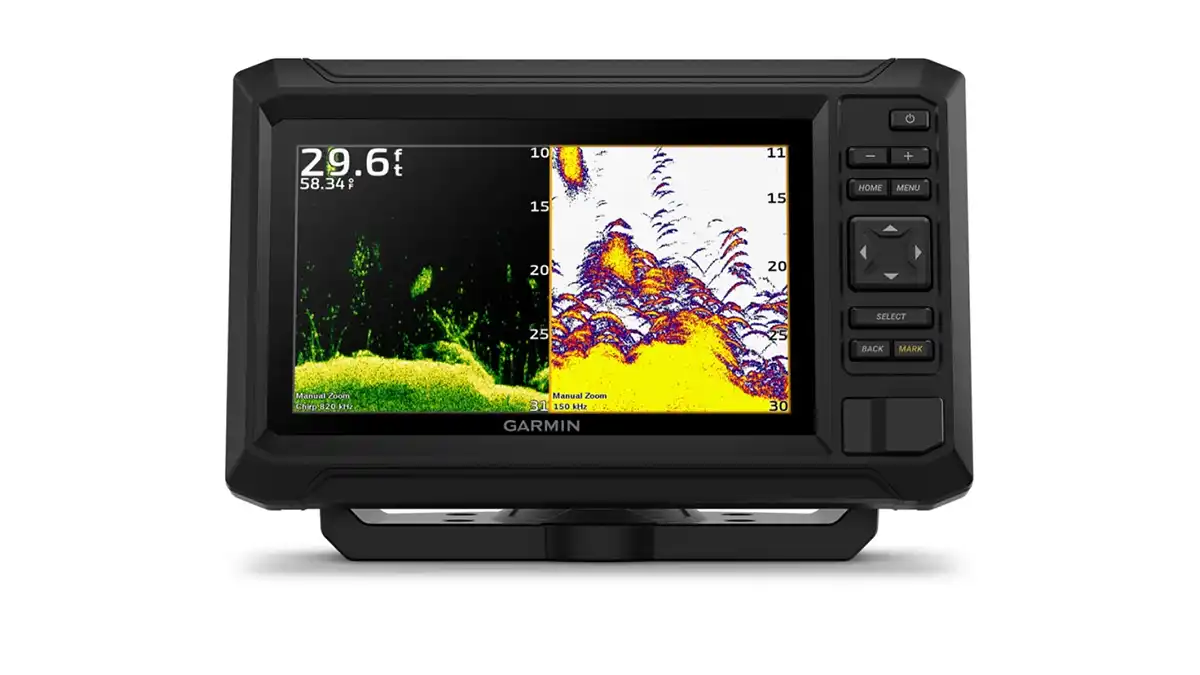
Garmin ECHOMAP UHD2 73SV
This is a great quick affordable option for anglers wanting a capable unit for their kayak that won’t break their bank. This unit can do SIDEVÜ, CLEARVÜ and CHIRP Sonar, comes with Navionics Inland, has a touchscreen with key assist, comes with the quickly accessible cradle to remove the graphs while traveling easily with an 800×480 resolution. So not as clear as the higher end units but very doable when you’re sitting so close to your screen while sitting in a kayak and it on a gimble mount. If you step up to the 9-inch you will get increased resolution of 1024×600.
Features and Specs
- SIDEVÜ, DOWNVÜ, and CHIRP SONAR ready
- 800×480 resolution
- Quick release cradle mount
- Navionics Inland mapping
- 10Hz GPS
- Touchscreen with key assist
- Easy setup
- Active Captain app
Pros
- Quick setup
- Good functions at a low price point
- Easy take down and setup for portability
- Touchscreen
Cons
- Lower resolution
Best Fish Finder for Custom Mapping
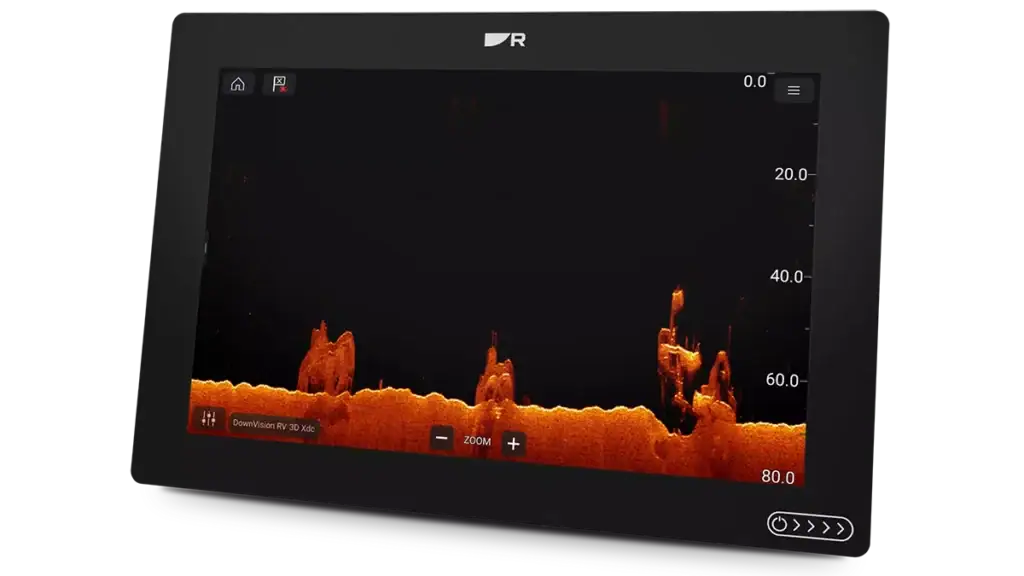
Raymarine Axiom 2 Pro
If you spend your day scanning for off-the-shore structure when fishing, the last thing you want is a graph that lags. The Raymarine Axiom 2 Pro is an absolute beast for custom mapping, packing a lightning-fast 6-core processor and a high-speed 10 Hz GPS that keeps your screen completely fluid. When you’re trying to dial in a submerged brush pile, this unit redraws charts up to 30 percent faster than older models. Plus, you can multi-task your mapping, SideVision, and 3D sonar at the console.
When it comes to breaking down water, this graph makes finding that spot incredibly easy. Using Raymarine’s built-in RealBathy or Navionics SonarChart Live, you can map out unchartered backwaters or fine-tune heavily pressured community holes. Even better, if you’re fishing a reservoir that fluctuates heavily with winter drawdowns or spring floods, the water level offset feature lets you calibrate your map on the fly.
The secret sauce for serious bass guys is how you can tweak the map to match your daily pattern. The custom depth shading lets you set up specific color palettes. Combine that with dual MicroSD card slots — which let you run your premium chart card on one side while saving your custom-mapped honey holes to a blank card on the other — and you’ve got the ultimate tool for breaking down a lake.
Pros
- Fast 6-core processor
- HybridTouch button-and-touch control
- Water-repelling display
- Built-in RealVision 3D sonar
- Broad multi-device networking
Cons
- Higher overall cost
- Heavier power consumption
What to Consider When Choosing a Fish Finder
At the entry tier ($300 to $600), basic 7-inch standalone models give bass anglers core side-scanning and down-imaging to locate submerged structure using simple GPS tracking. Stepping up to the mid-range tier ($600 to $900) unlocks high-definition inland lake mapping, sunlight-readable touchscreens, and Ethernet networking. Units in this bracket offer enhanced side-imaging resolution and entry-level live sonar compatibility, making them ideal for mapping ledges and offshore brush from the console.
In the upper mid-range tier ($1,000 to $1,600), high-resolution 9-inch displays provide the processing power and screen real estate needed to seamlessly drive real-time forward-facing sonar at the bow. At the premium tournament tier ($1,800 to $3,000 plus), flagship 10- to 12-inch HD touchscreens offer dual-channel CHIRP, ultra-fast processors, and full multi-display networking. This top level allows you to sync mapping, side-scanning, live sonar feeds, and electric trolling motor controls across your entire boat.
Is Forward-Facing Sonar (FFS) Worth the Investment?
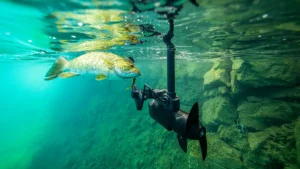
Short answer, yes. If you’re not against the technology for reasons besides catching fish, then forward-facing sonar is a game-changer. Garmin LiveScope, Lowrance ActiveTarget, or Humminbird MEGA Live will help you locate fish, especially once you get familiar with the technology. The tech is different from 2D and Side Imaging; FFS actually forces the angler into a different style of fishing that includes watching a screen pretty constantly.
Do I Need to Upgrade to Lithium Power?
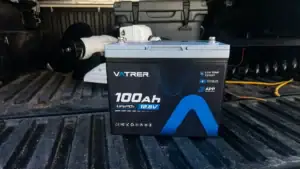
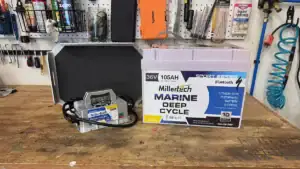
Modern high-definition units and live transducers pull heavy amperage. Anglers constantly ask whether their boat’s standard cranking battery can power the electronics system. To be safe, get dedicated lithium batteries and a heavy-gauge wiring harness for your electronics, plus it’ll also help to prevent screen interference and voltage drops.
What Portable Fish Finder Can I Use for a Jon Boat or Canoe?
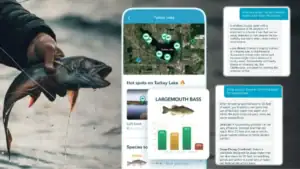
- Try a fishfinder that utilizes your smartphone. Accuphy Live Sonar is an app-based forward-facing sonar system that streams real-time underwater imaging directly to your hand via a dedicated Wi-Fi connection. Unlike traditional live-sonar setups that require a heavy external black box processor and expensive chartplotter, Accuphy builds the signal processor directly into the transducer housing itself. Available in the standard PingLive and compact PingLive Mini models, the system offers low-latency forward, down, and split-screen combo views using your mobile device as the screen.
- The Garmin Striker 4 Portable Kit stands out as a winner, pairing dual-beam CHIRP sonar and basic GPS waypoint tracking with a rugged carrying bag, battery, and suction-cup transducer mount. If high-resolution mapping and screen real estate are top priorities, the Humminbird Helix 5 steps up with a 5-inch display, AutoChart Live capabilities, and full LakeMaster map compatibility, making it ideal for anglers targeting specific bottom structure on larger bodies of water from a paddle craft.
- If floor space, weight savings, and minimal gear are your primary concerns — especially in a lightweight canoe — castable smart sonar and handheld units eliminate the need to lug around heavy batteries. The Deeper CHIRP+ 2 casts out a high-precision sphere that streams detailed sonar data directly to your smartphone via Wi-Fi, offering exceptional 0.4-inch target separation while tethered to a gunnel flex-arm.
Adapting any of these systems to small craft comes down to choosing drag-free, drill-free mounting methods. Flat aluminum transoms on jon boats easily accommodate heavy-duty suction-cup brackets, allowing for reliable transducer positioning and quick removal at the end of the day. Canoes benefit more from adjustable side-clamp flex arms attached to the gunnel or rib, or a “shoot-through-hull” installation where traditional transducers are bedded inside the interior floor using putty or silicone. And plenty of entrepreneurial anglers have come up with their very own rigging methods.