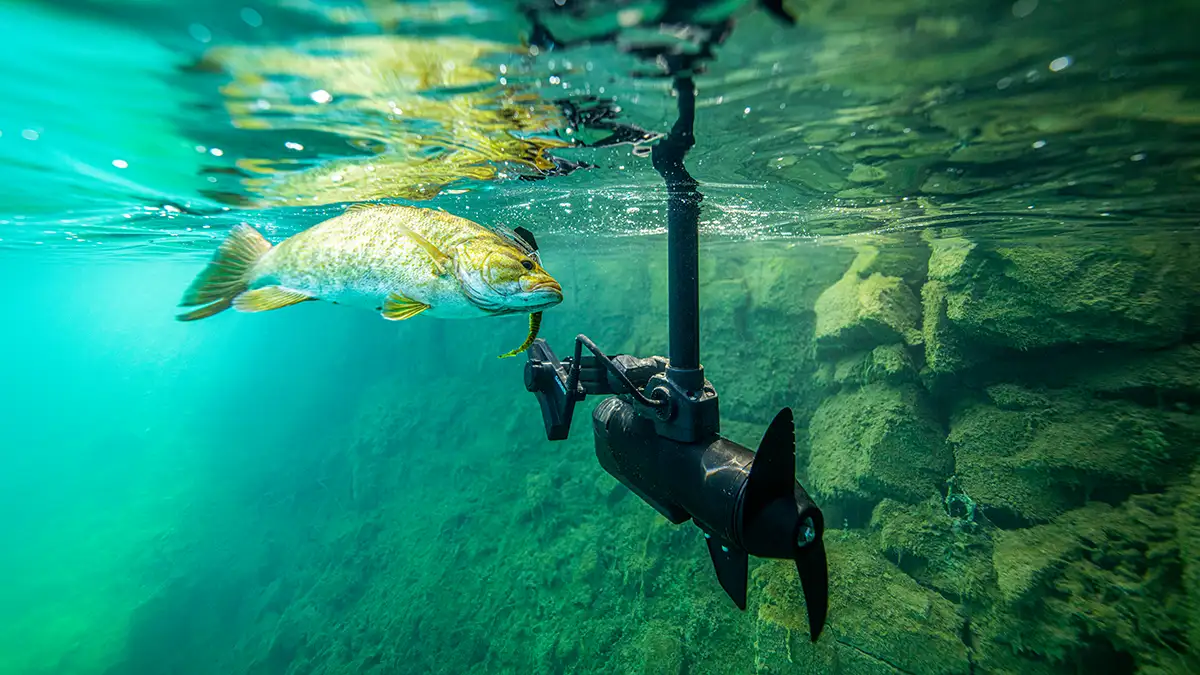
If you fish with any sort of purpose or strategy, a good ol’ trolling motor is pretty much an absolutely necessary piece of fishing gear. There ain’t no two ways about it. It lets you slip through the pads quietly or keeps you in place against current or wind, positioning your rig in the perfect position to tempt bucketmouth bass, Walter walleyes, and slab crappie.
While smaller craft may rely solely on a trolling motor, larger vessels typically pair a trolling motor with a main outboard engine. The outboard gets you from spot to spot quickly, while the trolling motor lets you maneuver quietly once you arrive. Regardless of your budget, investing in the best trolling motor you can afford will make a huge difference on the water.
The trolling motor market has exploded over the past 10 years. Where two brands once dominated the industry, nearly a dozen manufacturers now produce electric propulsion systems for everything from kayaks and jon boats to fiberglass bass rigs to deep V aluminum fishing boats. Prices range from as little as $200 to upwards of $5,000, depending on the power, build quality, and tech features you need.
Below, we break down the top models across the categories anglers care about most, offering solid choices for every budget and preference. Let’s dive into our top picks for the best trolling motors on the market.
Our Overall Picks for Best Trolling Motors in 2026
- Best Overall Trolling Motor: Minn Kota Ultrex Quest Buy from Tackle Warehouse
- Best Forward Facing Sonar Trolling Motor: Garmin Force Kraken Buy from Bass Pro Shops
- Best Trolling Motor for GPS Positioning: Lowrance Ghost X Buy from Tackle Warehouse
- Best Jon Boat Trolling Motor: Newport NV Series Buy from Bass Pro Shops
- Best Bow Mount Trolling Motor: Power-Pole Move ZR Buy from Bass Pro Shops
- Best Budget Trolling Motor: Minn Kota Endura Buy from Bass Pro Shops
- Best Kayak Trolling Motor: Minn Kota Riptide Kayak Terrova Buy from Bass Pro Shops
- Best Basic Trolling Motor: Minn Kota Fortrex Bow-Mount Buy from Bass Pro Shops
- Best Bass Fishing Trolling Motor: Garmin Force Pro Buy from Tackle Warehouse
Best Overall Trolling Motor: Minn Kota Ultrex Quest
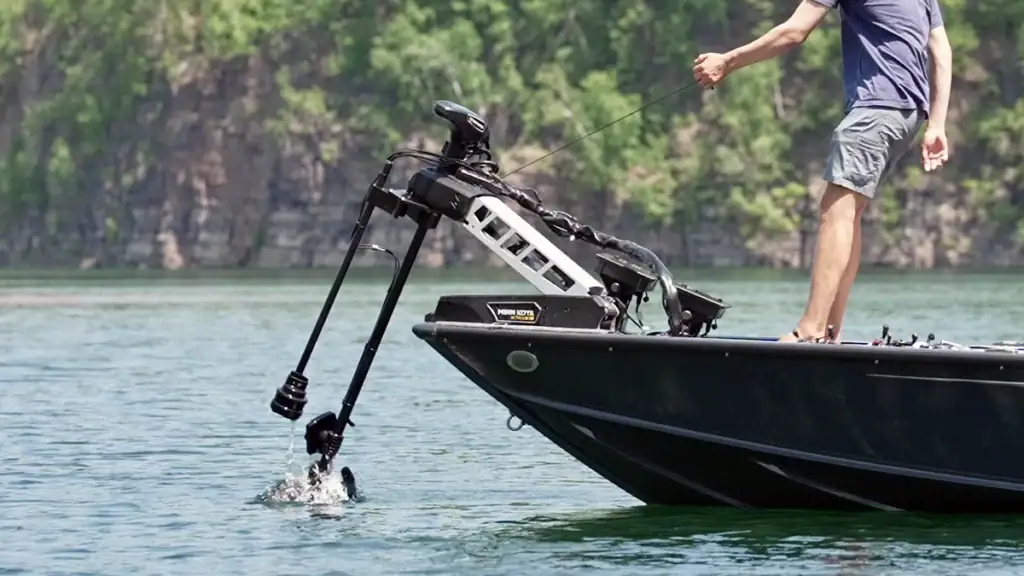
The Minn Kota Ultrex Quest is the ultimate upgrade for your bass boat, combining legendary Ultrex cable steering with massive 24V/36V brushless Quest power to conquer heavy cover and harsh winds. You get the instant, responsive feel of a heel-toe foot pedal paired with reliable GPS anchoring and advanced Minn Kota One-Boat Network features, ultimately keeping you locked on the perfect fishing spot longer and fishing with total confidence.
There’s a few scenarios where the Minn Kota Ultrex Quest really stands out, one of them being shallow water. “It’s super quiet and offers a lot of control with speed settings, which helps with efficiency and not spooking fish,” said Wired2fish’s Nick Dumke. “On the other hand, the Quest is awesome for big water as well. The Spot-Lock holds incredibly well in crazy wind and waves, and it can go very fast, which is key for breaking down big lakes quickly.”
Minn Kota’s Drift Mode is a super unique and helpful feature. “This allows you to set a track, and have control of the speed and angle of your drift rather than just floating with the wind.,” said Dumke. “It makes it incredibly easy in big waves and hard wind to just focus on fishing and not worrying about boat control.”
The Ultrex also comes with Speed and Grass props. The speed prop is awesome for covering open water quickly, and the grass prop works surprisingly well at keeping grass off. That means more time fishing and less time pulling weeds off a bogged-down trolling motor.
Pros
- Brushless power
- Dual voltage
- Ultra-quiet
- Heavy-duty build
- Advanced GPS
Cons
- Heavy and large
- High upfront cost
- Sometimes touchy pedal
- No directional arrow
Best Forward Facing Sonar Trolling Motor: Garmin Force Kraken
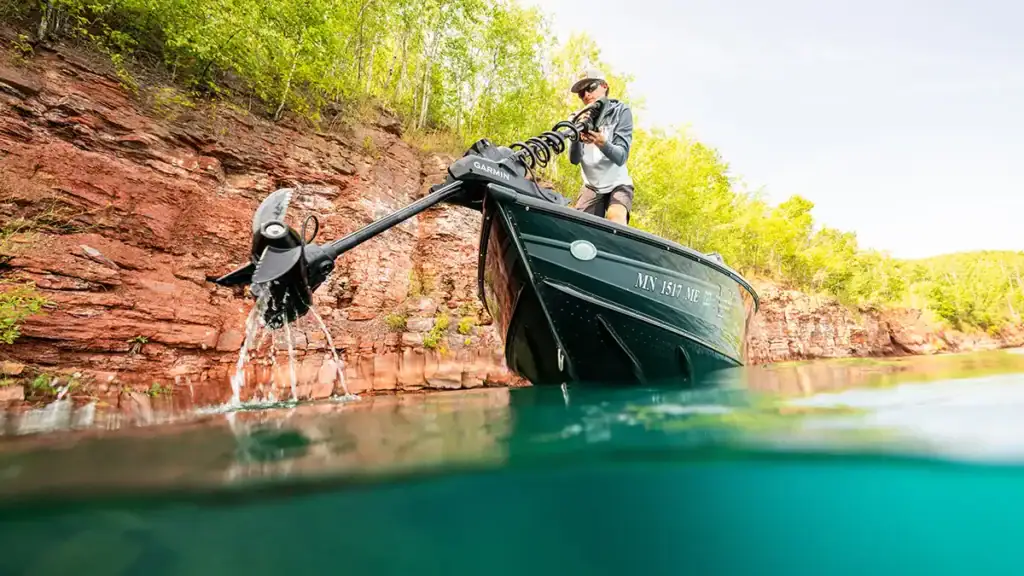
For bass anglers fishing heavily with forward-facing sonar like Garmin LiveScope, the Garmin Force Kraken is a game-changer engineered to eliminate traditional trolling motor headaches. Its standout feature is an internal cable routing system that passes transducer cables directly inside the shaft, completely eliminating zip-ties, pinched wires, or accidentally snagging or bumping into heavy hydrilla or standing timber.
Powered by a high-efficiency 24V/36V brushless motor delivering 80 or 100 pounds of thrust, it operates with virtually zero electrical interference — giving you all-day battery life, whisper-quiet performance, and razor-sharp LiveScope returns without electronic noise.
Beyond raw power, the Kraken revolutionizes stealth and boat control whether you’re working offshore ledges or picking apart shallow cover. Its multi-band GPS Anchor Lock features a smart reverse-propeller adjustment in light conditions, holding your position precisely without violently spinning the motor head or churning up water to spook skittish bass.
Pros
- Delivers up to 100 pounds of thrust
- Clean LiveScope integration
- Precision anchor lock
- Versatile shaft lengths
- Saltwater tough
Cons
- Higher cost initially
- Bulky frame
- Locked into the Garmin network
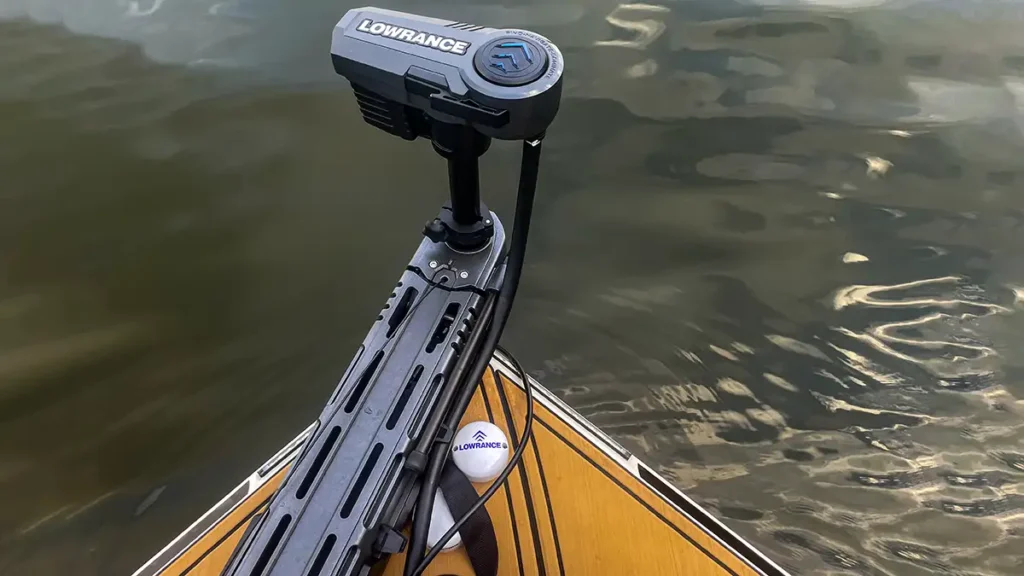
Best Trolling Motor for GPS Positioning: Lowrance Ghost X Trolling Motor
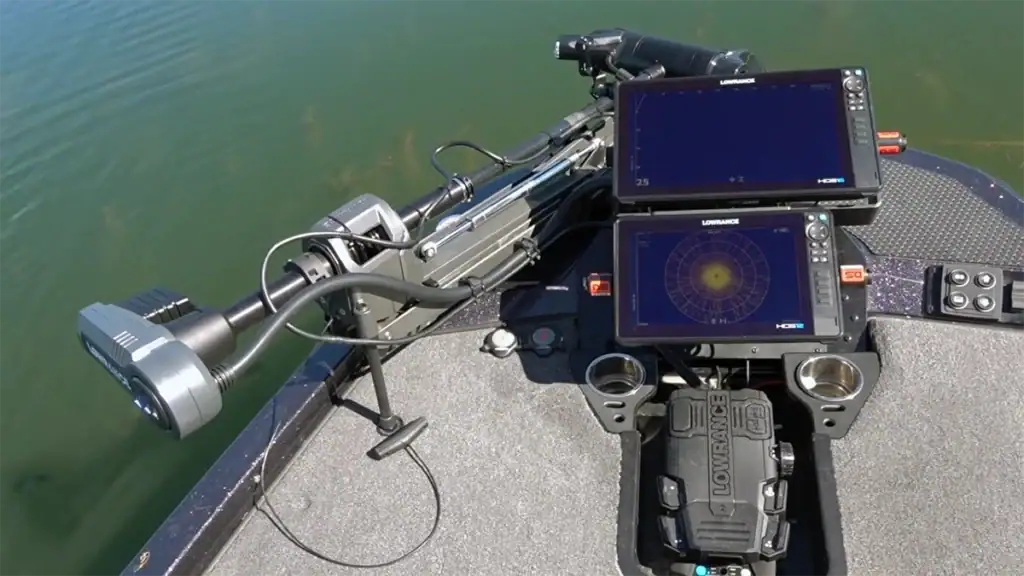
We have worked with a lot of electronics installers across the nation and what we’ve learned is that Garmin and the Lowrance seem to have the least issues that need fixing. One trolling motor is the Garmin Force. A close second in needing the least repairs is the Lowrance Ghost. So the Ghost X is another solid choice for a dependable trolling motor.
The Ghost features a brushless motor design with a powerful 120 pounds of thrust on the 36-volt option. This trolling motor is very quiet and the mount is very sturdy. It has a nice lift assist springs and the head auto rotates for quick stow and deployment.
The Ghost power management is one of the best in the industry and you can run all day and have plenty left over because the power management is that good. The Lowrance Ghost Trolling Motor is an excellent tool for GPS anchoring because it combines a highly precise GPS system with an ultra-quiet, brushless motor. This allows it to lock onto a waypoint, route, or your current spot and hold the boat steady, even against strong winds or currents.
Pros
- Provides 20% more thrust than the original Ghost model
- Brushless efficiency and silence
- Zero electromagnetic interference
- Plug-and-play sonar
- Fly-by-wire steering
- Easy stow system
Cons
- Hefty initial price
- Accessories sold separately
- Freshwater design only
- Limited shaft lengths
Best Jon Boat Trolling Motor: Newport NV Series Trolling Motor
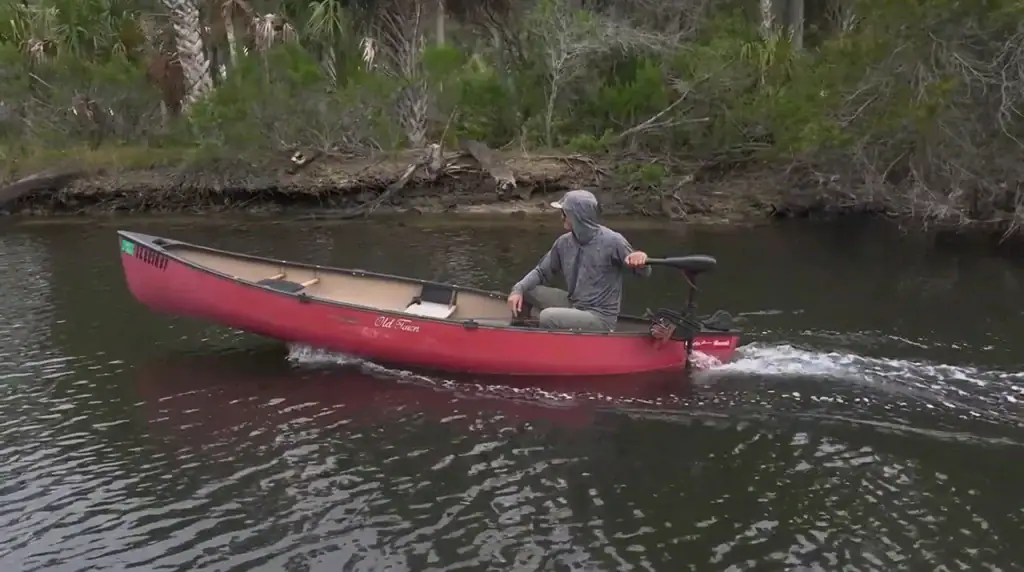
The Newport NV Series is a lineup of versatile, transom-mount electric trolling motors engineered for quiet, reliable performance. Vegas Iaconelli, the son of all-time great Mike Iaconelli, runs the NT 300 (36V, 55 thrust) and NT 600 (48V, 65 thrust) from NV series on both of his tiny boats. He’s already quite an accomplished fisherman himself.
“It always comes to the body of water I’m going to fish. If I’m fishing from my tiny boats on a large lake I always go with the NT 300,” said Vegas. “This motor lasts forever when full throttle and, to be honest, it feels like a 4-hp motor. There’s so much more kick in that motor than I’ve ever felt. If it’s tournament time on a small lake, I always go with the NT600.”
Ranging in thrust from 36 to 86 pounds across 12- and 24-V setups, each model includes an intuitive 8-speed twist tiller (5 forward, 3 reverse), a top-mounted 5-LED battery charge indicator, and a flexible composite shaft built to absorb underwater impacts. Designed to outfit everything from kayaks and canoes to inflatable dinghies and small fishing skiffs, the NV Series serves as an accessible, low-maintenance, all-in-one electric propulsion solution.
“The NT 600 tells me my run time until it needs charging. It also tells me my battery life and how many volts I’m using,” he said. “You can change the sensitivity. Both of the NT models I use are super light.”
Pros
- Saltwater and freshwater ready
- Affordable price point
- Good battery efficiency
- Different options in thrust power
- Ergonomic tiller
Cons
- Uses fixed speed notches
- Uneven throttle spacing sometimes
- No advanced GPS features
- Plastic Hardware
Best Bow Mount Trolling Motor: Power-Pole Move ZR
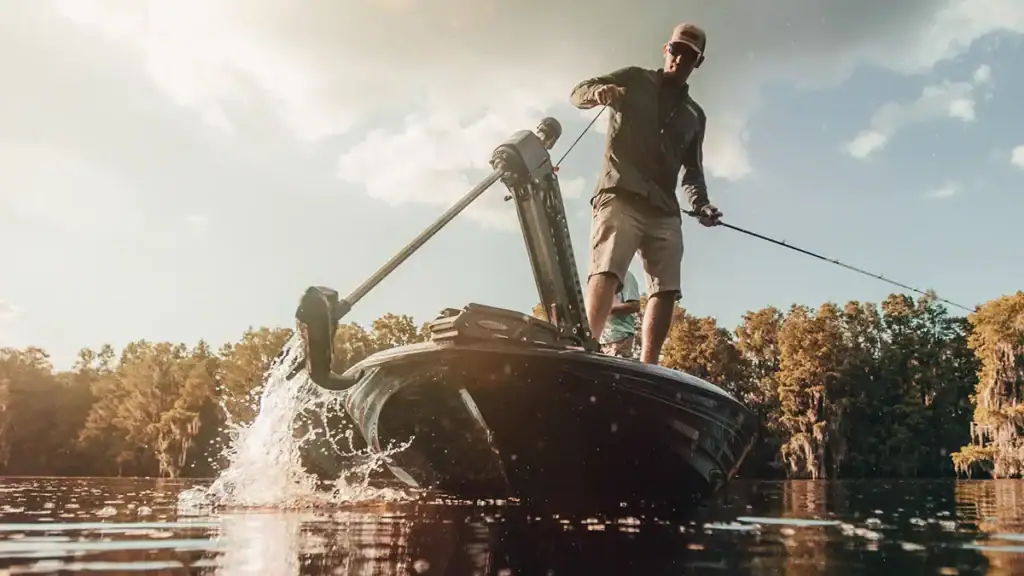
Power-Pole MOVE’s design process led them to do some very interesting things. First they chose titanium as the material to make the shaft. It’s lighter, longer-lasting, and stronger than the fiberglass composite that most shafts are made out of. They also built in levels of redundancy. Their steering gears have six additional gearing drives. So if you sheer all the teeth some miraculous way off the gear, there are five more that will take its place and still allow you to steer. The shaft is rated indestructible and has a lifetime warranty on it.
Their brushless motor was built from the ground up. They used no existing parts. They literally built every part to fit in the overall design so they wouldn’t rely on any existing parts that might have been points of failure in other trolling motors. The result is a highly strong, powerful, and robust trolling motor.
We found it to be the quietest of all the trolling motors and might be the most powerful although it is hard to judge power with arbitrary measurements like thrust. But to us, it felt like one of the strongest in terms of power in vegetation and speed in open water.
Pros
- Ultra quiet motor operation
- Lifetime titanium shaft warranty
- Lightweight overall design
- Efficient battery usage
- Precise GPS spot locking
Cons
- High purchase price
- Lacks integrated sonar transducer
- Heavy reliance on remotes
Best Budget Trolling Motor: Minn Kota Endura
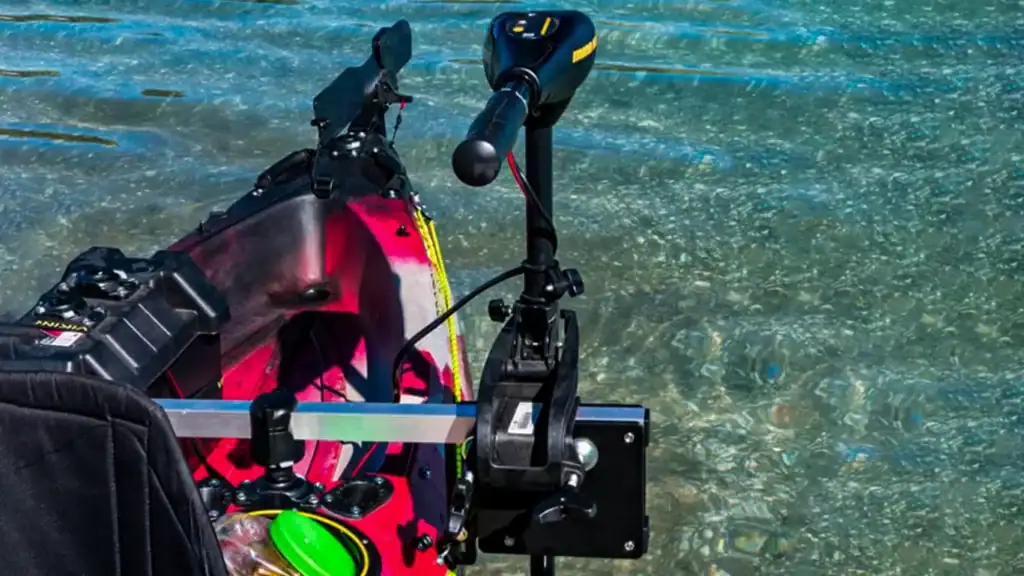
The Minn Kota Endura is a super affordable option that a lot of anglers have been using to propel paddle craft, jon boats, and lightweight car-topper boats. And these trolling motors are great for kayaks, too.
The Endura has three shaft lengths from 30 to 42 inches and three-pound thrust powers from 30 to 50 pounds of force. We like the 36-inch shaft and 40 or 50 pound thrust options. Easy display, twist handle operation and on your kayak with a rudder, you can just set it to straight and use your rudder to adjust course slightly.
Pros
- Highly affordable
- Indestructible composite shaft
- Lightweight and portable
- Simple tiller operation
- Reliable, low-maintenance design
Cons
- Freshwater use only
- Manual steering only
- No GPS features
- Limited thrust options
- High battery draw on top speed
Best Kayak Trolling Motor: Minn Kota Riptide Kayak Terrova Trolling Motor
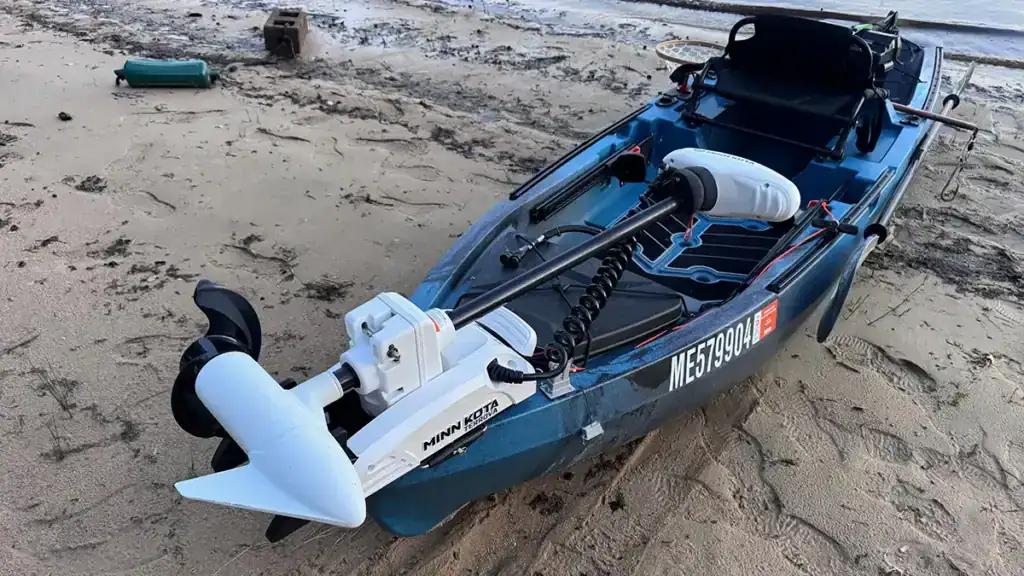
The Riptide Kayak Terrova is a 55-pound thrust saltwater-ready, bow-mounted trolling motor built with a 36-inch indestructible composite shaft specifically for kayaks. Like its larger brethren, it features an advanced GPS system with Spot-Lock to keep your kayak pinned on productive fishing spots. It also features AutoPilot for hands-free propulsion over productive territory. Input is controlled by a wireless micro remote control which you can wear over your neck with the included lanyard.
Wired2fish Editor-in-Chief Joe Albanese has been using one on his Old Town Sportsman 120 Pro since he got it in June, and has been impressed with it ever since.
“Having Spot-Lock on a kayak really changes the way I fish,” said Albanese. “I can cover ground, and metaphorically throw the anchor when I hit a productive stretch. It has really upped my catch rate, and simplified boat handling.”
The motor easily integrates with other Minn Kota electronics, and anything on the One-Boat Network, letting you set a full system just like you would on a bass boat. It has what Minn Kota calls “Digital Maximizer” technology for extended battery life. In practice, I’ve gotten a full day out of a 12-volt 100-amp hour battery with plenty of juice to spare. It comes fitted with a Weedless Wedge 2 prop, which seems to do a great job cutting through even thick coon tail.
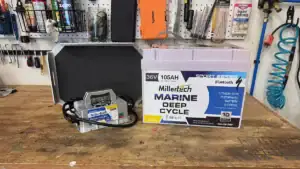
During testing, the 100-amp hour MillerTech battery it was connected to never dipped below 50% capacity after two days of heavy use at dawn and dusk.
“I can’t wait to get it out on the salt marsh,” said Albanese. “Its got more than enough oomph to handle big tide swings and strong coastal currents, so it should be awesome for striped bass.”
Pros
- Saltwater corrosion protection
- Advanced GPS Spot-Lock
- Wireless remote operation
- Extended battery life
- Lifetime shaft warranty
- One-Boat Network integration
Cons
- Expensive
- Relatively heavy unit
- Single 55-pound thrust option
- Foot pedal sold separately
Best Basic Trolling: Minn Kota Fortrex Bow-Mount Trolling Motor
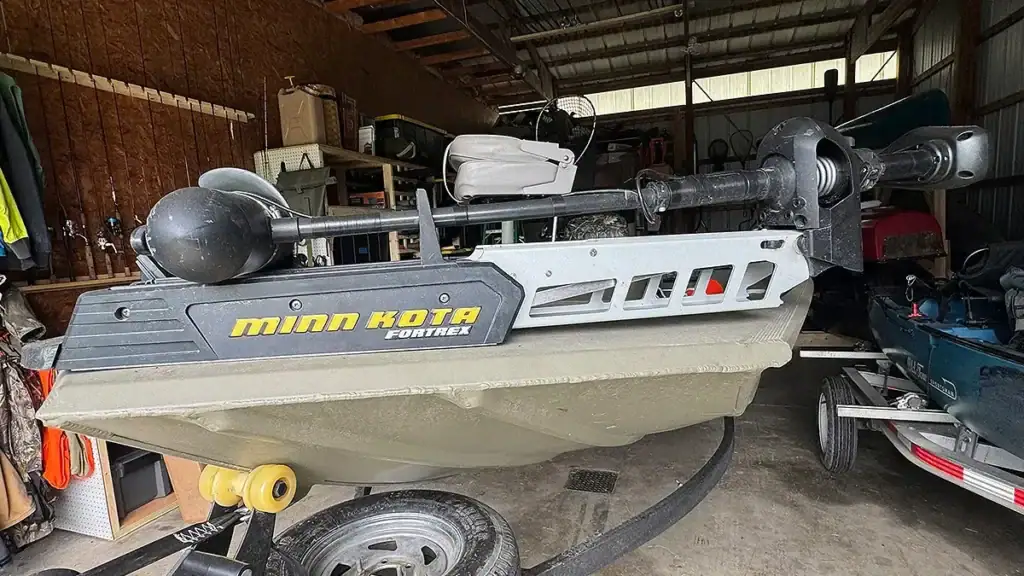
For anglers who want simplicity and precise boat control, the Minn Kota Fortrex is an excellent foot-control trolling motor. There are no menus to navigate, no joysticks to master, and no complicated learning curve. Simply step on the pedal and start controlling the boat almost immediately. The foot pedal feels intuitive, making it especially appealing for anglers who want to concentrate on fishing rather than figuring out their electronics.
“That simplicity is a big part of why I like the Fortrex,” Albanese said. “My young son loves taking control of the boat whenever we go out, and the Fortrex makes that possible without requiring him to learn a complicated control system. He can quickly understand the basics of steering and speed, which makes time on the water more fun for both of us. For straightforward, responsive foot control, the Fortrex remains a standout choice.”
Beyond its straightforward foot control, the Fortrex packs in several features that make it a capable choice for serious anglers. Its lift-assist mechanism makes deploying and stowing the motor easier, while the spring-loaded BowGuard helps protect the motor from impacts when fishing around docks, timber, and other obstacles. The Fortrex also offers variable-speed control for making subtle adjustments while fishing, along with a durable, weedless prop designed to keep moving through vegetation. With its rugged construction and responsive steering, the Fortrex is built to handle the demands of regular use while keeping the focus on simple, dependable boat control.
“I’ve been using one on my 18-foot Tracker Grizzly 1860 since I got it,” says Albanese. “It has done everything I need it to, and even moves the 18-foot hull with ease even on windy days.”
Pros
- Rugged aluminum construction
- Gas-spring lift assist
- Responsive cable pedal
- Efficient battery management
- Quiet, high thrust
- Lifetime shaft warranty
Cons
- Heavy physical weight
- No Spot-Lock or GPS
- Manual steering only
Best Bass Fishing Trolling Motor: Garmin Force Pro
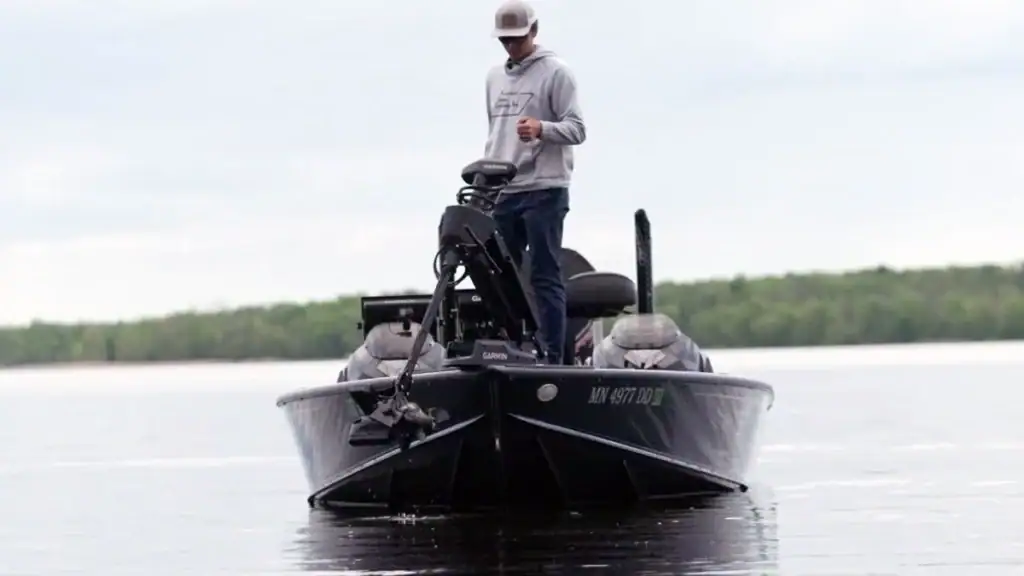
The Garmin Force Pro is a high-performance trolling motor engineered specifically for bass boats, offering dual-voltage operation (24V/36V) that delivers up to 100 pounds of thrust via a whisper-quiet brushless motor.
“I think this Garmin excels in ease of use and adaptability,” explained Wired2fish’s Will Stanley. “It has a bluetooth foot pedal, which allows the motor to be controlled from anywhere in the boat. The handheld remote also has ‘gesture’ control, which lets the user press a button and point the remote to wherever you want the trolling motor to look. Both of these are nice for efficiently scanning an area, or just trying to spread out the boat with multiple passengers.”
The motor comes standard with a GT56UHD transducer for high-definition CHIRP, ClearVü, and SideVü scanning sonar right out of the box. For precise boat handling, it pairs multi-band GPS for rock-solid Anchor Lock positioning with a distinct reverse thrust feature that allows you to back up without spinning the motor head.
“Networking between the trolling motor and graphs is essential for getting the best performance out of your [Garmins],” Casey Scanlon told Wired2fish. Scanlon is a pro bass angler and guide on the Lake of the Ozarks. “The anchor lock feature and the reverse feature is great in shallow water to avoid spooking the fish. The trolling motor is one of, if not the most important piece of equipment on my boat. The quality and power of the Garmin Force Pro is unmatched in my opinion.”
Pros
- Available 100-pound thrust
- Multi-band GPS anchor
- Instant reverse thrust
- Whisper-quiet operation
- High battery efficiency
- Flexible 24V/36V operation
- Integrated GT56UHD transducer
- Effortless lift-assist stowing
- Wireless pedal and remote
Cons
- Premium price
- Large, bulky head
- Heavier deck weight
- Best with only Garmin chartplotters
Frequently Asked Questions (FAQs)
Should I Buy a 12V, 24V, or 36V Trolling Motor?
Choosing the right trolling motor comes down to matching system voltage to your boat’s total loaded weight, aiming for at least two pounds of thrust for every 100 pounds of boat, fuel, gear, and passengers combined. A 12V system (delivering up to 55 pounds of thrust) is ideal for small aluminum jon boats, kayaks, and light utility craft under 16 feet, running off a simple single-battery setup. A 24V system (70 to 80 pounds of thrust) is the practical sweet spot for the vast majority of freshwater anglers, providing plenty of power for 16- to 21-foot bass boats, crappie rigs, and deep-V multi-species boats. For heavy fiberglass hulls over 21 feet, large walleye boats, or anglers carrying heavy loads, a 36V system (105-plus pounds of thrust) is necessary to maneuver the vessel effortlessly without bogging down.
Your battery storage space should also drive your final decision. What room do you have? Higher-voltage systems run far more efficiently, meaning a 24V or 36V motor operating at half throttle consumes less energy and gives you significantly longer runtime than a 12V motor pegged at max throttle all day.
If you frequently fish strong river currents, wind-blown main lake points, or thick lily pads — or rely heavily on GPS anchor locks to stay pinned over structure — stepping up a voltage class ensures your motor holds position without draining your power. Just remember to account for deck space and weight budget. While a 12V setup uses just one battery, 24V and 36V systems require two or three batteries wired together (or a dedicated single-pack lithium battery) to deliver that extra all-day muscle.
What is Spot Lock?
Say goodbye to that old, heavy anchor! Spot Lock — often referred to broadly as a GPS anchor — is a feature on modern trolling motors that uses an internal GPS receiver to automatically hold your boat over a precise coordinate on the water. With a single press of a button on a remote, foot pedal, or connected fish finder, the motor constantly calculates your position and automatically adjusts its steering and motor speed to counteract wind, waves, and water currents. This holds the boat virtually motionless within a few feet of your target—such as a brush pile, ledge, or drop-off — eliminating the need to toss a heavy manual anchor or continuously manage the foot pedal, allowing you to keep your hands free and focus entirely on casting.
Is a Foot Pedal or Remote Control Better?
For bass fishing, a foot pedal is almost universally better as your primary controller because keeping your hands completely free to cast, work lures, and set hooks is paramount. Pitching jigs into tight cover or picking apart a shoreline requires hundreds of adjustments a day, which you can easily handle with your heel and toe without ever taking a hand off your rod and reel. High-response electronic and cable-steer foot pedals give you immediate steering feedback, allowing you to react instantly when a sudden gust of wind or strong current threatens to push your boat off course or into overhanging branches.
A remote control works best as a secondary tool to complement the pedal rather than replace it. Handheld remotes shine when you step away from the bow to re-tie a lure, grab gear, or net a fish from the stern, as they allow you to activate Spot-Lock or tweak your heading from anywhere on the boat. They are also great for trolling in open water where you set a straight course and let the motor handle the driving. The ideal setup for most bass anglers is a foot pedal mounted on the front deck for active, hands-free fishing, paired with a small remote worn on a neck lanyard or wrist strap for quick off-deck adjustments.
What Trolling Motors Are Compatible With Different Electronics?
- Because Minn Kota and Humminbird are sister companies under Johnson Outdoors, their integration is the deepest in the industry Via The One-Boat Network.
- Garmin built their trolling motors around high-definition imaging and wireless networking for Garmin chartplotters.
- Lowrance trolling motors are built explicitly to integrate into the Navico/Lowrance ecosystem.
- Power-Pole designed the MOVE trolling motor with a brand-agnostic focus, offering flexible transducer integration options. But networking and screen control integrates with Lowrance displays via NMEA 2000.
What is The Difference Between a Freshwater And Saltwater Trolling Motor?
The main difference between freshwater and saltwater trolling motors lies in corrosion resistance and component protection: Saltwater motors are specifically engineered with sacrificial zinc or aluminum anodes, 316-grade stainless steel hardware, multi-layer protective powder coats (traditionally white), and fully “potted” (epoxy-encapsulated) electronics to withstand harsh brine and salt air.
In contrast, freshwater motors (traditionally black) rely on standard plated hardware and basic board coatings that quickly degrade in salty environments. While saltwater models cost 10% to 20% more due to these heavy-duty upgrades, they can be safely used in both salt and fresh water without issue, whereas running a freshwater motor in saltwater will rapidly corrode its internal electronics and probably void your warranty.