“One last spot.”
That was Tyler Clements’ “never-give-up” comment as he headed for the boat ramp after a disappointing day of white-bass fishing on the Marion Reservoir in central Kansas.
He knew the “stripes” were out there someplace in the shallow 6,160-acre impoundment in the Kansas Flint Hills. But they sure weren’t at any of the spots where he usually fills the boat.
Small Adjustments, Big Payoff
Pulling up to a spot at the mouth of a cove, though, his luck dramatically took a turn for the better.
“This is the most fish I’ve seen all day,” he said, studying his fish finder.
Clements dropped a small jigging bait to the zone where his electronics indicated a large concentration of fish, and immediately felt an aggressive hit. He quickly reeled in a fat white bass and tossed it into the livewell. Then he got his bait back in the water as quickly as he could.
Game on. The swarm of white bass he marked were seemingly competing for what they perceived as food. Clements and I both had several doubles and almost non-stop action.
When the fish would re-position a bit, Clements switched to a small Bandit crankbait and caught fish that way.
By the time the flurry was over, we had 30 healthy white bass in the livewell. All this within a half-hour time span.
Lots of bites, lots of fights. That sums up Kansas white-bass fishing.
Bassin’ in Kansas
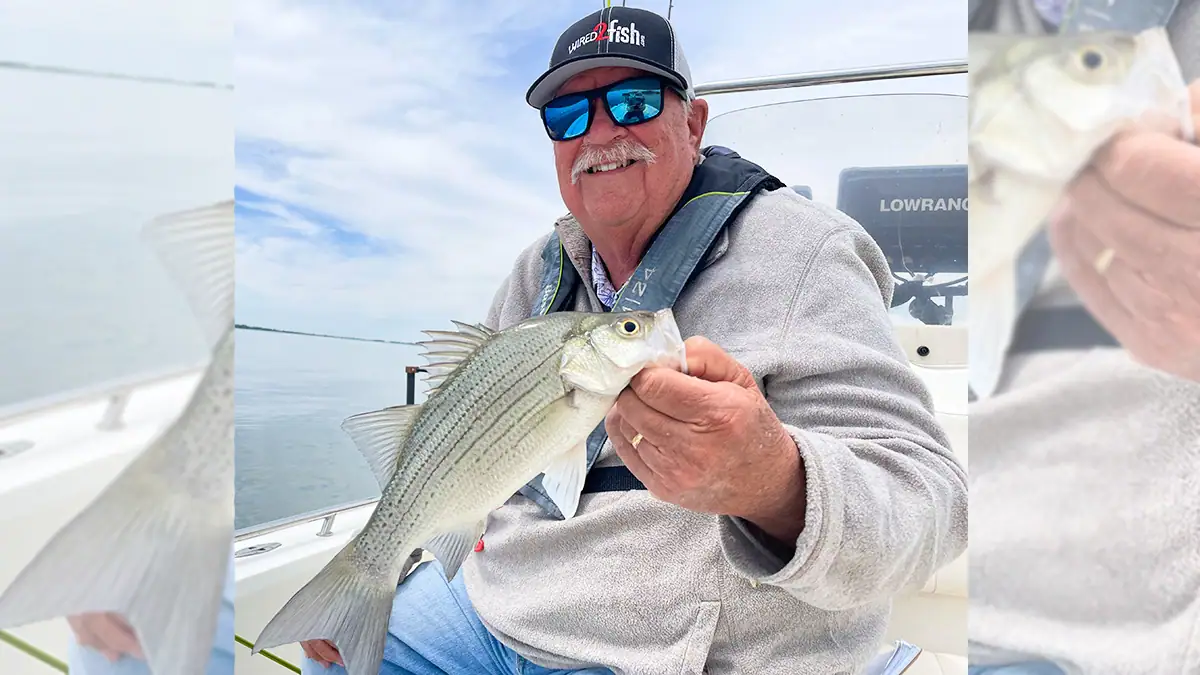
Locating schools of aggressive fish is the hard part. Catching them is easier.
Clements, who runs the Livin Water Fishing guide service, was reminded of that in early May when he fished his home lake. The whites had returned from their spawning run up the Cottonwood River and were ready to gorge on shad.
But they weren’t where Clements left them in his last trip, when he and two other fishermen caught 80 whites. So he stayed on the move, scanning structure until he located the concentration of fish he was looking for.
He caught most of his fish on a small Stealth Minnow, a jigging rap-type bait made by Rally Time Jigs in Marion. With its fluttering, darting type action, the bait is ideal for targeting schools of aggressive whites.
“After they get off the spawn, they’ll head to the rocky points, the ledges and the rocky points,” said Clements, 34, who lives in Hillsboro, Kansas. “The one constant is that they’ll always be around their food, the shad.“
Managing the White Bass Population
Marion has long been known as one of the top white-bass reservoirs in Kansas. In the mid-2010s, the population took a dip when stocked wipers (a cross between white bass and stripers) dominated the fishery and over-competed for the reservoir’s plentiful shad. The result: less white bass and slow-growing wipers.
Management biologist Craig Johnson decided to take a different approach, cutting back on the stocking of wipers to every four years to see if white bass would respond to diminished competition for their food.
That strategy has worked. Today, Marion has a healthy population of white bass with a mix of fewer but sizable wipers.
“As far as trends go, we’re seeing good numbers and good growth of our white bass,” Johnson said. “We’re seeing some good, fat fish.”
Kansas Fishing’s Best Kept Secret
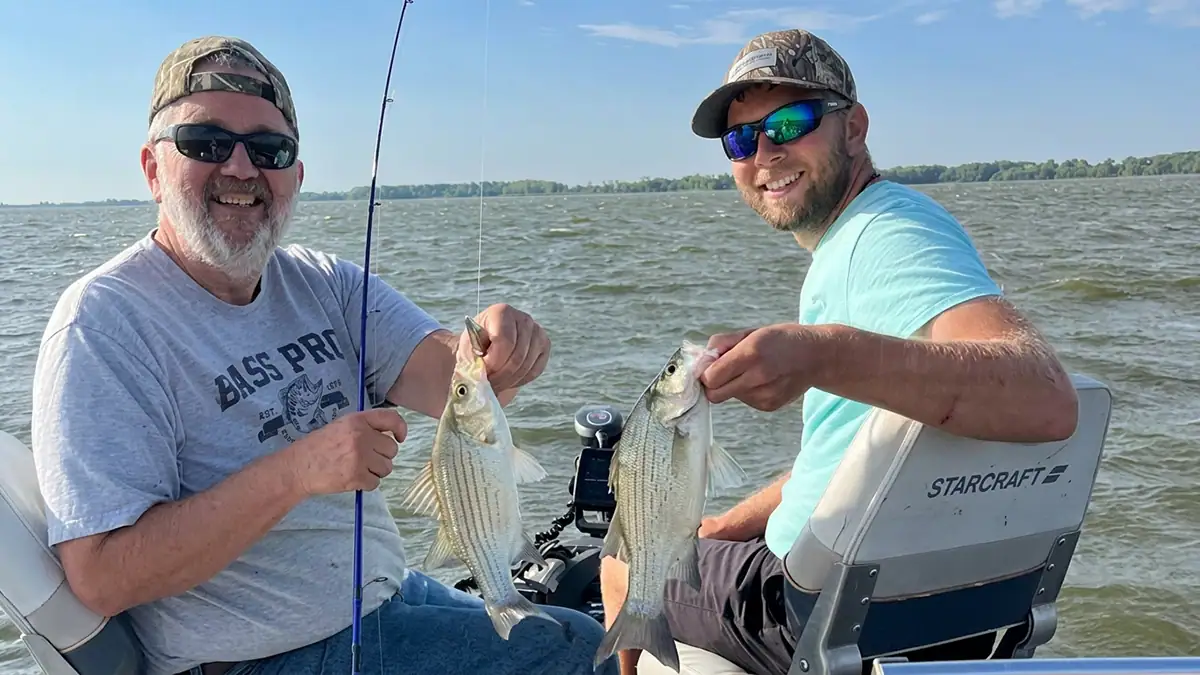
But Marion isn’t in a class by itself in Kansas. Reservoirs such as Cedar Bluff, Glen Elder, Webster, and Pomona also have impressive numbers of white bass measuring 12 inches and over, according to surveys by fisheries biologists.
Still, they are overshadowed by crappie, walleyes, and blue catfish in Kansas. They create only a low-grade spring fever once May rolls around.
White bass attract interest once they make their spawning run in reservoir tributaries in March and April. But by the time the spawn is over and the fish move back to the reservoirs, the interest wanes.
Many anglers don’t know what they’re missing, Clements said.
“There are good numbers in a lot of Kansas reservoirs, their catchability is high, and they put up a good fight on medium-action spinning tackle,” he said. “When you find a big school of them, the action can be non-stop.”