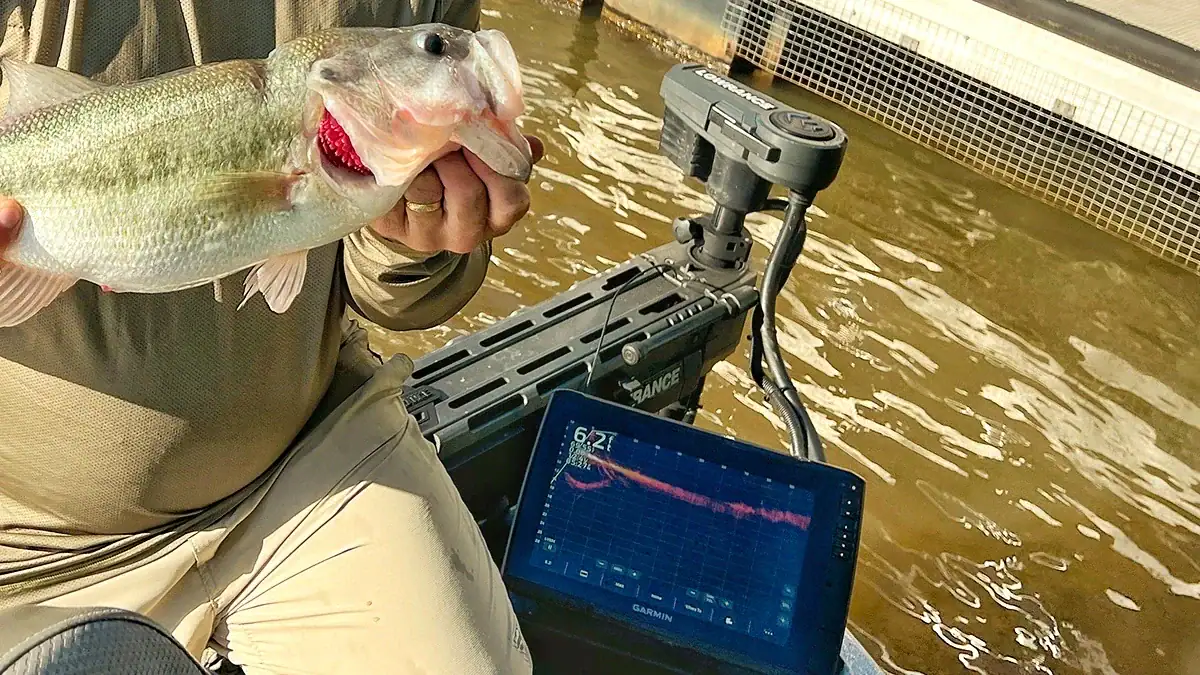
Few pieces of fishing technology have generated more debate than forward-facing sonar (FFS).
Some anglers believe it’s the Holy Grail and refuse to fish without it. Others call it the “Cheater Box” and argue that it gives anglers using it an unfair advantage over their competition — and the fish themselves. Detractors assert that FFS use can hurt fisheries by making fish too easy to catch, though those who favor the tech point out that “it doesn’t make fish bite.”
So, who’s right? Does forward-facing sonar actually help anglers catch more fish? Researchers in Wisconsin set out to find out once and for all, using the scientific method and a lot of time on the water. The results just might surprise you.
Putting FFS To The Test
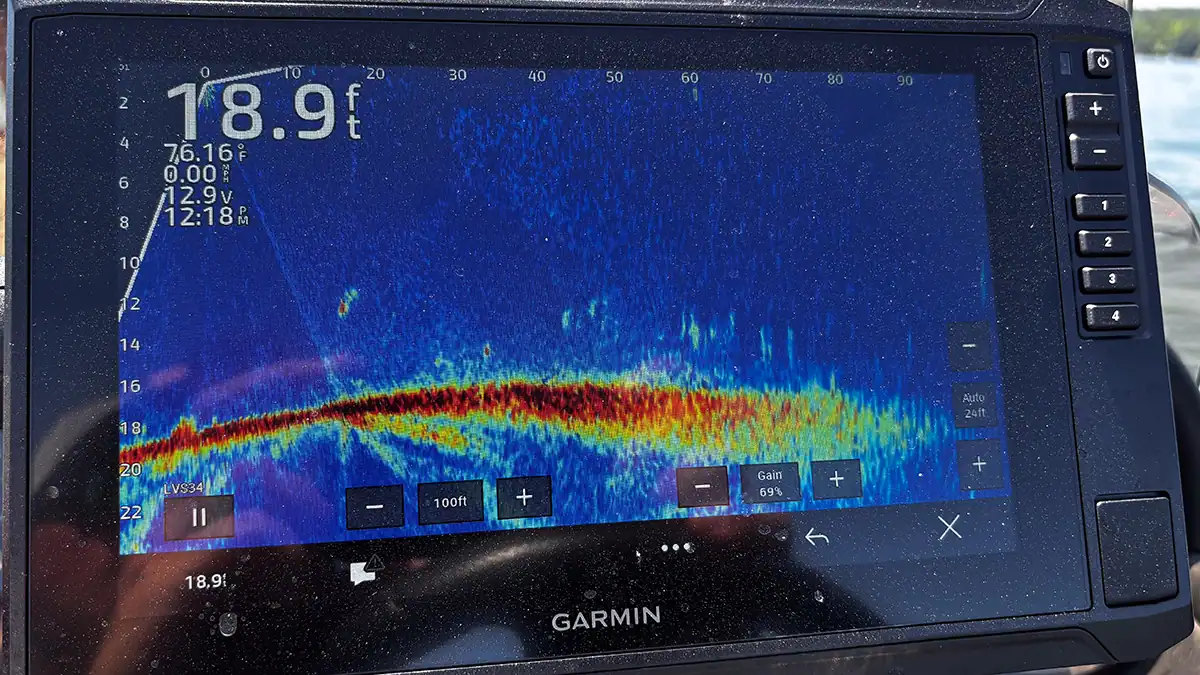
Instead of relying on angler surveys or tournament results, researchers designed a true experiment. Two teams of experienced anglers spent the summer of 2025 fishing Nebish Lake in northern Wisconsin. Each team fished six days a week in identical four-hour trips. During part of the study, one team had access to forward-facing sonar while the other fished without it. Later, they switched.
Because the same anglers fished the same lake under nearly identical conditions, researchers could isolate the effect of the technology itself rather than differences in angler skill or local knowledge. Over the course of the study, the anglers logged nearly 500 hours on the water and caught more than 1,700 smallmouth bass.
This study is one of the first randomized controlled experiments on forward-facing sonar. Unlike survey-based studies that compare different groups of anglers, this design largely removed differences in skill, making it one of the strongest pieces of evidence so far on how FFS affects smallmouth bass fishing.
The Big Surprise
Many anglers assume forward-facing sonar use leads to more fish in the boat. In this study, it didn’t.
Researchers found that anglers using FFS actually caught about 0.64 fewer smallmouth bass per hour than when they fished without it. That’s the opposite of what the researchers — and many anglers — expected.
Why didn’t catch rates increase? The answer appears to be simple, and could have probably been pointed out by some FFS naysayers: Anglers spent more time looking for fish than actually fishing.
GPS tracking showed that when using forward-facing sonar, anglers covered less water and made more turns with the boat. Instead of casting continuously, they slowed down, searched for individual fish on the screen, and carefully positioned the boat before making presentations.
In other words, screen time replaced fishing time. The technology changed how anglers fished, but not necessarily in a way that produced more bites.
Although anglers caught fewer bass overall, the fish they did catch tended to be larger. On average, smallmouth bass caught while using FFS measured about one inch longer than bass caught without the technology. The increase wasn’t dramatic, but it was statistically significant.
Interestingly, forward-facing sonar didn’t consistently produce the biggest fish of the trip. While average size increased, the maximum size caught showed only a weak relationship with sonar use.
Does this mean that FFS gives anglers an advantage in a tournament? That’s a subject for another study, I suppose.
Does Experience With FFS Matter?
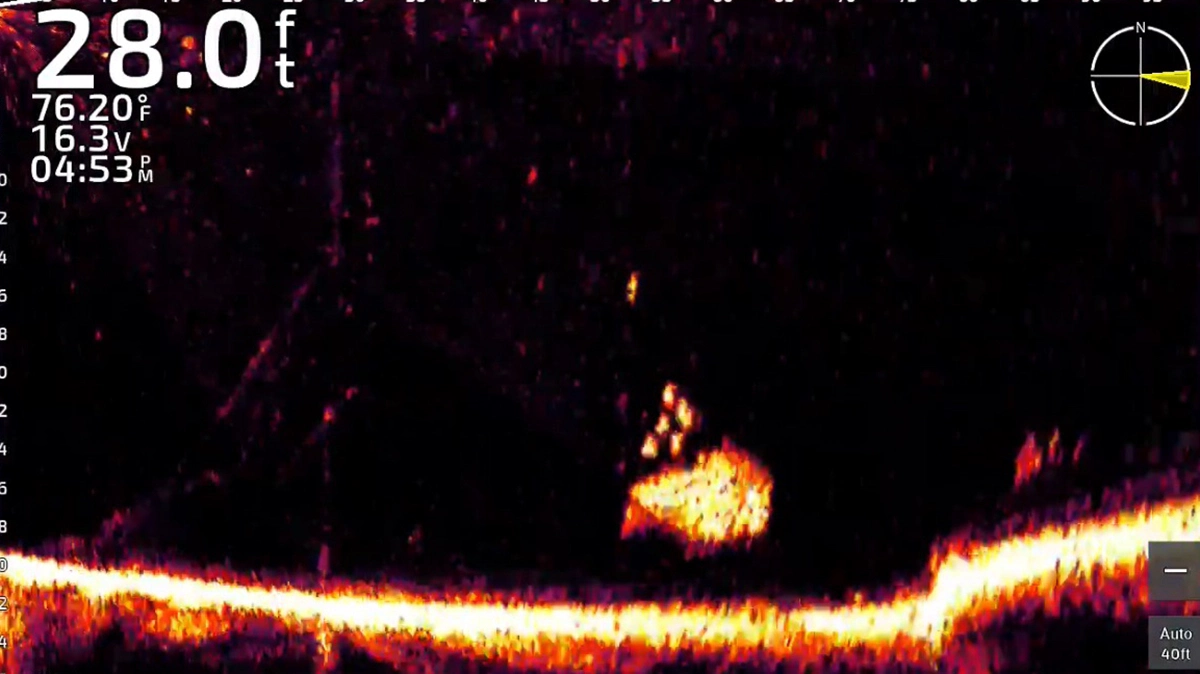
One theory surrounding forward-facing sonar is that anglers simply need time to learn it. Once they become proficient, catch rates should improve. This study found little evidence for that.
Researchers looked for signs that catch rates improved as anglers gained more experience with the technology during the experiment. They found little support for a learning effect.
That doesn’t mean experienced sonar users can’t become more efficient over time. But in this experiment, simply spending more days with the technology didn’t suddenly lead to dramatically better fishing.
Why Were the Fish Bigger?
Researchers believe forward-facing sonar may help anglers target a different group of bass. During summer, many smallmouth bass move offshore to chase pelagic baitfish instead of staying along traditional rocky shorelines.
Without FFS, many anglers simply don’t fish those open-water areas. With live sonar, however, anglers can search for individual fish suspended offshore and make precise casts to them. That may explain why average fish size increased even though total catch declined.
What About Conservation?
One of the biggest concerns surrounding FFS is that it could increase fishing pressure enough to threaten fish populations. This study didn’t support that concern.
In fact, researchers concluded that their results do not support proposed bans on forward-facing sonar based on fears that it dramatically increases catch rates. But that doesn’t mean the debate is over.
The authors point out that other studies have found different results depending on the species being targeted. Some research has shown increased catches of crappie and largemouth bass, while other studies have found little or no effect.
Like many fishing tools, forward-facing sonar appears to work differently depending on the fishery, the species, and how anglers use it.
The Bottom Line
This study challenges one of the biggest assumptions surrounding forward-facing sonar. It didn’t help anglers catch more smallmouth; instead, it changed how the anglers fished. They spent more time searching, less time casting, caught slightly fewer fish overall, but landed bass that were, on average, a little bigger.
This (mostly) disproves the theory that forward-facing sonar is a magic fish-catching machine, offering a bit of reality check. For fisheries managers wondering whether the technology leads to overfishing, the findings provide evidence that the answer may not be as straightforward as many people assume.
Forward-facing sonar changes angler behavior. But whether it catches more fish depends on where, how, and what you’re fishing.