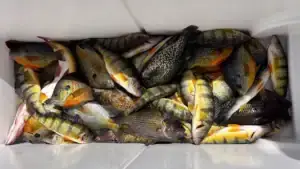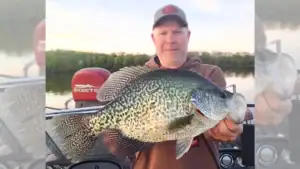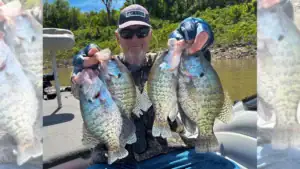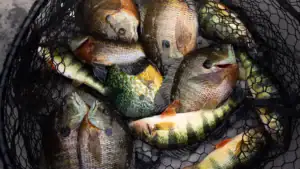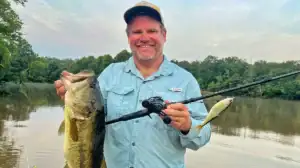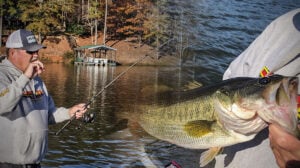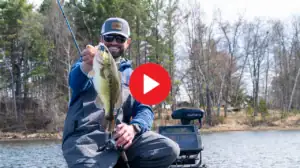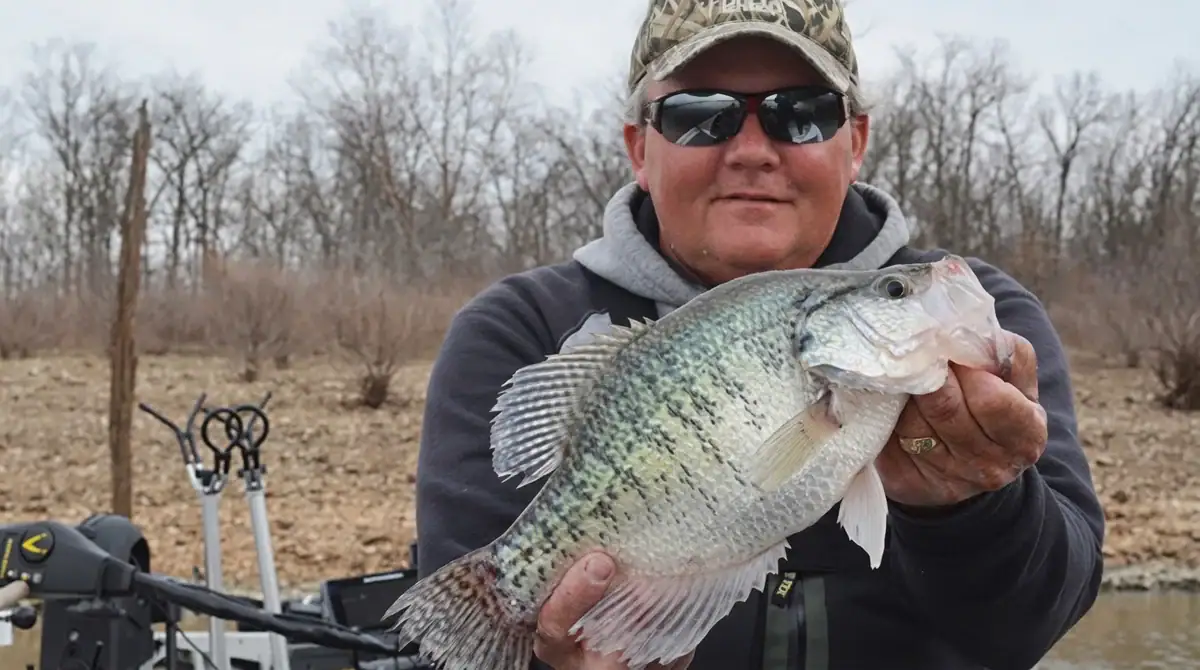
Richard Bowling, a longtime guide on Truman Lake in Missouri, uses Livecope to unravel some of the mysteries about crappie behavior. Photo: Brent Frazee
Don’t believe that adage about not being able to teach an old dog new tricks.
Richard Bowling, a popular fishing guide at Truman Lake in Missouri, is a good example of how wrong that way of thinking can be.
After more than 30 years of guiding for crappies, he thought he had a good handle on what makes the species tick. Then Livescope, which shows the real-time movement of fish, came along in the late 2010s.
Even Bowling was amazed at everything he learned after that.
Location, Location, Location
If it’s a crappie, it has to relate to brush, flooded timber, or weeds, right?
Wrong.
That was the old-school way of thinking. But Livescope has since revealed that crappies are quite comfortable in open water devoid of cover.
“The biggest thing Livescope has taught me, [crappies] don’t mind being out in open water,” Bowling told Wired2Fish. “This summer, we’ve been catching a lot of fish that are just cruising, not a tree or brush pile anywhere close.
“In the past, we didn’t even fish for those crappies because we didn’t know they were there. Those fish never got bothered.”
Hitting the Main-Lake Flats
In the heat of summer, you can’t go wrong by fishing main-lake flats, Bowling said. That’s where the baitfish will be — and the crappies won’t be far away.
“Truman has so many crappies that you can put your trolling motor down on a flat and catch a limit of fish (15 daily),” Bowling said. “You have to cover water: You usually won’t find one big school. They’re scattered. But they’re out there.”
Exploring the Brush
Of course, there are times when crappies relate heavily to cover. No secret there. But Livescope can reveal just how crappies position themselves in the brush.
Bowling has seen times when big crappies will have their noses plastered to pole timber: “There’s not even enough room between them and the tree to drop a bait to them.”
At times, a single, bushy tree will hold an impressive school of fish. But when Bowling pulls up to a tree and Livescope shows only a few fish, he has found that they’re usually big ones.
Selecting a Target
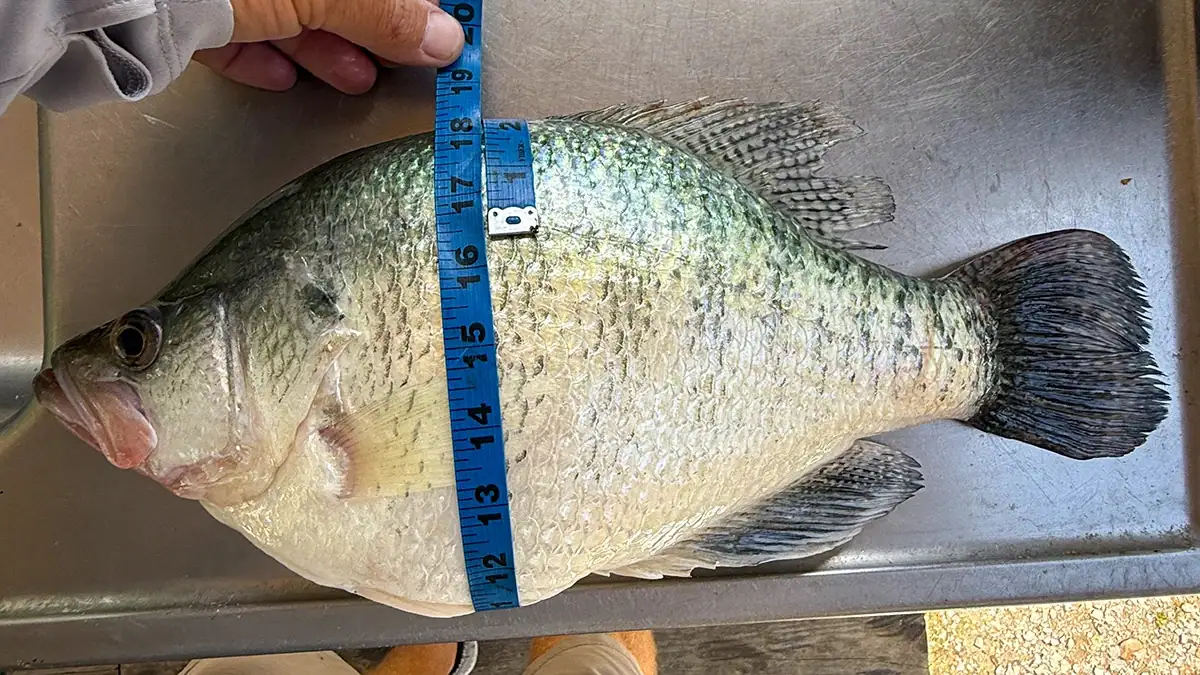
Livescope allows fishermen such as Bowling to find a large crappie and fish for that individual, even if it is moving away from cover.
Bowling remembers following one big fish for 300 yards during a tourney before finally getting it to hit.
“In a tournament on Grenada Lake in Mississippi, I dropped down on a big fish in a stake bed,” he said. “I got her to hit, but I missed. She just started slowly swimming away and I followed her.
“I finally caught her and it paid off. It was a 2 ½-pound fish.”
They Don’t All Bite
Livescope often exhibits the frustration of fishing for crappies.
Often, the screen will reveal a large school of fish relating to cover. But getting those fish to hit can be a struggle.
“Sometimes, I’ll get on top of a big school and we’ll catch two or three or fish out of it, but there’s a lot more fish that won’t even look at it,” Bowling said. “If they’re in a negative mood, you can put your bait right in front of them and they’ll just turn and swim away.
“I just keep moving from spot to spot until I find fish that will bite.”
The Retrieve Matters
Livescope also reveals how crappies react to a jig or minnow, according to Bowling.
“I like to drop my bait down as fast as I can to get their attention,” he said. “As soon as I see one turn toward my bait, I keep it moving. I raise my rod slowly to imitate a baitfish trying to get away.
“Usually, they’re not going to hit a bait that is just sitting there. It doesn’t look natural.”
What Depth?
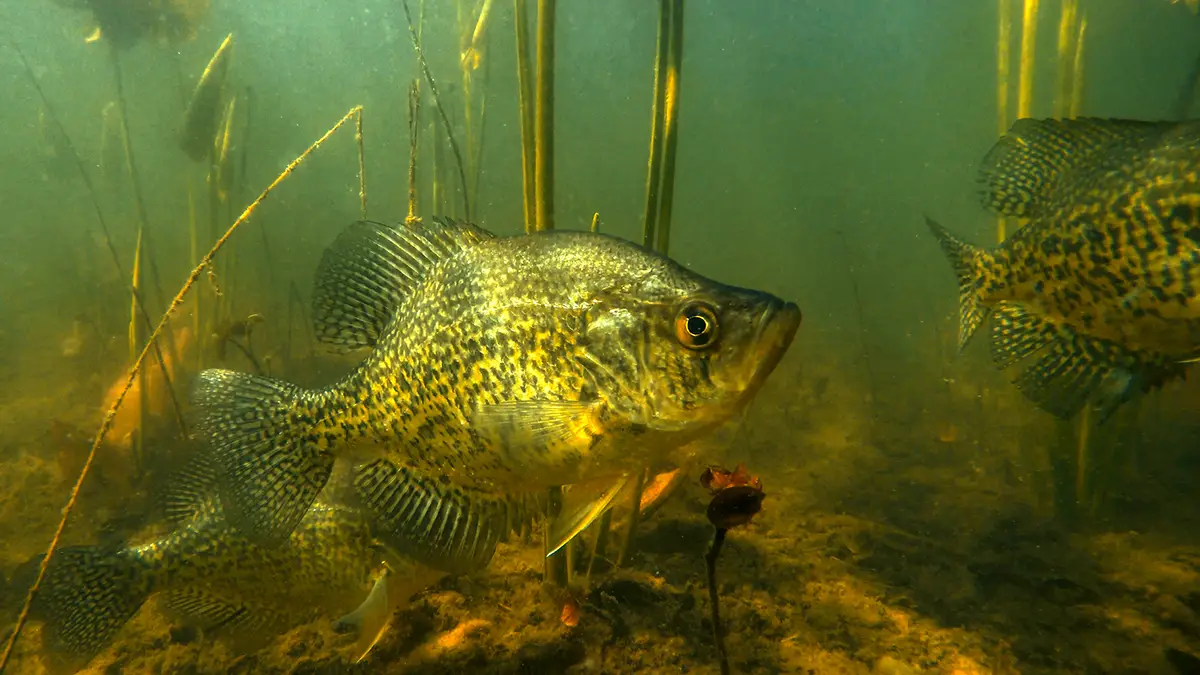
Seasonal patterns will indicate the general areas where crappies can be found. But good luck trying to determine a daily pattern from which depth they are using.
On a July day when Bowling led his clients to limits of big crappies, he said, “Today, we caught fish from two feet below the surface to the bottom in 16 feet of water.”
Included were some fish that were sitting in the mud on the bottom.
“I would see a little blurp on the bottom and when we would drop down to just above that fish, it would come up and hit,” Bowling said.
In other words, even when the fish are biting, many times there’s no pattern as to what depth they will use. Not in Bowling’s experience at Truman Lake, at least.
Getting Schooled
Ordinary electronics will show how large the schools of crappies can get during the cold-weather months. But Livescope shows how the fish in those schools will react.
“I’ve seen schools with hundreds of fish in them,” said Bowling. “And school after school, too.”
Fishing the Spawn
Many fishermen are intent on fishing the banks during the spawn. Not Bowling. He positions in his boat in 7 to 12 feet of water and follows the contour of the bank. He will use Livescope to explore the brush just out from spawning banks.
“That way, I’ll catch the females before they move in,” Bowling explained.
The Bottom Line
Some anglers argue that using forward-facing sonar is an unfair advantage. Bowling disagrees.
First, he said, fishermen have to know where to start their search. That often amounts to a knowledge of seasonal patterns. Second, it helps anglers find fish — but it doesn’t make them hit.
“When I first started guiding, I didn’t even have a graph that worked and we still caught fish,” Bowling said. “I knew where the fish would be at that time of the year and I went from there.
“Livescope is a tool, and it can teach you a lot. But it’s not a cure-all.“